
Learn when to cut annual summer savory for fragrant leaves, distinguish it from winter savory and preserve leaf nodes for a second flush. The diagrams distinguish the actual plant structures, so a cutting line or sowing depth is never just a generic arrow. Check your variety and local conditions before choosing a season or handling method.
Recognize Annual Summer Savory Before Cutting
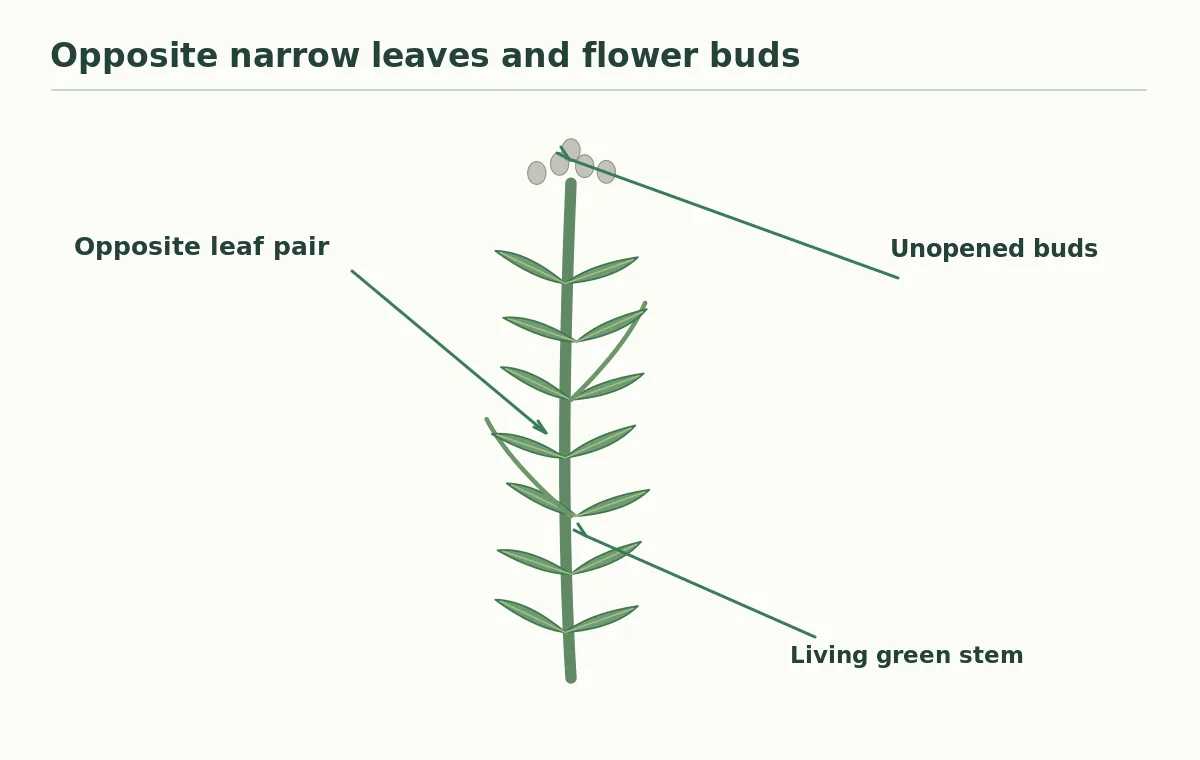
Summer savory, Satureja hortensis, is a small annual culinary herb with branching fine stems and many narrow lance-shaped leaves. Leaves usually sit opposite one another at distinct nodes. The foliage is not broad and rounded like oregano, not threadlike like dill and not stiff evergreen needles like rosemary. Small pale white to pinkish or lilac flowers develop near the tops later in the season. The featured illustration shows the narrow leaf pairs and young terminal buds rather than replacing the actual herb with a flavor label.
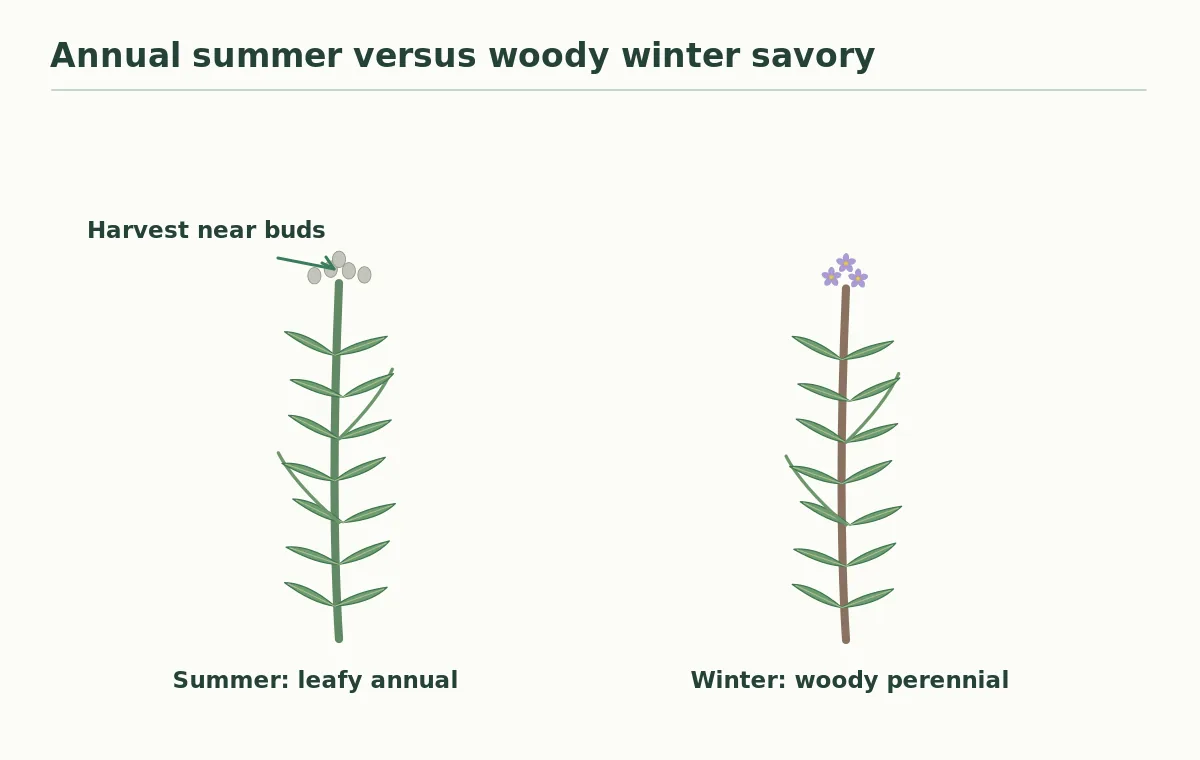
Winter savory, Satureja montana, can resemble it at a glance but is a woodier perennial under suitable conditions. Read the botanical label before applying heavy annual cutting guidance to a permanent woody plant. A weak seedling only a few inches tall should not be stripped for a full harvest; the plant first needs enough photosynthesizing leaves to recover. Pick from an accurately identified garden crop rather than an unidentified plant with similar leaves and smell.
Aim for Bud Stage Rather Than Open Flowers
Illinois Extension recommends cutting summer savory leafy tops when plants begin to show flower buds. RHS notes that its delicate flavor is particularly pleasant before the flowers open. That gives you an observable harvest cue independent of a calendar: examine the growing tips for clusters of small buds, while most leaves are still green and tender. You can take a small handful earlier once the plant is well established, but the bud stage is especially useful for a larger harvest for drying.
Flower buds on the tip do not mean the plant is dying; they indicate a change from foliage growth into reproduction. Once flowers open fully, leaves can remain usable but the amount of tender fresh growth may decline. Do not insist on waiting for brown seed heads if your goal is leaves. Decide whether you want a succession of leafy cuttings or a patch left partly in bloom for pollinators and potential self-sown seed.
Find Each Opposite Leaf Pair and Its Node
The place where two leaves attach across a narrow stem is a node. A side shoot can grow from buds associated with a living node after the tip above it is removed. Before using scissors, trace down from the flowering tip to a healthy green leaf pair with more green tissue below. The action diagram places the cut a short distance above that pair; the blades do not cross the leaves or slice through bare stem below the last viable node.
If the branch already has small side shoots, try to leave those intact. Cut back several stems individually rather than dragging a knife through the whole mound. Summer savory tolerates picking, but hard chopping into yellow, dried or dead stems is not a reliable recipe for regrowth. Clean scissors also make it easier to keep the harvested tops free of crushed soil and damaged leaves. Trim evenly so enough foliage remains to fuel fresh development.

Leave Enough Living Stem to Recover
University of Maryland and Iowa State Extension advise leaving functioning leaves and nodes on leafy herbs when harvesting for repeat growth. With a healthy annual, select upper tips and retain several lower pairs, especially if the plant is still young or has grown slowly during unfavorable weather. A dramatic bare-stem haircut can stop a short-lived annual in its tracks. The correct/avoid panel contrasts a leafy remaining base with a severely scalped crown lacking green tissue.
After a moderate harvest, water only if the root zone needs it; overwatering is not a substitute for intact leaves. Summer savory prefers plenty of light and soil that drains, and an open canopy helps shoots dry after rain. Plants cannot promise a second flush after severe frost or at the end of their natural annual lifespan. Give remaining stems time to branch before another substantial cut and adapt the interval to actual growth, not a weekly quota.
Harvest Clean Shoots at a Good Time of Day
A dry morning after dew has evaporated is a useful time to collect aromatic herbs before the hottest sun. Inspect leaves for insects, dust and signs of contamination. Wash hands and cutting tools, and collect clean tops in a breathable container rather than leaving them to heat in a closed bag. The leafy shoots can be used fresh; strip leaves from larger stems for dishes requiring a fine texture. Summer savory is often paired with beans and vegetable cooking, but add flavor according to taste.
If preserving, dry healthy material in a clean, shaded and ventilated place appropriate for herbs. Do not store damp bundles in a sealed jar where mold can develop. When fully dry, place leaves in a clean airtight container and label the plant and collection date. This article does not propose canning or oil infusions, which have different food-safety requirements. Use trustworthy preparation methods for any food product you intend to store long-term.
See Whether New Growth Is Emerging After a Cut
Within suitable warm growing conditions, look at the paired nodes left below the cut for small new shoots. A green branching tip is evidence of recovery; a dead brown stub with no living foliage is not. The diagram marks new paired shoots sprouting from a preserved node instead of drawing shoots floating in space. Avoid scraping bark or digging around roots in an attempt to stimulate recovery. Sunlight, healthy foliage and enough moisture will matter more than repeated cutting.
Summer savory is annual. RHS notes that a moderate cut after flowering can produce another leafy flush if enough season remains; it is not a perennial that guarantees endless harvests through winter. Make a new sowing in the next suitable season if the plant has finished its cycle. Winter savory is a separate perennial crop with different pruning limits, so do not use this late-season recovery test to justify removing half of an old woody winter-savory bush.
Separate Flowering From Pest or Drought Stress
A tip carrying evenly formed small flower buds is normal development. Pale stretched stems with widely spaced leaves more often suggest weak light, while wilting and crispy margins can reflect dry roots or damaging heat. Yellow leaves on a plant whose pot remains waterlogged may point to root problems. None of those symptoms can be diagnosed by flower presence alone. Check the soil, light, stems and leaf undersides before applying any fertilizer or pesticide.
If aphids gather on tender tips, try accurate identification and low-impact IPM practices supported by local Extension first. Do not spray unknown herbs with a product lacking an edible-herb label. Harvest only intact, clean foliage free from decay. The final comparison drawing distinguishes Satureja hortensis with green fine stems from the woodier winter savory, and separately shows pre-flower buds versus open blossoms, so the crop identity and harvest stage stay clear.
Related Guides
- Growing Herbs by Type: Water, Harvest, and Winter Survival Guide
- How to Start Summer Savory From Seed and Harvest Tender Tips
How We Research and Check These Botanical Details
Source pages reviewed on 2026-10-27: extension.illinois.edu — Illinois Extension identifies summer savory as a fine-leaved annual and recommends cutting leafy tops when buds first appear. www.rhs.org.uk — RHS distinguishes summer savory from perennial forms and describes light harvesting, leafy shoot collection and renewed growth after trimming. extension.umd.edu — Maryland Extension explains clean harvest tools, picking herbs before flowering for leafy quality and cutting shoot tips at living nodes. yardandgarden.extension.iastate.edu — Iowa State advises harvesting leafy annual herbs around bud stage, after dew dries, with cuts above a leaf pair and sufficient stem left to regrow. Plant morphology and growing steps were cross-checked against source descriptions, including which part is edible or retained after cutting. Recommendations that depend on variety, temperature or local conditions are qualified in the text.
No paid products or affiliate relationships are recommended in this article. Read our affiliate disclosure. Botanical drawings are explanatory teaching diagrams rather than photographs of a guaranteed cultivar. Use clean tools and follow current local Extension advice for pests, climate and edible-crop safety.
No. Satureja hortensis is generally grown as an annual; winter savory is a distinct woody perennial.
Cut leafy tops as flower buds appear, ideally before most flowers open.
Slightly above a healthy opposite leaf pair, leaving living nodes and green foliage below.
Avoid that if you want another harvest; retain adequate leaf area and multiple active nodes.
Not reliably. Summer savory completes an annual life cycle and regrowth depends on remaining season and plant health.