
True lemongrass is a tropical bunchgrass with slender leaves and tightly overlapping leaf sheaths, not a lemon-scented shrub. A pot is a useful way to grow it where winter temperatures or wet soil threaten the crown. This guide shows which stalks can root, how high to set the base, and how to harvest without stripping every emerging shoot.
Identify the Culinary Grass Before You Begin
Culinary lemongrass is usually Cymbopogon citratus. The plant forms a dense tuft of long, narrow, parallel-veined leaves from pale, layered, slightly bulbous leaf bases. It is not lemon balm, which has broad toothed leaves, or lemon verbena, which is a woody shrub. A grocery bunch may contain stems cut too short or dried beyond recovery. Check that the white basal end is intact and firm, not rotten or hollow. A nursery-grown division with a rooted base is more reliable. Confirm the botanical identity when purchasing plants rather than assuming all fragrant grasses are interchangeable.
Choose Stalks or Divisions That Can Root
Illinois Extension notes that stem cuttings and divisions can establish lemongrass. Choose a firm stalk with its full basal portion or separate a living outer fan from an established clump, retaining its roots where possible. Discard soft, moldy material and do not expect a detached leaf blade to form a new plant by itself. For a grocery stalk without roots, stand only the bottom portion in clean water and replace the water regularly; move it to potting medium once roots are present. Rooted divisions can go straight into a suitable pot. Protect fresh roots from drying during handling.
Set Up a Stable Pot With Real Drainage
Use a sturdy container with free-flowing drainage holes and enough width for a widening clump. The ideal initial size depends on the division: a tiny stem sitting in a huge waterlogged volume may struggle, while a large root mass needs space to expand. Use a reasonably moisture-retentive but free-draining potting mix rather than dense garden clay. If you add a decorative outer pot, empty excess water after irrigation. Lemongrass is not a bog plant; persistent saturation can rot its roots. Set the container in a place where leaves will not whip against a narrow path and scratch people passing by.

Plant at the Base of the Leaf Sheaths
Position a rooted stalk vertically with its root-bearing base below the surface and the leafy growing center above it. For a division, RHS recommends planting at the same level at which it previously grew. Fill around the roots, press gently to close large air pockets, and water enough to settle the mix. Do not bury a tall section of overlapping leaves: stagnant moisture inside sheaths encourages decay. The diagram shows the soil line just at the original basal crown, roots descending in the medium, and new shoots emerging upward. A transplanted fan may lean briefly, but should not wobble loose.
Give Bright Light and Avoid Chilling
RHS describes lemongrass as tender and best grown warm, sheltered, and sunny, with particularly strong growth when temperatures remain mild. A USDA hardiness zone cannot establish the correct move-out date by itself. Harden indoor-grown plants gradually before placing pots outside, particularly after nights become suitable for tender herbs. Do not put an actively growing pot into a sudden cold wind or allow a waterlogged container to chill. When conditions cool again, move the pot indoors to a bright protected position. A south-facing window may be insufficient in dark winter weather without supplemental horticultural light.

Water the Roots Without Flooding the Crown
Check the potting medium by touch and water when the upper layer is beginning to dry, supplying enough water that drainage actually occurs. The aim is evenly moist roots during active growth, not a standing pool in the saucer. Wind and heat dry containers more quickly, while indoor winter growth uses less water. Adjust by observing leaves and the medium, not by following a fixed daily schedule. Dry brown tips can reflect inconsistent moisture, cold, or salt stress rather than a single nutrient deficiency. If the core of the clump is mushy, inspect drainage and crown health before adding fertilizer.
Feed and Divide Only as the Clump Needs
A vigorous potted grass eventually packs the container with roots and new stems. Use a balanced, container-appropriate feeding program during active growth if the mix becomes depleted, following the product label rather than treating every yellow leaf as hunger. Divide a crowded established clump when it can recover in warm weather: lift it, separate vigorous outer rooted fans, and leave sufficient roots and living basal shoot tissue on each piece. Cut off fully dead leaves but avoid scalping every green growing point. Repot at the former soil line and shelter divisions from harsh midday sun until growth resumes.
Harvest the Swollen Outer Stalks Carefully
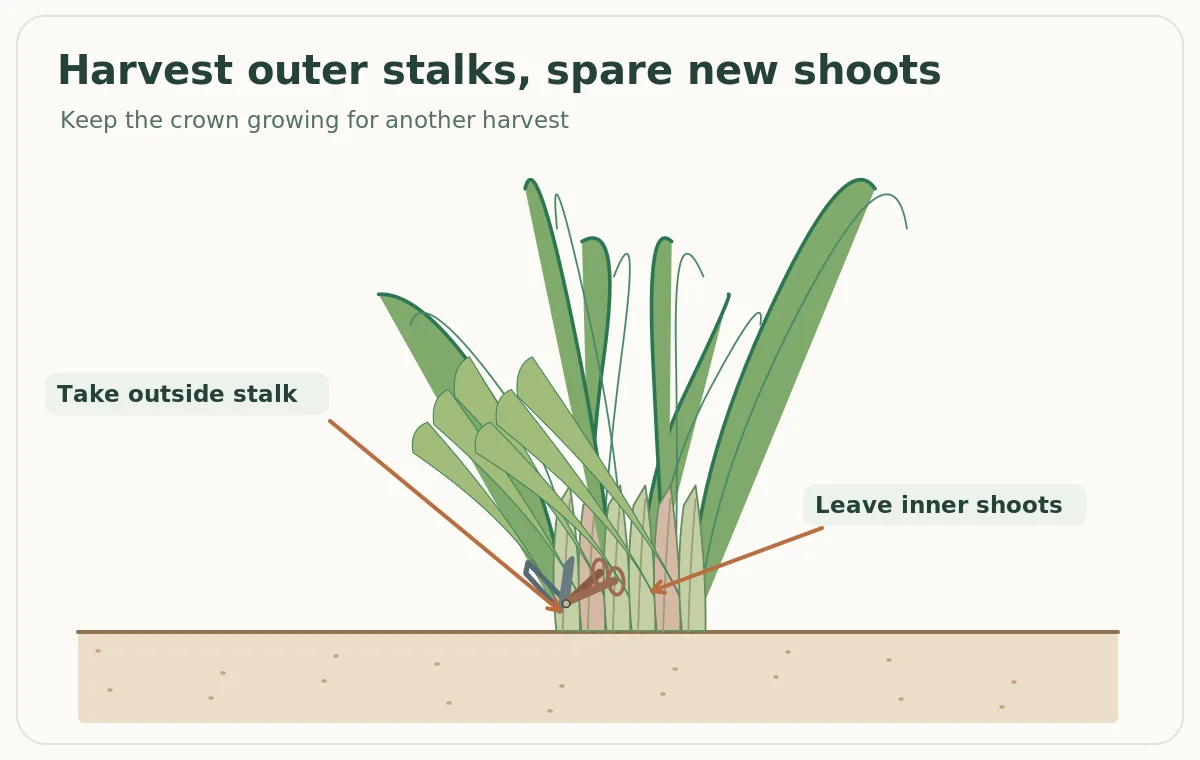
Choose a well-established plant and locate a firm enlarged stem base along the outside edge. RHS recommends pulling or cutting individual outer stems low, leaving interior shoots to develop. Hold nearby blades aside so the tool does not strike new basal buds. Remove the toughest upper leaves for the kitchen and use the tender lower stem for flavoring; long leaves may be steeped, then removed. Handle sharp leaf edges cautiously. The illustration shows the outer stem selected and the young inner shoots still attached, not the entire clump cut to the soil at once.
Diagnose Stalled Growth Before Replanting
If a pot does not produce fresh shoots, check whether the planting material ever developed living roots. A stalk with no basal tissue cannot be rescued simply by feeding it. Inspect for a blocked drainage hole, rotten crown, drying roots, low light, cold exposure, or a pot packed hard with roots. If tips turn brown while new centers stay green, correct water and temperature stress first. Repotting and dividing on the same day can add unnecessary disturbance. Photograph the basal crown over several weeks and make one measured change at a time so you can judge whether the response is improving.
Use a Seasonal Container Checklist
At the beginning of active growth, inspect the crown for fresh green inner leaves, refresh tired surface mix, and verify that water drains freely. During the warm season, rotate the pot for even light, support it against wind, and harvest individual outer stalks. Before cold weather, inspect leaves for pests, then move the container into a bright protected space; reduce watering as growth slows. In consistently warm climates the plant may remain outside, but the same drainage rules still apply. The main visual checks are true grass leaves, a living basal crown, attached roots, and inner shoots spared during harvest.
Related Guides
- Grow Lemongrass From Store-Bought Stalks: Root, Pot, and Protect It
- Growing Herbs by Type: Water, Harvest, and Winter Survival Guide
- How to Overwinter Lemongrass in a Pot Before the First Frost
How We Research and Verify Plant Advice
The species descriptions, sowing and harvest actions, and environmental cautions were checked against RHS University Extension on October 28, 2026. We use the original plant-specific sources to distinguish botanical anatomy from generalized gardening habits. Local climate, cultivar and soil conditions may change timing and outcomes; this article does not imply a fixed yield, medical benefit, sponsorship, or pesticide prescription. The illustrations are explanatory diagrams rather than to-scale construction drawings. Review VegWin’s affiliate disclosure for the site’s general policy; no affiliate partnership is asserted in this guide.
Some firm stalks with intact basal tissue root in water, but a rooted nursery division is usually more predictable.
No. Keep the central growing point above the mix and set a rooted division at its previous depth.
It is tender. Protect container plants from frost and prolonged cold, following local conditions.
Harvest firm enlarged outer stems, leaving younger shoots near the center to grow.
Check light, watering, drainage and cold stress before assuming it needs fertilizer.