
Horseradish is a hardy perennial grown for a pungent, fleshy storage root. Unlike a carrot pulled neatly from loose soil, an established horseradish can have a long central root and many side roots that break and resprout. In a temperate garden, good fall harvest follows the plant’s late-summer and early-autumn root growth, often after frosts have slowed the leaves. Work beside the root with a deep digging tool, lift it gradually, and decide whether you intend to clear the patch completely or keep selected planting roots for next season. Root fragments left behind can produce volunteer plants.
Identify the Leaf Crown and Main Root
Horseradish, Armoracia rusticana, grows a basal clump of large oblong leaves, often with wavy edges, from the top of a thick pale root. The edible storage root descends into the soil; smaller lateral roots extend from it. The leaf crown is above the root, not a bulb separate from it. These details matter because pushing a fork directly through the center of the crown can split the portion you wanted to harvest.
Inspect the plant while its leaves are still visible and mark the center. If autumn frost has killed the tops, a marker will help locate the root when everything at ground level looks brown. Do not identify a random dock or other broad-leaved weed as horseradish based only on foliage silhouette. Use the planting record, root structure, and reliable plant identification before using any dug material as food.
Wait for Late-Season Root Growth and Cold
University of Minnesota and Iowa State Extension both describe horseradish roots gaining much of their size in late summer and early autumn. In cold temperate climates, fall digging is often delayed until late October or November, or just before the ground freezes. Oregon State Extension notes that harvest after frosts is associated with quality. The season is an ecological cue, not an instruction to dig on the same calendar date everywhere.
If ground is already frozen solid or dangerously waterlogged, forcing a digging tool into it risks injury and breaks roots. In some gardens roots can remain in the bed through winter and be harvested before spring growth restarts. That flexibility is useful, but do not let the rhizosphere become untraceable among perennial weeds. New plantings may benefit from an establishment year before a substantial harvest, depending on local guidance.

Dig a Trench Beside the Root, Not Through It
Set a garden fork or spade a safe distance to the side of the marked crown. Loosen a deep strip of soil alongside the row rather than driving tines straight down beside the stem. Minnesota Extension describes a deep trench along the row to free roots; work cautiously and widen the hole as the root’s direction becomes clear. Horseradish is not a short turnip sitting just below the surface.
Tilt the tool to loosen earth and feel for root resistance, then remove soil by hand around the thick storage root. Pulling hard on brittle autumn foliage can leave the main root behind. In compacted soil, repeat the loosening on more than one side. A cross-section should show a long root below the crown, with the fork placed outside its outline and arrows indicating lifting soil away from the root, not spearing the center.
Lift the Storage Root and Inspect Side Roots
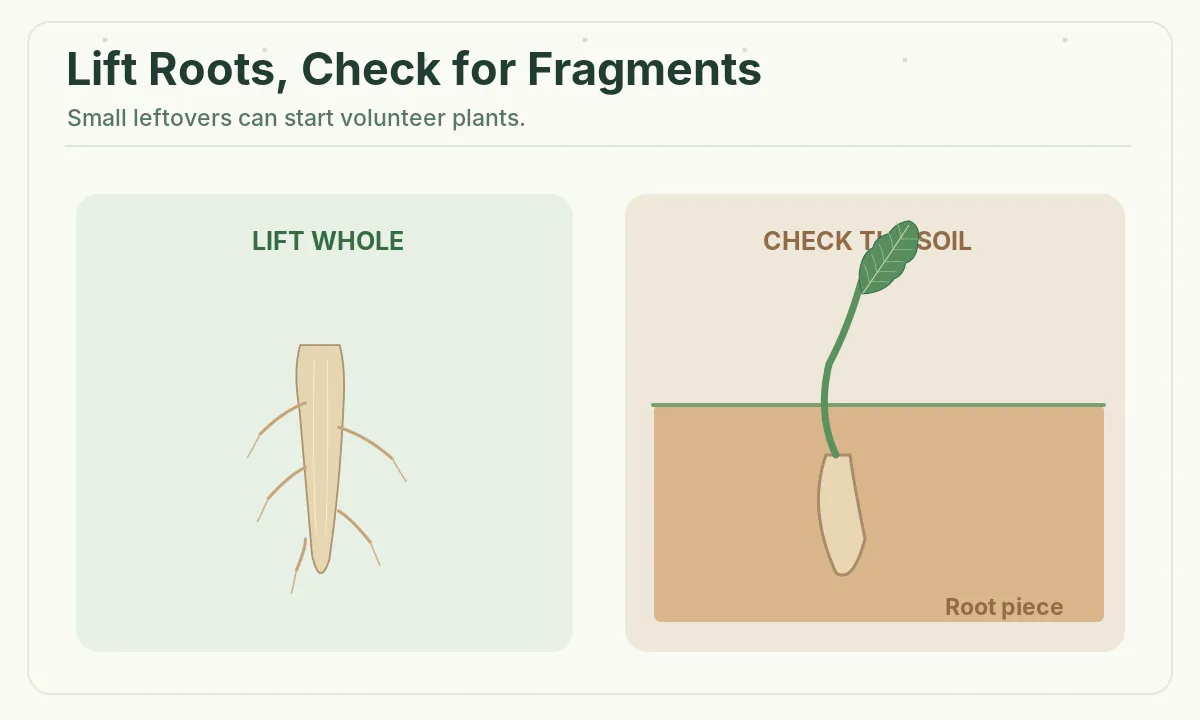
As the soil loosens, take hold low near the crown and lift the root gradually. Follow long branches with your fingers or a small trowel to avoid breaking them off unnecessarily. For a complete bed clearing, collect as many root pieces as feasible; even fairly small sections may generate new plants. Oregon State Extension emphasizes removing roots to prevent unwanted spread.
A root that snaps is not automatically useless for the kitchen, but the remaining piece can regrow if left in the ground. Decide whether you want a perpetual patch or a clean annual bed before you walk away. Use a shallow tray to collect small side roots so they do not disappear under discarded leaves. Set aside sound propagation pieces only if you plan to replant intentionally, and keep them separate from kitchen roots.

Trim Tops and Protect the Harvested Root
After digging, brush off loose soil and cut old foliage back near the crown without slicing deeply into the storage root. Iowa State provides roughly an inch of foliage above the crown as a practical storage trim. Avoid bruising and sun exposure while you work. Do not cut all roots into small pieces merely to fit a basket before you have chosen which pieces you want to store or replant.
Horseradish’s pungent compounds become especially noticeable once root tissue is broken or grated. Handle preparation in a ventilated area and keep grated roots away from eyes and irritated skin. This article concerns harvest technique, not a home canning formula. For preserving or preparing horseradish for food, follow a tested Extension recipe rather than improvising shelf-stable processing times.
Store Sound Roots Cool and Check for Spoilage
Intact, clean roots keep better when protected from dehydration and heat. Iowa State describes cool, humid storage in a refrigerator or root-cellar environment; Oregon State also discusses storing roots in moist packing medium. Home storage conditions differ, so check roots regularly for shriveling, slime, or mold rather than assuming a fixed shelf life. Keep them out of light and handle them as fresh produce.
If the root is soft, has spreading decay, or smells rotten, discard it rather than trimming and declaring the remainder safe. Keep propagation stock labeled and separate, especially if you have multiple perennial root crops. Only prepare as much freshly grated horseradish as you will use under a trustworthy food-storage method. Leaves, crowns, and root ends shown in diagrams should clearly relate to the same Armoracia plant.
Plan for Volunteer Growth Next Spring
A tiny overlooked lateral root can emerge as a new horseradish plant once soil warms. If you aim to clear the bed, revisit it in spring and remove volunteer shoots with the attached roots while they are small. If you intentionally maintain horseradish, keep the patch contained and plant selected healthy root sections in a suitable place following local Extension guidance.
Do not assume that mowing off leaves kills an established root. Conversely, do not keep pulling every young shoot if you are trying to build a stable perennial clump. The harvest method changes with the goal: preserving a permanent planting versus removing the entire plant. Mark your decision in a garden record and photograph the first spring regrowth to track whether root fragments remained.
Related Guides
- Growing Horseradish Without Letting the Roots Take Over
- When to Harvest Horseradish Roots and Lift the Main Root Without Breaking It
How We Research This Gardening Guide
For this guide, we cross-checked the crop-specific guidance in the following institutional resources on October 27, 2026: University of Minnesota Extension (University of Minnesota Extension recommends delaying horseradish harvest to late fall and loosening the soil beside the row.); Iowa State University Extension (Iowa State Extension states late-October or November harvest and early-spring harvest before new growth.); Oregon State Extension (Oregon State Extension links root quality with autumn frost and advises lifting roots carefully and removing side pieces.). Recommendations are interpreted for gardeners and may need adjustment to local conditions, cultivar differences, and extension advice.
No paid product placement or affiliate recommendation is included in this article. See the VegWin affiliate disclosure. If disease symptoms or food-safety decisions are involved, seek local Extension guidance before making a treatment or food-processing decision.
Frost and late-season growth can improve quality in temperate climates; harvest timing must still fit soil and local conditions.
The long storage root and lateral roots extend downward and outward; digging beside them helps reduce breakage.
Yes. Pieces left in soil can generate volunteer horseradish plants.
In some suitable gardens, they can be dug in early spring before new growth begins.
No. Horseradish produces a fleshy storage root with attached side roots beneath a leaf crown.