
Celery is ready in more than one useful way. You can remove mature outer petioles while leaving the growing center intact, or take an entire plant when the head is well developed or weather and quality make repeated picking impractical. The key is to recognize that the edible “stalks” are leaf petioles: the pale inner cluster is active new growth, not waste to be sliced away. Utah State University Extension describes both outer-petiole harvesting and cutting whole heads. Use plant size, tenderness, and the condition of your bed rather than a single day count on a seed packet.
Identify Petioles, Not Separate Stems
Look at a mature celery plant from above. The outermost leaves have thick, long petioles that run down toward the base; the youngest leaves emerge tightly clustered in the center. Celery is not a collection of independent woody stems. When you cut through the growing heart, you also remove the point that produces future petioles. That is why repeated harvest starts at the perimeter. Look for fresh, fairly firm petioles, not just an impressive spray of leaf blades. Garden celery may be darker, more aromatic, or slimmer than a grocery-store bunch; appearance varies with variety, blanching, nutrition, and weather. For the basics, see our guide: When to Harvest Radicchio.
Use Size and Tenderness to Decide When to Pick
Utah State Extension notes that individual outer petioles can be taken when they reach roughly a foot long, while a whole plant is suitable once its head is at least about three inches across. These are useful checks, not strict guarantees of tenderness. Test one outside petiole if possible: it should be crisp rather than pithy, with a pleasant celery fragrance. Excess heat or drought can produce tough, stringy, intensely flavored growth. Check how the plant is growing now. A compact but healthy, cool-season planting may taste better than a much larger plant struggling under summer heat.
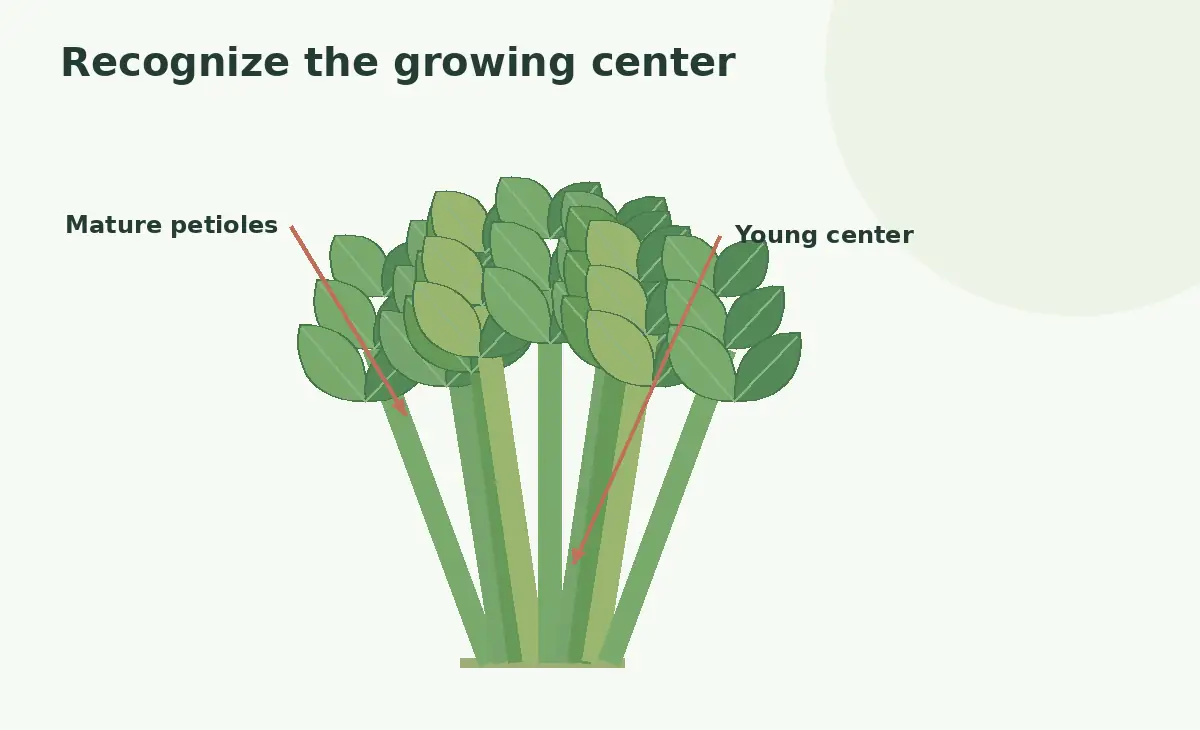
Choose Outer-Stalk Picking for an Ongoing Supply
For several small kitchen harvests, support the plant with one hand and remove a mature outer petiole close to its natural attachment without gouging the center. A sharp, clean knife or careful outward snap may work depending on how tightly the petiole is attached. Harvest a few at a time; leave plenty of healthy leaves to support continued growth. Work from the outside inward over several visits rather than stripping one side bare. Inspect the remaining crown each time. If the central shoots are uninjured and the weather stays suitable, new petioles can keep developing, although the rate is not unlimited.
Take the Entire Head When the Crop Has Peaked
A whole-head harvest makes sense when the planting is mature, cold or heat is approaching, or you want one substantial batch for cooking. At soil level, carefully cut the base while keeping dirt out of the petiole channels, or lift the roots first if the bed is crowded. Discard damaged external petioles only after examining them for usable portions. Whole-head removal ends production from that plant; it is not the same as picking leaves from the perimeter. If you will not use the whole head immediately, keep it cool and humid rather than letting the cut ends sit in a hot bucket.
Keep the Growing Point Above the Cut
Imagine a bullseye when looking down on celery: the packed center is the area to protect. Do not cut straight across every petiole at one height as you might cut some leafy greens; this can strike the developing heart. Leave the small new leaves and their bases in place when selectively harvesting. Removing overly damaged outer growth can improve cleanliness, but defoliating a struggling plant will not make it grow faster. If the crown has a dark, sunken center or soft rot, stop treating it as a routine harvest question and assess plant health before using affected tissue.

| Situation | What to do | Why |
|---|---|---|
| Outer petioles are long and crisp | Pick a few outside petioles | Keeps the growing center intact |
| Full head is developed, or weather threatens quality | Harvest the whole head | Preserves quality before decline |
| Inner crown is blackened or rotting | Inspect and diagnose before eating | Damage is not a ripeness signal |
Plan Around Temperature and Water Stress
Celery grows best under relatively cool, even conditions and requires regular root-zone moisture. Utah State Extension highlights deterioration in hot, dry periods. In a warm climate, adapt the planting schedule to the locally suitable cool season rather than assigning an identical month nationwide. Check the soil below the surface: roots need moisture without waterlogging. Mulch can buffer soil moisture, but keep organic material away from the crown itself. Neither extra fertilizer nor repeated trimming will erase bitter or stringy petioles caused by persistent stress. During an unexpected hot spell, sample petiole quality and consider harvesting before further decline.
Diagnose Hollow, Bitter, or Darkened Stalks
A celery petiole can be coarse for several reasons. Dry spells, delayed harvest, extreme heat, and variety characteristics all affect texture and flavor. Brown patches, insect feeding, or soft spots warrant separate inspection. A blackened growing heart can signal blackheart, a physiological problem often associated with disrupted calcium movement and water management; it should not be confused with ordinary leaf aging. Do not prescribe a calcium amendment without assessing moisture, soil conditions, and accurate identification. Trim food only when the remaining tissue is clearly sound and handle questionable, decaying plant parts conservatively.
Wash Petiole Channels and Chill the Harvest
Soil and grit hide in the inside grooves of petioles, especially low on the plant after rain or overhead irrigation. Rinse under clean running water, separate stalks if needed, and inspect the full length before use. Avoid leaving harvested celery in direct sun because the crisp texture depends on retained moisture. Utah State Extension gives refrigeration as the normal storage method and describes up to roughly two weeks under suitable conditions. Real quality varies with initial condition, fridge humidity, and handling. Discard material showing rot, unusual slime, or off odors rather than relying on washing alone.
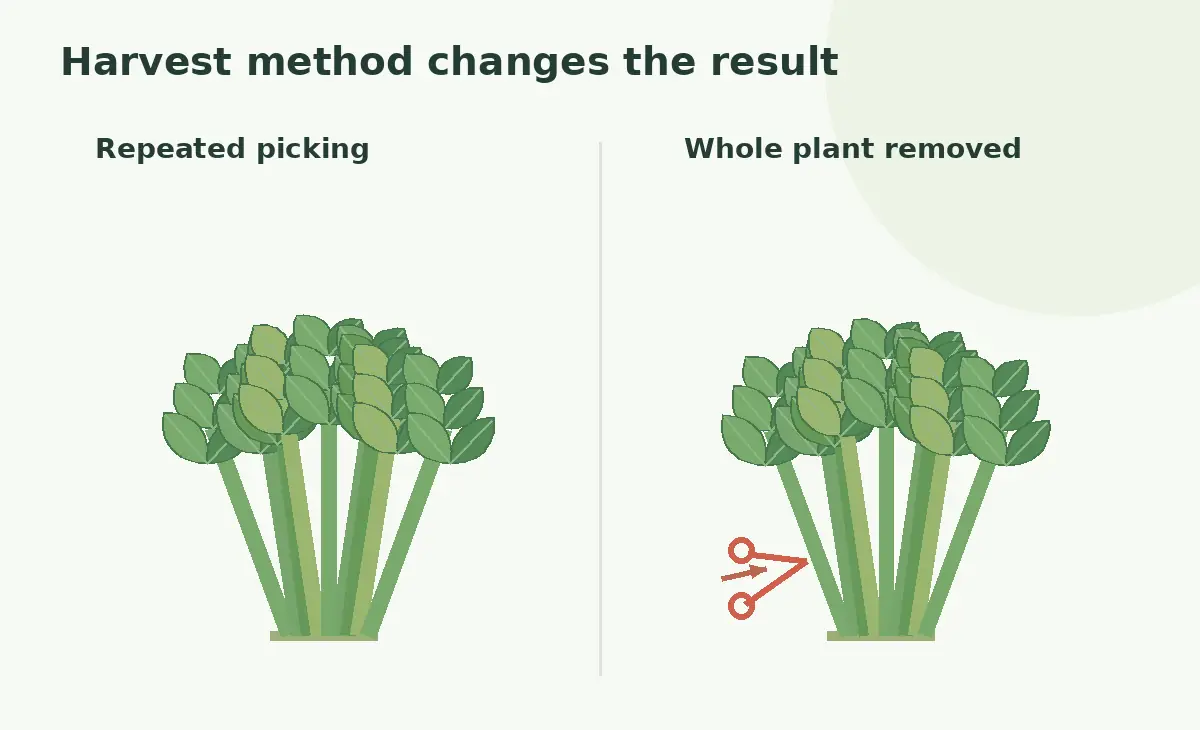
Compare Harvest Decisions at a Glance
A large dark-green plant is not automatically a better entire-head candidate than a compact vigorous one. Ask three questions: Are outer petioles long and crisp? Does the crown contain healthy emerging leaves? Is the garden likely to offer steady weather and water for further growth? If all answers are yes and you want small portions, pick outer stalks. If the central crown is nearing a natural end of useful production, a damaging weather shift is imminent, or the kitchen needs a large bunch, choose a whole-head harvest. These choices maximize edible quality, not headline weight.
Keep Notes for the Next Planting
Record sowing or transplant date, the first usable outer harvest, and how petiole quality changed during hotter or drier weather. Compare a few plants that received steady irrigation with those that experienced irregular moisture rather than guessing from one specimen. Note which cultivar gave crisp stalks at a useful size in your specific garden. Timing is influenced by local frost-free periods, seasonal heat, soil texture, and the maturity class on the packet; a USDA hardiness zone by itself does not set an annual vegetable harvest calendar. Good notes are more useful than expecting every celery plant to look like a commercial stalk bunch. Our guide to growing celery goes deeper into a moisture-first plan for crisp stalks.
Related Guides
- How to Start Celery Seeds Indoors for Strong Leafy Transplants
- How to Start Chinese Leaf Celery From Seed for Slender Aromatic Stalks
How We Research and Verify These Steps
We cross-checked the identification, timing, practical actions, and safety cautions against these authoritative resources on 2026-10-24: extension.usu.edu reference; extension.psu.edu reference; extension.oregonstate.edu reference. Guidance from RHS or university Extension may describe a particular climate, species, or planting system, so compare it with your actual growing conditions. We distinguish observations supported by those references from local decisions that must be adapted to a garden, cultivar, or weather pattern.
Disclosures and Regional Considerations
This is educational garden guidance, not a promise of a crop or flower outcome. No paid partnership or affiliate recommendation is claimed for this article; see VegWin affiliate disclosure. Weather, plant identity, garden location, and local regulations can change the safest procedure. For pesticides, use only products currently registered for the exact crop and pest and follow the label. Toxic ornamentals must be kept away from children and pets, and proper protective equipment should be used as described.
Yes. Take mature outer petioles carefully and leave the central developing leaves intact, provided the plant remains vigorous.
Utah State Extension indicates outer petioles can be harvested at roughly 12 inches, but texture and quality matter too.
Do not count on useful regrowth from a whole-head cut. For repeat picking, retain the growing center and take only outer petioles.
Heat, water stress, delayed harvest, and cultivar traits can increase strong or bitter flavors. Sample stalks and review growing conditions.
No. A dark or damaged growing heart can indicate a physiological disorder or disease and requires inspection rather than harvest timing.