
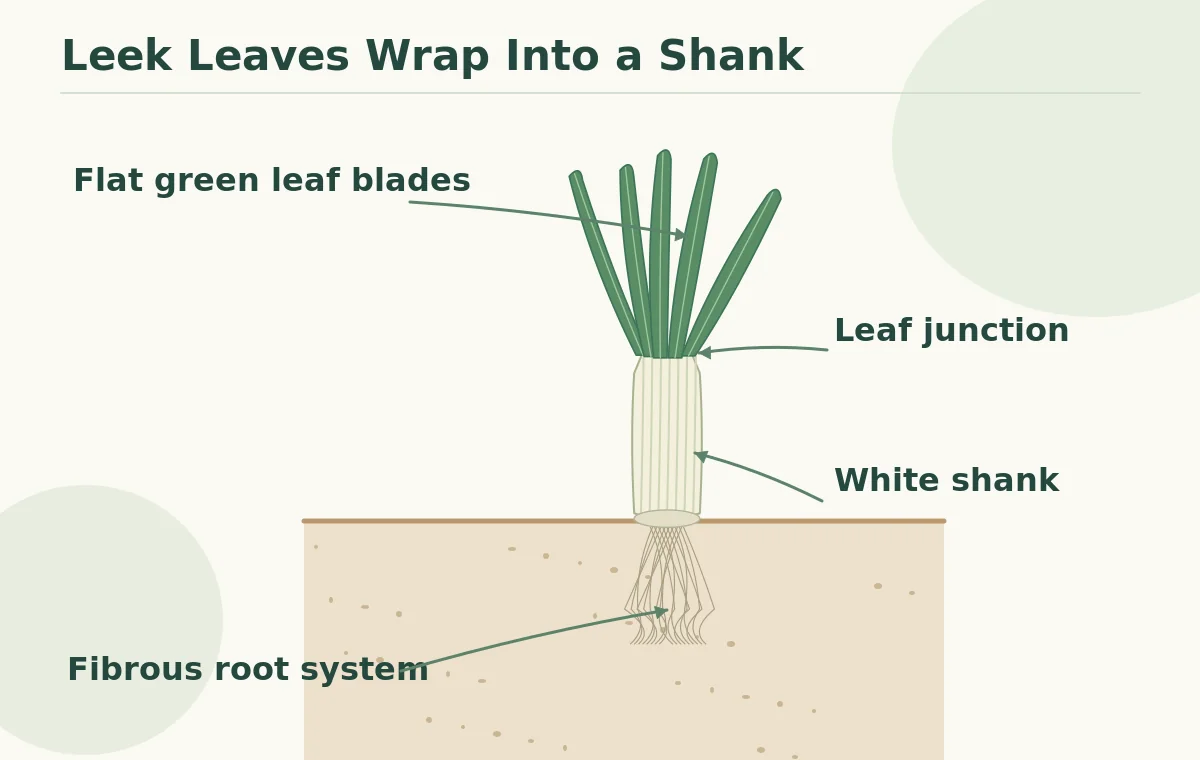
A leek is an allium related to onions, but it normally makes a long cylinder of tightly wrapped leaf sheaths instead of one rounded onion bulb. The pale edible lower section is called the shank or pseudostem. Its whitish color results from growing without direct light, while the upper leaf blades remain green and spread in a flat fan.
Know What the White Leek Shank Actually Is
The real roots arise beneath the basal plate and extend into soil. Leaves attach as concentric sheaths that wrap one another, so dropping grit between their bases can make cleaning and growth more difficult. A good diagram distinguishes the broad green leaves from the lower blanchable sheath and shows roots below the original soil line.
Plan a Cool-Season Window and Good Soil
Leeks are slow-growing crops and are often started as transplants for a harvest later in the year. Choose a cultivar suited to the season and your local temperatures. University of Maryland Extension explains that summer leeks and overwintering leeks differ in timing and size. Gardeners in very hot regions need region-specific windows rather than a universal USDA zone calendar.
Prepare fertile, well-drained soil that can be moved easily for later hilling. Water steadily through establishment because leek roots are relatively shallow and irregular moisture can reduce growth. Weed early to prevent competition. The goal is a vigorous healthy leek before adding more soil, not a tiny stressed seedling buried under a steep mound.
Set Transplants in Deep Dibbled Holes
One established method is to make a deep dibble hole in loose soil and gently set a sturdy leek transplant into it. Maryland Extension describes holes about five to six inches deep and about an inch or slightly more across, followed by watering without packing the hole solid immediately. This encourages a length of white sheath to form below exposed light.
Handle the roots gently and keep the green growing leaves above the hole. A tiny transplant in a flooded deep socket may struggle, so adapt the technique to soil structure and plant size. Do not put loose soil down into the leaf funnel. If the transplant bends severely or the hole caves in, adjust the planting method instead of forcing it.
Let Young Plants Establish Before Hilling
Hilling is the gradual addition of soil around the lower part of the leek as it grows. Start after the plants are actively making new leaves and have sufficient height to stay upright, rather than dumping a large cone over them at planting. Garden soil should remain loose enough for water and air to reach roots.
Monitor the growing leaves after each shallow addition. If damp soil slides into the V-shaped gaps where leaf blades separate, brush it away gently. Gardeners sometimes grow leeks without hilling at all; the crop is still edible, simply greener along a greater portion of the sheath. Blanching is a quality choice, not an absolute survival requirement.
Bank Soil Around the Lower Sheath Only
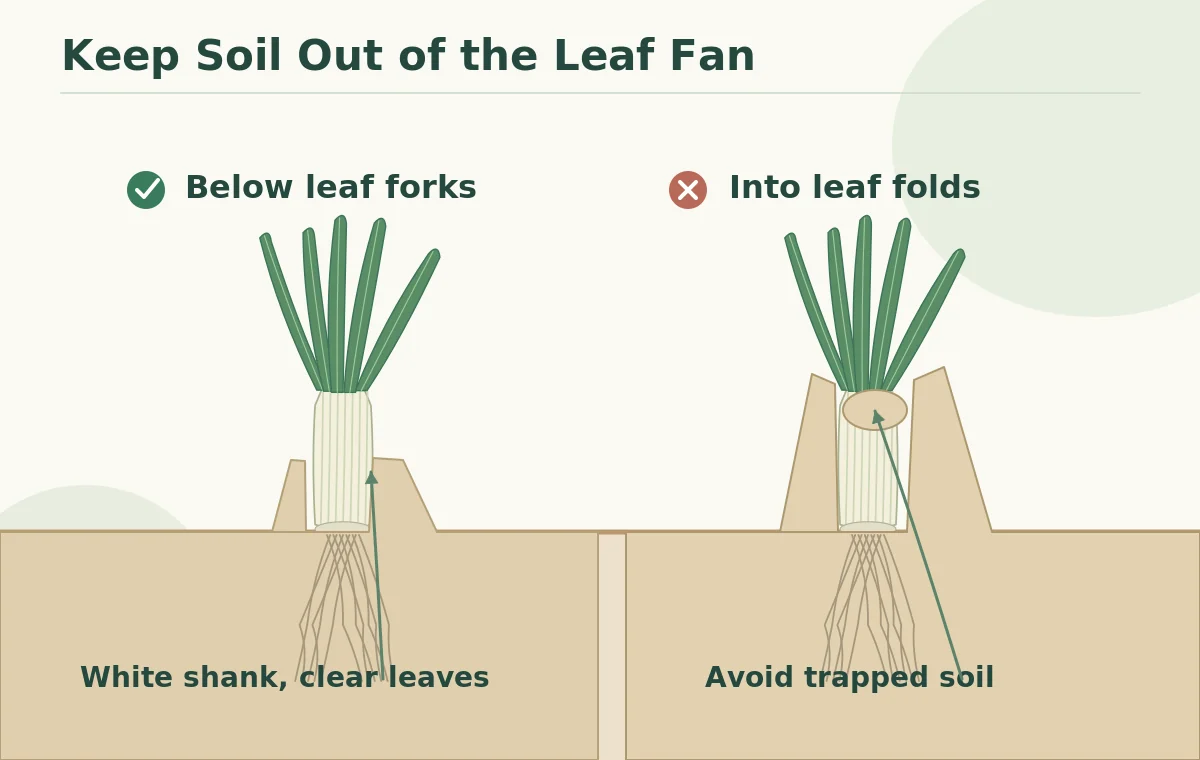
Draw loose soil up around the basal cylinder a little at a time, leaving the leaf junctions and green fan exposed. The Royal Horticultural Society specifically cautions against allowing earth to enter between the leaves. In cross-section, the mound slopes upward around the outside of the pale sheath but ends below the point where leaf blades peel outward.
A diagram with a solid brown hill covering the entire green fan is misleading; the leaf blades need light to grow. Equally, a mound shown floating outside the actual soil line has no useful meaning. Trace the roots to the basal plate, trace the sheath to the green leaves, then stop the earth at the correct level.

Check Growth, Weeds, and Moisture After Each Hill
Soil around leeks can settle after heavy rain. Inspect plants for exposed white sections and adjust the mound only when necessary, not on a rigid weekly schedule. Avoid cultivating so close that tools slice the shallow roots. Mulch between rows if compatible with the bed and weather, while keeping the leaf bases clean.
Watch for rust, blotches and insect injury; actual symptoms should be identified before any control action is chosen. Avoid covering diseased leaves with wet soil in an attempt to hide damage. A yellowing plant might be suffering from waterlogging or root injury rather than merely needing more hilling. Local Extension diagnostics can help separate these causes.
Lift Mature Leeks With Their Roots Attached
Harvest when the shanks have reached a useful diameter and maturity for the cultivar, not simply when their leaves become tall. Maryland Extension notes that about an inch across is a useful indication for many leeks, but baby types are often taken smaller. Use a garden fork at a safe distance to loosen the root zone rather than tugging hard and snapping the sheaths.
After lifting, shake off loose soil, trim the roots as appropriate, and inspect between green leaves for trapped grit. Soil in the leaf folds is precisely the problem careful hilling tries to minimize. Keep cut produce clean and refrigerated according to food handling guidance. Plants left to flower may form a central seed stalk instead of a tender elongated sheath.
Compare a Clear Leaf Fan With a Buried One
In a correct hill, soil covers the lower shank, the green blades are fully exposed, and no large clods sit in the leaf joints. In an incorrect hill, soil is piled above the leaf break or into the funnel. The latter can encourage decay and leaves grit trapped deep in the plant. Compare both drawings at the same height for a meaningful visual test.
Not every leek needs a deep trench or tall white section, particularly where soils are heavy and wet. Take notes on variety, planting method, degree of blanching and ease of cleaning. Next year adjust just one variable so you can decide whether deep planting, gentle hilling or ordinary flat-ground cultivation works best for your conditions.
Related Guides
- Growing Leeks: Transplant Depth, White Shanks, and Clean Harvests
- When to Harvest Leeks and Lift Their Tender Shanks Without Damage
- How to Transplant Leeks Into Dibber Holes for Long White Shanks
How We Research These Botanical Illustrations
This guide was checked against University of Maryland Extension leek guide; Royal Horticultural Society leek guide. We compared plant parts, the development stage and the action shown by each diagram with these sources. Local weather, cultivar and soil conditions can change timing; check regional Cooperative Extension advice when necessary.
This independent educational guide contains no approved partner products or commissioned recommendations. Review the affiliate disclosure. Source citations support the named horticultural claims, not medical outcomes, pesticide applications or guarantees for every garden.
No. Its long white lower section is formed mainly by overlapping leaf sheaths.
Excluding light from the sheath reduces green coloring in that covered portion.
No. Leave the leaf junctions and upper blades uncovered and keep grit out of folds.
No. The crop grows without hilling, though a larger portion may stay green.
Add loose soil gradually only against the outside of lower sheaths and stop below leaf junctions.