
Winged bean (Psophocarpus tetragonolobus) is a heat-loving climbing legume with three-part leaves, blue-violet flowers, and green pods edged by four lengthwise ruffled wings. Its unusual pods are easiest to identify and harvest when still young. The grower’s most important choices are cultivar, season, sturdy support, and the difference between tender pods and seed-mature pods.
Confirm a true four-winged bean before starting
Choose seed labeled Psophocarpus tetragonolobus, also called goa or asparagus bean in some catalogs. Look for a photograph of a pod with four pronounced, frilled lengthwise edges rather than a flat snow pea or ordinary round snap bean. A mature plant has trifoliate leaves on slender climbing shoots and often blue to violet flowers attached to flower stalks. Different varieties vary in pod texture and flower timing. Some traditional lines initiate flowers when days become shorter, while day-neutral selections make sense for gardeners at higher latitudes. Check cultivar notes before promising yourself a summer harvest.
Choose genuinely warm weather and a long enough season
UF/IFAS describes winged bean as a tropical, frost-sensitive crop that grows well in heat and humidity. In regions with freezes, do not sow into cold, soggy spring soil simply because a calendar says spring has arrived. Wait for sustained warming or start plants in a warm protected place, avoiding root damage when you move them out. In warm climates the best season depends on rainfall, local temperature and the cultivar’s response to day length. A USDA hardiness zone describes typical winter minimums, not when your seedbed has warmed or whether your variety will flower.
Prepare hard-coated seed without injuring the embryo
The seed coat may resist water entry, so UF/IFAS suggests a short warm-water soak and scarification when appropriate. Follow packet instructions: a light nick or abrasion belongs on the coat away from the visible embryo, not a deep cut through the entire seed. Discard seed that becomes soft, moldy or obviously damaged. Sow into moist, well-drained soil rather than a constantly saturated plug. Use a clean seed tray if starting indoors and provide adequate light as soon as the shoot emerges. Never plant seed with a broken embryonic root pointing into dry air.
Install the support before the vines need it
A bean that can climb several feet needs a secure trellis that will remain upright through rain and wind. Put posts and mesh in place before sowing, so you will not drive a stake through established roots. Position climbing strands where young twining stems can contact them naturally; guide the shoot gently rather than tying it in a tight loop. Leave enough room around each plant for air movement and for a person to reach the pods without crushing leaves. UF/IFAS compares the growing habit to pole beans but notes the characteristic wings are unique to this crop.
Keep root-zone moisture steady, never stagnant
Winged beans need available moisture through vigorous growth and flowering. Water at the soil, check below the top crust, and avoid wetting foliage late in the day when you can. A light organic mulch can slow evaporation but leave the stem base clear. Because legumes can associate with nitrogen-fixing bacteria, heavy nitrogen feeding is not an automatic improvement and may encourage leaves instead of the pods you want. A soil test and observation are more useful than an invented universal fertilizer rate. If roots are waterlogged, correct drainage before adding more fertilizer.
Learn the attachment of flower, stem and pod
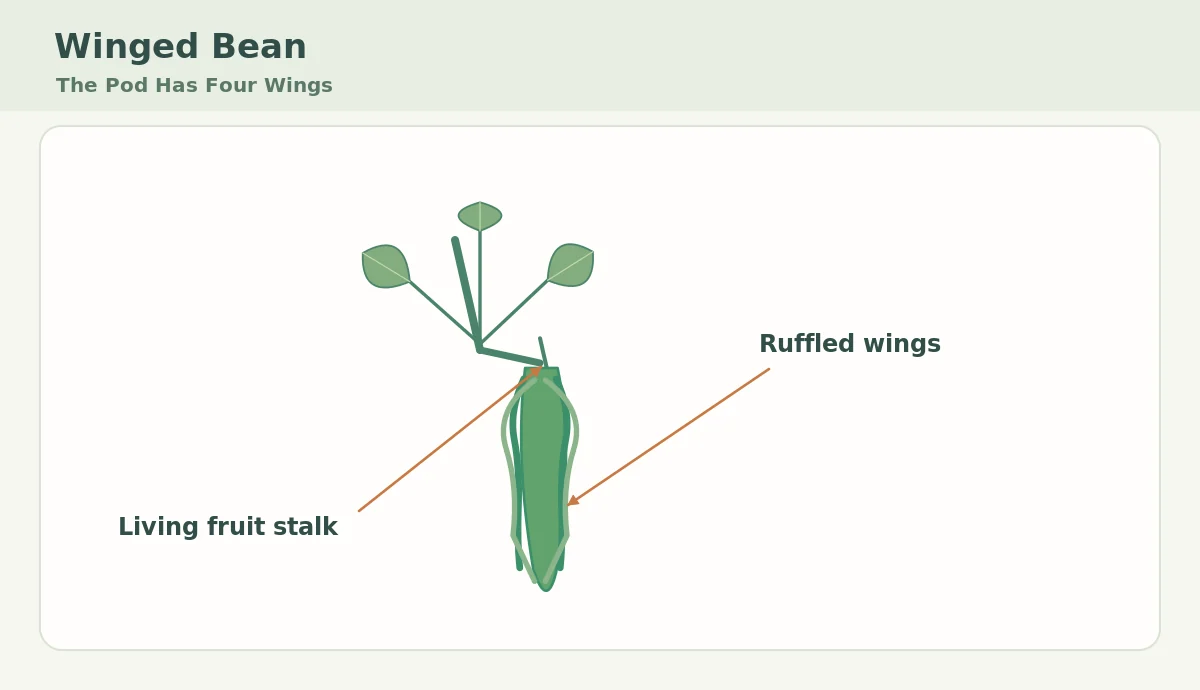
The fruit develops from a flower whose stalk connects to the vine. Follow a real green pedicel from the pod back to its cluster on a living stem. Four thin green winged edges extend down the pod; they are not four detached leaves glued around a cylinder. Young pods are usually smooth and flexible with small developing seeds. Older pods become longer, tougher and more fibrous as seeds enlarge. Purple-blue flowers may occur among three-part leaves on the same vine; monitor several clusters rather than judging the whole crop from one pod.
Pick immature green pods by their real stalk
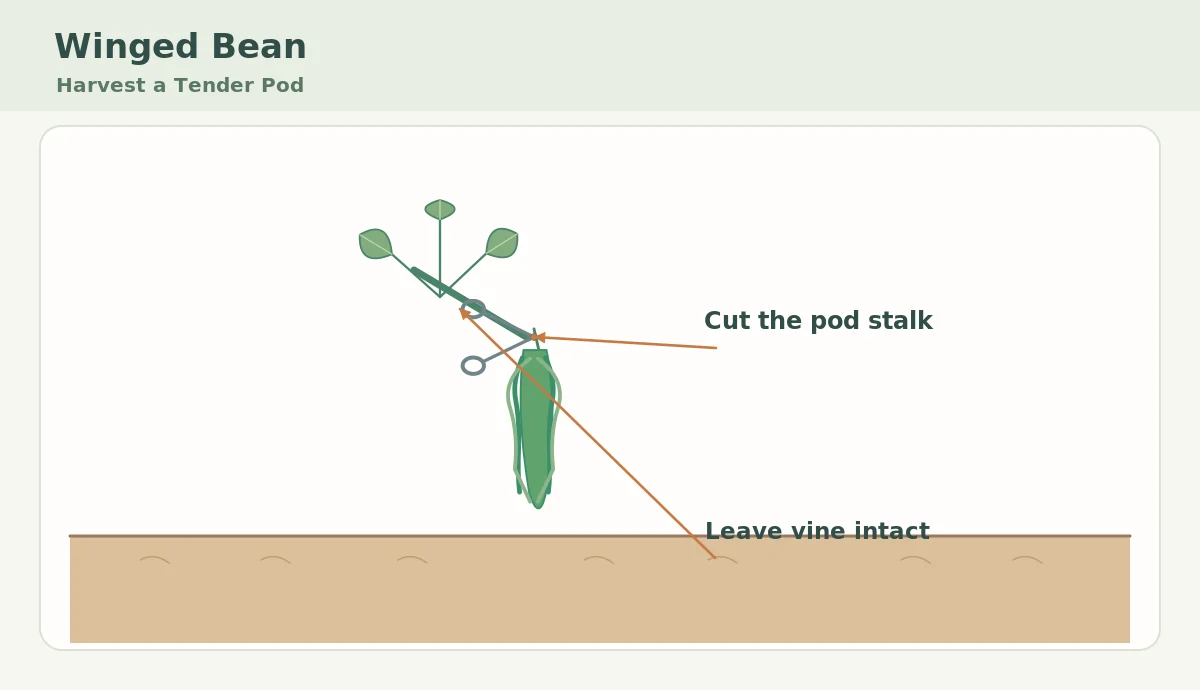
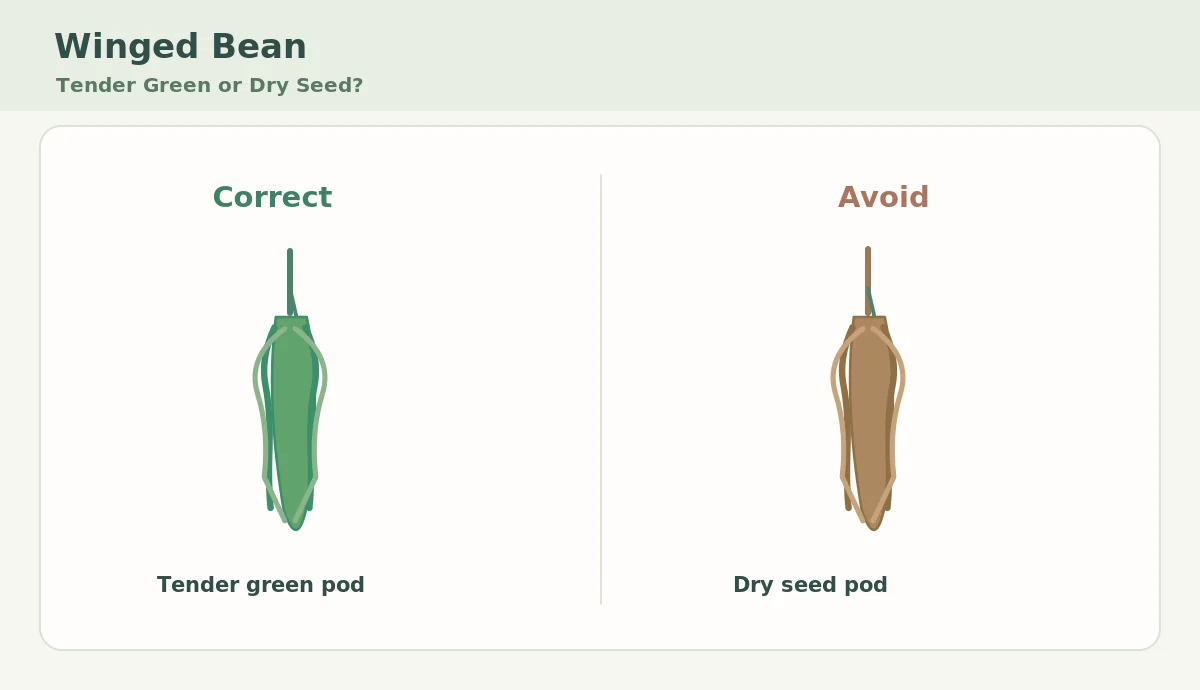
UF/IFAS recommends harvesting young pods at roughly 2–4 inches long for a snap-bean-style vegetable, though size varies with cultivar. Use clean scissors on the short fruit stalk or hold the cluster gently and avoid pulling the whole vine down. A pod should still be green and tender rather than woody, dry, or filled with hard seeds. Harvest frequently enough to catch newly sized pods; it is easier to prevent oversized tough fruit than to make it tender later. Inspect both faces of a pod for bruising or pests before taking it into the kitchen.
Separate pod harvest from saved mature seed
If you save seed, allow some healthy pods to mature fully on the vine and dry, protected from prolonged wet weather. These pods will be past the best tender-eating stage. Label them as seed stock and keep them separate from fresh pods. Do not treat dried mature beans as raw snack food; they need appropriate thorough cooking as edible dry legumes. Food traditions using winged bean leaves, flowers and tuberous roots exist, but identification, variety and safe preparation matter; the beginner’s reliable target here is properly prepared young pods from a known crop.
Check likely failures before trying a chemical treatment
Healthy leaf growth with no flowers may reflect cultivar day-length response rather than a deficiency. Vines wilting while soil is soaked suggest drainage or damaged roots; drooping in very dry soil suggests different action. Check undersides of leaves and growing tips for visible pests, and begin with sanitation, hand removal when practical, and better growing conditions. Avoid inventing pesticide rates. If flowers appear but pods abort, consider severe heat, water stress and plant vigor. Keep notes on seed name, planting date, first flowers and pod tenderness for next season.
End the season without spreading uncertain seed
At cleanup, cut down finished vines and remove damaged material according to local composting guidance. Leave support structures safe for another season and inspect the soil before deciding whether roots should be removed. If saving seed, use sound, dry, labeled pods and store away from excess moisture. In a cold region, frost usually ends this tropical crop. In a mild region, local growing conditions determine whether a vine can persist. Your success measure is several harvests of correctly identified, green, tender four-winged pods, not the tallest possible mass of leaves.
How We Research and Check Botanical Details
This guide was researched on October 30, 2026 against gardeningsolutions.ifas.ufl.edu; gardeningsg.nparks.gov.sg; gardeningsolutions.ifas.ufl.edu. We cross-checked the named species, the growing operation and the parts of the plant shown in the diagrams. Regional schedules and cultivar traits vary; check local Cooperative Extension and the actual seed or planting-stock label before adapting precise timing. Illustrations are explanatory botanical drawings rather than scale models or pesticide instructions.
VegWin publishes independent informational gardening guidance. The internal navigation links here are not paid placements and no affiliate relationship is claimed. Our affiliate disclosure explains the site policy. If a plant may be toxic, grown for food or affected by an uncertain disease, confirm identification and relevant safety advice before using or treating it.
Yes. Winged bean is a climbing vine; a sound support keeps its pods reachable and improves plant access.
Some cultivars need shorter days to flower. Check the seed variety and local season before assuming a fertilizer problem.
It has four ruffled lengthwise wing-like edges along a real green legume pod.
Harvest young, green and tender pods rather than waiting for large, woody seed-filled pods.
No. Mature dried beans require appropriate cooking; keep seed-saving pods separate from tender vegetable harvests.