
Moonflower vine (Ipomoea alba) produces broad heart-shaped leaves and large white trumpet-shaped flowers that open in the evening. The name “moonflower” is also used for toxic Datura species, so correct seed identity comes before soaking, planting or choosing a garden position.
Read the full Latin name on the seed packet
Moonflower is an ambiguous common name. This article addresses Ipomoea alba, a twining member of the morning glory family, not the large white flowers of Datura. These plants differ in flower support and parts: I. alba climbs with a twining stem and bears broad leaves, while Datura is a non-twining plant and may be dangerously toxic. NC State marks I. alba as having low-severity poison characteristics, so seeds and plant parts are not food. Keep them away from children and pets and wash hands after handling. Do not infer that a white evening bloom or fragrant scent proves a plant is safe.
Start according to frost and warmth, not hardiness zones
UF/IFAS describes starting seed indoors several weeks before the last spring frost and planting outdoors once warmth is dependable. NC State gives approximately four to six weeks before the last frost for indoor propagation; the two sources differ slightly in their suggested lead time, so treat packet guidance and the actual local growing season as the practical controls. A USDA winter-hardiness map does not tell you when seeds should be started. Ipomoea alba can begin slowly in cool weather, then grow vigorously in summer heat. In a long warm season, direct sowing after frost is also an option, but later flowering is possible.
Soften only the hard outer seed coat
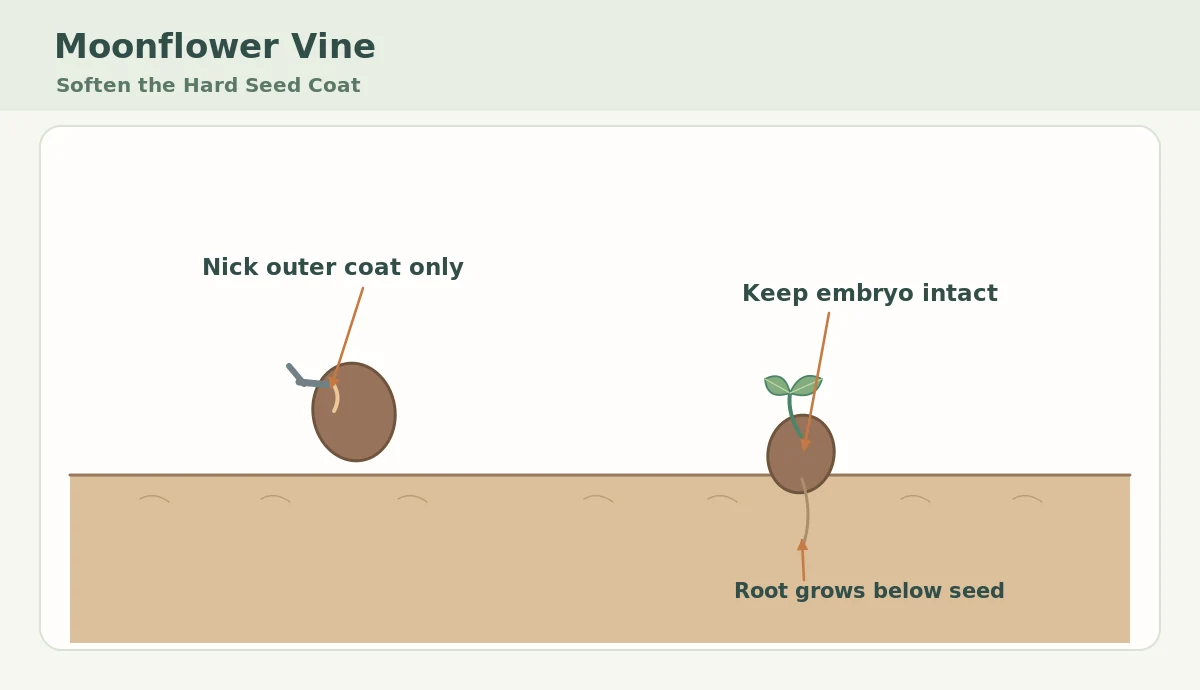
NC State suggests either soaking seeds overnight in warm water or lightly nicking the hard seed coat with a file. These are alternative methods, not instructions to gouge through the seed. Hold one hard seed securely, make a small abrasion away from the visible embryo area if distinguishable, and stop as soon as the outer shell is thinned. A deeply cut or cracked living interior can reduce germination. If using the soaking option, use clean water and sow promptly afterward rather than leaving seeds fermenting for days. Store all untreated seeds securely because seeds are not edible and curious children may mistake them for beans.
Sow in draining pots with support planned ahead
Use clean individual pots or large cells and a well-draining seed-starting mix so roots will not need repeated disruption. Moisten the medium before planting and cover seeds according to the specific packet, which should be used for exact depth. Provide warmth without placing sealed containers in harsh midday sunlight. Once seedlings emerge, give them strong light and gentle air movement. Label the pots with Ipomoea alba to distinguish them from other morning glories in the same room. A rooted young vine will soon need a small support; otherwise several seedlings can twist tightly around one another before it is time to move outside.
Recognize attached heart-shaped leaves and twining stems
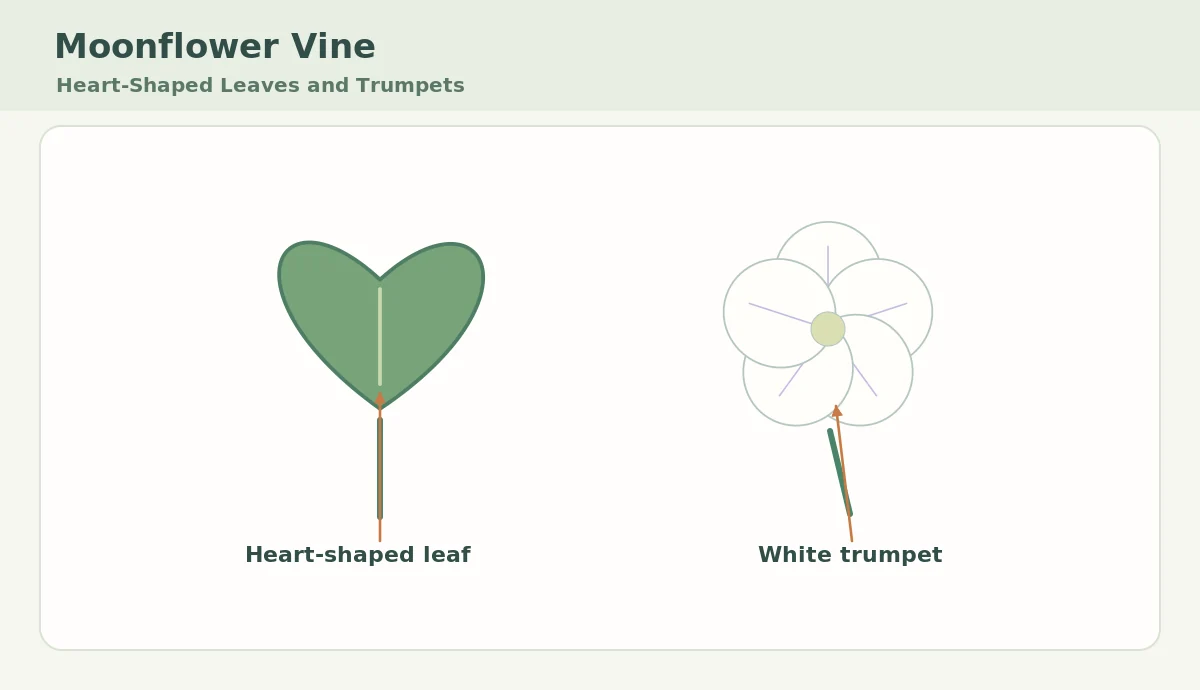
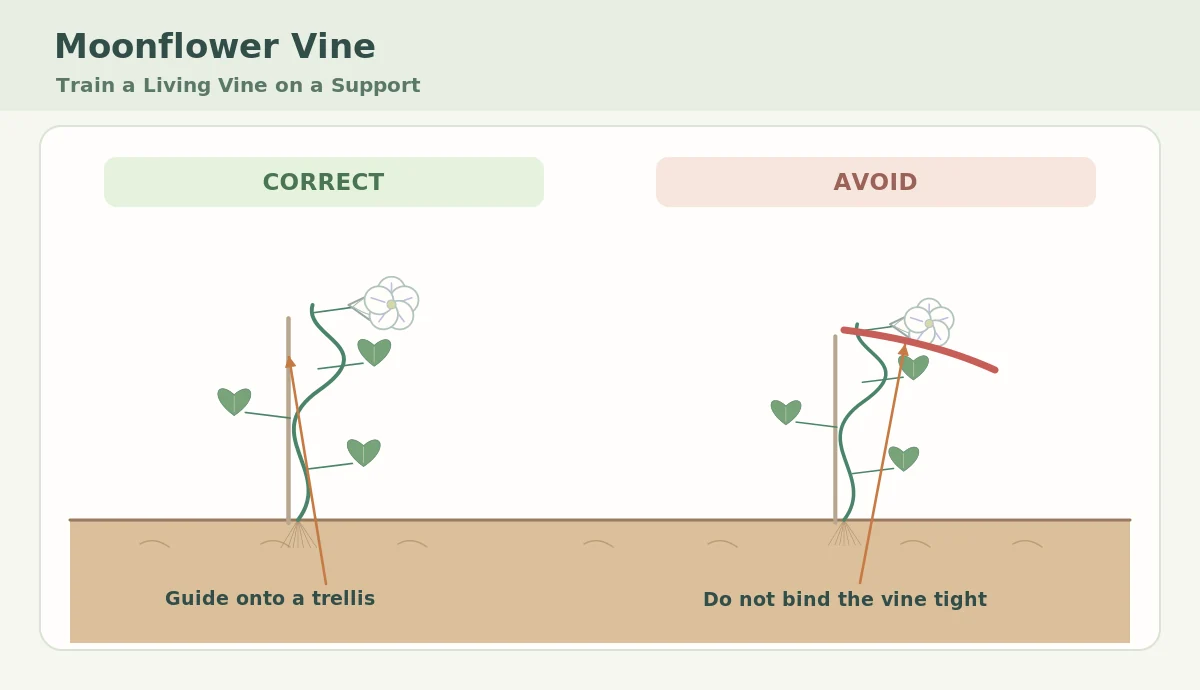
I. alba produces broad heart-shaped green leaves on distinct petioles attached at the vine nodes. The main stem coils around a support as it elongates; it does not climb by suction cups or a stiff woody trunk. NC State notes that growth accelerates when weather is warm. A climbing diagram should show the living vine actually winding around a trellis and all leaves connected through their petioles. Move a young shoot gently toward a support rather than pulling tightly on the tender tip. Give the full-grown vine enough room, because strong summer growth can shade nearby plants if allowed to spread across a small bed.
Harden off and transplant after cold nights pass
Seedlings raised indoors cannot immediately handle full wind and direct afternoon sun. Gradually acclimate them while retaining their pot-grown roots. UF/IFAS recommends transplanting after the last frost when the soil has warmed; use the local forecast rather than a fixed calendar date. Choose a full-sun, freely drained site near the support before opening the pot. Set the intact root ball at the same depth, firm soil gently and water it in. Do not dig up the plant later to relocate it simply because you forgot the trellis. If a cold snap is forecast, provide appropriate protection rather than expecting a tender tropical vine to act like a hardy perennial.
Choose a sturdy trellis and keep the vine contained
A mature moonflower can reach several yards in suitable warmth. Install a strong trellis, arbor or supported fence before the stems are long enough to tangle. Check that the structure can carry foliage and resist wind without toppling. Guide a wandering vine loosely and keep it away from doors, steps and neighboring plants that might be smothered. Do not tie the expanding stem tightly with thin wire. NC State describes a warm-season plant that can spread quickly once temperatures rise; this growth habit is part of the value of the plant and also a reason to maintain an accessible pruning and training route.
Know what a genuine moonflower bloom looks like
The large white flower opens rapidly around dusk and may be strongly fragrant. It has a long narrow tube that widens into a broad flared corolla, joined to the vine through a pedicel and flower base. The trumpet is not a detached white disc or a flower floating beside a leaf. Visit the plant at evening rather than judging its success from midday inspections alone. Some flowers close after their brief display, making timing particularly important for photographs. A closed flower is not automatically failed pollination. Distinguish a flower bud from a ripening seed capsule before deciding which stems to trim.
Handle seed and pets with appropriate caution
NC State identifies poison characteristics for moonflower vine and lists plant parts that should not be eaten. Do not use harvested seeds as snacks, herbal remedies, craft candy or improvised food. Label storage containers and keep collected seeds out of reach of children and animals. If a person or pet may have eaten them, contact the appropriate poison service or veterinarian promptly rather than relying on a gardening article to evaluate symptoms. Use gloves if your skin is sensitive and wash hands after handling seeds and vines. Check local restrictions and avoid letting mature seed escape to unwanted garden areas.
Evaluate one complete warm-season cycle
A successful first attempt starts with the verified Ipomoea alba name, a sensible frost-based start date and careful softening of the outer seed coat. The young plant forms rooted shoots and heart-shaped leaves, twines around a deliberately installed support, and grows more strongly as the weather becomes warm. In the evening, its attached white trumpets open and then fade. Track that sequence rather than using a winter hardiness zone to promise blooming dates. At season end, decide whether to remove seed capsules to limit spread, while remembering that any saved seed needs secure labeled storage.
How We Research and Illustrate These Garden Steps
For this guide we reviewed horticultural guidance from plants.ces.ncsu.edu; gardeningsolutions.ifas.ufl.edu; extension.umn.edu on October 30, 2026. Sources distinguish species identification, practical timing, transplanting, and care. Conditions and cultivar differences mean that a local Cooperative Extension service and the actual seed packet remain important for site-specific decisions. Botanical drawings illustrate connected plant anatomy but are not measured planting-depth templates.
VegWin provides independent educational garden information. The navigation links in this article lead to VegWin content, not paid recommendations, and no affiliate relationship is claimed. Read our affiliate disclosure. For uncertain plant identity, poisoning exposure, or serious disease, seek appropriate professional or Cooperative Extension help.
No. This guide concerns the climbing vine Ipomoea alba, not non-twining Datura plants.
NC State suggests nicking the hard seed coat or soaking seeds overnight to aid germination.
After the frost risk has passed and local soil and air conditions are warm, following gradual hardening.
Night opening is a normal feature of this species; the fragrant white trumpets often open around dusk.
No. Treat seeds and plant parts as non-food and keep them away from children and pets.