
Learn when to sow Napa cabbage, how to keep seedlings growing steadily, and how to tell a tightly forming head from an emerging flower stalk. The following diagrams show identifiable plant structures and decision points rather than a universal calendar. Check the label for your actual cultivar and adapt timing to local conditions.
Identify Heading Napa Cabbage Before Sowing
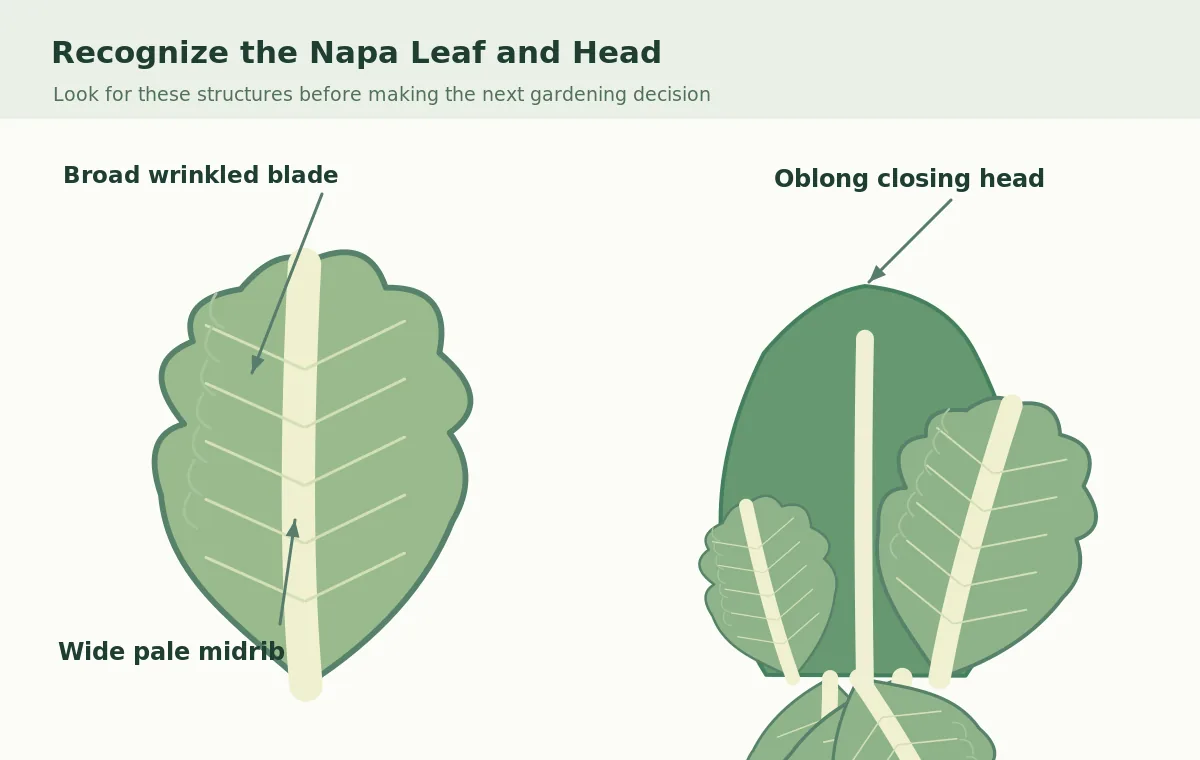
Napa cabbage belongs to the Chinese cabbage group of Brassica rapa and forms an oblong, tightly layered head rather than the round waxy ball of European heading cabbage. Its leaves are thin, softly wrinkled and pale green, with thick, conspicuous white or cream midribs. An early rosette looks open; only later do the inner leaves rise and fold together. Start with seed clearly labeled Napa or a heading Chinese cabbage variety, not a loose-leaf bok choy or choy sum packet.
The practical distinction matters because you are cultivating an edible head, not a flowering stem. The featured illustration shows broad crinkled blades wrapping into a tall oval head, while the detail panel separates the white midrib from the expanding green blade. A thin central flower stalk carrying yellow blossoms is not the expected harvest head. Seed labels vary in shape, maturity and disease resistance, so retain the packet for spacing and local crop information rather than copying a photo blindly.
Choose a Cool Season Without Prolonged Seedling Chill
Chinese cabbage prefers mild growing weather. Clemson Extension describes a bolting risk after extended cold exposure following an initial growth period. The response depends on variety and the exact sequence of temperature and plant maturity. For many climates a late-summer sowing followed by a cool fall harvest is easier than sending transplants into fluctuating cold spring weather. A spring crop is possible where conditions align, but an early planting is not automatically a safer planting.
Look at your local frost and temperature forecasts and the cultivar information before selecting a date. USDA hardiness zones cannot tell you the best week for sowing a cool-season annual vegetable. Protect new transplants against repeated freezing nights; do not assume frost tolerance of a harvestable head means small plants are immune to bolting. Too much heat can also interrupt head quality. Your goal is continuous vegetative growth in a season long enough for the head to firm.
Sow Small Seeds in Fine Medium at the Packet Depth
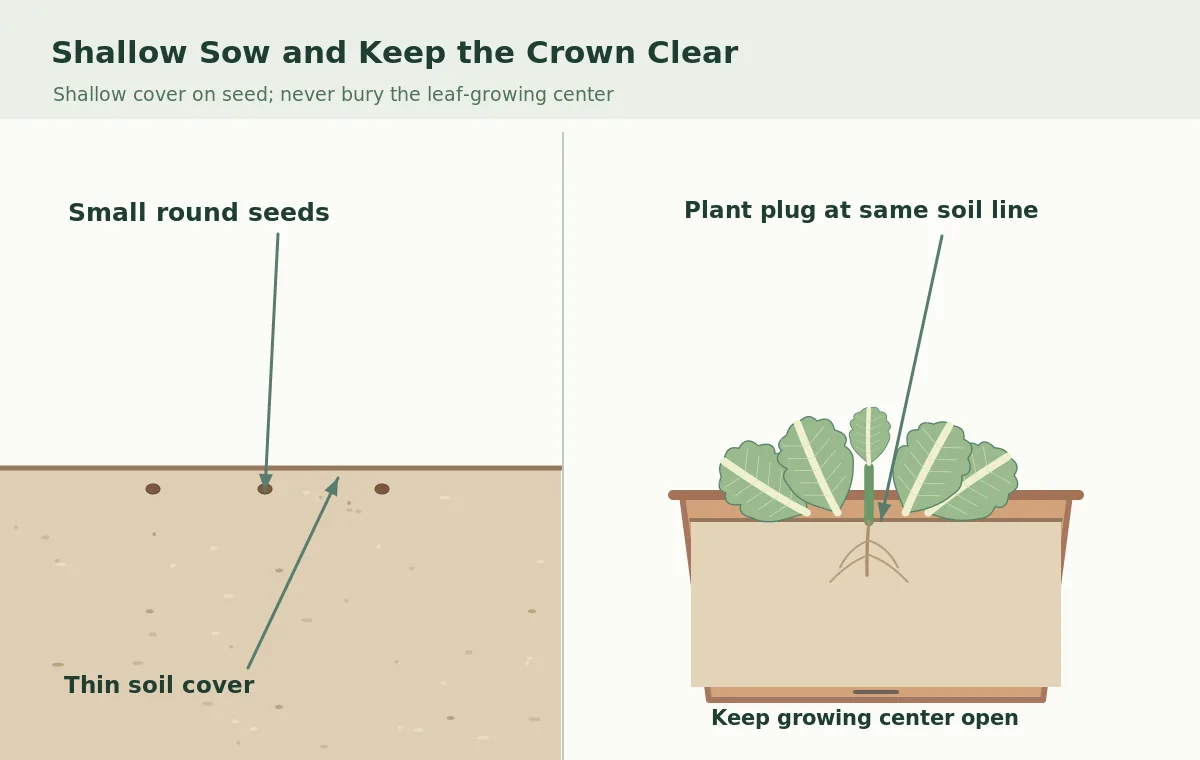
Choose seed-starting cells with drainage and pre-moistened, fine-textured medium. Napa cabbage seed is small and round, so place it in a shallow depression consistent with the seed packet rather than a deep bean-sized hole. Cover lightly, water with a soft stream or mist, and label the variety and sowing date. Germination speed depends on seed freshness, moisture and medium temperature. A clear cover can hold early moisture, but remove it once seedlings emerge and provide prompt light.
Thin crowded seedlings in each cell before roots become entangled. The drawing shows a small brown seed just below the actual soil surface, followed by two rounded seed leaves and then the first green true leaf. That initial leaf does not yet look like a finished Napa cabbage head. Avoid heavy fertilization in a tiny starting cell: a stretched weak stem signals insufficient light or overly warm crowded growth more often than a need for more fertilizer. Water only enough to keep medium evenly moist.
Transplant the Whole Plug Without Burying the Crown
If starting indoors, move seedlings while young and compact rather than allowing dense intertwined root mats. Water the tray first and push each plug upward from below, keeping the root ball together. Set the plant into prepared soil so the plug surface meets the surrounding soil; keep the leaf-growing crown free of piled earth. Firm gently and water to settle roots. A transplant that loses roots can pause, and interruption combined with unfavorable temperatures may undermine steady heading.
Give each heading plant room to form broad outer leaves. The UC Master Gardener guide gives a regional example of roughly 10 to 12 inches between plants, but a large cultivar may require the spacing printed on its own packet. Use row cover where suitable to protect young plants from flea beetles and some caterpillars, remembering to ventilate appropriately. Inspect undersides for eggs and feeding marks. Waterlogged soil is not a substitute for establishment, and a drenched root zone can reduce oxygen just when seedlings need it.
Support Leaf Expansion Before the Head Closes
A healthy Napa plant produces generous outer leaves that feed the later developing head. Offer consistent moisture, adequate sun and soil that drains well; severe dry spells followed by erratic watering can hurt quality. Mulch once plants are established if it helps reduce moisture swings, keeping the mulch clear of the center. Observe growth instead of following a rigid fertilizer calendar. A soil test and regional Extension advice are more defensible than guessing a nitrogen dose.
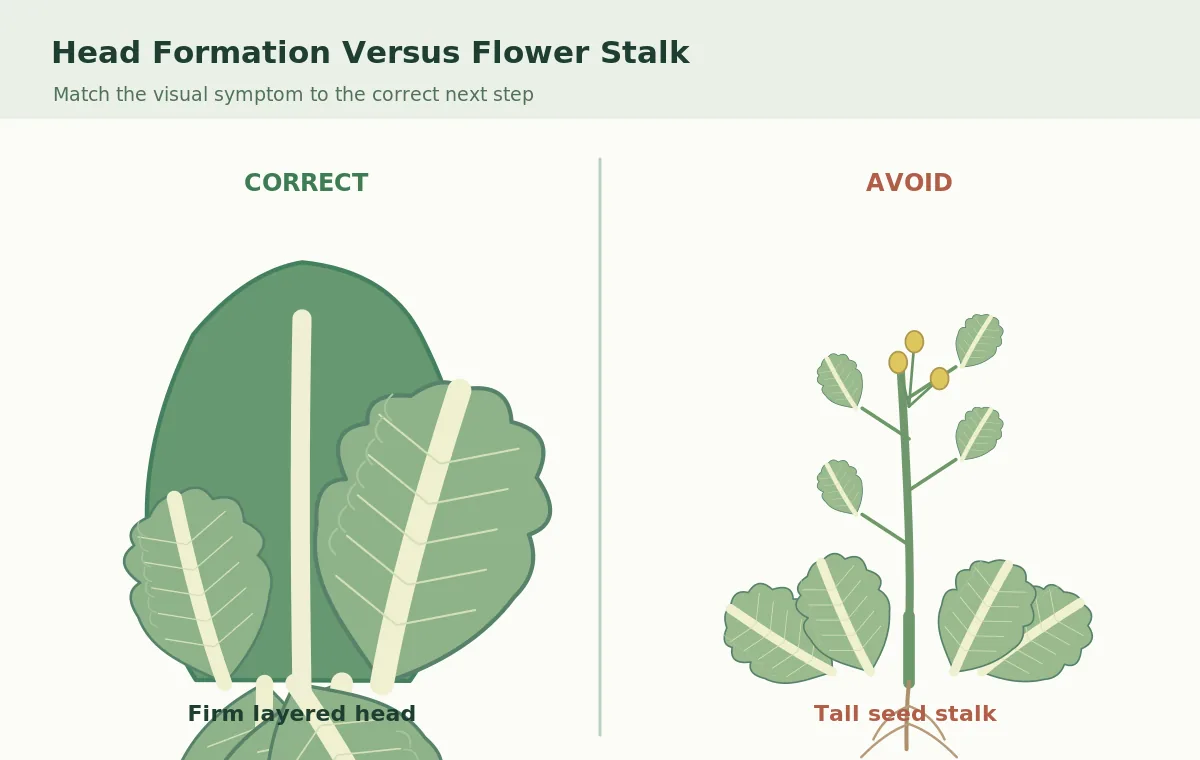
As inner leaves curve upward, gently observe whether a head is starting to form. Do not tie the leaves tightly or peel outer leaves away to speed this. The comparisons show an open, healthy seedling rosette transitioning into an upright oblong head. If leaves have shot upward into a tall central stem with small flower buds, the plant has started to bolt; the shape is different from a dense overlapping head. Warm stress, cold exposure, age and cultivar all matter in diagnosing the cause.
Recognize a Firm Head and Cut It at the Base
Harvest a mature Napa head when it feels filled and fairly firm with gentle pressure, not simply when it has reached a certain calendar age. UC Master Gardeners note that firmness is a better cue than head size alone. Different varieties can have distinct degrees of compactness, so inspect the head expected from your packet. Choose a dry, clean working area, and cut through the stalk at ground level with a sharp knife, protecting your fingers and keeping dirty soil away from the edible leaves.
Remove only damaged outer leaves that cannot be used, then inspect the interior if needed for caterpillars or decay. A head that begins to split needs prompt attention. Do not wait for a flowering stalk expecting it to produce a larger vegetable. The final comparison has a correctly layered pale head on one side and a visible vertical flower shoot above narrow, loosened leaves on the other. These images are visual decision aids, not promises of the same timing in every region.
Tell Bolting, Pest Feeding, and Normal Crinkling Apart
Wrinkled blade surfaces and prominent pale ribs are normal for heading Napa cabbage. Small holes and black insect pellets, by contrast, may indicate caterpillar feeding; flea beetles can leave shot-hole scars early in growth. Open the outer leaves and look before naming a pest. A lanky seed stalk topped with flower buds is another process entirely: it reflects reproduction rather than chewing damage. Do not treat bolting with a pesticide or attempt to force the plant back into head formation.
If a crop bolts early, write down sowing and transplant dates and any prolonged cold stretches; choose an adapted variety or move the sowing window next time. If a head fails to fill but stays leafy, check crowding, water and season length. If disease appears, isolate symptoms and ask your local Cooperative Extension to identify it before acting. Edible crops should receive only appropriately labeled interventions if needed. The most reusable prevention is season choice and steady growth, not an invented spray schedule.
Related Guides
- How to Grow Napa Cabbage From Seed for Firm Fall Heads
- Grow Napa Cabbage for Firm Heads Without Early Bolting
How We Research and Verify the Botanical Details
Sources checked on 2026-10-27: ucanr.edu: UC Master Gardeners identify Napa cabbage crinkled pale leaves, late-season planting windows, and firm-head harvest cues. hgic.clemson.edu: Clemson Extension describes Chinese cabbage cool-season culture, bolting after extended cold exposure, and cylindrical Napa head formation. www.johnnyseeds.com: Johnny’s grower guide documents short indoor starts, careful transplant handling, and sensitivity of young Chinese cabbage to frost and prolonged cold nights. Diagrams are explanatory botanical drawings. Plant size and coloration may vary with cultivar and season.
This article is informational, with no paid sponsorship or affiliate product links. Review our affiliate disclosure. Follow local Cooperative Extension recommendations for problems involving pests or climate and the full legally approved label before using any pesticide.
No. Heading Napa cabbage develops a tall layered head; bok choy usually forms an open rosette of thick petioles.
Yes. Repeated or prolonged chilling of established young plants can encourage flower stalks instead of a normal head.
Plant the root plug at the previous soil line and keep the central leaf-growing crown above soil.
Feel for a substantially filled, firm oblong head rather than judging only the number of days or its outside size.
You cannot restore a tight head by cutting off the flower stalk; reassess planting timing and temperature exposure.