
Black Spanish radishes need a different timetable and spacing from tiny salad radishes. See sowing, thinning, harvest and storage checks. This guide explains the plant features you can actually see, the action to take, and the signs that you should change course. Always adapt season and cultivar advice to your own conditions.
Identify the Black-Skinned Winter Radish
Black Spanish radish is a form of Raphanus sativus bred for a larger winter root rather than the tiny red globes sold for spring salads. The heritage cultivar Black Spanish Round has a dark, rough-looking black skin surrounding crisp white flesh. The crown sends up a rosette of lobed, somewhat coarse green leaves. Different seed strains may vary in shape and maturity, so read the exact cultivar name instead of assuming every black radish will be round.
The detailed cutaway shows dark skin enclosing white tissue, not a black interior. A side view also distinguishes the fleshy storage root from its thin downward feeder root. The leaves resemble other brassicas, but the dark root is the most reliable mature identification clue. If a seed catalog uses the name Black Spanish Long, expect a different root shape and use its spacing advice. Never substitute a quick spring-red-radish harvest calendar for the slower winter crop.

Sow for Cool Growth Rather Than Summer Heat
Winter radishes are typically sown for a cool later-season harvest, with dates depending on local climate. RHS suggests late summer for winter radish sowings in its conditions. In warm regions that may mean a later autumn window, while cold areas need enough growing time before hard soil freezes. Hot weather and inappropriate day length can encourage premature flowering instead of a firm swollen root. Plan backward from local frost and typical temperature patterns.
Sow directly where roots will mature rather than raising long-rooted seedlings in a small transplant tray. Radishes produce a strong primary root early; deforming or twisting that root can interfere with a smooth storage root. Prepare loose, reasonably fine soil and remove large stones in the anticipated root zone. Water the seedbed gently so it is damp but not crusted or waterlogged. The planting illustration shows a seed beneath the soil line and the young root extending straight downward.
Give Each Developing Root Space
A single winter radish usually needs considerably more space than the two-inch spring radish beside it. RHS advises thinning winter varieties to roughly six to eight inches, adjusted for variety. Crowded plants may put energy into foliage and stay small belowground. When seedlings emerge unevenly, mark the strongest ones and remove close rivals early. Use scissors near the ground if pulling a crowded seedling might drag its neighbor out.
Spacing is not just a cosmetic choice. The shoulder of a maturing root needs room to swell, and green leaves need light to make sugars. Soil pressed hard from repeated foot traffic can cause misshapen roots. A deeply loosened growing area helps even when the mature Black Spanish Round root is squat. Place mulch around developing leaves only after seedlings are established and keep material away from wet crowns. The comparison diagram contrasts one spacious plant with several cramped roots.

Keep Root Growth Steady Without Overfeeding
Even moisture encourages root development, but waterlogged soil prevents oxygen from reaching the fine roots. Check moisture beneath any surface crust, especially during irregular autumn rains. Sudden swings from dry to soaked soil may cause splits or uneven texture in many root crops. Irrigate to wet the growing zone, not merely to darken the very top. Drainage matters even when the climate is cool.
Use a soil test and local Extension guidance before adding fertilizers. Large doses of nitrogen are not a cure for tiny roots and may favor leaves over the intended harvest. If holes appear in foliage, inspect for caterpillars or flea beetles and first use exclusion or nonchemical options appropriate to your region. Soil can be a source of contamination on edible roots, so wash harvested roots thoroughly. No home garden needs a universal pesticide schedule simply because radishes belong to the cabbage family.
Check Root Firmness Before Harvesting
Black Spanish radishes can develop a generously sized winter root without becoming as immediately pithy as many small spring radishes. Illinois Extension notes that winter types hold usable quality longer under favorable cool weather. That is not permission to leave them indefinitely in frozen or soggy ground. Gently move soil from the shoulder of one mature-looking root, compare its size with the seed supplier’s description, and harvest a sample to check texture.
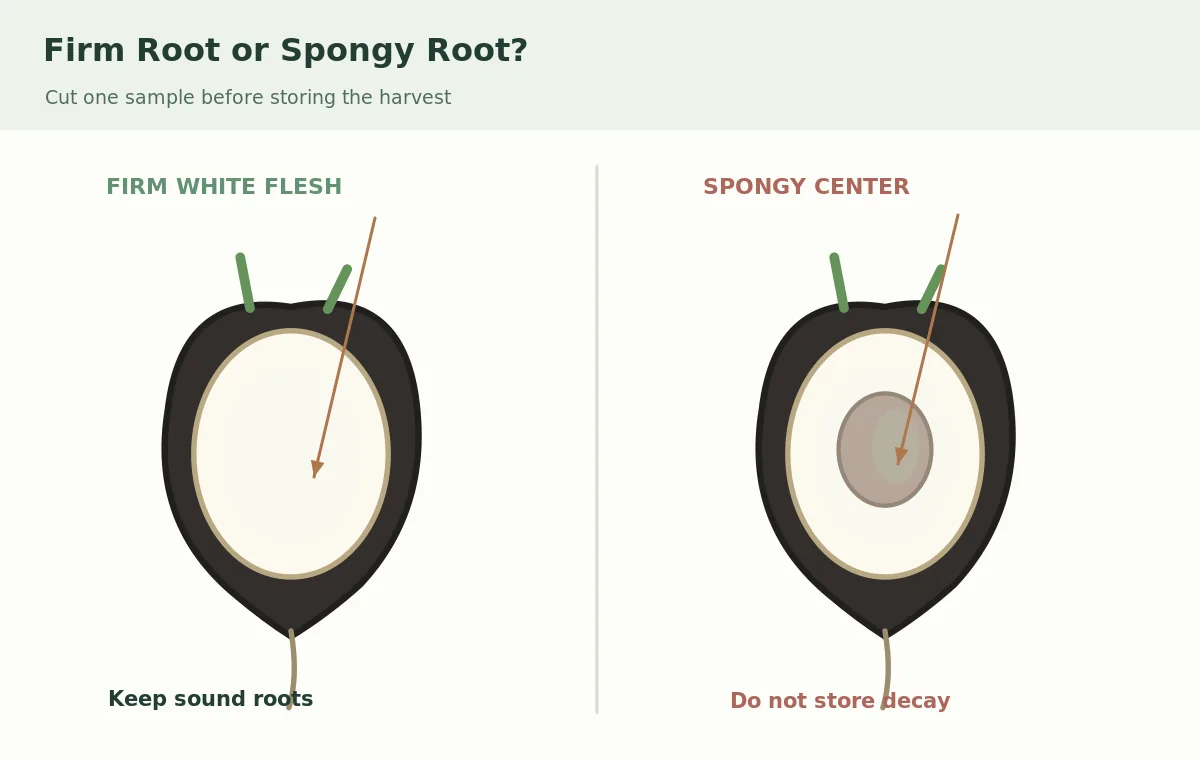
Cut through the test root: the inside should be white and firm with no hollow brown center or extensive internal decay. A very sharp flavor can be normal for this type; blandness is not the maturity test. Lift from loosened soil, supporting the root rather than ripping leaves off if the ground is compacted. The harvest drawing puts a fork to the side of the root, not through its center. Remove loose soil without bruising the skin.
Store Roots Cleanly and Avoid Freeze Damage
RHS recommends either lifting winter radishes when needed or storing them under suitable cool conditions after the growing season. Where ground can freeze solid, dig before deep freezing makes lifting impossible and harms unprotected roots. Sort immediately; a damaged or soft root should be used promptly or discarded if spoiled rather than stored with healthy produce. Remove large leaves without gouging the crown or cutting deeply into the storage root.
Keep roots cool and sufficiently humid to limit shriveling, without trapping visibly wet, muddy roots in an unventilated plastic bag. Storage conditions vary between an outdoor cellar, refrigerator drawer and damp-sand method, so adapt advice to an actual safe storage space. Inspect the stored harvest occasionally. If roots are slimy, moldy or smell rotten, discard them. The visual comparison shows a sound, white-centered root versus an internally spongy one.
Separate Bolting From Normal Leaf Development
A young radish usually sends up several coarse, lobed leaves before the root reaches usable size. A tall flower stalk with buds and then four-petaled brassica flowers means the plant is entering the reproductive phase. That is a different outcome from healthy vegetative leaf growth. Long days, heat or missed planting windows can contribute to early bolting. Do not assume fertilizer will reverse a flower stalk into a high-quality storage root.
Make a note of your sowing window and compare it with subsequent weather. In climates with mild winters, a fall sowing may perform very differently from a hot spring sowing. Choose winter cultivars specifically suited to your region, and keep the seed packet to interpret root shape. The final visual checklist distinguishes a mature firm dark-skinned root, a crowded underdeveloped cluster, and the long stem of a bolting plant. The message is timely harvest, not a fixed number of days.
Related Guides
- How to Grow Black Spanish Radishes for Firm Winter Roots
- How to Grow Daikon Radishes in Deep Pots Without Stunted Roots
- How to Grow Rat-Tail Radishes for Tender Edible Seed Pods
- How to Grow Edible Radish Pods and Pick Them While Tender
- How to Thin Radish Seedlings Without Disturbing Nearby Roots
How We Research and Check Botanical Details
Authoritative sources reviewed on 2026-10-27: www.rhs.org.uk — RHS separates slower, larger winter radishes from quick spring radishes and gives spacing and seasonal advice. www.rhs.org.uk — RHS describes Black Spanish Round as a late-maturing radish with black skin and white flesh. extension.illinois.edu — Illinois Extension notes that winter radishes reach larger usable sizes and retain quality in cool weather longer than spring radishes. www.rhs.org.uk — RHS discusses lifting and cool storage of winter radishes ahead of severe freezing. The figures are purpose-drawn botanical explanations, not photographs or guarantees that every cultivar has identical dimensions. The sowing and harvest times are conditional on local growing conditions.
This educational page is not sponsored and has no paid product placement. See our affiliate disclosure. Use locally registered crop protection products only under their labels, and follow local Extension advice for pest or disease diagnosis.
No. Black Spanish Round has a dark skin and white internal flesh.
No. Winter radishes are slower-growing and normally reach a larger mature size.
Direct sowing is preferred so the developing primary root remains undisturbed.
Review sowing window, heat, day length and crowding; flowering roots rarely return to ideal quality.
Yes, sound roots can be kept cool and appropriately humid after lifting before damaging freezes.