
Learn to recognize arugula’s long dry seed pods, catch seeds before shattering, and store clean seed without confusing flower buds with pods. The following diagrams show identifiable plant structures and decision points rather than a universal calendar. Check the label for your actual cultivar and adapt timing to local conditions.
Know the Flowering Arugula Plant You Are Saving
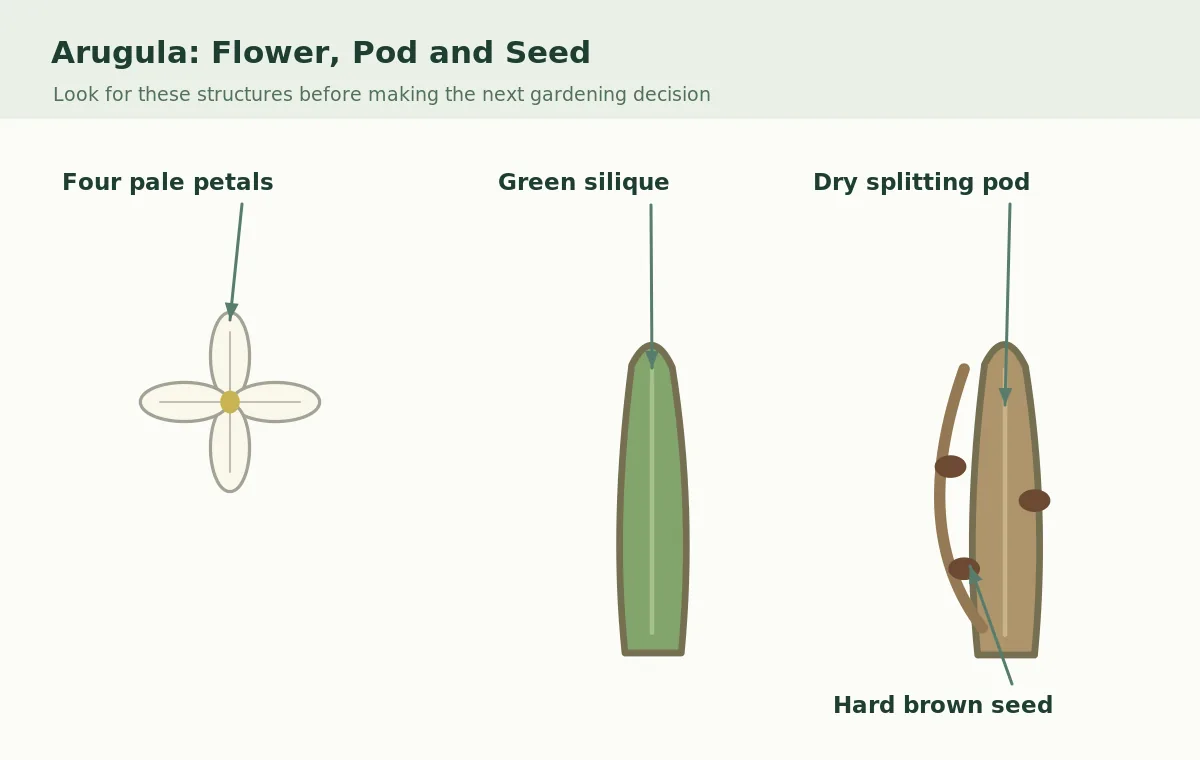
Common salad arugula, Eruca vesicaria often listed as E. sativa, begins as a cool-season rosette of peppery leaves, many with irregular deep lobes. Once flowering starts, a stem rises above the rosette and bears small pale cream or white four-petaled flowers, often marked with darker veins. Each fertilized flower can produce a narrow erect seed pod called a silique. The pod is not the same part as the leafy shoot or the pointed bud of an unopened flower.
Check the botanical name on your packet: perennial wild rocket, often Diplotaxis tenuifolia, is a different species and can differ in flowers and growth habit. This article concerns common annual salad arugula. Seed Savers Exchange gives a separate seed-saving guide for this crop and warns that different arugula varieties can cross. If variety purity matters, isolate flowering crops or grow just one variety, rather than saving seed from an unlabeled mixed planting.
Let Healthy Plants Finish Flowering and Set Pods
Seed saving happens after the usual delicious leaf harvest. Choose several healthy representative plants and allow their center stems to flower instead of continually clipping off buds. Beneficial pollinating insects should have access to flowers; Cornell notes that arugula benefits from insect pollination. The leaves commonly become sharper and less pleasant as temperatures rise and a flowering stalk develops. Do not treat this seasonal transition as a disorder requiring a spray.
To preserve a selected variety, choose plants that grew well under your real conditions and did not have obvious serious disease. Saving seed from just one oddly stunted individual may capture problems rather than useful traits. If a nearby garden grows another flowering variety, no photograph can guarantee the seed will come true. Keep a note of the seed supplier, planting date, and any isolation limitations so next year’s seedlings are not assumed to be genetically identical to their parent.
Identify Green Pods, Tan Pods, and Opening Seams
Newly formed arugula pods are narrow green rods that stand along the flowering stem. As seeds ripen, pods change to tan and brown, become dry and eventually split along seams, exposing small brown seeds. The illustration magnifies an intact green pod, a dry brown silique and a partially opened pod. This is the most useful timing comparison: hard brown seeds in brittle pods are the goal, but once every pod has opened you may already have lost much of the harvest.
University of Wisconsin Extension recommends cutting stalks as plants begin to dry and hanging them upside down inside a paper bag. Seed Savers Exchange likewise uses browning and brittleness as maturity cues. Pods on the same stem do not necessarily ripen simultaneously, so check the lower, older fruit as well as the top. Resist shaking a fully dry uncovered plant above bare soil; it scatters the contents and produces volunteers where you may not want them.
Place a Bag Under the Head Before Moving the Stems
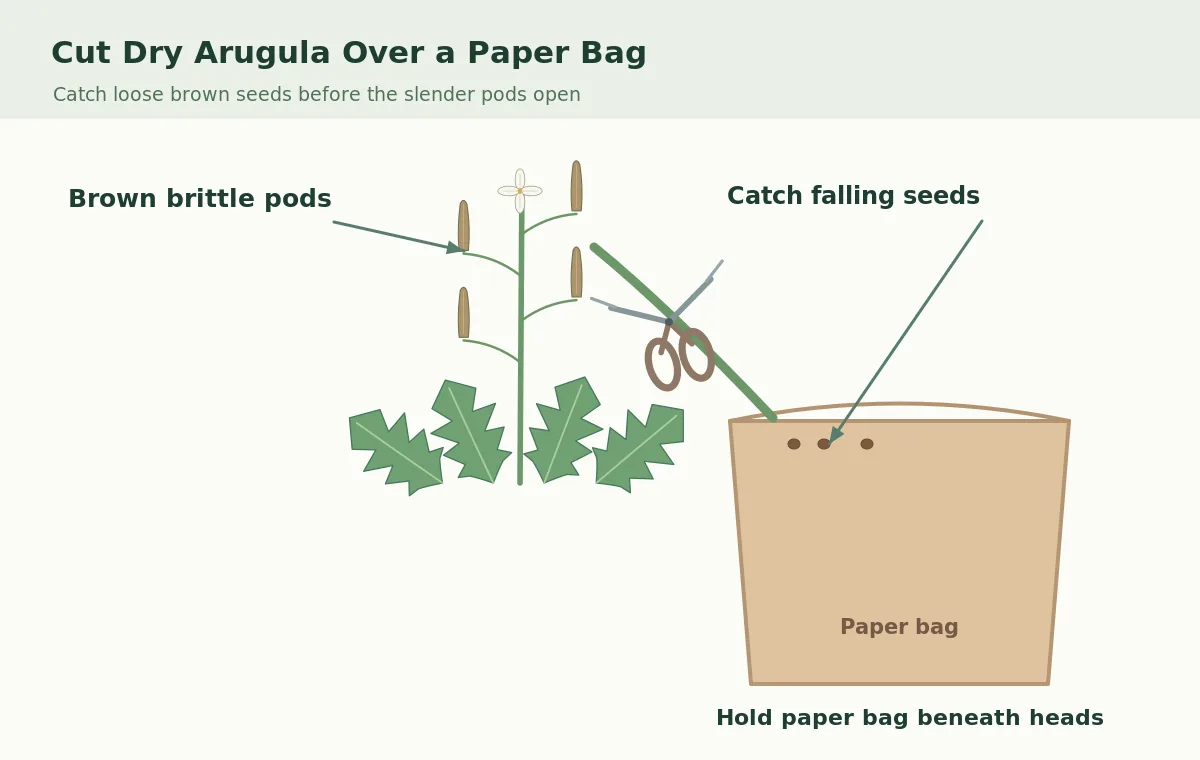
Choose a dry day without recent heavy rain if possible. Open a clean paper bag beneath a branch carrying many tan pods, then snip or gather the stalk over the mouth of the bag. Do not use a tightly sealed plastic bag for initially damp seedheads. The practical drawing shows a dry pod cluster over a real open paper bag, and a cutting point below the cluster—both are necessary for a useful diagram. Keep the shears clear of the pod seams while collecting.
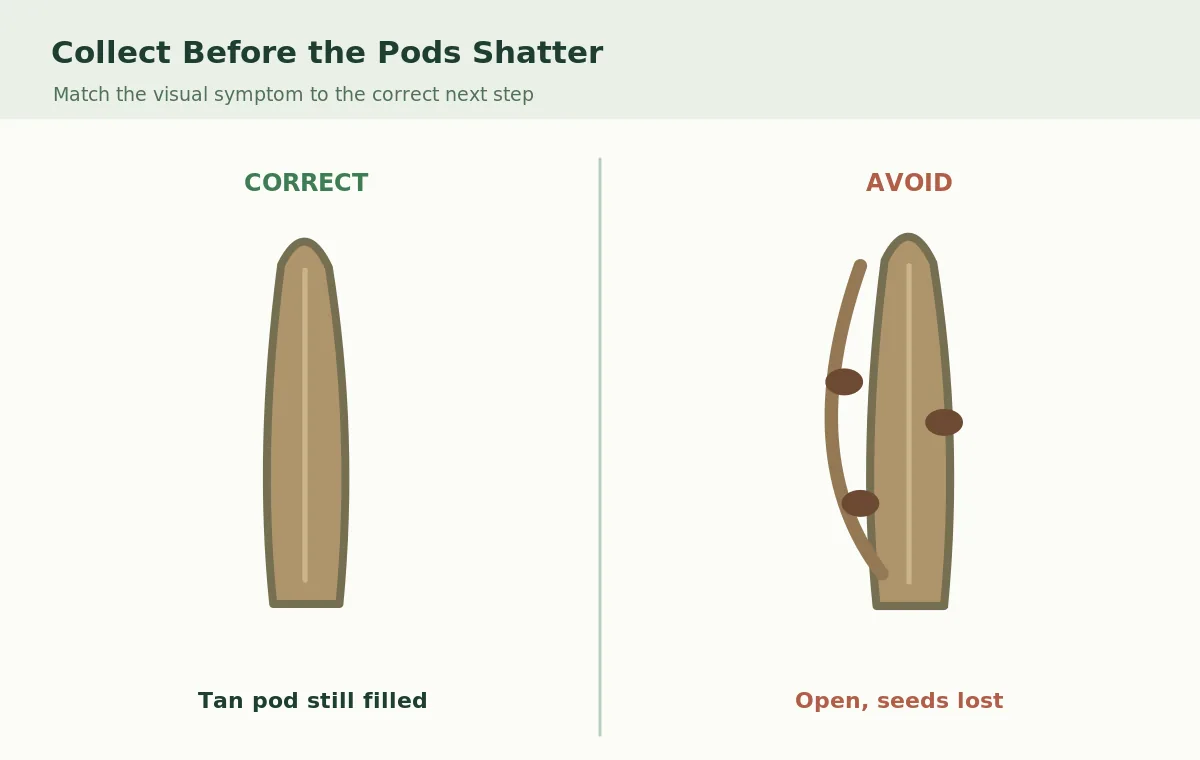
If seeds are already shaking loose, gently enclose the stalk with the bag before tilting it. Gather a few stems at a time so fragile pods do not scrape against other branches. Label the bag immediately with species, cultivar if known, and date. Cutting too early while pods are fleshy green gives underdeveloped seed; waiting until the slightest touch empties every pod is the opposite mistake. The capture bag buys you a margin between those stages.
Finish Drying and Release the Seeds Inside the Bag
Hang stalks upside down inside their paper bag in a sheltered airy dry place, or spread them on a clean tray with a rim. Check periodically for moisture or mildew. When pods are thoroughly dry, rub brittle pods gently inside the bag or tap stems to release the contents. Wisconsin Extension describes this upside-down method. Do not grind the seeds themselves; the objective is to open the thin pod walls while leaving the little round-to-oval seeds intact.
Pour the material onto clean paper in a shallow tray. Remove large stems and fragments by hand, then use a small screen if its opening suits the seed size. A gentle controlled winnow can separate lighter dry chaff, but use a very light air movement so you do not blow away the seed. A few papery fragments are less serious than storing damp material or throwing away the seeds with the pod walls. Keep varieties separated throughout cleaning.
Check Dryness and Store Seed With a Useful Label
Mature arugula seed should be hard enough that it does not dent easily with a fingernail, a maturity test described by Seed Savers Exchange. Allow cleaned seed to finish drying in a dry ventilated place away from rain, then store it in a labeled moisture-protected container once fully dry. A cool dark location supports storage; keeping it next to a steamy kitchen window does not. Use a paper envelope inside a suitable outer container if it helps organize small lots.
Record year, variety, and whether more than one arugula variety flowered nearby. A clear date keeps an old packet from being mistaken for fresh seed. If your stored seed is uncertain, germinate a small test sample before dedicating a whole planting bed to it. The correct comparison image shows a pod cut into the bag at the tan stage and a cracked empty pod left too long outdoors, rather than teaching a rigid number of days after flowering.
Distinguish Natural Self-Sowing From Controlled Seed Saving
Arugula can seed itself freely when fully ripe pods remain in the garden. Volunteers may be useful, but they can appear among future crops and are not a reliable way to preserve a named variety. Remove extra seedlings before they compete for light or root space. If you intend a new lettuce-style harvest instead, make a fresh planting in appropriate cool weather and harvest tender leaves well before flower stalks develop.
Seed-saving success requires three distinct things: a healthy flowering plant, mature dry seed, and timely capture before the pods release it. No chemical treatment is necessary just because stems turn straw colored at normal seed maturity. Persistent blackened rot, mold or badly deformed pods are different warning signs; discard suspect material rather than saving it. Keep accurate source and storage notes so future germination results can be interpreted instead of blamed on the weather alone.
Related Guides
- How to Grow Arugula for Tender Leaves Before Heat and Bolting
- How to Harvest Arugula Leaves for Repeated Tender Cuttings
How We Research and Verify the Botanical Details
Sources checked on 2026-10-27: hort.extension.wisc.edu: University of Wisconsin Extension explains arugula lobed leaves, pale four-petal flowers, erect seed pods and upside-down paper bag collection. seedsavers.org: Seed Savers Exchange describes arugula seed maturity, dry threshing, population selection and potential crossing between varieties. edis.ifas.ufl.edu: UF/IFAS seed-saving guide shows dry brown arugula capsules splitting open and stresses that brassica seed must ripen beyond leaf-harvest stage. Diagrams are explanatory botanical drawings. Plant size and coloration may vary with cultivar and season.
This article is informational, with no paid sponsorship or affiliate product links. Review our affiliate disclosure. Follow local Cooperative Extension recommendations for problems involving pests or climate and the full legally approved label before using any pesticide.
They are seed-bearing siliques that develop after the small pale four-petaled flowers.
When most pods are tan and drying but before they split open and scatter the small brown seeds.
A bag catches brittle pods and loose seeds while the stalks finish drying without trapping excess moisture.
Not always. Different common arugula varieties can cross if they flower close enough for insect pollination.
No. Allow seed pods to mature and dry; immature green pods may hold poorly developed seed.