
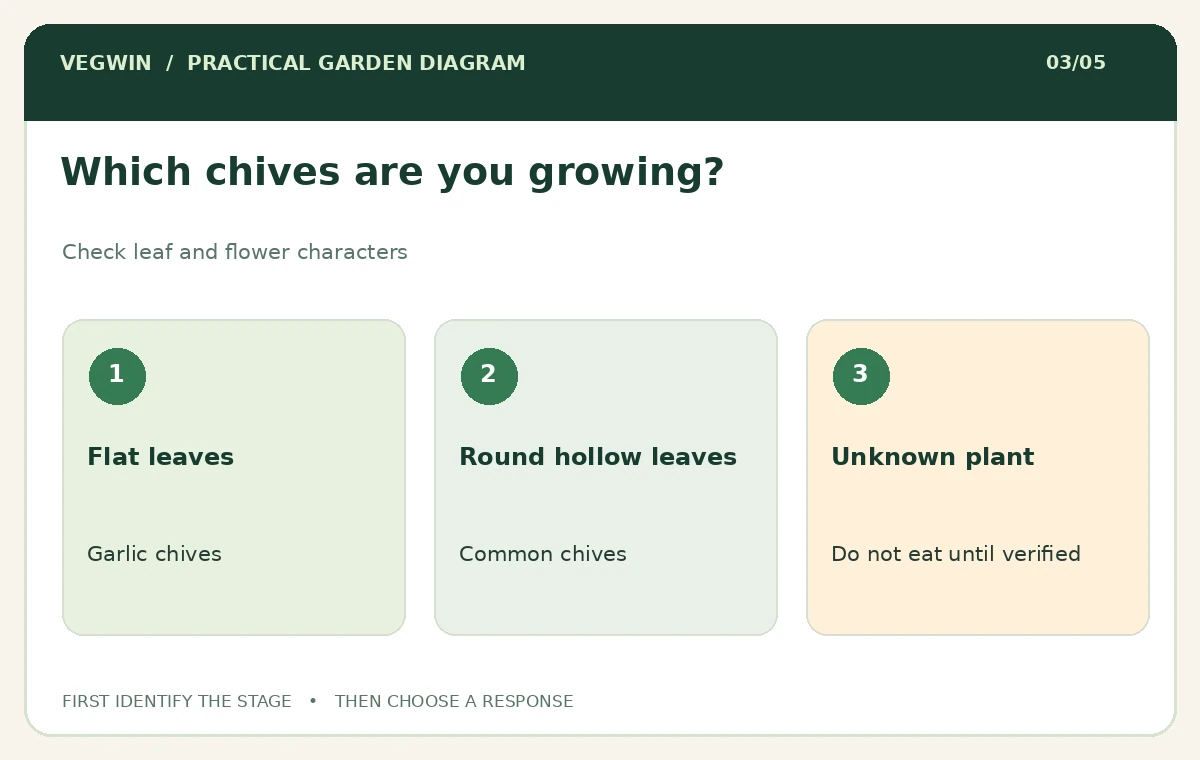
Garlic chives produce flat, narrow leaves that taste gently of garlic, unlike the round hollow leaves of common chives. A single clump can be a very convenient kitchen crop: you cut some leaves for dumplings, soups or eggs and let the plant recover. The surprise comes after the white flower heads ripen. Garlic chives can seed themselves far beyond the original planting, and in favorable sites they may become difficult to contain.
This is a growing guide with a control plan built into it. Before planting, choose whether you want a perennial edge, one or two pots or a harvest-only patch where flower heads will be removed. Then use leaf shape, crown vigor and flower stage to decide when to divide, harvest and deadhead. Wisconsin and New Hampshire Extension both describe garlic chives as easy to grow but prone to prolific reseeding. Those two facts belong in the same plan. Our guide to growing chives goes into more detail.
Distinguish flat garlic chives from ordinary chives
Garlic chives are Allium tuberosum. Their leaves are relatively flat and strap-like, and they form clusters of white starry flowers rather than the purple-pink globes familiar on many ordinary chives, Allium schoenoprasum. Crush a small leaf from a positively identified garden plant and you may notice its garliclike aroma. Leaf shape and flower color are more reliable than a retail name, because both crops are often loosely called chives.
New Hampshire Extension lists garlic chives as a perennial clump-former. That makes it different from scallions, which are often harvested whole as a short-term onion crop. Do not assume every long narrow green leaf found in an unfamiliar garden is safe to eat; Allium plants have potentially confusing lookalikes. Grow labeled edible plants from a trusted source and keep the identity recorded before using leaves or flowers in food. For a step-by-step method, see how to grow garlic chives from seed and prevent unwanted self-seeding.
Pick a bed or container with spread in mind
Garlic chives grow well with sun and soil that drains but retains enough moisture for leaf regrowth. Wisconsin Extension notes their ability to grow in garden edges and containers, while NC State describes the risk of spreading in suitable sites. A pot set on a paved patio makes seedling surveillance easier than a planting beside a natural area. Use a vessel with drainage holes; an enclosed wet pot is not a substitute for a well-drained bed.
If you choose a raised bed, leave access around the crown so you can reach all flower stems before seed ripens. Position the plant where self-sown seedlings can be recognized early, rather than inside dense perennial groundcover where they disappear. Do not promise that a pot makes the plant completely sterile: flower heads can release seed over the rim. The low-effort containment technique is to prevent mature seed formation, not to rely only on a physical border.
Start from seed or divide an established clump
University of New Hampshire Extension describes sowing garlic chive seed and dividing clumps. Seed is useful for starting a new planting when none is available, while division provides established roots and a faster path to harvest. Use fresh labeled seed and a clean, free-draining medium. Keep the young seedlings evenly moist without keeping roots saturated, and adjust outside planting to local conditions instead of applying one date to every state.
For division, loosen an overcrowded clump while conditions favor re-establishment. Separate sections with viable roots and leaf bases, reset them at an appropriate planting depth, water them in and watch for new growth. Do not cut the roots down to dust or divide a heat-stressed plant without a plan for recovery. Wisconsin suggests periodic division to maintain vigor. Label new pieces so later volunteers are not mistaken for a deliberate crop.
| Observation | What it means | Recommended next step |
|---|---|---|
| Flat leaves + white flowers | Likely garlic chives | Confirm labeled Allium tuberosum |
| Clump strong with new leaves | Ready for modest harvesting | Cut selectively; watch regrowth |
| Flower heads still fresh | Seed not yet fully released | Remove before capsules dry |
| Many small volunteers | Past seed release | Dig early and prevent new seed |
| Clump crowded and weak | Division may restore vigor | Lift and reset rooted sections |
Harvest usable leaves while protecting regrowth
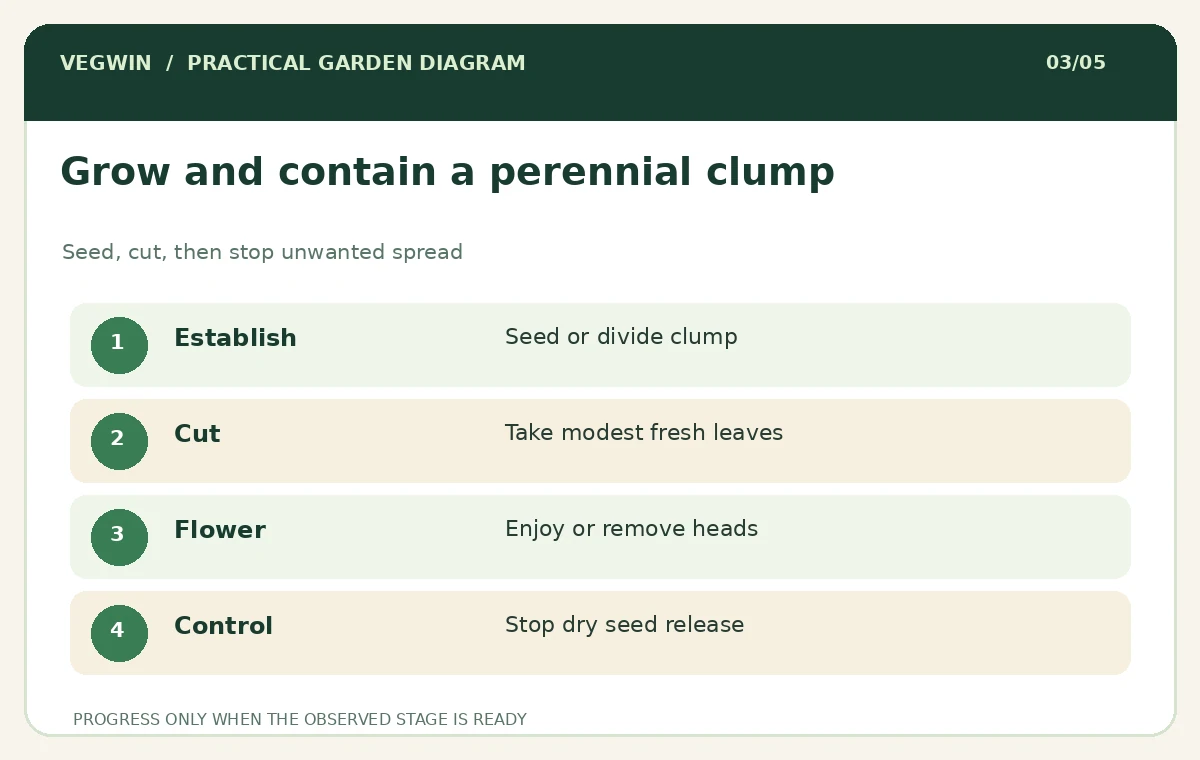
Young, sound garlic chive leaves are the main kitchen product. Cut a manageable portion from a healthy clump instead of repeatedly removing every green leaf from a struggling plant. Leave enough foliage for continued photosynthesis; then observe how quickly the clump resumes growth in your weather. New Hampshire Extension explicitly notes that young leaves can be harvested whenever available, but that does not make a damaged or newly divided plant ready for constant cutting.
Harvest with clean scissors and inspect for soil, insects or spoiled foliage. Use fresh leaves promptly for the best texture. Garlic chive leaves are flat, so they can be washed and chopped differently from a hollow scallion; however, avoid claiming a medical benefit just because an herb smells of garlic. If a plant repeatedly sends weak leaves, check roots, drainage and competition before adding fertilizer. Use soil test advice and plant response, not an invented feeding schedule.
Enjoy white flowers without producing a seed problem
Garlic chive flowers attract visitors and can be visually appealing. They are also the start of the seed-production pathway. Wisconsin Horticulture advises removing flower stalks after bloom before seeds mature to prevent uncontrolled spread. If you want the flowers briefly, inspect the heads frequently and cut them well before dry capsules release seed. If you do not need flowers, removing buds earlier is a simpler strategy.
New Hampshire Extension notes that the species self-sows aggressively. Avoid shaking ripe heads over the bed or placing mature seed heads in casual compost unless your compost process reliably prevents germination. Bag seed heads for disposal according to local guidance. Survey the nearby soil for volunteers after favorable moisture and remove young unwanted seedlings while they are easy to identify. Intentional flowers and containment can coexist, but only with follow-through.
Diagnose overcrowding, weak leaves, and unwanted volunteers
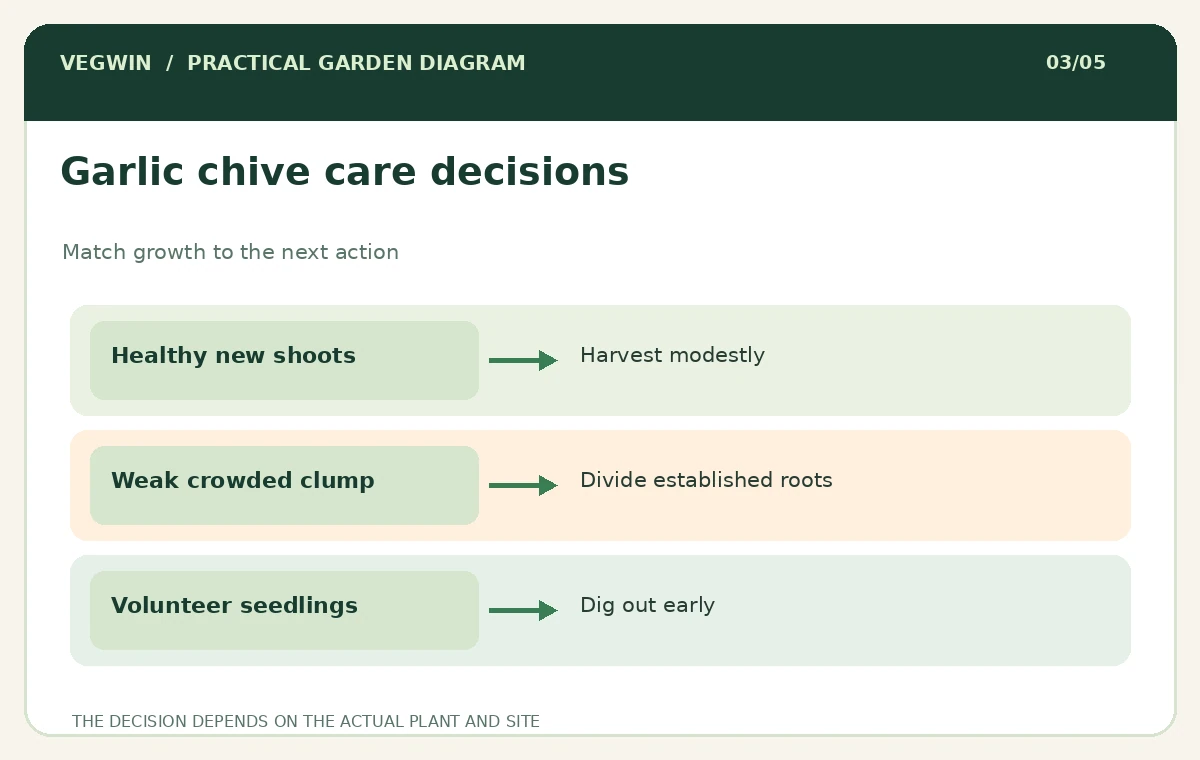
A declining center in an old clump can indicate crowding; loosen and divide into healthy rooted sections rather than routinely replacing all your plants. Yellow leaves may result from age, excess moisture, drought or another issue. Check the base for rot, assess the soil moisture a little below the surface and observe new growth before deciding on a treatment. Garlic chives tolerate a range of conditions, but perennial roots still need oxygen. For a step-by-step method, see how to divide crowded chives and replant healthy bulblet clumps.
If garlic chive volunteers appear beyond the chosen area, dig them early with the small bulbs or root pieces attached. Pulling off just the leaves is less reliable than removing rooted seedlings. Where seedlings recur, investigate which nearby flower heads were allowed to shed seed. Do not use broad herbicide advice from unrelated lawn weeds as an instruction for an edible herb bed. Try physical removal and flower-stage prevention first; seek local Extension guidance for persistent infestations.
Make a simple perennial care calendar
In early growth, look for healthy shoots and evaluate whether a dense clump needs division. During the productive leaf season, harvest in modest passes and water according to root-zone moisture. As buds appear, choose between temporary flowering and immediate removal. Before seed heads turn dry, cut them and clear the area. At the end of the season, record how many off-site seedlings appeared and whether the clump supplied enough usable leaves. For a step-by-step method, see how to grow fenugreek for tender leaves or mature spice seeds.
Hardiness and activity vary by regional weather; a USDA zone helps estimate perennial survival but is not a calendar for the exact spring harvest day. If a pot spends winter in a bright protected place, its water needs can differ from a dormant outdoor clump. Next year, adjust the plan based on your own evidence. The successful garlic chive garden is not simply the one producing most leaves; it also stays where you intended to grow it. Our guide “Grow Lemongrass From Store-Bought Stalks” adds more detail on this.
Related Guides
- How to Start Vegetable Seeds Indoors: Timing, Trays, and Transplant Care
- How to Divide Garlic Chives Clumps While Keeping Roots and Crowns
How We Research and Check Field Guidance
This original educational guide compares the crop-specific claims and decisions with the university Extension and RHS sources linked below, checked October 21, 2026. We separate observations that readers can make directly from region-dependent conditions such as frost, soil moisture and plant maturity. The decision charts are editorial syntheses, not laboratory-calibrated thresholds. Before changing fertilizer inputs, treating disease or storing food, check regional Extension recommendations and product instructions.
Primary References and Transparent Disclosure
Wisconsin Horticulture: clump culture, leaf harvest and prolific self-seeding after white flowers. University of New Hampshire Extension: seed, clump division, young leaf harvest and deadheading. NC State Extension Plant Toolbox: leaf and flowering habit, culinary parts and potential to spread. There are no approved affiliate promotions, paid placements or invented product endorsements in this article. See the VegWin affiliate disclosure; verify availability of the site disclosure page before publication.
No. Garlic chives have flattened garlic-scented leaves and white flowers; common chives usually have hollow leaves and pinkish flowers.
Yes. Use a drained pot and still remove flower heads before seed is released outside the container.
When it becomes crowded or less vigorous, divide during suitable growing weather and retain well-rooted portions.
Yes, but cut flower heads before the dry seed capsules mature if you wish to avoid many volunteer plants.
Remove seedlings early with their rooted bases, prevent further seed set and consult local Extension for severe infestations.