
Daikon radish microgreens (Raphanus sativus var. longipinnatus) needs a growth-stage approach rather than an imported calendar. This guide is organized around the actual plant organs a gardener can inspect, conditions that affect the next step, and common errors that illustrations can make deceptively simple. Use the species name on your seed or planting material, local extension guidance and weather observations for final decisions. The drawings describe typical anatomy, not a promise that every cultivar has identical colors, size, maturity time or yield.
Identify a radish microgreen, not a full radish root
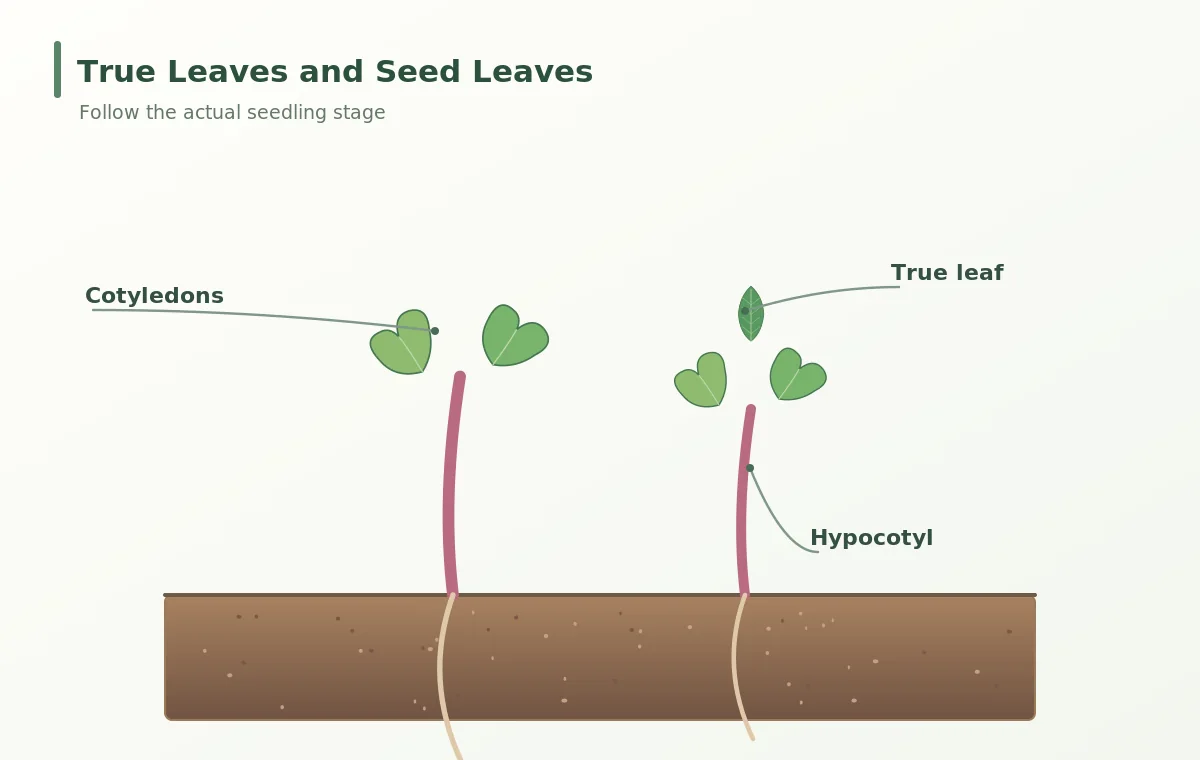
Daikon microgreens are seedlings of an edible radish, Raphanus sativus. They are cut for their young stems and small leaves before a swollen white taproot develops. The first paired seed leaves, or cotyledons, are smooth and broad with a heart-like outline. A later true leaf has a different more textured shape. The thin pale or pinkish hypocotyl is a stem connecting the cotyledons to the root below the medium.
Choose seed offered for edible sprouting or microgreen use from a reputable supplier and check for applicable handling instructions. Do not use ornamental or chemically treated seed. Microgreens grow in a drained tray on a medium or mat and are harvested above it. They are not identical to jar-grown sprouts, whose root and seed may be eaten and which have separate food-safety concerns.
Wash trays and prepare a shallow clean medium
Use a clean food-safe tray with holes for drainage, nested above a second tray to catch water. Penn State recommends suitable flat containers and a clean substrate or growing mat. Fill the tray with an even, shallow layer of moistened commercial medium rather than fresh manure, garden compost of uncertain treatment, or soil scooped from a contaminated bed. Smooth the top without packing it into a solid block.
Clean surfaces and scissors before they touch the crop. Wash hands before seeding and harvest, and use drinking-quality water. A tray that smells sour or contains visible mold should not be harvested for food. There is no home trick that can certify contaminated microgreens safe; prevention through inputs, drainage and hygiene matters more than attempting to clean a failed tray after the fact.
Broadcast radish seeds evenly instead of making piles
Spread whole daikon seeds across the moist medium in a relatively uniform single layer. They are round, brown brassica seeds, not the large pale beans used for pea microgreens. Leave enough separation that wet seeds are not heaped in thick clumps. Penn State describes gently broadcasting seeds and, for some media, using a light covering of substrate or vermiculite to keep moisture even.
Press lightly for contact with the growing medium and follow the seed lot directions for any covering or blackout phase. Avoid a heavy soil blanket that excludes emerging seedling stems from light for too long. Once shoots are established, provide useful light and ventilation so the cotyledons open and stems remain firm. Do not present an arbitrary seed rate as correct for all tray areas or seed sizes.

Water the roots without leaving a stagnant puddle
Water gently after sowing to maintain even moisture and prevent seed displacement. When roots have grown into the medium, bottom watering is particularly useful: add a small amount of clean water to the lower tray, let the upper medium moisten, then remove excess rather than leaving seedlings permanently submerged. Penn State emphasizes that wet leaves and stagnant humidity favor disease.
Look at the medium, not just the top of the cotyledons, to decide when to water. A drying patch along an edge and a waterlogged center both indicate uneven management. Keep air moving gently without drying the tray overnight. If seedlings suddenly fall over at a narrowed dark stem, consider damping-off and discard affected material rather than treating it as something to eat.
Read growth stages on the actual radish seedling
Germination starts with a tiny root emerging downward into the substrate. A curved hypocotyl then lifts the paired cotyledons upward; the seed coat sometimes remains attached briefly before dropping off. The cotyledons spread like two little hearts and turn green or slightly purple depending on cultivar. This stage looks unlike the jagged true leaves of an older radish plant or the long leaves of a mature daikon root crop.
Harvest timing depends on species, light, temperature and your intended texture. Rather than promising a fixed day count, look for expanded cotyledons and clean erect stems. More mature microgreens may show the first small true leaf; that is a choice of texture, not proof the tray has become unsafe. Weak stems and yellow leaves suggest inadequate light or overly crowded, wet conditions.
Harvest clean stems clearly above the medium
Use a clean sharp knife or sanitized scissors and cut the stems a little above the growing medium so that roots, seed coats and media remain behind. The blade must pass across the narrow stems, not through their roots or across an empty background. Hold a small bundle gently without crushing cotyledons and transfer immediately into a clean food container.
Keep microgreens cool and use them promptly following appropriate food-storage guidance. Avoid harvesting a tray if you see widespread mold, bird or rodent contamination, or other signs that clean production was compromised. Rinsing cannot reliably reverse unsafe growing conditions. If you wash harvested greens, use safe drinking water and clean tools; Penn State warns against unnecessary postharvest wetting because it may spread contamination.

Distinguish root hairs from fuzzy mold
Fine white root hairs may appear near a germinating radish seed and are attached to the root, usually close to the substrate. Widespread webbing that bridges multiple stems, a musty smell, discolored collapsing tissue or cottony patches on leaves are different warning signs. You cannot always identify a fungus safely from a picture; when in doubt, do not eat the affected crop.
If a tray fails, clean and sanitize the equipment according to food-contact directions and begin again with clean seed and medium. Reduce overcrowding and permanent saturation, then verify that air can circulate. Avoid an improvised pesticide application on seedlings intended to be eaten within days, unless it is explicitly legal and suitable for that crop and use.
Use one learning tray to improve the next
Keep notes on tray dimensions, seed amount, temperature, light, watering method, and the appearance of cotyledons at cutting. Comparing a dense tray with a moderately spaced tray can clarify whether leggy or damp seedlings came from crowding, inadequate light or overwatering. Record the actual stage rather than treating every home as a seven-day greenhouse cycle.
Keep this tray-specific method separate from instructions for growing mature daikon taproots. Microgreens do not need deep loose garden soil for a long white root because that root is not the harvested organ. Their key quality checks are young recognizable radish leaves, clean edible stem tissue, good hygiene and a blade that never drags through the growth medium.
Related Guides
- How to Plant Daikon Radish Seeds for Straight, Unbroken White Roots
- Grow Daikon Radishes With Straight Roots and a Careful Harvest
- How to Grow Daikon Radishes in Deep Pots Without Stunted Roots
How We Research and Verify This Advice
We cross-checked the plant anatomy, planting stages and handling recommendations against these published horticultural sources, accessed 2026-10-29: extension.psu.edu; extension.psu.edu; extension.psu.edu. Regional schedules in a source are examples for the source region, not universal dates. We separately checked nearby VegWin archive topics and publicly indexed pages, but hidden WordPress drafts are not visible in public results. Always prioritize local weather, cultivar guidance and current local Extension advice.
No sponsorship, paid partnership or affiliate product is promoted here. See the VegWin affiliate disclosure. The illustrations explain the intended crop and action; real plants vary and require an individual check for disease, pests, ripeness, and safety before any harvest.
No. Microgreens are cut above a growing medium, while jar sprouts may include root and seed and require different handling.
Harvest when the cotyledons have expanded and the stems are firm; light and temperature affect the schedule.
No. Cut the edible stems above the medium, leaving roots and debris behind.
Not always; fine attached root hairs are normal, but widespread webbing or collapsing seedlings are warning signs.
No. Discard suspect material; rinsing cannot make an unsanitary production tray reliably safe.