
An overgrown ornamental grass can look like one plant while actually consisting of many tightly packed growing points. If its center is dying or the clump has outgrown the space, division can restore manageable sections. The difficult part is choosing the correct season and ensuring each piece carries living basal shoots and roots. Cool-growing grasses do not follow exactly the same calendar as warm-growing grasses, and not every grasslike plant tolerates identical treatment.
Check the Grass Identity Before Digging
Look at the plant label for the genus rather than identifying an ornamental grass only by its fountain-like silhouette. Miscanthus and Panicum are warm-season grasses that generally start later in spring. Calamagrostis, Deschampsia, and Festuca are cool-growing examples with earlier activity. Sedges such as Carex have grasslike leaves, but their biology and evergreen habits differ from some deciduous ornamental grasses. RHS lists many of these groups and distinguishes their division timing. If the label is missing, photograph the plant during growth and use a trusted local horticultural resource before attempting a major split. Species identity matters more than a single all-purpose month.
Time Cool-Climate Grasses as New Growth Starts
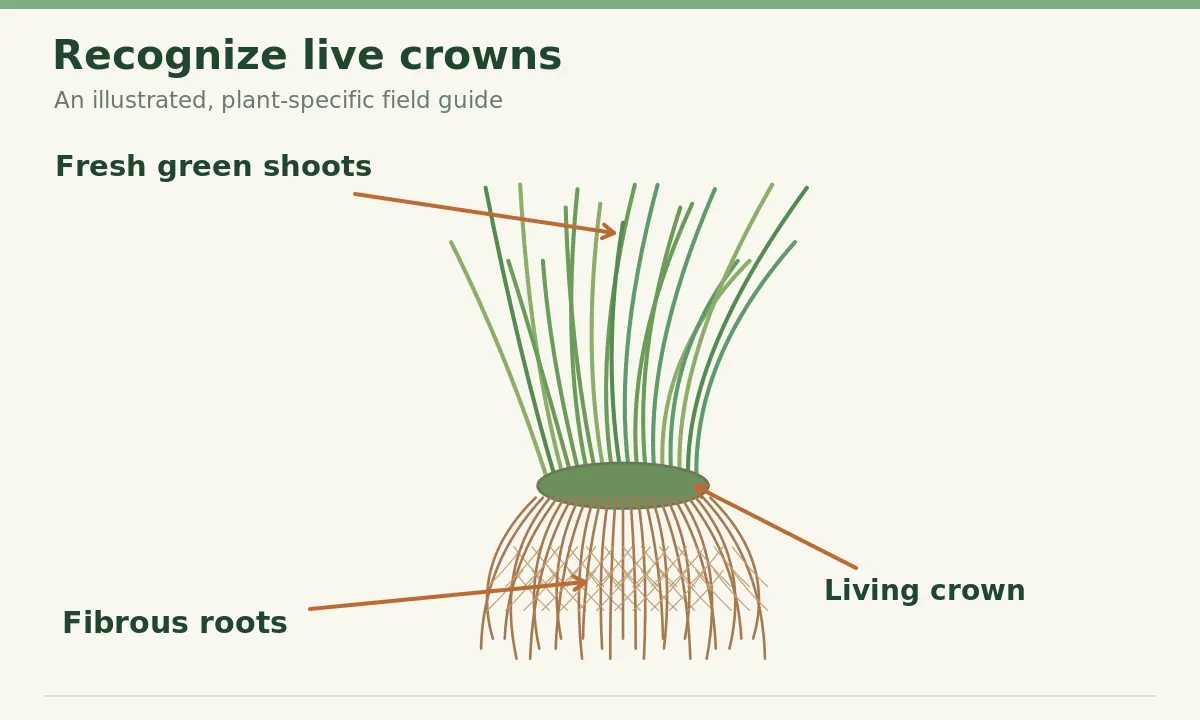
Cool-climate grasses are best divided in late winter or early spring when they start growing, according to RHS. Fresh green shoots appearing among old foliage give a useful visual cue. In a cold climate, wait until soil can be worked without smearing or compacting saturated ground. These plants may have developed active roots while warm-season grasses remain dormant. Do not lift an actively stressed clump simply because a generic calendar says spring. If it is growing well, not overcrowded, and fits the space, it may not need division now. Climate, site exposure, and weather shift the practical window.
Wait Longer for Warm-Climate Grass Clumps
Warm-season grasses typically begin vigorous growth later; RHS recommends dividing them in late spring after growth resumes. Miscanthus, Panicum, and many Pennisetum types fall into this group. A warm-season clump can appear lifeless during cool early spring even though viable buds remain at its base. If you split and replant it while soil is cold and wet, recovery can be poor. Wait for small fresh shoots or other credible evidence of renewed activity. A grass that is invasive or restricted in your region requires local guidance before propagation; dividing such a plant can spread an ecological problem.
Locate the Living Crown and Fibrous Root Mass
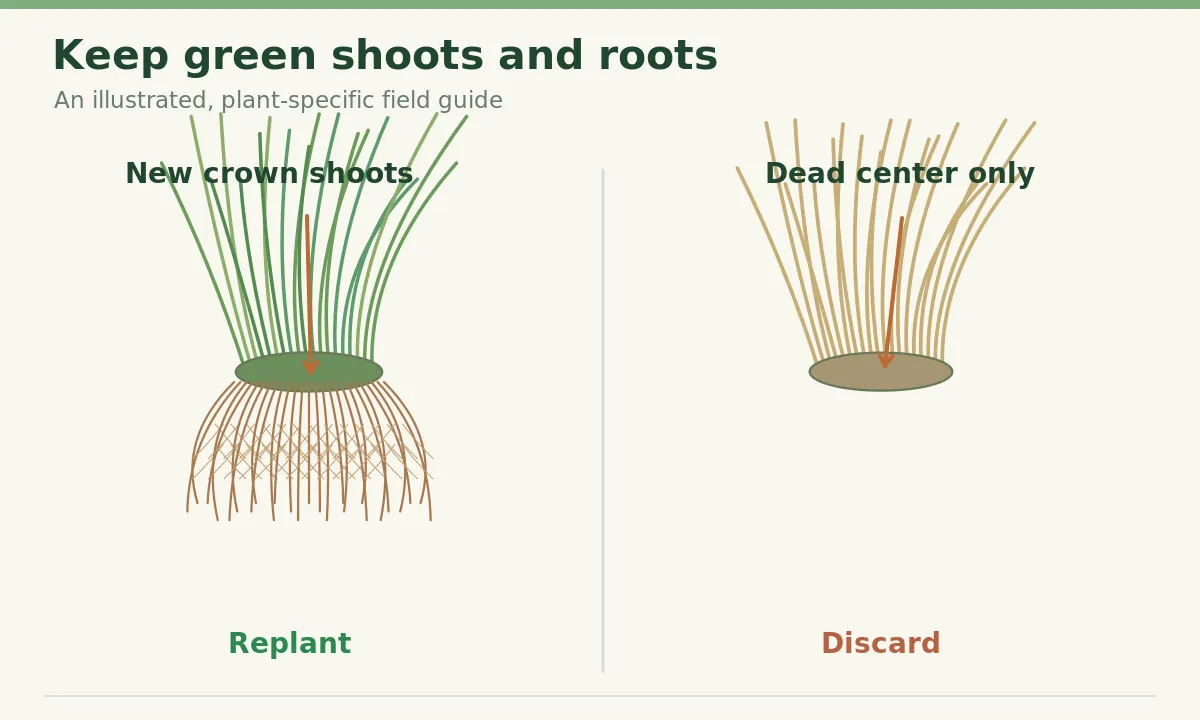
The crown is the basal zone from which grass shoots emerge. Beneath it is a network of fibrous roots, sometimes forming a dense, difficult mat. Viable divisions must have a section of living crown with growing buds or shoots and supporting roots. A handful of detached leaves without crown tissue cannot establish as a normal division. At the center of an aging clump you may find brown dead material without new shoots. Examine the whole perimeter to locate vigorous pieces before choosing how to split it. The detail illustration shows crown sections connected to roots rather than falsely showing bulbs or tubers.
Lift the Clump Without Chopping Through Every Root
Water a very dry bed in advance if soil conditions permit, and prepare a suitable replanting area before lifting. Use a spade or digging fork around the outside of the clump, leaving room to get beneath its root system. Lever carefully from several sides. Dense mature clumps can be heavy enough to require two people; sharp grass blades can also cut skin, so wear stout gloves and sleeves. Shake or brush off some soil to reveal divisions, but do not let the lifted crown dry in hot sun. Avoid wrenching the plant upward by leaves because this can separate shoots from their roots.
Make Sections That Include Both Shoots and Roots
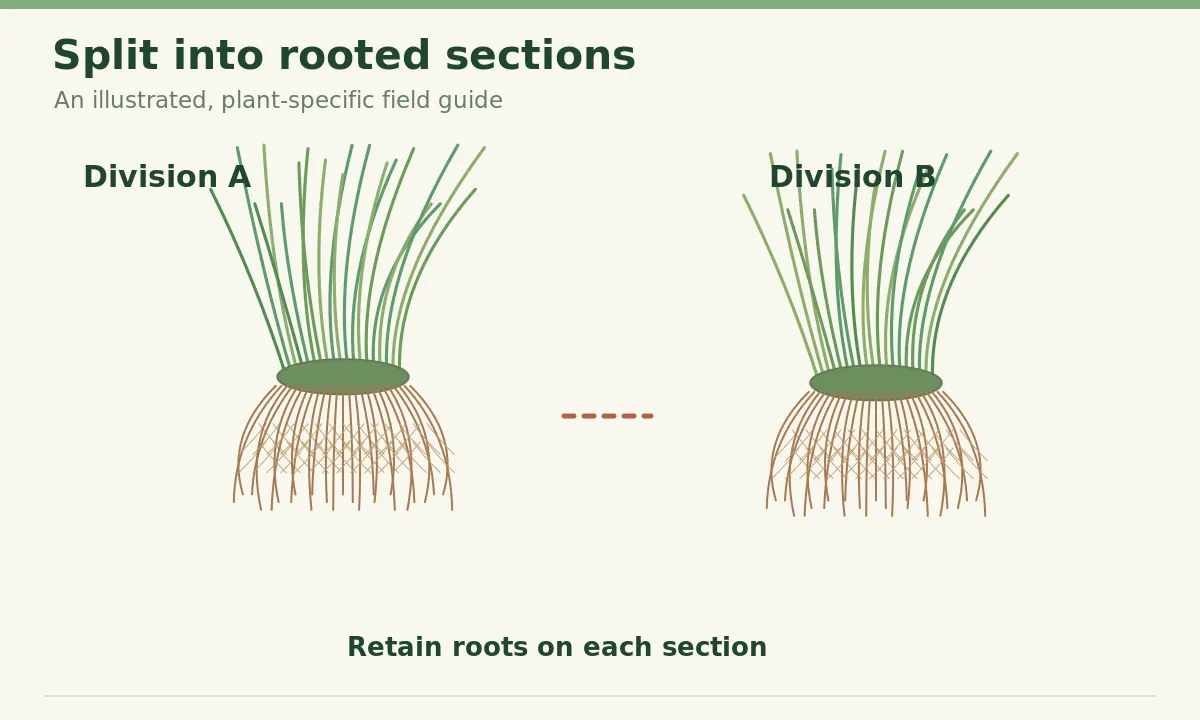
Smaller clumps can sometimes be teased apart by hand or using two digging forks back to back. A large tough crown may require a sharp spade, knife, or saw. RHS suggests keeping divisions as large as practical. Direct the split through the crown between groups of living shoots, aiming for complete pieces rather than shredding the perimeter. After each split, check that roots remain attached to each section. Remove genuinely dead interior fragments that have no viable green or firm basal buds. Clean blades when moving among plants showing suspicious decay. The illustration depicts two healthy sections, not the false idea that any root fragment will regrow.
Protect Hands and Match the Tool to the Plant
Some grasses have very abrasive or sharp-edged leaves. Pampas grass may need heavy clothing and gauntlet gloves; RHS specifically mentions protection when preparing it for division. A dull spade may crush woody sections and injure the user. Work on stable ground and keep hands clear of the splitting path. When two people operate forks, coordinate movements rather than levering suddenly against each other. Do not use an axe or saw indoors or with people nearby. For small soft-rooted grasses, a gentler hand separation can preserve more roots than a large metal blade. Stop if the plant is too heavy to handle safely.
Replant at the Previous Growing Depth
Prepare holes large enough that attached roots can spread without being folded into a knot. Set each section so the living crown sits at approximately its prior soil level; burying green shoots under a deep mound risks problems, while leaving roots exposed causes drying. Firm soil around the roots gently and water to settle air pockets. If the site drains poorly, improve the planting area instead of filling the hole with an isolated pocket of very rich material. Mulch around the clump without packing material over its shoot bases. Choose light and moisture conditions appropriate for the genus, not simply the sunniest available place.
Give Newly Divided Grasses Recovery Time
New divisions may appear sparse for a while, and some leaves can droop after root disturbance. Check soil moisture regularly and water when the root zone begins to dry, without creating permanently saturated soil. Protect small divisions from extreme heat and drying wind where practical. Do not interpret an immediate lack of flowers as a reason to divide them again. University of Minnesota Extension notes that divided perennials need enough time and moisture to establish new roots. Mulch and weeding can help, but aggressive fertilizing is not a substitute for intact crowns. Some species take more than one growing season to regain their mature shape.
Know When Division Is Not the Best Answer
A healthy ornamental grass may not require splitting for years. If a clump has poor flowering, inspect sun exposure and site conditions before diagnosing overcrowding; RHS notes insufficient light is a common cause. If the plant is affected by serious crown rot, creating several pieces may merely spread the problem. If local guidance describes the species as invasive, do not multiply or distribute it. During a severe drought or in saturated soil, delay strenuous lifting when possible. Compare your candidate division with the illustrated standard: living shoots, attached fibrous roots, and a sound basal connection. Without all three, replanting success is uncertain.
Related Guides
- When to Divide Ornamental Grasses and Remove a Dead Center
- When to Divide Bee Balm and Replant Rooted Rhizome Sections
- How to Divide Bearded Irises and Replant Healthy Rhizomes
- How to Divide Hostas Without Damaging Crowns or Planting Too Deep
- Dividing Tall Garden Phlox: When, Where to Cut, and How to Replant
How We Research and Verify Plant Advice
Sources checked on 2026-10-26: rhs.org.uk; rhs.org.uk; extension.umn.edu. We reviewed each institution’s plant identification, correct growth stage and relevant cultural recommendations before adapting them into an independently written step-by-step guide. Where sources are region-specific, their calendar details are not applied universally. Pictures use simplified teaching shapes and should be compared with living specimens; they are not a substitute for laboratory disease diagnosis or local climate guidance. The relevant advice is paraphrased rather than reproduced.
Safety and Independent Editorial Disclosure
This independently prepared educational article does not claim sponsorship or affiliate approval. Our category reading links are informational, not product endorsements. See the VegWin affiliate disclosure. Clean sharp tools before cutting plants, protect hands from thorns and blades, and keep cut plant material away from children and pets where appropriate. Use only locally registered plant treatments labeled for the actual crop, and observe the product label. Do not rely on unsupervised home remedies or unverified harvest-safety promises.
Usually late winter to early spring as fresh growth starts, where soil is workable.
Usually later in spring as their new growth begins, rather than while they are cold-dormant.
No. A useful division needs living basal crown tissue and attached roots.
Often a sound reason to divide, provided healthy outer sections still have shoots and roots.
At roughly their original growing level, with attached roots covered and living crown not buried too deeply.