
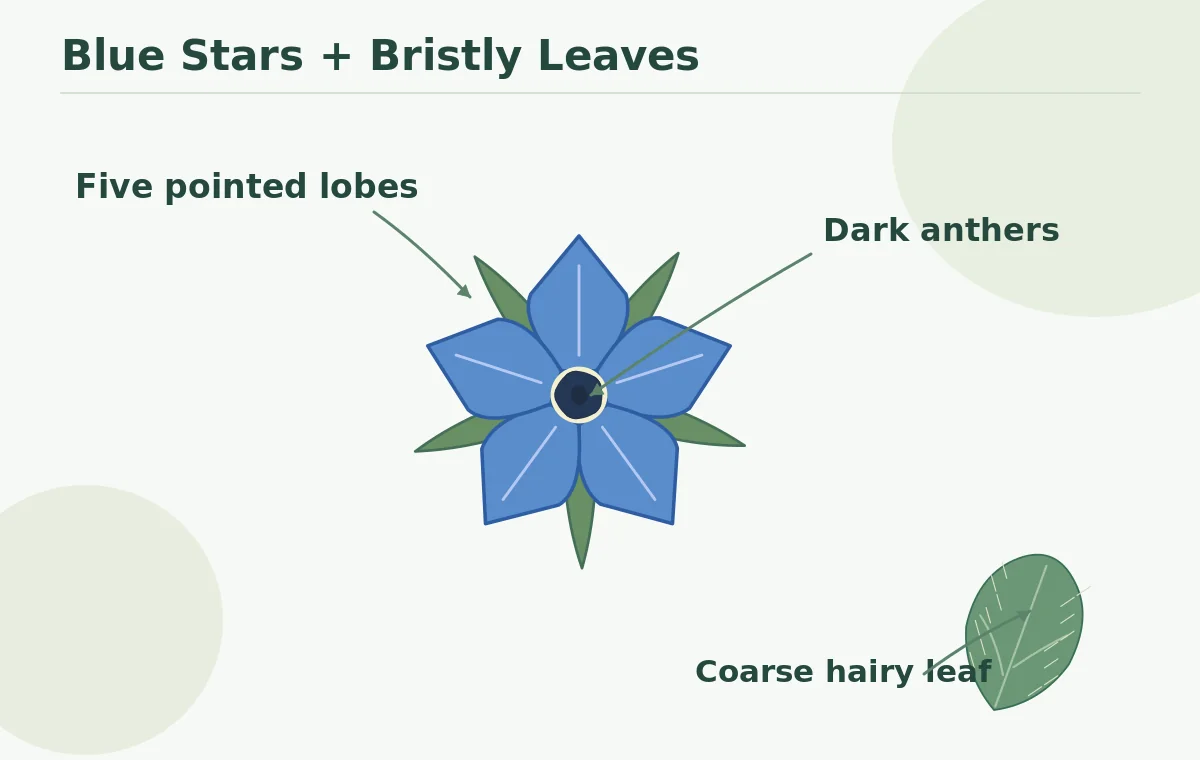
Borage, Borago officinalis, is a vigorous annual herb with rough, noticeably hairy gray-green stems and leaves. The true leaves are broad, simple, often oval to elongated and can look slightly wrinkled. Mature plants bear clusters of nodding flowers with five pointed sky-blue lobes and a contrasting dark central cluster of anthers.
Identify the Coarse Leaves and Blue Stars
A realistic botanical illustration should show actual bristles and downward-oriented or nodding star-shaped flowers rather than smooth mint leaves or upright flat daisy heads. Young plants will not flower immediately; identify them by the coarse emerging foliage. Some ornamental cultivars flower white, so flower color alone cannot determine species in all gardens.
Choose a Sunny Site With Room for Growth
Both Maryland and Illinois Extension describe borage as an annual suitable for sunny gardens. It can grow roughly two to three feet tall, with spreading branching stems and broad leaves. Leave space so its brittle stems do not crowd narrow paths or shade small adjacent seedlings. In exposed places, modest support can prevent wind damage.
Use reasonably well-drained soil and avoid keeping the seedbed saturated. Once established, borage can tolerate fairly dry sites, but fresh seedlings need adequate moisture to emerge and extend roots. Provide enough light to reduce weak, leaning growth. Pick the position before sowing rather than planning to move large plants later.
Direct Sow Instead of Disturbing Established Roots
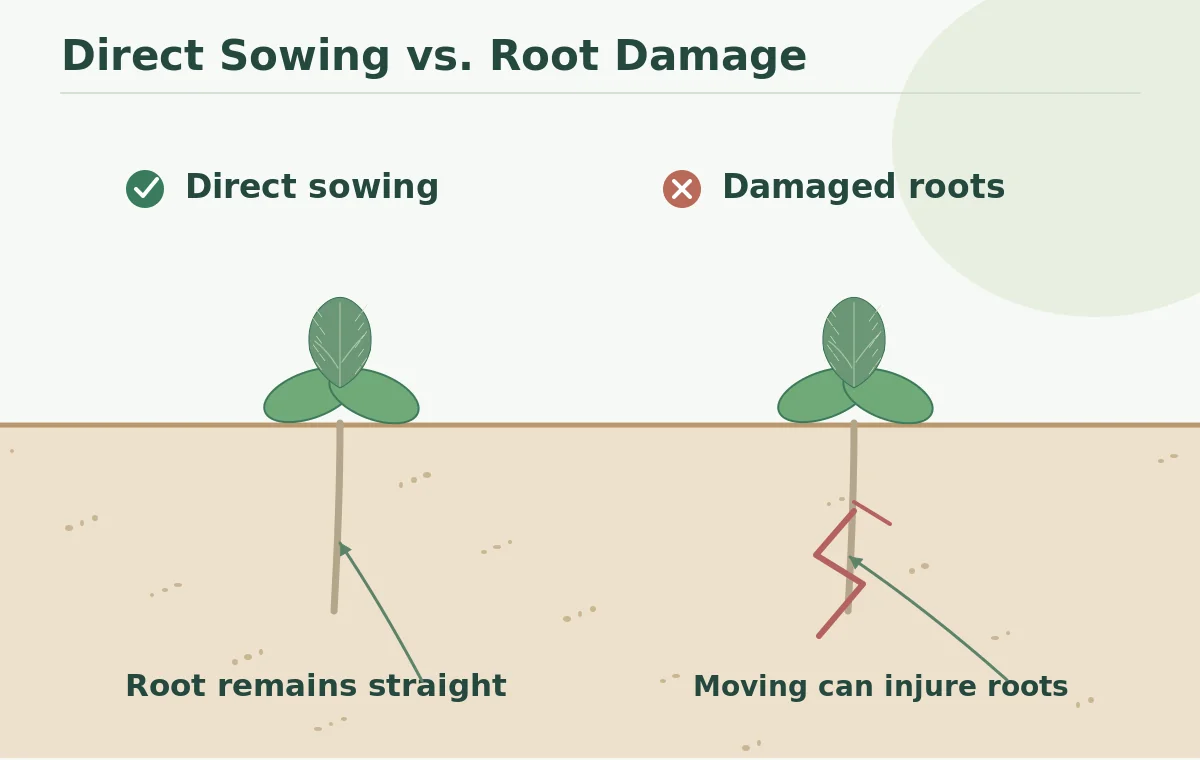
Maryland Extension notes that borage does not transplant especially easily. Direct sowing into its final position avoids disrupting the developing root system. Plant when local frost risk has passed, using the packet and local Extension for precise depth and spacing. This is more reliable than presenting one universal spring calendar for all regions.
Prepare a clean fine seedbed, draw a shallow row or small planting spots, place seed into soil rather than on top of dry mulch, and cover as directed for the seed lot. Water gently to settle the cover without washing the seed away. Mark the row so the emerging plants are not mistaken for weeds.
Learn the Seed, Cotyledon, and True-Leaf Stages
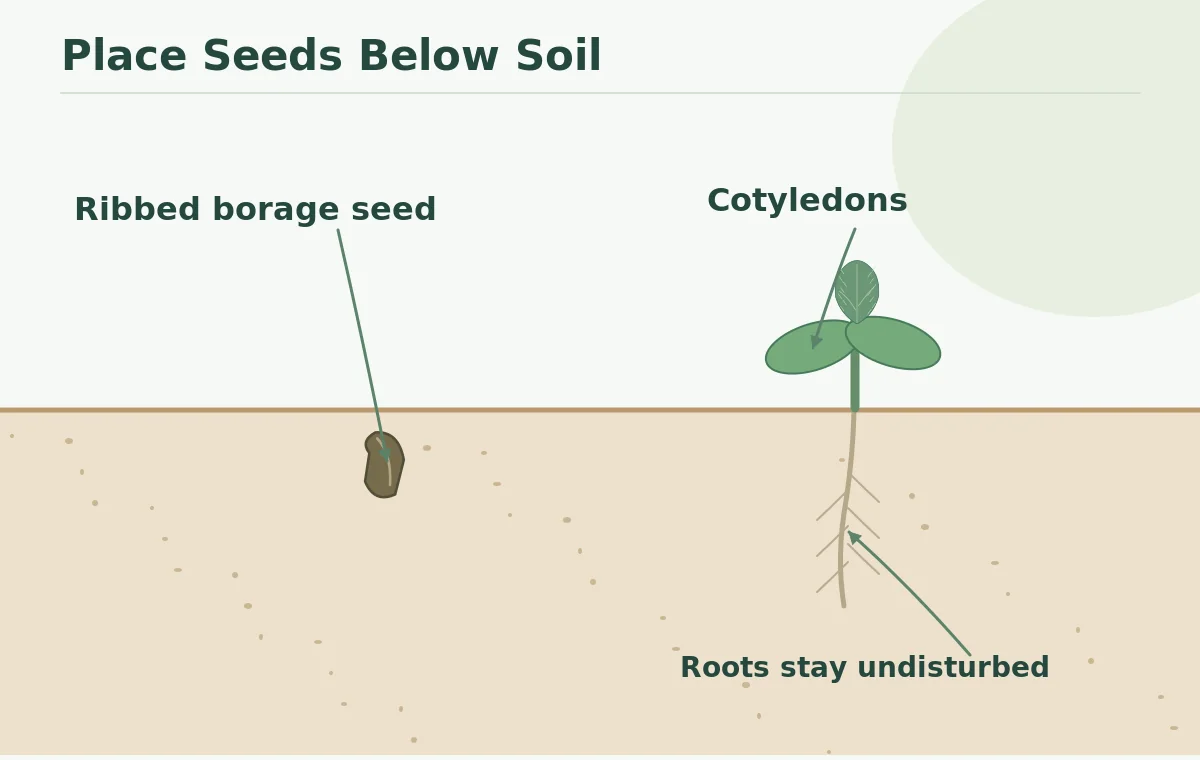
Borage seeds are relatively large, elongated, ribbed nutlets rather than round black peppercorns. After germination, the seedling first opens two cotyledons, then develops more textured true leaves. The earliest stages look different from the flowering plant, so do not expect a blue floral pattern or full-size fuzzy leaves immediately.
Thin only after seedlings are identifiable and sturdy enough to handle. Follow variety and spacing guidance rather than uprooting every young plant to move it. Allow a few well-positioned plants to establish deep roots and branch freely. A crowded line of seedlings can later become an untidy thicket of overlapping bristly stems.
Protect Establishing Seedlings Without Overwatering
Keep the upper seedbed evenly moist during germination. Once new true leaves develop and root growth is underway, water according to soil and actual weather conditions. A surface that looks dry can still be damp lower down, so check before watering again. Avoid stagnant water against the crown of the young plant.
Consider a temporary marker or low protective ring if birds or wind repeatedly disturb newly seeded rows, but remove anything that restricts leaf expansion. Weed carefully so borage roots remain undisturbed. If foliage is pale or distorted, first inspect light, drainage, moisture and actual insects before reaching for an unverified treatment.
Recognize Nodding Five-Point Flowers
Mature borage flowers commonly hang down from branching flowering stems, with a sharply pointed five-lobed blue corolla. The dark anthers form a protruding central cone, while green sepals sit behind the blue lobes. These are not the orange daisy florets of calendula or the yellow petaled flowers of many brassicas.
Flowering time depends on sowing and growing conditions. Avoid claiming that every seedling will bloom a specific number of days after emergence. Observe the shift from vegetative leaves to branching inflorescences. Beneficial insects can visit the flowers, but that does not prove that borage repels pests or improves every neighboring vegetable yield.
Manage Self-Seeding and Brittle Stems
Borage can drop seed and produce volunteers in later growing periods where conditions suit it. Remove developing seed clusters before full maturity if you do not want plants outside the intended bed. Alternatively, allow a few selected stems to set seed and recognize their seedlings in the next season. Volunteers can be weeded while young.
Rough leaves and little bristles may irritate sensitive skin. Wear gardening gloves when thinning or cutting plants, and use a clean tool where stems are tough or crowded. If a stem snaps in wind, tidy the broken material rather than tying it back as though the break had healed. Compost sound plant debris according to local practice.
Grow It as an Ornamental Without Food Claims
This guide focuses on germination and plant identification, not on consumption or medicinal uses. Some informal herb sources discuss culinary applications, but borage contains naturally occurring pyrrolizidine alkaloids and its use can raise safety questions. Do not infer that a visually healthy borage flower is suitable for everyone to eat.
For an educational planting plan, the safest useful results are attractive blue flowers, accurate labeling, appropriate spacing and a known self-seeding habit. Record the sowing date, actual weather and emergence so the next planting can be adjusted. Do not substitute folkloric companion-planting promises for observed results.
Related Guides
- How to Grow Borage From Seed and Manage Its Self-Sown Seedlings
- How to Grow Borage in a Deep Pot Without Damaging the Taproot
- How to Save Borage Seeds Before Black Nutlets Drop to the Ground
- Growing Borage Near Vegetables Without Letting It Self-Seed Everywhere
How We Research These Botanical Illustrations
This guide was checked against University of Maryland Extension borage guide; Illinois Extension borage guide; German Federal Institute for Risk Assessment PA safety questions. We compared plant parts, the development stage and the action shown by each diagram with these sources. Local weather, cultivar and soil conditions can change timing; check regional Cooperative Extension advice when necessary.
This independent educational guide contains no approved partner products or commissioned recommendations. Review the affiliate disclosure. Source citations support the named horticultural claims, not medical outcomes, pesticide applications or guarantees for every garden.
No. Direct sowing into its final bed is often simpler because established roots dislike disturbance.
They commonly hang downward and have five pointed blue lobes with dark central anthers.
No. The leaves and stems are characteristically coarse and bristly.
It is an annual but can self-seed where dropped seed survives and germinates.
This article does not recommend consumption; borage contains compounds that raise safety concerns.