
Borage, Borago officinalis, is easy to grow but remarkably good at scattering its own seed. The plant can carry fresh star-shaped blue flowers, with conspicuous dark stamens, while older flowers nearby are already drying and dropping small black seeds. Waiting for the whole plant to die back often means much of the harvest has disappeared into the soil. Instead, inspect fading flower clusters often and collect the mature hard black nutlets while they are still held by the old calyx, using paper or a shallow tray to catch any that fall.
Recognize True Borage Flowers and Seed Clusters
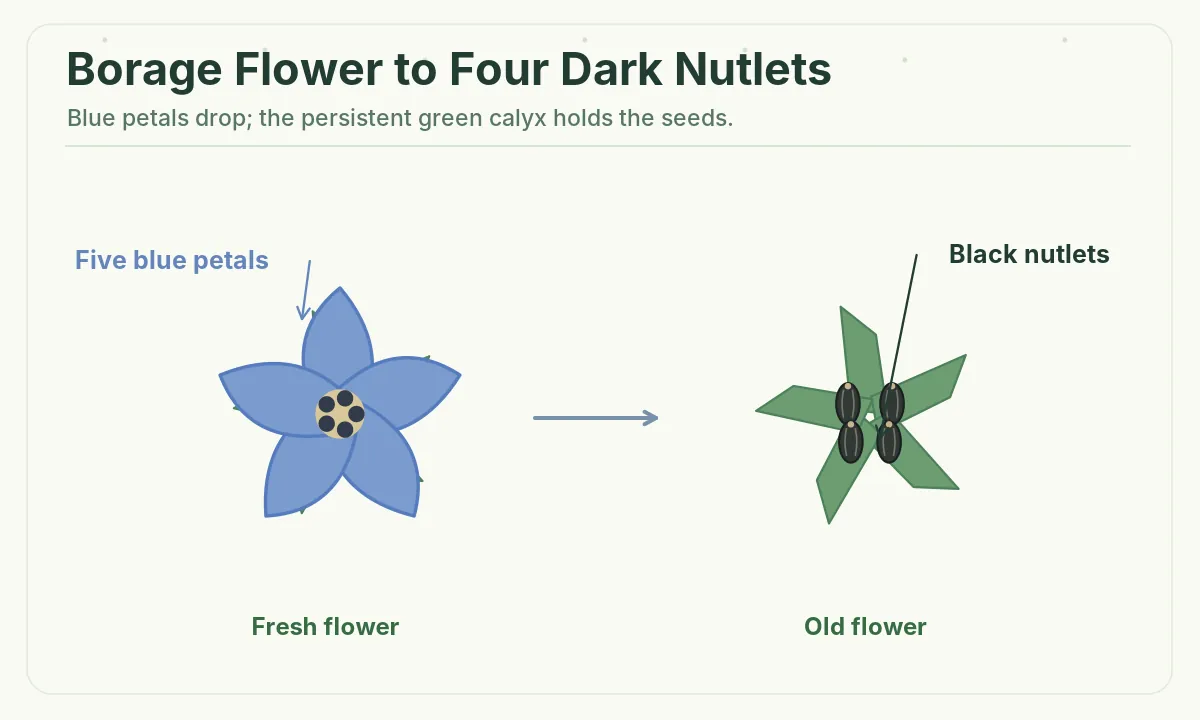
Common borage is an annual herb with hairy, often rough leaves, branching stems, and five pointed blue petals around a dark central cluster. Some garden forms bloom white. The blue star is not itself a seed pod; after pollination, petals wither and detach, leaving a persistent calyx around developing fruit. Each old flower can form several small, individual nutlets, often described as four in a complete set. The true mature seed-like units are those nutlets, not the discarded blue petals.
RHS specifically describes borage seed as hard and black within remains of old flowers. The small dark pieces are easy to miss amid fine hairs, dry green sepals and mixed-age blossoms. Look at faded flower sites near the stem tips instead of shaking fresh open blue flowers in search of seed. Do not confuse borage with lookalikes or mix it with an unknown plant growing nearby; correct identification should come before handling any plant material for gardening or culinary use.
Watch for Black Nutlets While New Flowers Open
Borage sets seed over time, not in a single dramatic end-of-season flush. Fresh flowers, newly formed green nutlets, and already black loose nutlets can coexist on the same stem. Choose heads where the petals have dropped and the developing units have become dark, hard and easy to dislodge. Pale or soft material still needs time. If most of the old calyx is empty and several dark seeds lie on the ground, the best harvest moment has already partly passed.
Check a few clusters every couple of days during active flowering, adjusting for weather and how quickly flowers fade. RHS notes that plants readily self-seed and that early flowers may already hold ripe seed while later flowers remain attractive. This staggered maturation explains why clipping an entire green branch is often wasteful. The best strategy is small, repeated collection of ripe, accessible material rather than uprooting a flowering plant to capture everything at once.
Use a Catch Tray or Paper Bag Beneath the Flowers
Slide a shallow light-colored tray or open paper bag under a cluster of fading borage flowers before touching it. Tap gently with one hand. Hard black nutlets that are ready may fall straight into the container. If they do not release, leave that cluster in place and try again later. This method shows immediately how much true seed you have caught versus leaves and dry petals. It also reduces the number of self-sown volunteers in the surrounding soil.
RHS advises picking or shaking dry seeds into a paper bag; for borage the catch surface matters because the seed is small and falls singly. Work during dry conditions and avoid vigorous shaking that breaks tender flowering stems. Handle the bristly foliage with care if your skin is sensitive; gardening gloves may be comfortable. Never put damp flowering material into a tightly sealed plastic pouch and assume it will become storage-ready without further drying.
Separate Hard Dark Seeds From Flower Debris
Spread your catch onto a clean pale sheet and remove stems, leaves and flower remains. The real crop is the hard dark oval nutlets. Tiny petal fragments and dry sepals are much lighter and often larger; take them off by hand or use a suitable small sieve rather than blowing away everything. If the seed needs a little finishing time, arrange it thinly in a breathable container in a dry airy place. The condition of each batch matters more than a universal number of drying days.
Label as borage, include the collection year and any flower color you selected, and keep different plants separate if you need traceability. Seeds from open-pollinated borage are not guaranteed to match every detail of the parent, particularly if differently colored plants mingle. For self-sowing beds, there is no need to save every seed; collect the amount you can identify and store responsibly. Avoid keeping seed from obviously diseased plants or heavily contaminated sites.

Store Dry Nutlets and Choose Where They Germinate
Once fully dry, place labeled borage seed in a dry, cool storage location where moisture and pests cannot reach it. Follow standard RHS seed storage advice and inspect containers if conditions fluctuate. Store the seed apart from food and avoid labeling a bag only as “blue flower.” A clear plant name helps prevent accidental use of unknown seed. If you want to sow in spring, RHS gives pot or direct-sowing options; the plant also readily establishes from dropped seed in suitable garden soil.
Volunteer borage is useful where it fits, but seedlings can appear in vegetable beds or paths where you did not plan them. Remove extras while small or transplant only when roots can be moved without disturbance; borage can establish a substantial taproot. Letting a few flowerheads shed naturally is a garden-management choice; collecting seed in a bag is the opposite choice. Decide which you want before the oldest clusters ripen and disperse.
Avoid Common Mistakes in Seed Saving
One frequent mistake is collecting dried blue petals and treating them as seeds. Another is waiting for the entire stem to become brown, long after nutlets have dropped. Dark mature nutlets should be seen as distinct compact objects, not fuzzy flower fluff. If nothing falls into your bag after gentle tapping, inspect a flower site closely before deciding the plant produced no seed. Cold, wet weather may delay maturation or cause poor-quality material.
If saved seed molds, the problem is usually storage of material that was still damp or contaminated; discard rather than resow. If next spring’s sowing is patchy, germination can be affected by seed maturity, storage and soil conditions. Keep a labeled sample and do not invent a mandatory cold-treatment regime for all borage seeds. Your best improvement for another year is to collect small batches at the moment dark seeds begin to release.

Distinguish Harvesting Seed From Eating Flowers
Borage flowers are sometimes used in drinks or food, but harvesting mature nutlets is a separate gardening task. This article does not recommend consuming seeds or making concentrated herbal products. Herbal safety varies with species, plant part and personal circumstances; people who are pregnant or have medical concerns should seek qualified advice rather than treating a seed-saving article as an edible-use guide.
Leave some flowers for pollinators while collecting only the spent heads you need. Remove flowerheads from areas where abundant self-seeding would be a problem; elsewhere, allow normal succession. Because fresh blossoms and mature seed develop side by side, a staggered harvest does not need to interrupt the whole flowering season. The distinguishing feature is the visible hard black nutlet sheltered by fading calyx tissue, not the color of a pretty open flower.
Related Guides
- How to Grow Borage From Seed and Manage Its Self-Sown Seedlings
- How to Grow Borage in a Deep Pot Without Damaging the Taproot
- Growing Borage Near Vegetables Without Letting It Self-Seed Everywhere
How We Research These Garden Recommendations
Our instructions were checked against the following subject-specific published sources on October 27, 2026: RHS explains guidance (RHS explains borage is a self-seeding annual and describes hard black mature seeds within old flowers, collected by shaking into a paper bag.), RHS seed-saving guidance (RHS seed-saving guidelines cover mature dry seed collection, label and dry storage.), Iowa State guidance (Iowa State Extension recommends collecting mature seed of desirable, healthy plants and harvesting species as seed ripens.). The advice is interpreted for general home gardens and is not a substitute for local extension schedules, site assessment, or species identification.
This article contains no paid product endorsement. Please read VegWin’s affiliate disclosure. Botanical advice depends on the plant, cultivar and conditions; confirm any food or pesticide use with appropriate qualified sources.
Hard black nutlets develop within the calyx remaining after petals drop; do not save dry petals as seed.
Borage produces individual nutlets in the old flower rather than long bean-like pods.
Ripe borage nutlets detach readily, which is why the plant often self-seeds.
Yes. Old flowers can carry ripe nutlets while younger flowers are still open.
Only after they are thoroughly dry; damp plant material can develop mold in sealed storage.