
Pink muhly grass (Muhlenbergia capillaris) forms a tidy mound of thin wiry blades topped by airy pink flower panicles in fall. Planting time matters less as a calendar slogan than as a chance to grow new roots before summer heat or winter freezing arrives. In milder regions, an early fall planting may establish well; in colder or poorly drained sites, spring after the ground becomes workable can be the safer choice. Buy the correct species, protect its crown from waterlogging, and give the clump enough sun to develop its characteristic plume display.
Identify a clumping grass rather than a runner
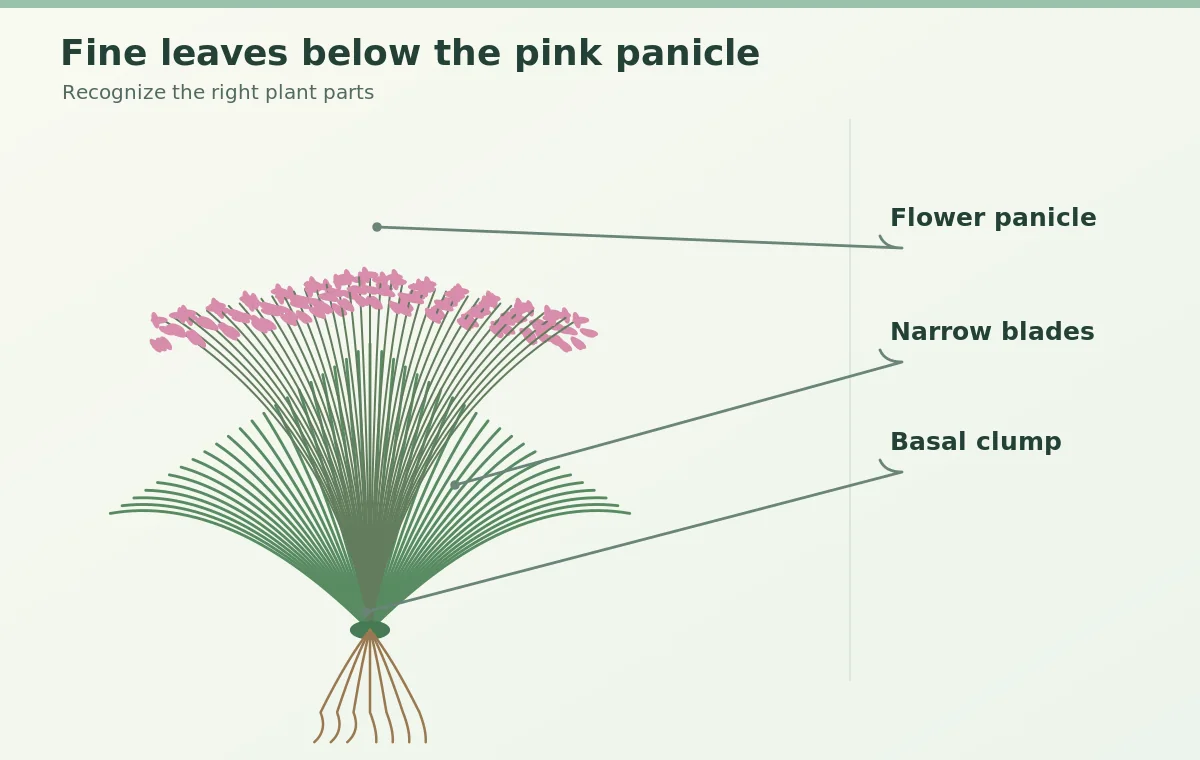
Pink muhly grows in an expanding clump of slender leaves, not a carpet of stolons or rhizomes that races across the ground. NC State describes threadlike foliage and floating-looking pink to purple-pink panicles in the fall. The showy cloud is made of many fine flowering stems rising well above the leaves; it is not a single fluffy ball glued to the crown. Read the nursery label for Muhlenbergia capillaris, because several other muhly species and ornamental grasses have similar trade names but different mature size or climate tolerance.
Choose spring when winter establishment is risky
In regions with hard freezes, wet cold soil or an exposed planting site, spring gives new transplants a warm growing season to establish roots before winter. Plant once the ground is workable and not waterlogged, and after severe cold is unlikely to damage a newly handled crown. Local temperature and drainage matter more than the first day of spring on a calendar. A pot bought late in the year can sometimes overwinter in a sheltered well-drained location for spring planting, but container protection needs differ from in-ground winter hardiness.
Use early fall only where roots can settle
Mild-winter areas often support fall planting of hardy ornamental grasses while soil still has warmth and periodic rain helps roots establish. However, do not transplant immediately before a forecast freeze, into soggy clay or during a long drought without reliable irrigation. The plant needs a useful interval for root growth, not just a date labeled fall. If your site freezes deeply and remains saturated all winter, spring is often a more sensible default. Note the local first-frost pattern and the actual weather forecast when making this choice.
Give pink plumes a sunny stage
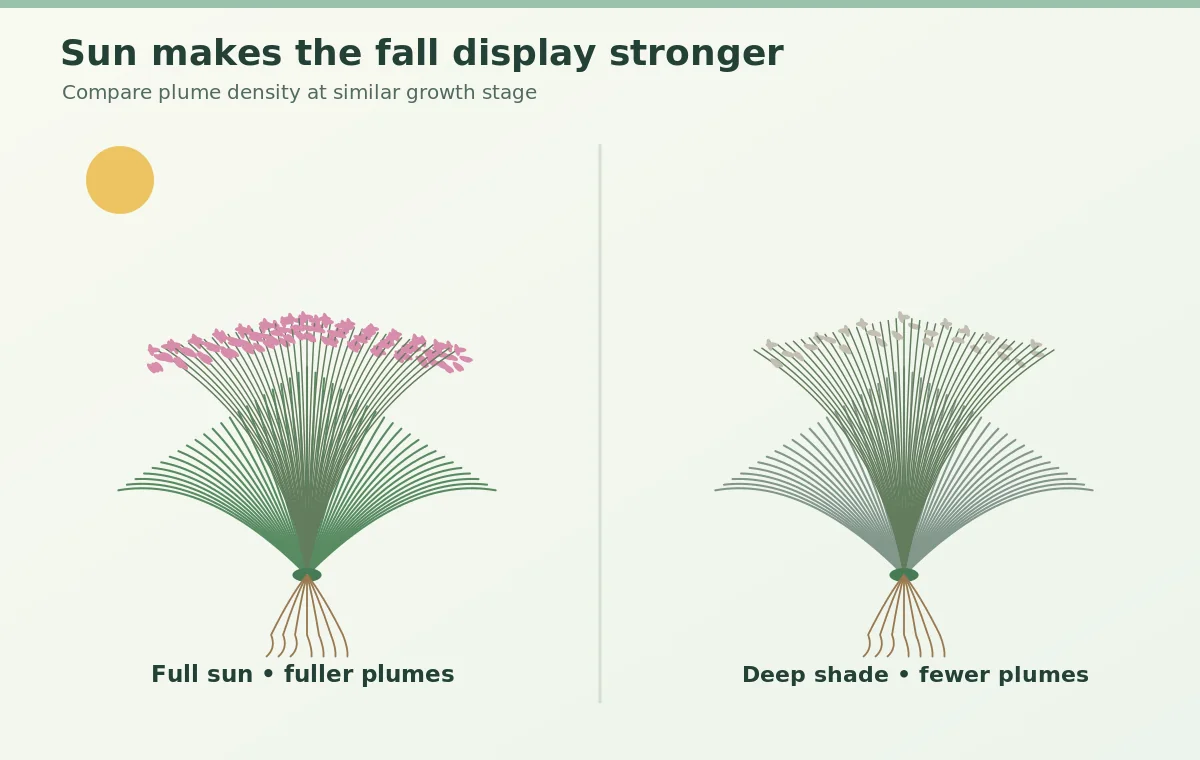
Pink muhly tolerates some shade but performs best for flowers in generous direct sunlight. NC State explains that the fall display is a mass of airy panicles above narrow leaves. In a deeply shaded border the clump may remain green but produce sparse, weakly colored flowers. Site a group where low afternoon sun can illuminate the plumes from behind without blocking a walkway. Provide enough distance that neighboring perennials do not grow over the center; an overgrown companion can hide the flowering stems even when the muhly itself is healthy.
Prepare drainage before placing the rootball
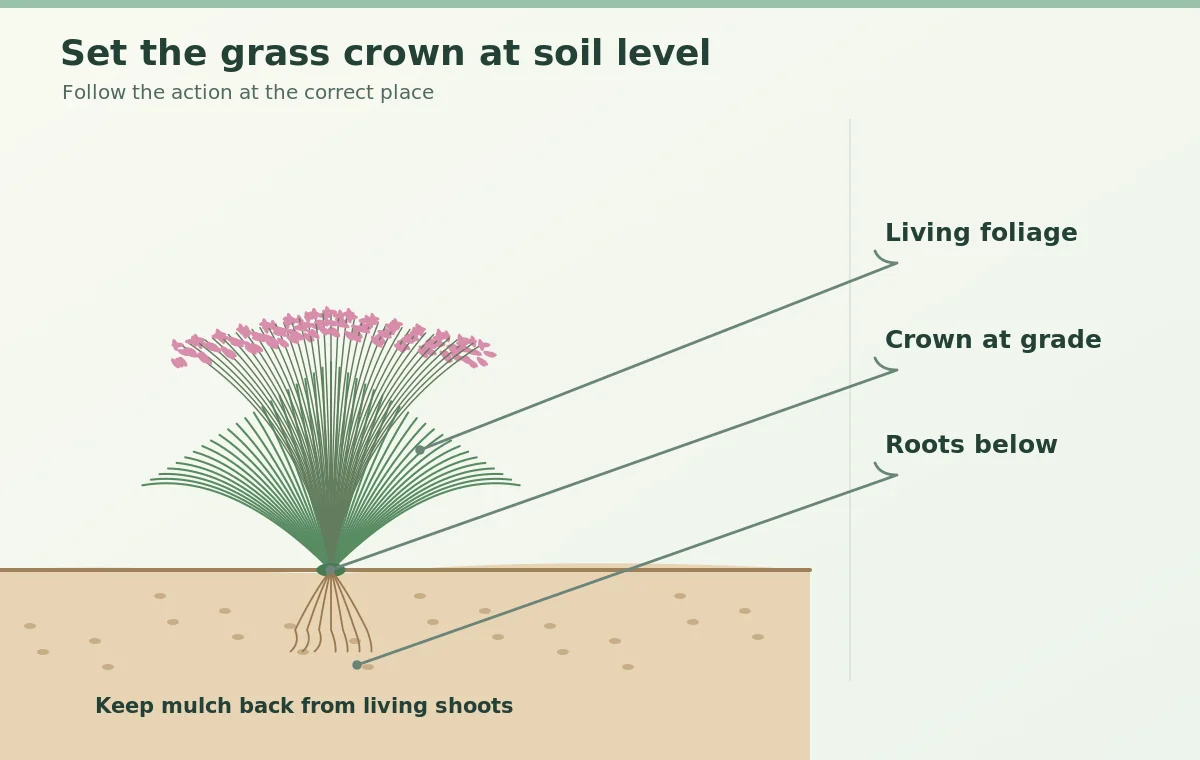
A wide planting hole with a saturated clay bottom is not improved by putting a handful of gravel beneath the rootball. Work with the existing drainage pattern, choose an appropriate raised site if necessary, and avoid burying the base of the grass. Set the top of the root mass at or near surrounding grade. Refill with site-appropriate soil and water to settle gaps. Mulch around the planting area without piling it into the green crown. The goal is moisture for new roots plus oxygen in the pore spaces, not a permanently wet basin.
Water new plants differently from established clumps
A newly transplanted grass needs regular checking and watering while roots expand beyond the original pot. Check the rootball itself, since the surrounding soil may feel moist even when a peat-based rootball is dry. Once established, pink muhly can tolerate significant dry periods, but that drought resilience does not excuse neglect of a newly planted division. Avoid fixed daily watering that keeps the crown soaked. Adjust for rainfall, soil texture and weather rather than giving every bed the same volume.
Show the actual crown and root system
A healthy muhly clump has many narrow leaves emerging from a basal crown above a branching fibrous root system. The roots belong under the soil line, not dangling below the pot. When removing a nursery container, support the rootball and loosen circling outer roots gently without tearing the crown apart. If dividing a mature plant, each retained portion must have both living shoots and roots. Do not treat a tuft of detached upper foliage as a rooted division. Replant promptly so fine roots do not dry in wind.
Expect fall flowering after summer leaf growth
Pink muhly is a warm-season grass: fine green foliage builds during warmer months, followed by a haze of pink blooms in late summer to fall according to climate. The color of dried winter panicles becomes tawny. A newly planted small clump may not produce the same plume volume as an established mass. Do not assume every short first-year display means the plant is diseased. Check sunlight, establishment and local season before adding fertilizer, which can encourage foliage without improving the flower display.
Trim dead blades without injuring new shoots
LSU AgCenter describes a late-winter pruning that leaves a short stubble above the crown before growth resumes. Use clean shears and inspect the center for new green blades first; do not cut directly into fresh basal shoots. In climates where plants stay green, remove only dead material as necessary rather than stripping away living foliage indiscriminately. Avoid tying an overly tight bundle around the crown while trimming. Leaving some standing stems through winter provides a tidy seasonal texture, but cut back before the next major flush of active growth.
Do not overfeed a grass adapted to lean sites
Pink muhly grows well in a range of well-drained soils and does not normally need a rich, heavily fertilized bed. Too much nitrogen can make foliage soft or floppy and may reduce the clear mound shape. If a mature clump is pale, check whether its roots are wet, shaded or buried before attributing the symptom to nutrient deficiency. A soil test is a better basis for fertilizer than a weekly product schedule. Keep mulch and organic matter away from direct contact with the crown to reduce persistent dampness.
Plan spacing around the eventual plume cloud
A tiny nursery pot does not describe the mature clump and its late-season flower spread. NC State notes plants may reach several feet in height and width. Mark the approximate finished diameter before planting groups, leaving space for maintenance and neighboring flowers. Position them where plumes will not lean into a narrow path or cover a drainage grate. If the site demands a grass that remains very small, choose a more compact species or cultivar with documented size rather than repeatedly cutting back a large muhly clump throughout summer.
How We Research and Check These Recommendations
We checked species identification, cultural requirements and cautions against plant profiles and research-backed guides, prioritizing horticultural universities and public botanical agencies. Recommendations here describe observed growth characteristics and practical decisions, not guaranteed results for every garden. Local weather, purchased variety and site drainage can change the right choice. For further reading see the first plant reference and the second detailed guide. This page contains no paid affiliate recommendation; read the VegWin affiliate disclosure for our site policy.
Spring is often safer where winters are cold or wet; early fall can work in milder climates with time for roots to establish.
It is primarily a clumping grass, so allow width for the expanding crown rather than expecting turf-like runners.
Flowering is generally stronger in full sun; deep shade can reduce the display.
No. Keep the crown near soil grade and keep mulch from piling against it.
Inspect the crown and trim dead foliage in late winter or before active spring growth without cutting into new green shoots.