
Mexican tarragon has an anise-like scent but is not the French tarragon of classic herb recipes. Tagetes lucida is a marigold relative with narrow green leaves and small yellow composite flower heads.
Identify the right herb before sowing
Mexican tarragon is Tagetes lucida, a marigold relative in the daisy family, whereas French tarragon is Artemisia dracunculus. Both can flavor food with an anise-like aroma, but their flowers, seed habits and cold tolerance differ. T. lucida makes opposite narrow leaves on branching upright stems and later clusters of small yellow daisy-like heads. French tarragon looks and propagates differently; seed packets marketed as generic tarragon should not be assumed to produce the French type. Check the scientific name, source and intended garden use. If a plant has an unfamiliar odor or labeling is doubtful, do not use it as food before positive identification.
Choose a seed-starting setup with drainage
Seed of Mexican tarragon can be harder to find and less predictable to germinate than common basil or cilantro. A UC Master Gardener guide notes this challenge and suggests starting with purchased plants as an alternative. To try seed, use a fine clean mix in small draining cells and follow the seed supplier’s actual sowing depth; reliable institutional sources do not support inventing one exact universal depth for every lot. Moisten first and apply water gently after placing seed. Label each variety so it is not confused with ornamental Tagetes seedlings. A seed-starting tray is only the first stage: it needs light and air as much as it needs water.
Give the seedlings light and controlled moisture
Raise seedlings in a bright protected setting, moving from any germination cover to freely circulating air when sprouts show. Do not keep their root zone permanently sodden. An overly wet tray can produce weak, pale stems and fungal trouble even if the top looks lush. Thin crowded starts carefully after genuine leaves form. If germination is patchy, compare the age of the seed, temperature, moisture and manufacturer instructions before digging around for tiny roots. Some healthy batches emerge unevenly. Record conditions so a second sowing can be more informed. Resist adding strong fertilizer to a cell whose first problem is simply poor germination.
Move out after the weather becomes reliably warm
NC State describes Tagetes lucida as a tender perennial in warm regions but commonly an annual farther north. It is not French tarragon’s cold-hardiness equivalent. Acclimate young plants gradually to outdoor light and wind when local frost risk has passed. Plant in a location receiving good sun with soil that drains rather than collecting water around the crown. UC guidance advises spring planting after frost in its region; translate that seasonal principle to your climate, not the same date everywhere. A transplant should retain its original soil level and avoid deep burial of lower leaf nodes. If you grow in a container, check the drain holes before planting.
Recognize the opposite leaves and yellow heads
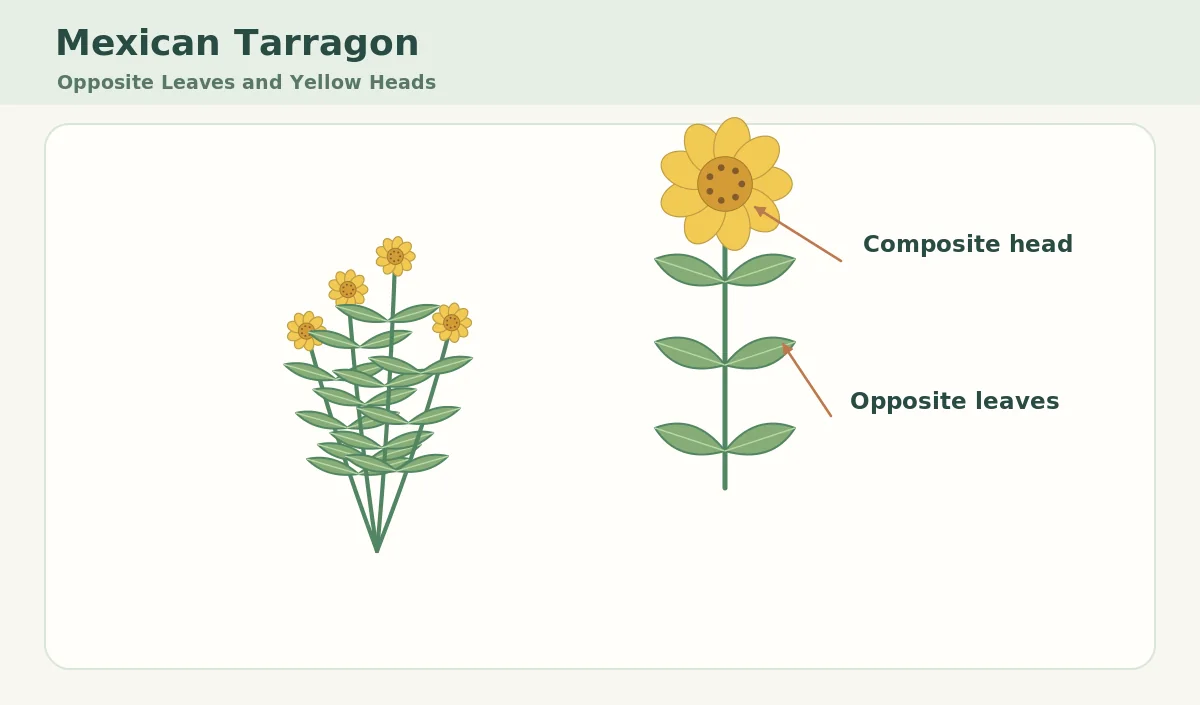
The mature plant has paired narrow leaves at nodes. Later, small yellow flowerheads develop near stem ends. The head is a composite structure of multiple florets, not a single giant five-petaled flower, although the ray florets make it look daisy-like. Distinct flowerheads attach to branching stems and should be drawn that way. Leaf color and aromatic scent are supporting clues but not independent proof of identity. The comparison graphic shows true T. lucida leaves, one attached flowerhead, and the different plant family of French tarragon without suggesting that they are interchangeable for seed propagation. These details make it easier to spot nursery mislabeling.
Water consistently without saturating the stem base
An established Mexican tarragon plant can tolerate some dry conditions, but repeated deep drought and prolonged soggy roots both reduce leaf quality. Check moisture below the surface before irrigating. A well-prepared bed with organic matter and drainage offers a more stable root zone than a tight clay basin or a pot without holes. Avoid splashing the foliage late in the day when weather is humid; UC notes that keeping leaves comparatively dry is prudent. Mulch lightly where useful but maintain an open space around the living crown. Heavy feeding is not the first response to sparse leaves; check sunlight, container space and recent weather.
Harvest a few leafy shoots at a time
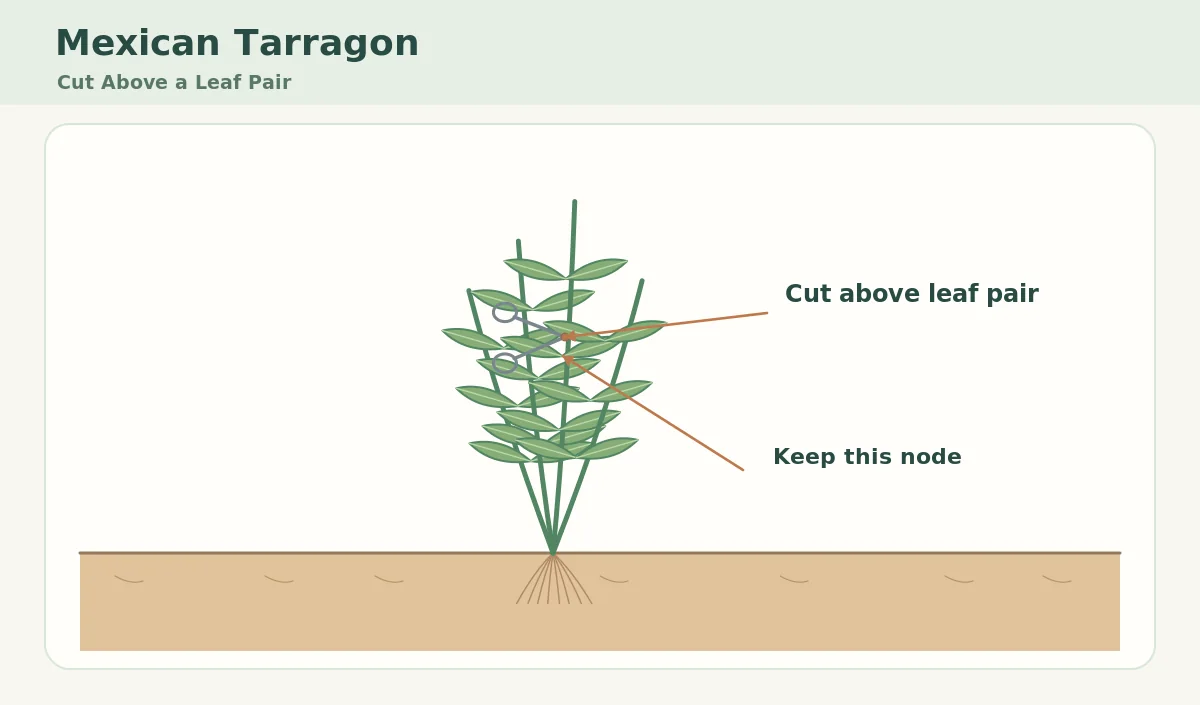
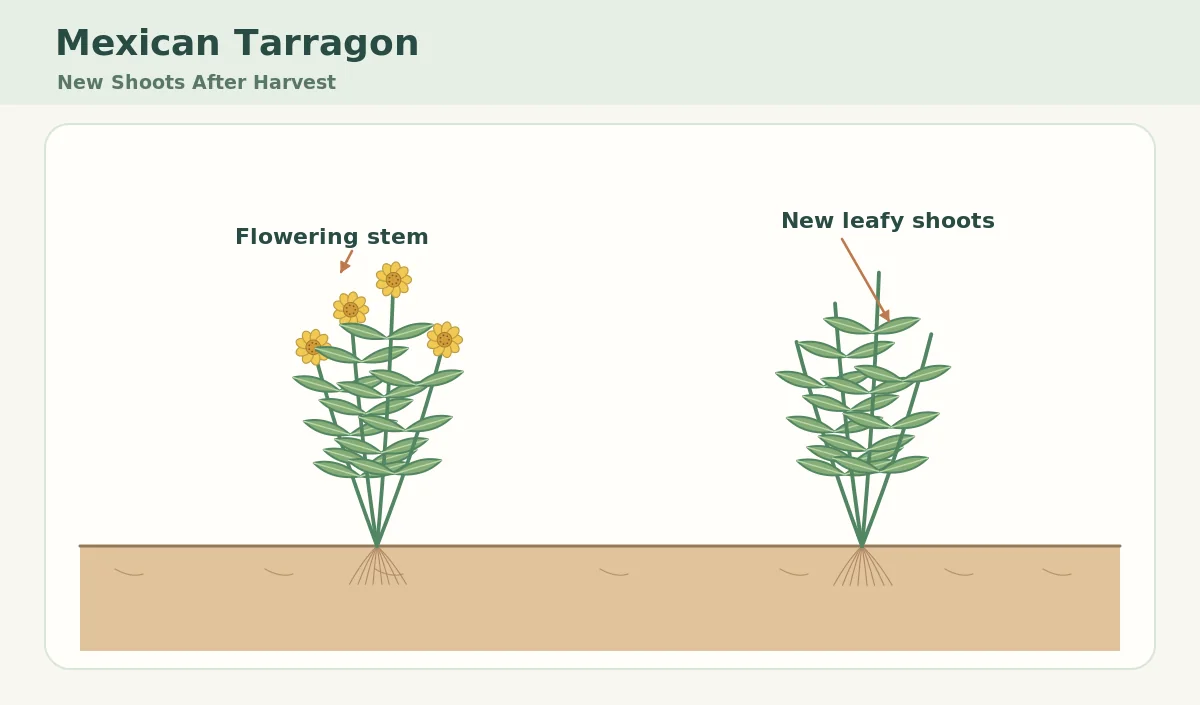
Pick clean, healthy young leaves or short leafy tips without cutting the whole plant down to the woody base. Use clean snips above a node where a pair of leaves remains. This protects side buds that can contribute to new branching. Avoid taking nearly all leaves just as the plant is recovering from transplant shock. For a small home herb patch, harvest only what is needed and track how rapidly new foliage returns. UC suggests using leaves fresh for the best aroma, though dried leaves are also used. Wash edible harvests appropriately, and never assume that strongly aromatic plants are safe to consume in unlimited quantities.
Treat culinary use as seasoning, not medicine
NC State specifically warns that this plant can cause problems when consumed in large quantities. Its traditional use as a flavoring does not make concentrated preparations or medicinal doses safe. Keep food use modest, choose correctly identified plants, and avoid making health claims about tea or extracts. People who are pregnant, take medications or have plant allergies should get individualized medical advice before using an unusual herb medicinally. Do not confuse a mild culinary garnish with a therapeutic supplement. Children and pets should not be encouraged to chew unidentified garden stems, flowers or seeds. Respect any reported skin sensitivity and wash after handling if irritation occurs.
Plan for flowers and possible seasonal dieback
In favorable warmth, Mexican tarragon branches into a leafy mound with golden heads that may attract pollinating insects. In a cold climate it may die with frost, while protected plants in warmer places can survive as perennials. The flowering season varies with temperature and day length; do not promise the same autumn bloom date everywhere. Allowing flowers does not require you to stop harvesting every leaf, but a plant stressed by drought and heavy cutting will be less vigorous. Look for healthy stems before gathering any seed. A fragrant flowering shrub may be valuable in an ornamental bed even if you rarely use the foliage in cooking.
Use plant labels and a small comparison journal
Record the scientific name, seed supplier, sow date, emergence, first yellow flowerheads and how the plant reacts to your site’s sun exposure. Compare plants in the same conditions before assuming a cultivar defect. A yellow marigold-like flower alone could belong to many Tagetes species; paired leaves and the complete habit provide additional evidence. If you need a predictable culinary supply, cuttings or locally sourced authenticated starts may be more practical than an uncertain seed lot. A good first season ends with a correctly identified herb, clean moderate leaf harvest and viable overwintering plan if your climate allows it—not an exact number of stems.
Related Guides
How We Research and Illustrate Plant Care
We reviewed the following horticultural sources on October 30, 2026: plants.ces.ncsu.edu; ucanr.edu; heritagegarden.uic.edu. Their published cultivation and anatomical guidance informed the practical distinctions above; cultivar, climate and garden conditions may change results. The original drawings are explanatory, not measurements to scale.
VegWin provides independent educational gardening information. All three on-page navigation links go to VegWin information, are not affiliate offers, and create no paid relationship. Read the affiliate disclosure. For suspected disease, plant toxicity or identification uncertainty, ask a qualified local Cooperative Extension service.
No. Mexican tarragon is Tagetes lucida; French tarragon is Artemisia dracunculus.
Yes, but seed can be slow or uneven and established nursery plants may be easier.
Small yellow composite flowerheads attached near the ends of branching stems.
Harvest modest leafy tips above living nodes rather than stripping the plant.
Do not assume medicinal safety; NC State warns against large ingestions, and individualized advice is appropriate.