
At a glance: Bok choy, also sold as pak choi or pac choi, is a leafy brassica grown for its crisp stalks and leaves. A common frustration is a healthy-looking transplant that rapidly sends up a flower stalk, or a promising young crop whose leaves develop tiny holes. Both problems have different causes and solutions. This guide uses the plant’s cool-season biology to plan a crop and decide what to do when weather or pests interrupt it.
Choose Bok Choy Rather Than Heading Napa Cabbage
Bok choy and Napa cabbage are closely related Asian greens, but they do not develop the same marketable shape. Bok choy forms an open cluster of leaves with broad, often pale or green stalks; Napa cabbage makes a denser head. University of Minnesota Extension discusses them together but provides crop-specific notes about timing and harvest. Check the seed packet for mature plant size and whether you intend baby stalks or a full-size plant. That choice changes space and time, even though the crops share several insects. For the fuller picture, see our guide “Grow Napa Cabbage for Firm Heads Without Early Bolting”.
A packet labeled "baby bok choy" may refer to a small-growing selection, a younger harvest stage or both; do not infer that every plant with that name is identical. Space selections for their expected form. A close stand harvested very young is a different project from leaving widely spaced plants to develop thick stalks. If your goal is a large head of cabbage, this is not a substitute for an article about head formation. The distinctive value here is control of bok choy’s timing, stalk condition and pest pressure.
Avoid the Spring Cold-to-Warm Bolting Trap
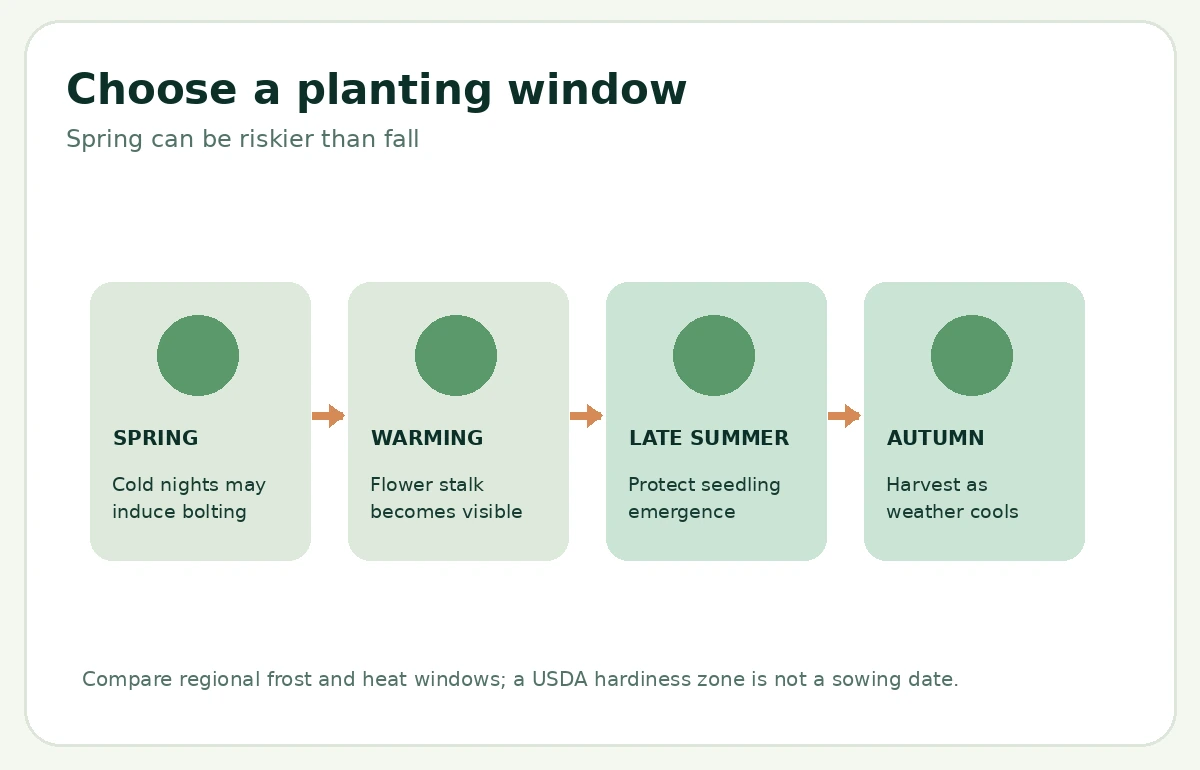
University of Minnesota Extension identifies unpredictable spring cold as an important reason bok choy may bolt. Plants exposed to prolonged chilly nights may initiate flower development; subsequent warming makes the stalk visible. Simply planting in the first warm afternoon does not guarantee a safe crop if nights remain cold. Conversely, waiting too long can push harvest into heat that also reduces quality. Check the local forecast, season length, cultivar and advice specific to your region.
In a climate with unreliable spring conditions, late-summer establishment for an autumn harvest may offer a more dependable window. Minnesota recommends this approach for its own conditions, but July is not a universal planting month for the United States. Compare average first frost, summer heat at emergence, current soil temperatures and packet maturity. USDA hardiness zones tell you about typical winter minimums, not whether your bok choy will flower in a particular April.
Sow or Transplant Without Creating Extra Stress
Bok choy can be direct sown, or young transplants can be used when a regionally appropriate window makes that sensible. Minnesota Extension gives shallow sowing and thinning instructions tailored to the mature size. Choose a level, well-drained bed with steady moisture and enough light; protect small seedlings from crusting and competition. Thin or transplant based on the cultivar rather than copying a generic cabbage spacing. Crowding produces small plants and makes leaf inspection difficult.
If moving seedlings from indoors, harden them gradually and avoid exposing tender leaves to abrupt wind, glare or cold nights. A transplant with damaged roots or a week of cold stress may not recover simply by adding fertilizer. When seeding in summer for a fall crop, protect the seedbed from drying; summer establishment can be the toughest part even when harvest weather will be favorable. Make a small test planting before committing an entire raised bed to a schedule you have never tried. For a step-by-step method, see how to grow arugula for tender leaves before heat and bolting.
Use Insect Barriers Correctly and Inspect Under Leaves
Young bok choy is attractive to flea beetles, which chew small shot holes in leaves, and to several caterpillars that make larger feeding damage. University of Minnesota lists flea beetles, cabbageworms, loopers and cabbage maggots among possible problems. Identify the injury pattern before choosing a response: holes are not proof of a fungus, and a wilted plant is not proof of root maggots. Inspect the undersides of several leaves and the base of a damaged plant.
A lightweight, well-anchored insect row cover can prevent some early pest access if installed at the right time and kept from overheating plants. Strong wind can turn a loose cover into an abrasive surface, and insects already inside a cover remain a problem. Check temperatures under protected structures. For a confirmed pest, use integrated pest management guidance from local Extension; do not invent homemade pesticide rates, claim that companion plants repel all pests or recommend off-label products.
| Sign | Check first | Decision |
|---|---|---|
| Flower stalk | Cold nights or heat during growth | Harvest usable leaves; change timing |
| Tiny round leaf holes | Flea beetles on young plants | Identify; check well-fitted row cover |
| Large ragged holes | Brassica caterpillars | Inspect undersides; follow IPM |
| Sudden wilt | Roots, soil wetness and pests | Confirm cause before treatment |
| Thin crowded stalks | Plant density and light | Thin per cultivar and harvest goal |
Keep Stalks Crisp Through Even Growth
Because both stalks and leaves are eaten, quality depends on even growth. Prevent long drying cycles followed by soaking irrigation; feel moisture beneath the surface, especially in raised beds that may dry rapidly. Use a soil test if fertility is uncertain rather than assuming that rapid yellowing always means a nitrogen shortage. Mulch can reduce weed competition and moisture swings once seedlings are established, but it should not cover the growing crown.
Watch plant shape as maturity approaches. Healthy new leaves should be developing from the center, while old outer leaves may collect damage. Remove only clearly deteriorating material during inspections instead of stripping the plant. If leaves discolor rapidly across a patch and do not show a clear insect pattern, check drainage and seek a local diagnosis. Alternaria, black rot and clubroot are among possible diseases listed by Minnesota; visual symptoms alone do not justify a confident species-level identification.
Harvest Based on Plant Size and Flower Development
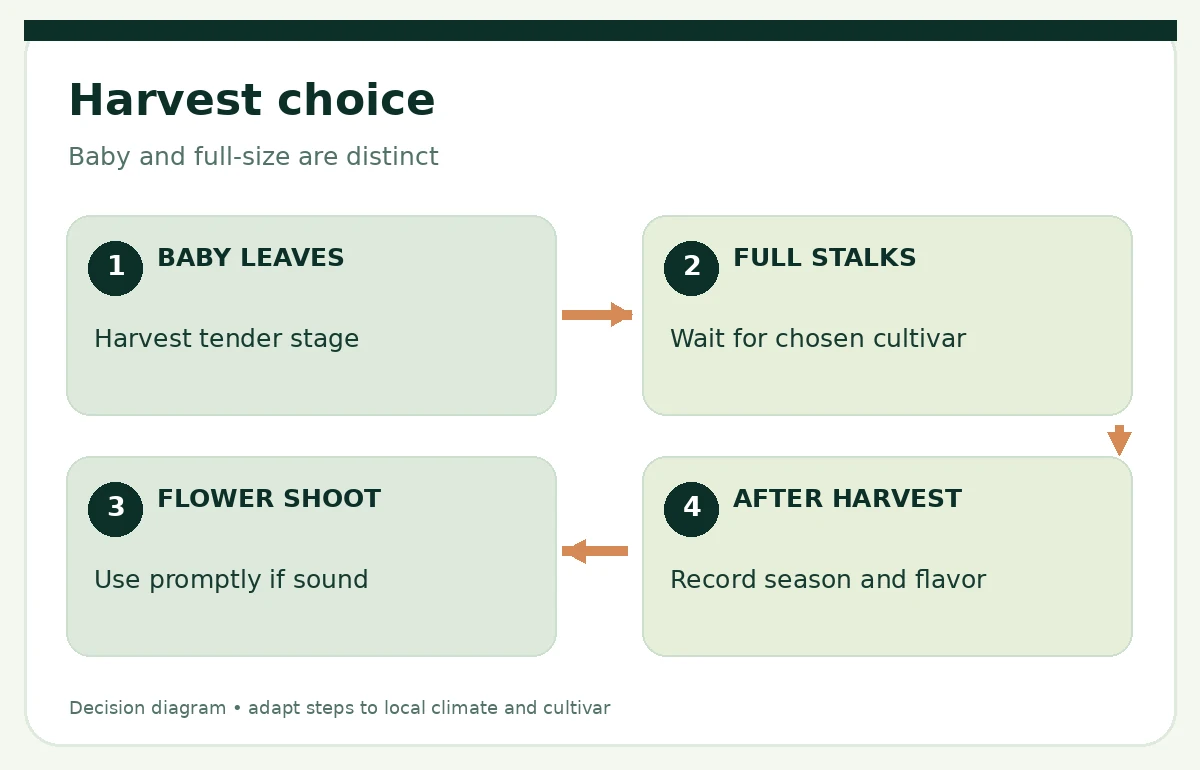
Bok choy can be used young or harvested as a more developed cluster; the right moment comes from cultivar size, stalk quality and upcoming weather. For a whole plant, cut near the base using a clean blade and remove obviously damaged outer leaves. Some gardeners selectively take outer leaves, leaving a live center, but regrowth and quality depend on growing conditions and should not be promised as an endless harvest. Wash produce with clean running water before use and keep it refrigerated. Our walkthrough on how to grow collard greens and harvest leaves from the bottom up sets out each step.
When a flower stalk is already elongating, the crop has begun bolting. The remaining leaves may still be usable if they are sound and acceptable in taste, but adding fertilizer cannot return the plant to a pre-bolting stage. Harvest promptly if suitable, then inspect whether cold nights or an overly warm finishing period fit the history. Record which cultivars stayed usable longer in your site; that observation is more useful than generic "bolt-proof" claims.
Distinguish Cold Shock, Insect Feeding and Disease
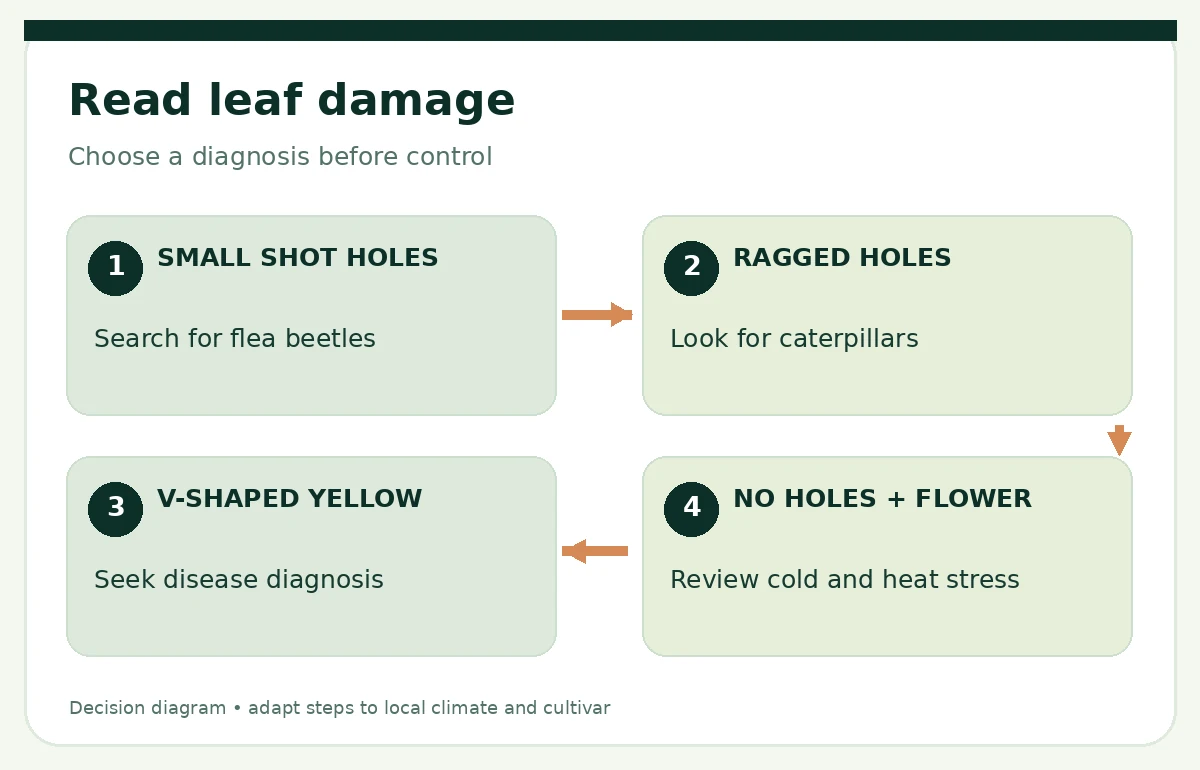
An elongated flower stem without insect damage points first toward seasonal bolting, particularly after exposure to prolonged cold or heat stress. Small, round leaf holes on multiple seedlings point toward flea beetles; irregular large holes can prompt a search for caterpillars. Yellow V-shaped margins or severe root swelling deserve specialist diagnosis rather than an improvised treatment. Take photos of both healthy and damaged plants and note which leaf age is affected.
If young plants collapse, inspect the crown and roots, watering history and actual insects. Row covers do not cure established infections. Removing severely diseased material and improving sanitation may be appropriate, but specific disease management depends on confirmation. Because bok choy is a brassica, previous cabbage, broccoli, kale and collard plantings matter when reviewing potential persistent soil problems. Rotation lowers some risk but does not create a pathogen-free guarantee.
Keep a Simple Seasonal Trial Record
Write down sowing date, whether you used direct seed or transplants, cold nighttime episodes, leaf damage, first harvest and any flowering. A small autumn test and a small spring test may reveal a reliable local planting season in a way that a broad national calendar cannot. Use the same cultivar and approximately similar care if comparing dates so the difference is interpretable. Where a crop is consistently damaged by flea beetles, trial a properly timed exclusion cover rather than switching several variables at once. For a step-by-step method, see how to grow kohlrabi and harvest tender stems before they turn woody.
This guide deliberately does not reproduce all rules from a general cabbage-growing page. Bok choy has its own open-leaf harvest and unusual sensitivity to weather transitions. Use the Minnesota and Maryland Extension source material as the evidence base; then have a local expert confirm frost windows and any pest control rules for your jurisdiction. Do not publish a climate-neutral date chart that implies there is one perfect month in every state.
Related Guides
How We Research and Check Regional Advice
This independent educational draft was researched against named university Extension guidance on October 20, 2026. Each main recommendation is matched to its source and separated from site-dependent decisions. A full live WordPress page inventory was not independently available, so the editor must still compare actual published URLs before releasing another page. We do not substitute USDA hardiness zones for local sowing windows or claim pesticide efficacy without identification and labeling.
Verified sources, checked October 20, 2026: extension.umn.edu (Bolting after spring cold, direct sowing, crop differentiation, insects and diseases). extension.umd.edu (Pac choi and brassica planting, maturity and general garden care). extension.umd.edu (Regional planting schedule demonstrates the need for climate-specific dates).
This guide contains no affiliate links. The site’s general affiliate disclosure should be verified live before manual publication.
Extended chilly nights followed by warming, or other unsuitable seasonal stress, can trigger bolting.
No. Bok choy has an open stalk-and-leaf habit; Napa cabbage makes a more enclosed head.
Flea beetles are a common cause; inspect the actual insects and damage pattern before deciding on control.
Healthy leaves may remain usable, though flavor and texture can decline. Harvest promptly and judge the edible material.
Choose the season using local night temperatures, heat patterns and cultivar maturity; fall can be more reliable in some climates.