
At a glance: The round part of kohlrabi looks like an aboveground turnip, but it is a swollen stem, not a root. That distinction changes how you plant, diagnose and harvest it. The crop tends to offer its best texture in cool, even growing conditions. This guide explains how to select a realistic window and recognize when a stem is ready, rather than waiting automatically for the biggest possible ball.
Identify the Swollen Stem You Are Growing
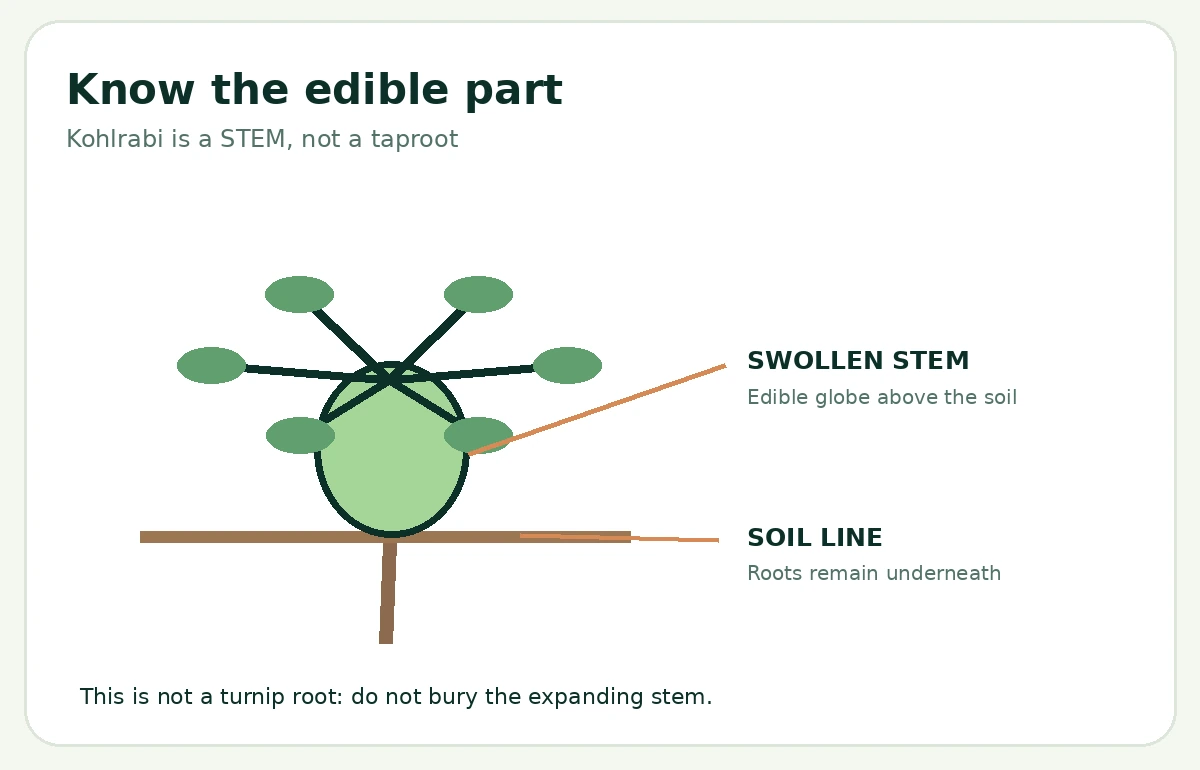
Kohlrabi belongs to the cabbage family. Its edible enlarged stem forms just above the soil line, while roots remain below ground. Illinois Extension emphasizes this anatomy because the plant is often mislabeled a root vegetable. Do not bury an expanding kohlrabi globe as if hilling potatoes or protecting carrots. Keep the crown at its appropriate level when transplanting and maintain soil around, not over, the stem. The leaf stalks radiate from the enlarged section, making it look unfamiliar even when perfectly healthy.
Most garden types have pale or purple outer skin with a light-colored interior. Skin color is not a reliable measurement of tenderness or a claim that one unnamed variety is more disease resistant. Select by cultivar maturity, local season and desired harvest size, then consult the packet for exceptions. Some cultivars are bred for larger tender stems, so the common small-stem rule is a starting point, not permission to ignore a specifically documented larger variety.
Select a Season That Avoids Both Heat and Cold Shock
Kohlrabi grows quickly enough to fit into spring or autumn in many regions, yet it is not simply a plant-anytime vegetable. Utah State Extension warns that excessive heat can make stems woody and that prolonged cold exposure can lead to premature flowering. Find a stretch of moderate weather long enough for the cultivar, then work backward using local frost guidance and actual soil conditions. A USDA hardiness zone number alone does not give a sowing date.
For some regions an early spring sowing works; elsewhere an autumn crop develops under better temperatures. An outdoor crop cannot be scheduled from a British or Utah calendar without translation. Use local Extension charts and allow extra days for shortened fall daylight rather than assuming spring growth speed will be repeated. Observe whether your garden’s hottest weeks coincide with the planned swelling stage. Move the planting window, not the harvest target, when the pattern is consistently wrong.
Plant Shallowly and Give Each Stem Elbow Room
Direct sow in a prepared, weed-free bed, or transplant young, well-rooted starts according to local recommendations. Kohlrabi does not need a deep taproot bed like parsnips, but it benefits from fertile, reasonably well-drained soil and steady moisture. The Illinois and Utah State guides provide specific depths and row spacing for their audiences; follow a compatible packet and regional guide rather than packing seedlings by eye. Early thinning is easier than untangling leaves and crowns later.
If using cell-grown seedlings, harden them gradually before outdoor exposure and keep the plant at its original stem depth. Excessive transplant stress, cold shock or drying can interrupt steady swelling. Resist the temptation to bury the future globe under extra soil to make plants appear sturdier. Compare spacing to the actual mature leaf spread as well as the desired stem diameter; dense canopies can hide small or neglected plants and make it harder to inspect for caterpillars.
Keep Growth Even Without Guessing Fertilizer Rates
Both Illinois and Utah State Extension emphasize consistent moisture for best eating quality. Check the soil below the surface rather than deciding from the topmost dry dust, and adjust watering to rainfall, soil texture and plant development. If a hot spell approaches, mulch can help reduce moisture swings once the seedlings are established. A kohlrabi stem that pauses in dry soil and then resumes growth may not produce the same texture as a steadily grown stem.
Use compost for soil structure where appropriate and a soil test for additional fertility needs. More nitrogen is not automatically better and a universal fertilizer cup measurement is not suitable for every plot. Observe leaf color, site history and general growth before assuming deficiency. When several crops in the same bed struggle, test the soil and drainage rather than diagnosing an isolated kohlrabi disease. Avoid spraying a product unless the cause is identified and the current label permits the intended use.
| What you see | Interpretation | Appropriate action |
|---|---|---|
| Compact swollen stem | Near tender harvest stage | Measure; check cultivar target |
| Very large fibrous stem | Likely overmature or heat-stressed | Harvest earlier next planting |
| Flowers forming | Bolting; not just slow swelling | Review cold/heat exposure |
| Holes and caterpillars | Possible brassica insect feeding | Identify pest; use IPM |
| Small stems in drought | Moisture and competition stress | Improve even water and spacing |
Check the Stem Before It Becomes Tough
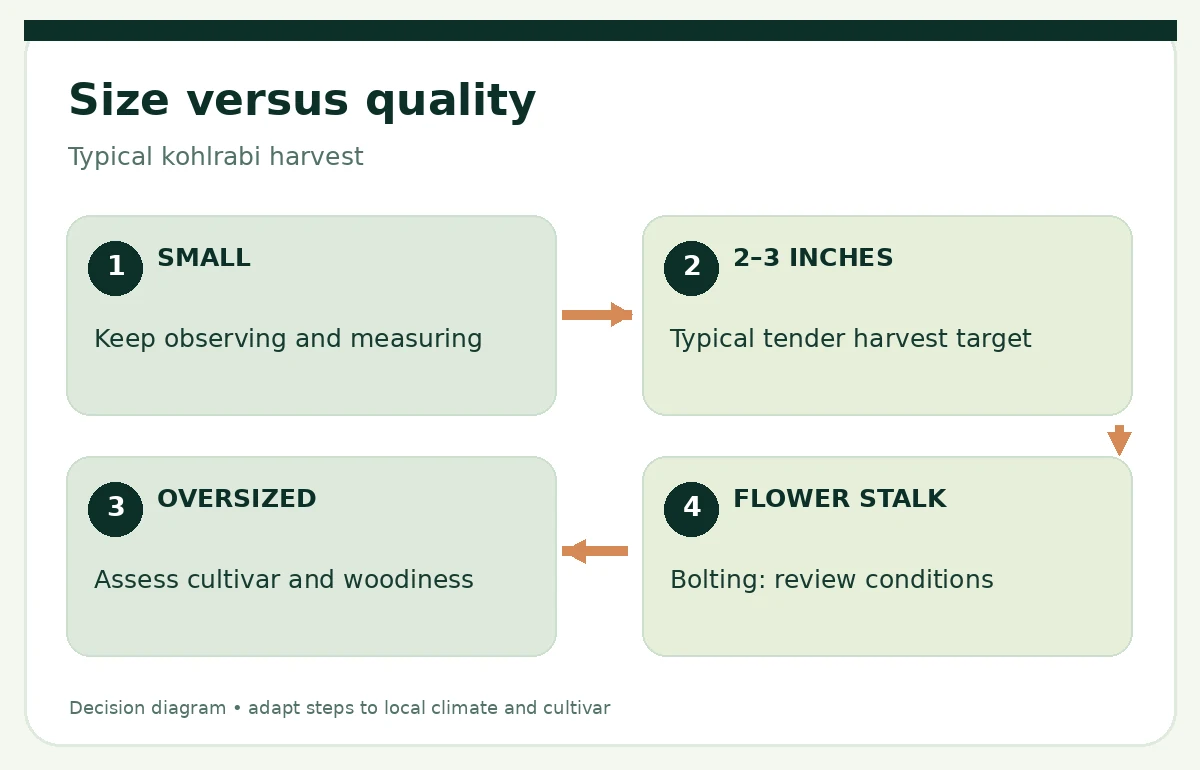
Harvest size is one of the most useful checkpoints for this crop. University of Illinois and Utah State Extension recommend harvesting common types while the expanded stem is relatively small; the University of Minnesota harvest guide gives about two to three inches for typical kohlrabi. A diameter check at the widest part is more reliable than estimating from leaf height. Feel firmness and consult the selected cultivar: true giant-stem types are a deliberate exception, not evidence that every plant should be left indefinitely. Our walkthrough on how to grow collard greens and harvest leaves from the bottom up sets out each step.
Use a clean knife to cut a mature plant or lift it carefully, remove leaves as appropriate and evaluate texture in the kitchen. A small stem with a flower stalk is not “just a slower globe”; the plant has shifted its growth priorities. Stems exposed to prolonged hot conditions may be fibrous even when an outer measurement looks acceptable. Record the date and diameter of a tender harvest so next season you can recognize that stage sooner. For the basics, see our guide: When to Harvest Kohlrabi for Tender Stems, Not Woody Bulbs.
Separate Bolting From Pest or Water Stress
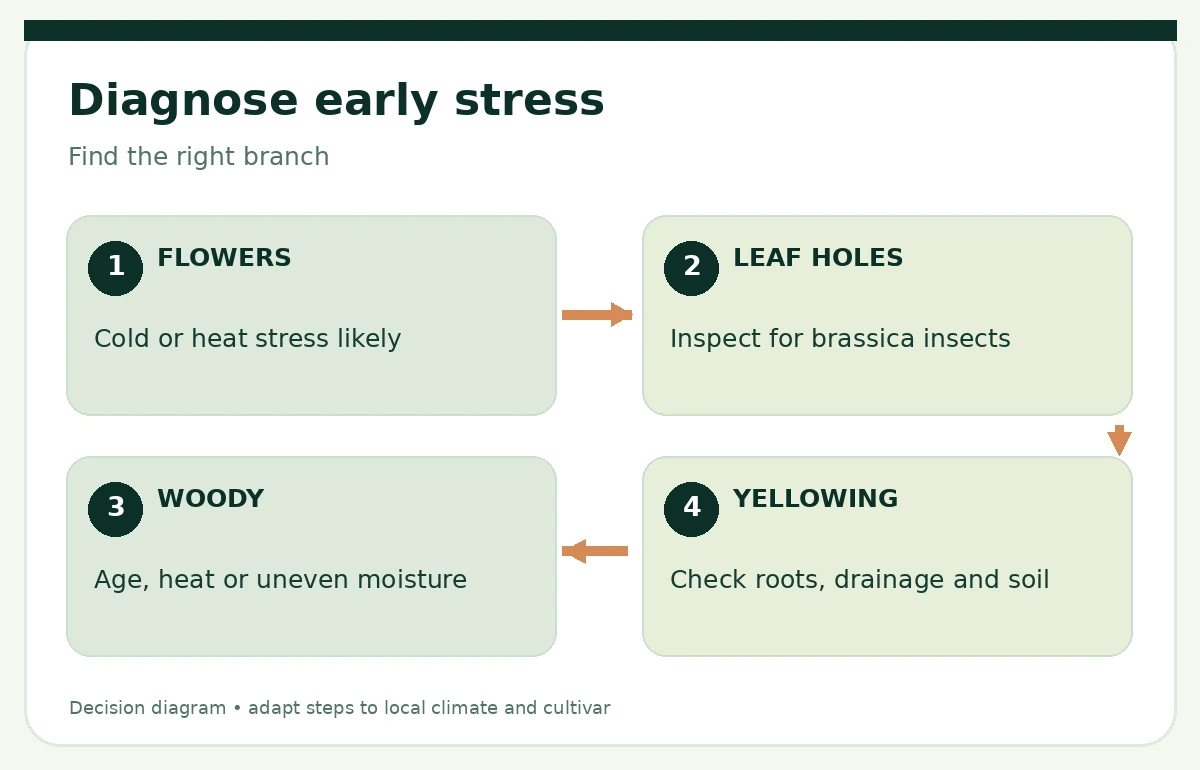
A central stalk with flower buds indicates bolting, often a response to environmental conditions, whereas lace-like leaf holes suggest caterpillars or other feeding damage. Insects common to brassicas include imported cabbageworms, loopers and cabbage maggots; inspect the actual pest or damage pattern before deciding on control. Lightweight insect netting can protect an early crop where it is installed correctly and secured, but it is not a cure for flowering caused by unsuitable weather.
If stems become woody without visible flowering, look at maturity, cultivar, heat and inconsistent moisture. If leaves yellow while neighboring crops also suffer, check drainage or soil before blaming a named pathogen. Clubroot and other brassica diseases require reliable identification, especially when planning future plantings. Practice good sanitation and rotation without claiming that a small backyard rotation will eliminate pathogens. Any pesticide response must follow local IPM advice and the product label. Our walkthrough on how to grow bok choy without early bolting or damaged leaves sets out each step.
Place Kohlrabi in a Brassica-Aware Rotation
Kohlrabi shares botanical relatives with broccoli, cabbage, kale, bok choy and collards. This matters because their insects and diseases may overlap. Before choosing a bed, look at where these vegetables grew in recent seasons and at the presence of persistent problems. Rotating unrelated crop families may reduce some risks, but tiny gardens can still have flying insects and soilborne pathogens that cross bed boundaries. Where a serious disease is confirmed, ask local Extension about realistic site management.
A fast kohlrabi planting can make good use of a gap between longer crops, but the plan should respect mature leaves, irrigation access and the harvest date. Space and care become harder when a quick crop is tucked directly under another plant’s shade. If two staggered sowings are appropriate for your region, keep a separate observation record so you can compare spring and autumn results. Avoid producing many near-identical kohlrabi modifier pages from the same advice. If you are starting from scratch, read When to Harvest Kohlrabi for Crisp, Tender Swollen Stems.
Store Only Sound Stems and Plan the Next Trial
A fresh, undamaged stem is better suited to short-term storage than one that is split or already fibrous. University of Minnesota advises removing tops and storing kohlrabi in cold, moist conditions. Keep edible produce clean, promptly cooled and separated from decaying material. This is general postharvest advice rather than a recipe for canned kohlrabi; preservation must use tested processes. Check quality after storage rather than promising a fixed life under every refrigerator condition.
For the next crop, change one variable: plant in a cooler window, harvest at a measured earlier size or correct irrigation swings. Write down whether the problem was bolting, woodiness or feeding injury. Those observations are more informative than an unexplained claim that a purple cultivar always succeeds. Consult your local Extension for cultivar recommendations suitable to your climate and use this stem-focused checklist as the baseline for the next planting.
Related Guides
- How to Grow Kohlrabi From Seed Without Burying the Swollen Stem
- How to Transplant Kohlrabi Seedlings at the Original Soil Line
How We Research and Check Regional Advice
This independent educational draft was researched against named university Extension guidance on October 20, 2026. Each main recommendation is matched to its source and separated from site-dependent decisions. A full live WordPress page inventory was not independently available, so the editor must still compare actual published URLs before releasing another page. We do not substitute USDA hardiness zones for local sowing windows or claim pesticide efficacy without identification and labeling.
Verified sources, checked October 20, 2026: extension.illinois.edu (Swollen stem anatomy, sowing, management and early harvest). extension.usu.edu (Cool-weather stress, planting and harvest size). extension.umn.edu (Typical kohlrabi harvest size and storage principles).
This guide contains no affiliate links. The site’s general affiliate disclosure should be verified live before manual publication.
No. The edible ball is a swollen stem that grows above the soil line.
Many common types are best harvested around two to three inches across; always check the named cultivar.
Heat, interrupted growth or excessive maturity can cause toughness; compare sowing window and watering.
They share a plant family and some pest and disease risks. Assess previous brassica crops before siting.
Cold exposure or other seasonal stress can induce bolting. Check local planting conditions and transplant handling.