
Daikon is a group of large Asian radishes within Raphanus sativus, not a stretched white carrot. Many familiar cultivars make long, smooth white roots that taper downward, although some are rounder or carry green at the shoulder. Read the packet before preparing the bed: a compact cultivar and a long-rooted winter daikon do not need exactly the same space or produce the same harvest shape.
Choose a Real Daikon Type and a Suitable Season
Cool-season conditions usually give better texture than sustained summer heat. Purdue Extension describes many larger oriental radishes as appropriate for a late-summer sowing to mature in cooler weather. Your actual planting window depends on climate, cultivar and seasonal forecast. Hardiness zone labels are not sowing calendars; check your first frost date and estimated days to maturity together.
Prepare Deep Loose Soil Instead of a Shallow Hole
A large daikon develops a single fleshy storage root with fine laterals extending into surrounding soil. Minnesota Extension advises loosening soil at least a foot deep for long radish types. Break up compacted layers and remove obvious stones or debris that could obstruct a straight root. A shallow pot of hard soil can produce twisted or stunted results despite healthy-looking foliage.
Aim for a bed with reasonably even moisture and drainage rather than a waterlogged trench. Roots may split or turn coarse when moisture swings dramatically. The white shoulder often rises above ground as the vegetable develops; this is normal in many varieties and does not mean the whole root is exposed. Do not bury the leafy crown to hide the raised shoulder.

Direct-Sow Seeds at a Consistent Shallow Depth
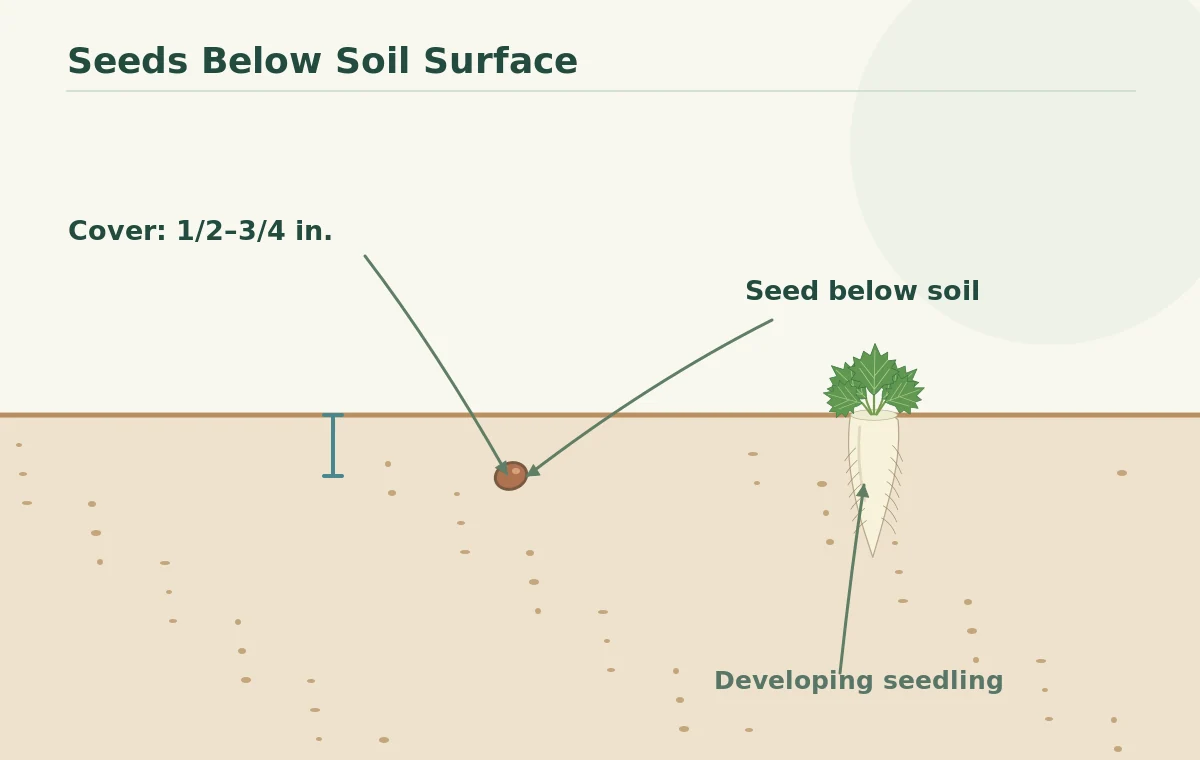
Daikon seedlings are usually best started where they will finish growing because moving their developing taproots risks damage. Purdue Extension recommends a seed depth around one-half to three-quarters inch for Chinese or oriental radishes. Make a shallow furrow and place the small roundish radish seeds below the surface, not on top of a mulch layer or several inches down.
Cover the seeds lightly with fine soil and water gently enough not to wash them away. Mark the sowing row outside the crop and keep the surface evenly moist while seedlings establish. Radish cotyledons appear before true leaves; the first true leaves soon show their coarser, lobed character. Be cautious with heavy crusted soil after strong rain, because emerging seedlings can struggle to push through it.
Thin Seedlings Before They Compete for Root Space
Daikon roots need more room than little red spring radishes. Purdue suggests about four to six inches between daikon plants, with wider row spacing in field culture. If several seeds germinate in one spot, keep the strongest correctly positioned seedling and remove the extras while they are small. Dense tops may appear lush even while the roots remain narrow or malformed.
Avoid pulling a huge clump of intertwined seedlings once the storage roots are enlarging. Carefully clip excess seedlings at soil level when pulling would disturb the keeper. Check the specific cultivar: an unusually broad or long type may need extra room. Measure spacing along the row rather than assuming every leaf cluster is one plant. A strong central growing point should remain undamaged.
Learn the Difference Between Shoulder, Crown and Tip
The swollen white shoulder directly beneath the leaves is the upper part of the storage root, while the green crown carries the petioles and new foliage. Below the shoulder the edible root may remain wide for some distance before tapering into a narrow tip and smaller lateral roots. Because the top can be visible, you can assess root diameter without hauling up a plant too early.
The root profile in the illustration shows a plausible continuous white taproot, not a detached white cylinder floating above a second set of roots. Fine feeder roots branch from the storage root into surrounding soil, while the leaves rise only from the central crown. This arrangement matters when you choose where a garden fork can enter the bed without skewering dinner.
Keep Growth Even and Watch for Stress
Regular moisture supports steady expansion. Excessively dry periods may produce tough, strongly flavored roots, while sudden heavy watering after drought can encourage splitting. Check soil below the surface with a finger or small trowel in the space between roots rather than repeatedly exposing the shoulder itself. Use mulch when appropriate, leaving the central growing point uncovered.
Radishes belong to the cabbage family and can attract flea beetles or root-feeding pests. Small holes in leaves are clues for inspection, not proof of a single cause. If roots are misshapen, review spacing, soil compaction, uneven water and possible insect injury before treating anything. Local Extension guidance is more dependable than a generic chemical recommendation without a diagnosis.
Lift the Long Root From Below Without Snapping It
When the shoulder reaches useful size for your chosen cultivar, loosen soil well away from the side of the root. Minnesota Extension explicitly recommends spading beneath long daikon roots to avoid breakage. Slide a fork or spade down outside the expected root width, loosen deeply, then gently lift from below; tugging straight up on the leaves can tear off a crown and leave the long root trapped.
The illustration contrasts the correct fork position in soil outside the white root with an unsafe tine placed through the root body. Not every root will be fully as long as a catalog picture, and the harvest time may vary. If the root resists, loosen more soil rather than applying more force. After lifting, trim greens and wash the harvested root.
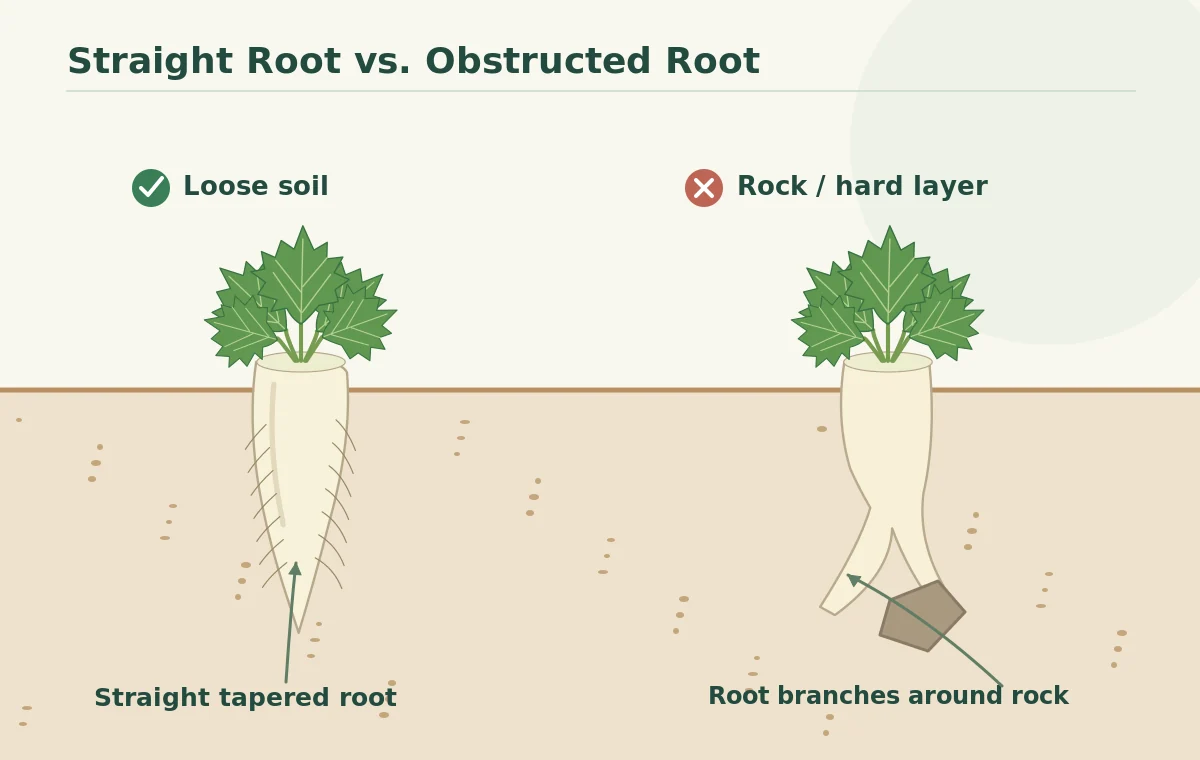
Compare a Straight Root With an Obstructed One
A healthy long daikon normally shows a thick central storage root tapering to a pointed tip, with several small laterals. A root that hits a stone or hard layer may bend, fork or develop a blunt distorted form. Other causes are possible, so one deformed specimen does not diagnose the entire bed. Keep a note of where the obstruction was found before the next planting.
Large white radishes lose quality when left excessively long in the garden. Taste and texture depend on variety, temperature and maturity, not only diameter. The best harvest is one that matches the cultivar and remains firm and crisp. Use the straight-versus-forked comparison to plan a deeper bed next time, then choose your lifting tool position by the actual outline of the root.
Related Guides
- How to Grow Daikon Radish Microgreens in a Clean Shallow Tray
- Grow Daikon Radishes With Straight Roots and a Careful Harvest
- How to Grow Daikon Radishes in Deep Pots Without Stunted Roots
- Growing Radishes: Tender Roots Without Heat or Hollow Centers
How We Research and Verify These Field Diagrams
These instructions were checked against university horticulture publications on October 28, 2026. In particular, we used University of Minnesota Extension radish guide; Purdue Extension daikon planting and food guide. The drawings distinguish actual plant structures from generalized gardening symbols; conditions, cultivars, local climate and development stage can change exact timing.
This independent educational guide has no sponsored product recommendation or confirmed affiliate link. Read our affiliate disclosure. Consult your local Cooperative Extension for climate-specific advice and follow any applicable food handling or pest-control guidance.
Direct sowing is preferred because moving the developing taproot can distort or injure it.
Purdue Extension recommends roughly 1/2–3/4 inch for oriental radishes; follow your cultivar packet if it differs.
The shoulder often protrudes naturally as a large storage root grows.
About 4–6 inches is a useful general guide for many types; very large cultivars may need more.
Loosen the soil outside the root and lift it from underneath instead of jerking the leaves.