
Learn when pot marigold seed heads are ready and how to recognize curved calendula achenes instead of Tagetes seeds. This guide focuses on plant parts you can identify with your eyes, season-specific decisions, and how to correct the mistakes that matter most.
Identify Calendula Before Taking Any Seeds
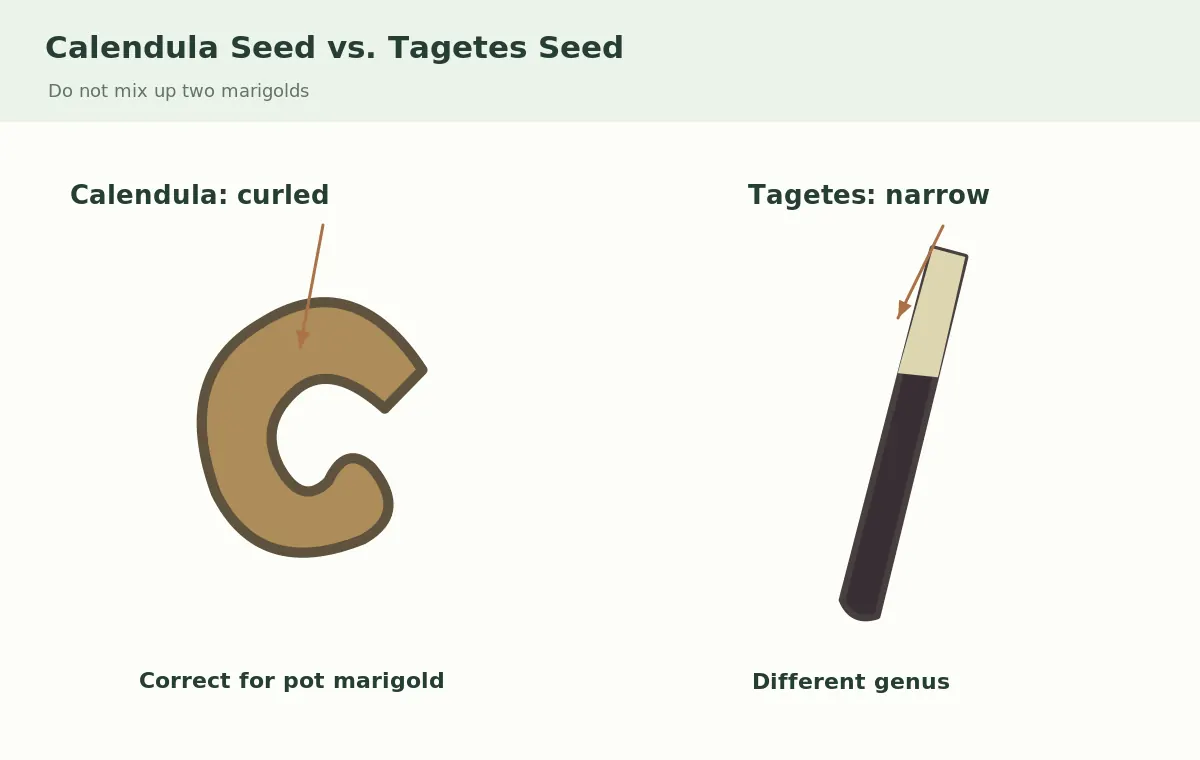
Calendula officinalis is commonly called pot marigold but is not the same botanical plant as French or African marigolds in the genus Tagetes. Calendula typically has relatively broad, slightly hairy green leaves and orange or yellow daisy-like composite flower heads with a central disk. Tagetes often has finely divided leaves and narrow black-and-pale needle-like seeds. Mixed names on plant tags make this confusion common, and the two seed forms should not be drawn as equivalents.
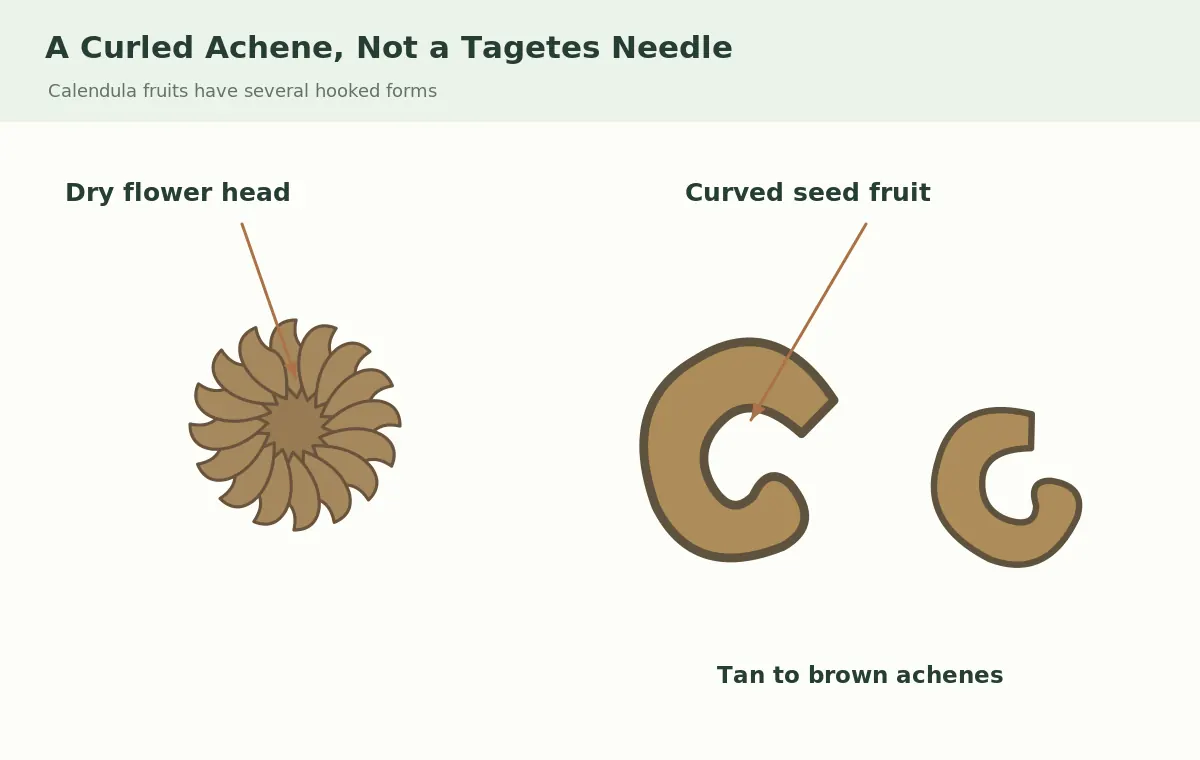
Before marking a plant for seed collection, photograph one intact flowering head, its leaves and its label. Calendula seed units are distinctive curved or hooked-looking fruits called achenes. Their size and curve vary within a single head, from chunky curled forms to smaller, more pointed ones. The botanical detail shows several brownish curved achenes emerging from the exposed center after petals fade, rather than imagining tiny sunflower seeds or straight black needles.
Leave Several Healthy Flowers to Finish
Regular deadheading can encourage more calendula flowers, but a flower whose head is constantly removed cannot mature seeds. Select a few healthy plants with the flower color or habit you want to try preserving and stop deadheading those chosen blossoms. Label them before the petals disappear. Allow the ray florets to fade and the central area to form mature fruits. Avoid collecting from an obviously diseased plant or from a flower head soaked with persistent moisture.
Seeds from named cultivars and crosses do not always reproduce the parent exactly, especially if multiple calendula varieties flower nearby. That variation can be attractive but should not be advertised as a guaranteed copy of the original. A commercial hybrid may be particularly variable. The source-backed objective is viable seed from correctly identified Calendula, not a promise that every seedling will carry precisely the same petal count and color as its parent.
Watch the Center Change From Green to Dry
After petals drop, inspect the head at intervals. Developing achenes can begin pale or greenish and become firmer and tan to brown as the head dries. Different fruits in one head may mature unevenly. The suitable harvest stage is when enough of the seeds are well developed and drying, but before they are washed away or fall naturally onto the soil. Choose a dry spell rather than packing wet heads into a closed envelope.
RHS notes that calendula can be one of the plants whose well-developed seed is sometimes gathered before it looks completely dry, then finished under cover. This is a practical nuance: a greenish head with soft unformed fruits is not the same as a nearly mature firm head. Use the comparison panel to distinguish fully fleshy immature fruit, good partly drying fruits and brittle overly dispersed material. Do not infer maturity from the color of one remaining petal.
Clip the Head Over a Paper Bag or Tray
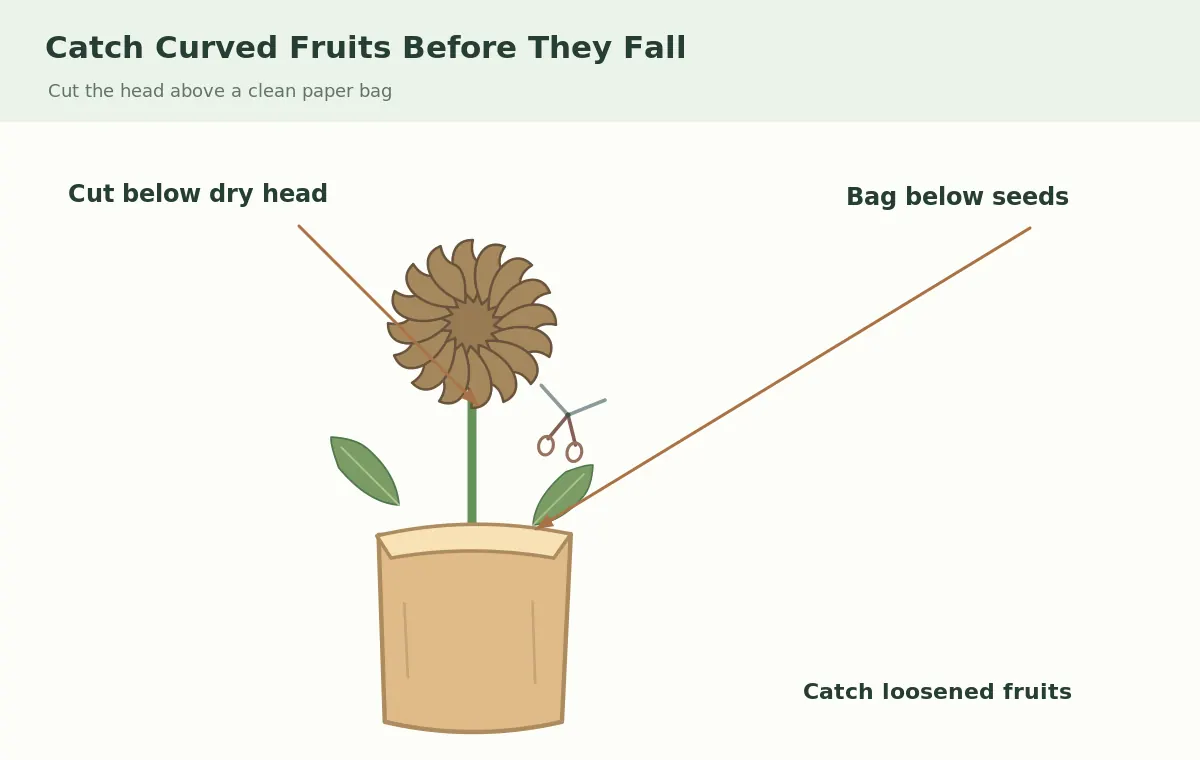
Hold a paper bag or shallow tray below the chosen dry head. Cut the stalk beneath the flower head with clean small scissors so seeds that break loose are caught rather than lost in mulch. The action illustration shows the bag physically beneath the head and the scissor blades below the formed fruits, never cutting through the central seed disk. Collect more than one healthy head if you need enough seed for a reliable selection next season.
You may leave a short stalk attached as a handle and take several heads indoors to finish drying. Avoid tightly bundling damp heads where condensation can develop. Spread the harvest in a single loose layer in an airy sheltered space, out of direct rain and intense sun. Label the collection by plant name and date before several different flower seed lots become visually similar. Keep loose chaff out of indoor drafts.
Separate the Curved Achenes From Chaff
When the heads are crisp and dry, gently rub the fruits loose into a clean tray. The seed-bearing achenes are the planting units; you do not need to split each curved husk to hunt for a separate tiny seed. Shapes can vary noticeably. Remove bits of dried petal, stem, insects or visibly moldy material. Never rinse dry flower seed and put it straight into a sealed jar, because extra water can reduce storage safety.
Inspect several collected pieces against the enlarged botanical detail. A gray-tan hooked, curved or ridged form is consistent with calendula, while a long dark needle with a pale tip is typical of Tagetes. This identification helps prevent mixing flower seed packets. If you saved multiple cultivars, keep them apart unless you intentionally want a mixed population. Do not claim that visual appearance of a harvested achene guarantees germination.
Dry Thoroughly and Store Cool and Labeled
Seeds intended for storage need to be thoroughly dry before being sealed in a suitable container. Penn State recommends collecting mature dry flower seeds and separating them from the head after drying. A paper envelope is practical for small labeled lots that may still equilibrate with the room, whereas an airtight container is useful only once dryness is genuinely established. Avoid direct heat, sunny windowsills and damp sheds that swing between condensation and warm afternoons.
Write Calendula officinalis, the parent variety if known, collection year and color note on the packet. Store the packet in a cool dry place inaccessible to pets and children, and check for any evidence of moisture or mold. A simple germination test of a small sample before a future sowing can tell you more than guesses about storage life. Expect seedling variability when flowers cross or were hybrids.
Use the Seed to Plan a New Flowering Patch
RHS describes direct sowing calendula in spring or autumn where local conditions permit. Follow your local climate and seed packet rather than copying a calendar from another region. You can sow part of your saved lot as a small test and retain the rest in reserve. Keep seedbeds lightly moist while seedlings emerge, and identify the broad early true leaves before pulling volunteer plants as weeds.
Save a quick photo of the parent bloom alongside the seed label. If future plants differ in color, height or double-petal form, consider normal genetic segregation and cross-pollination before blaming soil. The four educational drawings connect the familiar orange daisy-type flower, curved achenes, safe collection over a bag and dry-versus-green seed stages. Their job is to make the real botanical sequence recognizable, not substitute illustrated cards for a plant.
Related Guides
- How to Save Calendula Seeds After the Flower Heads Turn Brown
- How to Sow Calendula Seeds for Healthy Cool-Season Flowers
- When to Transplant Calendula Seedlings Without Burying Their Crowns
- How to Save Sunflower Seeds for Next Year Before Birds Take Them
- How to Save Marigold Seeds from Fully Dry Tagetes Flower Heads
How We Research and Verify Botanical Details
Authoritative sources reviewed October 27, 2026: extension.psu.edu: Penn State lists calendula among suitable flowers for seed saving and gives drying and storage guidance. www.rhs.org.uk: RHS explains monitoring ripening seedheads, collecting before dispersal, and seed not always coming true. www.rhs.org.uk: RHS identifies Calendula officinalis as an orange daisy-like flower with aromatic foliage propagated by seed. www.rhs.org.uk: RHS distinguishes calendula as pot marigold and describes its foliage and flowers. These practical illustrations simplify plant structures without implying exact scale or universal planting dates. Where cultivar, weather, locality or seed stock changes the result, follow local Extension and supplier guidance.
This independent educational guide contains no paid product placement. Read our affiliate disclosure. Check local regulations and registered product labels before any pesticide use; use integrated pest management and an accurate diagnosis first.
No. Calendula officinalis has curved achenes; Tagetes usually has slender, black-and-pale seeds.
Leave selected healthy flowers on the plant so their seeds can mature.
Well-developed nearly mature fruits may finish drying indoors; soft immature ones are unreliable.
No. Finish drying thoroughly first to prevent trapped moisture.
Not necessarily. Cross-pollination and hybrid parentage can cause different offspring.