
Calendula (Calendula officinalis), often called pot marigold, is an annual with cheerful yellow or orange daisy-like flowers that usually performs especially well in mild, cool-season weather. It is not the same plant as French or African marigold (Tagetes). For reliable germination, plant calendula’s irregular curled seeds in loose soil and cover them lightly; unlike tiny light-germinating flower seed, calendula germinates better under a shallow covering. Use local frost and soil conditions to choose between direct sowing and indoor starts. The goal is not to follow a nationwide calendar but to give the seedlings a cool, bright, uncrowded start.
Identify Calendula Seeds Before You Sow
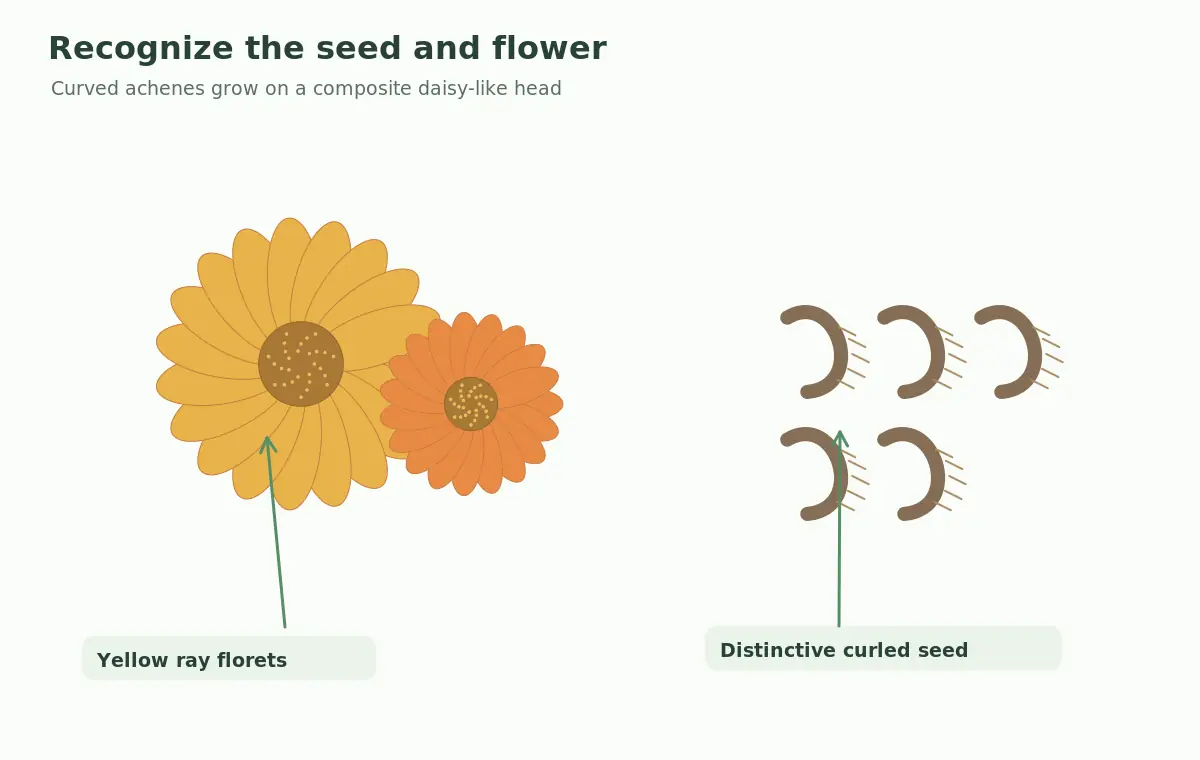
Calendula seeds can look like small, ridged, curved claws or tiny half-moons, and a seed head may contain several seed shapes. This appearance is normal. The parent plant has broad, somewhat sticky leaves arranged alternately along branched stems and flower heads made of a central disk ringed by orange or yellow ray florets. These botanical details help distinguish calendula from Tagetes marigolds, whose seed shape and growing advice differ. Choose seed labeled Calendula officinalis, particularly if you want the traditional pot marigold. Save seeds only from healthy plants, and remember that mixed or cross-pollinated cultivars may not reproduce an exact flower color. If you want the full process, read how to save calendula seeds after the flower heads turn brown.
Select a Cool-Season Planting Window
University of Wisconsin Extension recommends direct sowing just before the local last frost and starting indoors roughly six to eight weeks ahead for earlier flowers. University of New Hampshire guidance recommends sowing in early spring after danger of heavy frost passes and once soil warms to about 60°F. These are not identical thresholds; climate and site conditions matter. For beginners, use soil that can be worked without smearing, avoid heavy freezes and follow local advice. In mild-winter regions, fall sowing may also work where winter conditions permit, but this must be based on local Extension recommendations rather than a USDA zone number alone.
Cover the Seed With a Shallow Layer of Soil
Make a fine, weed-free seedbed and place seeds in shallow furrows or individual planting spots. Cover with roughly one-quarter inch of loose soil, consistent with New Hampshire Extension, while Wisconsin lists about one-quarter to one-half inch. A light cover protects the seed from drying and supplies the darkness preferred for germination; leaving it exposed is not ideal. Firm very gently so seed contacts soil but do not pack wet clay. A seedling must be able to push its first leaves through the layer. Water with a fine rose or gentle spray so tiny channels are not washed open.
Keep Moisture Even Until Seedlings Emerge
Use a gentle flow of water to keep the upper part of the soil consistently moist, never waterlogged. In a well-drained bed, seeds can germinate within roughly five to fifteen days under suitable conditions, although cold soil or poor seed quality can delay emergence. Do not make a second heavy sowing after only a few cool days. Watch for crusting where rain beats down bare clay; use a suitable fine seed-starting mix indoors or loosen surface soil carefully outdoors rather than burying seed deeper. A breathable environment helps avoid weak or diseased sprouts. Excess water in a closed container can deprive roots of oxygen.
Thin Plants Rather Than Leaving a Dense Carpet
At the first true leaves, identify the strongest seedlings and remove extras before their roots tangle extensively. University of New Hampshire suggests thinning young plants to about 16 inches apart; mature dimensions vary by cultivar and bed design, so use seed-packet spacing as well. If you want a flower border with multiple plants, give each its own light and air instead of retaining every germinated seed. Clip unwanted seedlings at ground level when pulling would damage neighbors. In cool weather an airy planting dries faster after rainfall and is easier to inspect for pests. Thick seeding may look lush initially but often leads to weak flowering.
Start Indoors Only When It Solves a Climate Problem
For early bloom where spring warms late, use individual cells or small pots filled with a clean, draining seed-starting medium. Sow at the recommended shallow depth, supply bright grow lights as soon as shoots appear and keep trays from standing in water. Plants kept too warm or poorly lit can become lanky and collapse after transplanting. Before moving them outdoors, harden them off gradually to sunlight, wind and fluctuating temperature. Transplant without damaging roots when weather and soil are suitable. In many regions, direct sowing is simpler, because calendula germinates readily outdoors and does not require the long indoor start needed by some slow annuals.

Give Flowers Sun and Moderate Fertility
Site calendula in full sun with soil that drains well, allowing enough water during establishment and dry periods. In very hot summer areas, plants may flower less or look tired during prolonged heat; they often perform better when cooler weather returns. Wisconsin Extension notes that heavy fertilization is not needed for good flowering, so avoid applying extra nutrients simply because foliage looks pale without first considering watering, temperature and soil testing. Keeping the seedbed clean reduces competition while the plants are small. Once roots establish, mulch between plants lightly if desired, without piling it over the crowns or shading emerging seedlings.
Deadhead or Save Seeds Deliberately
Removing spent flower heads can encourage a longer display and prevents some self-sowing. To collect seed instead, let selected healthy flower heads mature and dry on the plant, then gather the curved seeds on a dry day. Store clean, fully dry seed in a labeled paper packet in a cool, dry place; fresher seed generally germinates more reliably than old seed. Remember that allowing self-sowing is a management choice, not an obligation. Calendula can escape cultivation in suitable climates, and local weed guidance should take priority where naturalizing ornamentals are discouraged. Cut flowers with clean tools and remove wet, diseased foliage.
Recognize the Causes of Sparse or Delayed Blooms
Calendula grown through prolonged high heat may temporarily slow its flower production even with adequate water. Too much nitrogen can favor foliage over flower development. Crowded plants also compete for light, while deep shade causes stretching and few buds. Check actual sun exposure and growing temperatures before resorting to fertilizer. If seeds do not germinate, verify the lot age, planting depth, moisture and whether hard rain formed a crust. Seedlings with stretched, pale stems typically need brighter light rather than a stronger nutrient solution. Powdery mildew or aphids may occur, but do not assume every imperfect leaf needs a pesticide.

Adapt Sowing Dates to Your Specific Region
A mountain garden with late snow, a humid Southeast summer, and a mild coastal winter have different useful calendula sowing windows. Use your average frost dates only as a starting point, then check the current soil temperature and weather forecast. In a short growing season an indoor start may extend flowering; where spring becomes hot rapidly, earlier local direct sowing may work better. Garden journals can capture the soil conditions, first emergence date and flowering response across several attempts. The same practical seed depth and air-spacing principles travel well; the ideal week for sowing does not. Always follow local rules for edible flower production if you intend culinary use. Our walkthrough on how to direct-sow cosmos seeds for strong, airy summer flowers sets out each step.
Related Guides
How We Research and Verify Gardening Advice
University of Wisconsin Extension supplied the botany and dark-germination point, while University of New Hampshire provided a practical quarter-inch, 60°F sowing model. Their recommended outdoor start dates differ slightly, which is why this guide prioritizes workable soil, local frost conditions and conservative handling rather than presenting a universal calendar. Sources were accessed October 23, 2026. Calendula has traditional culinary and cosmetic uses, but the article makes no medical treatment claims and does not approve unidentified plants or pesticide-treated flowers for food.
Sources reviewed (October 23, 2026): University of Wisconsin Extension — Calendula (light-inhibited germination, planting, leaf form, cool-season flowering and self-sowing); University of New Hampshire Extension — How to Grow Calendula (quarter-inch sowing, soil temperature, germination, and thinning guidance); University of New Hampshire Extension — Starting Plants From Seed (seed covering and germination-light distinctions). No university listed here sponsors this article or endorses VegWin. For site-level commercial relationship information, consult the VegWin affiliate disclosure.
No. Calendula is among flowers that germinate better with a light soil covering; do not leave the seed fully exposed on the surface.
About one-quarter inch is a straightforward starting depth in loose soil; some Extension guidance allows up to one-half inch. Avoid burying seeds under a thick compacted layer.
No. Calendula officinalis is pot marigold. French marigolds are Tagetes plants with different botanical features and seed-handling advice.
In some mild-winter areas, fall sowing may be practical, but check local Extension recommendations and freeze risk rather than relying on hardiness zones as an annual-sowing calendar.
Too many seeds germinated close together. Thin gently at the young seedling stage to the spacing on the seed packet or a suitable Extension recommendation.