
An herb garden can be a whole bed, a collection of pots by the kitchen door, or a few edible plants placed among vegetables. Success comes from matching the plants to the light, root space, drainage, and harvest pattern you can actually provide. “Herbs” are not one crop: tender basil, seed-producing dill, woody rosemary, and spreading mint have different needs. Use the following decisions to design a small, maintainable garden without relying on claims that neighboring herbs magically repel pests.
Choose a Site for Daily Harvesting
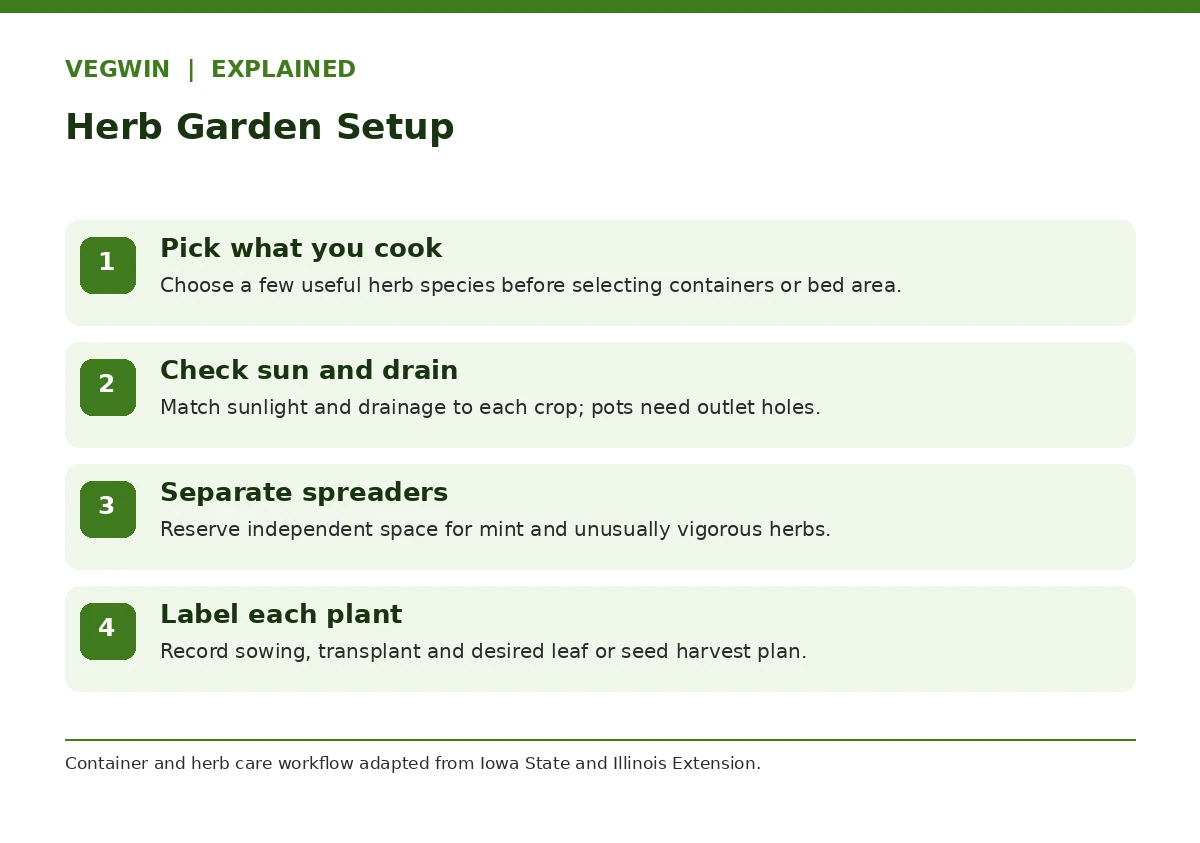
Convenience matters because culinary herbs are most useful when you can reach them regularly. Look for a spot with enough direct light for the herbs you choose and an easy route for watering. Iowa State Extension notes that many herbs perform well with at least several hours of direct sun, although individual species and very hot locations may require different exposure. Do not force every herb into an unshaded baking-hot wall space just because a generic tag says “full sun.”
Check drainage after rain. Wet roots are a bigger risk for some Mediterranean herbs than occasional missed harvests. A garden bed may be easier to maintain for large clumps, while pots let you move tender plants, separate soil moisture needs, and restrain vigorous growers. A handful of well-sited plants will usually produce more usable herbs than a crowded mixed bowl of incompatible species.
Group Herbs by Moisture Requirements
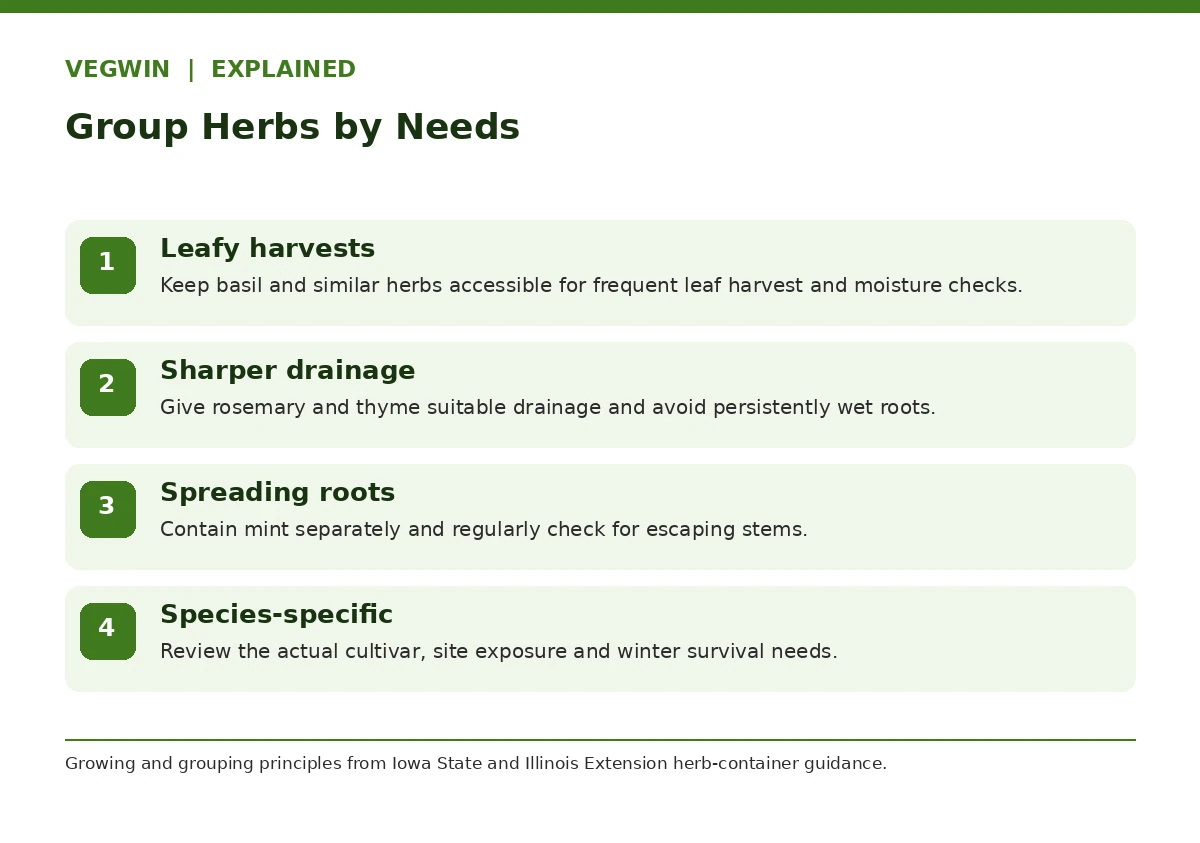
Use water needs as the organizing principle. Rosemary and thyme generally favor sharply drained conditions, whereas basil and parsley often benefit from more consistent available moisture during active growth. That does not mean drowning the second group; all require oxygen around their roots. Iowa State specifically recommends grouping container herbs with comparable watering requirements, which is more actionable than organizing them only by cuisine.
The easiest design is a few separate containers: a well-drained pot for herbs that dislike persistent wetness, another accessible pot for leafier herbs that may need closer moisture checks, and an individual container for mint. Plant labels, local climate, pot size and weather still determine when you water. Feel the media before repeating irrigation. Overly rich compost and heavy feeding are not automatically helpful to flavorful herbs.
Contain Mint and Other Spreaders
Mint is excellent to harvest but can travel through spreading stems and roots. If space is limited or you share a garden with other crops, a separate pot makes its reach easier to manage. Iowa State also identifies other vigorous herbs that may need containment in some settings. A pot is only effective if roots and escaping stems are monitored; placing an open-bottom pot directly on soil does not guarantee a permanent barrier.
Leave room for mature clumps and consider local winter survival separately from summer growth. Perennial herbs are not perennial everywhere: cold hardiness, winter wetness, and cultivar all matter. USDA hardiness zones speak to average extreme winter temperatures, not whether spring soil is warm enough for basil or when to sow dill. For timing, use local seasonal recommendations and plant-specific tolerance.
Decide Between Seeds and Transplants
Fast-growing annual herbs can be practical from seed; established nursery starts give other herbs a head start. Decide by what you intend to harvest: leaves, flowers, or seed. For example, an herb grown for seed needs to reach flowering and maturity, whereas a leafy herb may be regularly pinched to delay flowering and encourage new stems. Read individual seed packets for depth, timing and light requirements rather than assigning one propagation rule to an entire herb collection.
If a plant bolts in hot weather, check whether you chose a cool-season herb for a midsummer planting. Cilantro, for example, is often grown for tender leaves in cooler periods and for coriander seed after flowering; climate and variety affect how quickly this happens. Smaller succession sowings may serve a household better than one crowded planting. For transplants, inspect roots and pest damage before mixing new plants with established pots.
Harvest Leaves Without Exhausting Plants
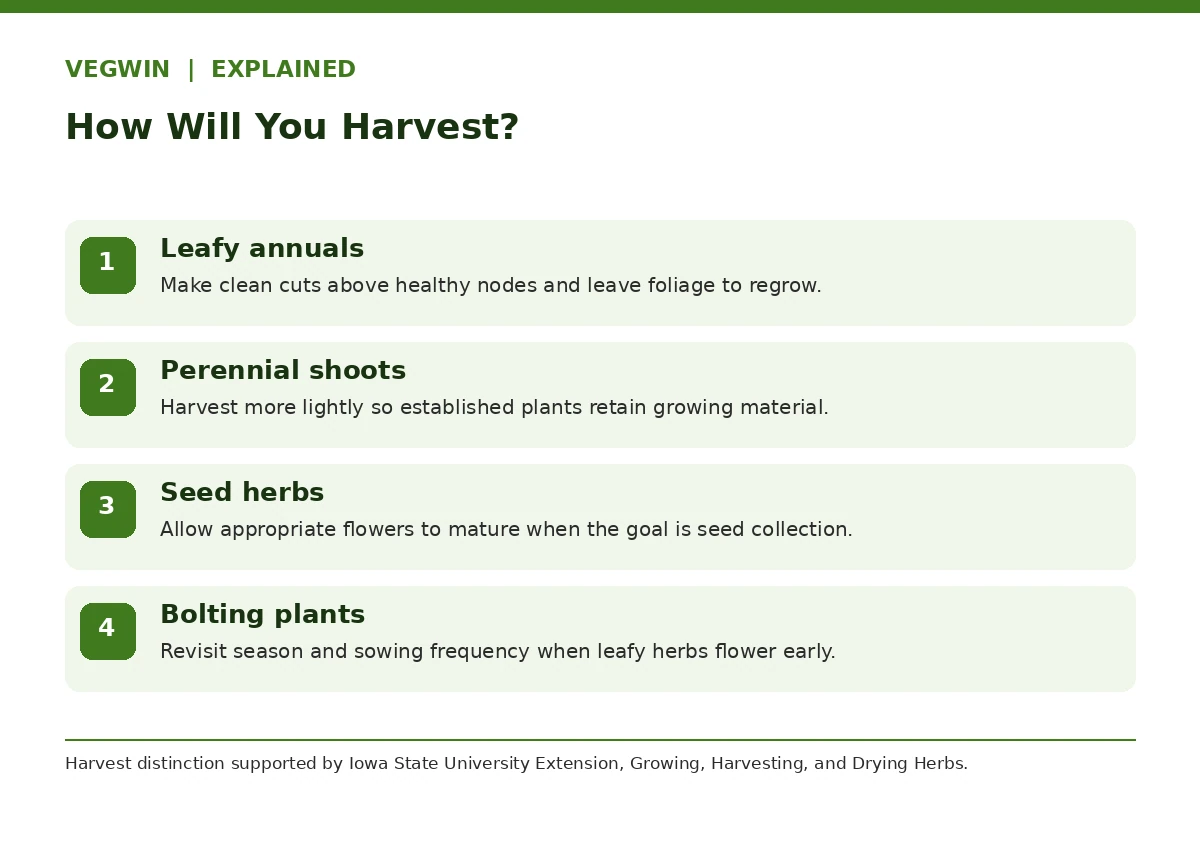
Harvesting is part of maintaining a leafy herb, but repeated severe cutting can weaken plants. Iowa State and Illinois Extension describe a lighter approach for perennials than for vigorous annual leafy herbs. Cut just above healthy leaf nodes to encourage branching where appropriate, and leave enough foliage for regrowth. Take small, frequent kitchen harvests instead of stripping plants bare in a single pass.
For herbs grown for seed, plan a different harvest sequence: allow flowers and seed heads to develop, then harvest according to the species. If a basil plant is flowering and you mostly want leaves, pinch appropriate growing tips while the plant remains healthy. Remove obviously diseased material rather than preserving it for culinary use. Wash edible harvests with food-safe practices; decorative or pesticide-treated foliage is not automatically safe to eat.
| Planning question | A workable choice | Watch for |
|---|---|---|
| Roots likely to spread? | Dedicated containable pot for mint | Runners escaping the container |
| Different water needs? | Separate containers or compatible groups | One pot staying wet while another dries |
| Tender vs. hardy? | Species-specific seasonal plan | Treating all perennials as winter-hardy |
| Harvest leaves or seeds? | Match pruning and sowing to purpose | Removing flowers needed for seed crop |
Manage Heat, Cold, and Pot Roots
Containers change the water and temperature environment quickly. Clay pots can dry faster than plastic ones; small root zones heat up and cool down more rapidly than garden soil. Inspect them after hot, windy days, and ensure every planter has drainage holes. If pots remain saturated despite reduced watering, check the potting medium, outlet holes, and root condition. Resist an automatic calendar-based fertilizer program; use plant performance and credible local guidance.
Tender perennial herbs may need protection or indoor care during cold weather, but moving them indoors is a new growing environment with different light and pests. Illinois Extension recommends gradual acclimatization for herbs moved inside. Check both sides of leaves for pests and do not assume a warm windowsill supplies outdoor-level sun. Record which herbs actually overwinter for you instead of promising that all “perennials” return.
Build a Small Herb Garden Plan
Start with three herbs you frequently cook with, then assign each to a specific place based on light, watering and growth habit. Sketch a path to reach them without stepping on the bed. Give mint its own containment plan and leave room for woody herbs to develop. Put short-lived annuals where you can replant them if they bolt or finish, and use individual labels so family members do not confuse look-alike foliage.
Each month, review what you harvested, which pot dried too quickly, and whether a plant became crowded. That observation helps you expand carefully. Avoid treating companion-planting folklore as pest prevention: a herb beside a tomato is not proof of insect control. For insects or diseases, first identify the organism and then use a local Extension management approach appropriate for the edible crop.
How We Research and What May Change
This guide compares public Cooperative Extension and university IPM recommendations, emphasizing the decisions a home grower can check in their own garden. The linked references were checked on October 19, 2026. No product testing, private cultivar trials, or site-specific soil analysis is claimed. Recommendations may change with climate, crop variety, local regulations, newly diagnosed disease, or revised Extension guidance; for a local decision, consult your state or county Extension office.
Sources reviewed: [1] Iowa State University Extension [2] Iowa State University Extension [3] University of Illinois Extension [4] University of Georgia Extension
Disclosure: This article contains no sponsored recommendations and no affiliate links. See the designated VegWin affiliate disclosure page; its live availability must be confirmed by the site owner before publication.
They may have conflicting moisture and growth habits. Separate containers are usually easier to manage, especially for spreading mint.
That is a sensible default because mint spreads vigorously. Inspect the container for escaping stems and roots.
Many herbs prefer several hours of direct light, but the amount depends on species, climate and exposure. Use individual herb and local Extension guidance.
If you are growing them for seed, allow flowering and seed maturation. For leafy harvests, pruning depends on growth habit and plant vigor.
Do not count on it. Specific interactions require evidence, and prevention should begin with pest identification and sound garden management.