
Welsh onion is a useful leaf allium when you want recurring green growth rather than an enormous round storage bulb. Allium fistulosum makes clumps of elongated white bases topped with hollow green tubes, and it can be started from small black onion seeds. The main mistakes are confusing it with garlic chives, burying the emerging leaves, leaving the sowing overcrowded or cutting away all the young growth before the base is established. RHS describes Welsh onion as a seed-propagated clump-forming crop in freely draining soil. This guide follows the seed, the circular leaf cross-section and the intact growing base through sowing and harvest.
Know What Makes Welsh Onion Different
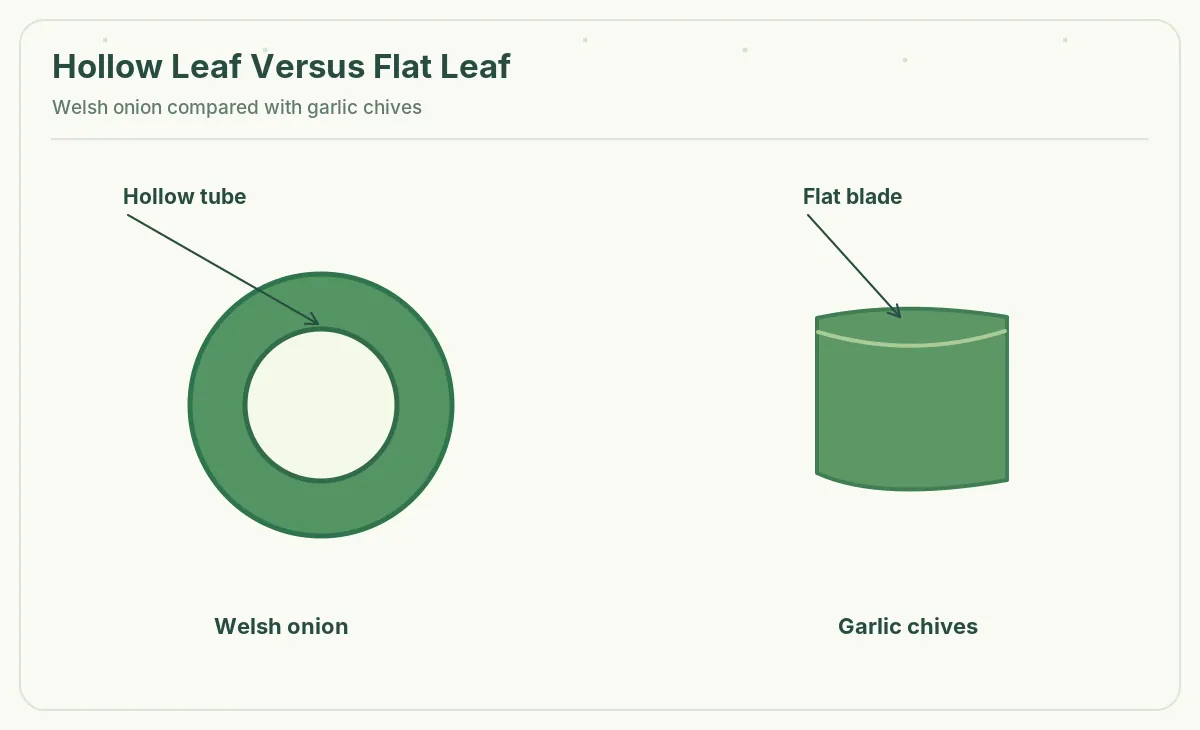
Welsh onion, Allium fistulosum, is also called Japanese bunching onion and can be grown for repeated leafy stems. It has hollow, circular or nearly circular green leaf blades emerging from a relatively narrow basal portion, rather than the broad flattened blades of garlic chives (Allium tuberosum). Bulb onion, Allium cepa, may swell into a rounded storage bulb depending on variety and conditions. Welsh onion generally makes long pseudostems and clumping shoots instead of being prized for a large dry bulb.
A useful identification panel shows one cut-open tubular Welsh-onion leaf beside a flat garlic-chive blade. The point is anatomy, not a claim that every seedling looks instantly distinct. Young onions initially produce narrow hooked leaves, and the definitive hollow tube becomes easier to see as they grow. Keep seed packets labelled during emergence so you do not accidentally combine species before their differences are clear.
Pick a Bed or Container That Drains
RHS’s Allium fistulosum profile calls for fertile soil with reliable drainage and access to sun. In dense heavy soil that sits saturated in winter, containers with drainage holes may be more manageable than a poorly drained trench. Before sowing, rake a bed smooth and remove perennial weeds that will compete with fine seedlings. Avoid planting directly into raw uncomposted debris or a compacted crust. If sowing in containers, use a suitable seed-starting mix initially and plan to provide room for maturing clumps.
Water needs depend on weather, medium and plant size. Maintain gentle, regular moisture during germination; later, let the surface begin to dry when appropriate rather than leaving the root zone permanently waterlogged. USDA perennial hardiness zones do not tell you which exact month the soil can be worked. Use local season conditions and the packet’s cultivar notes to time your sowing.
Sow Small Dark Seeds in Shallow Drills
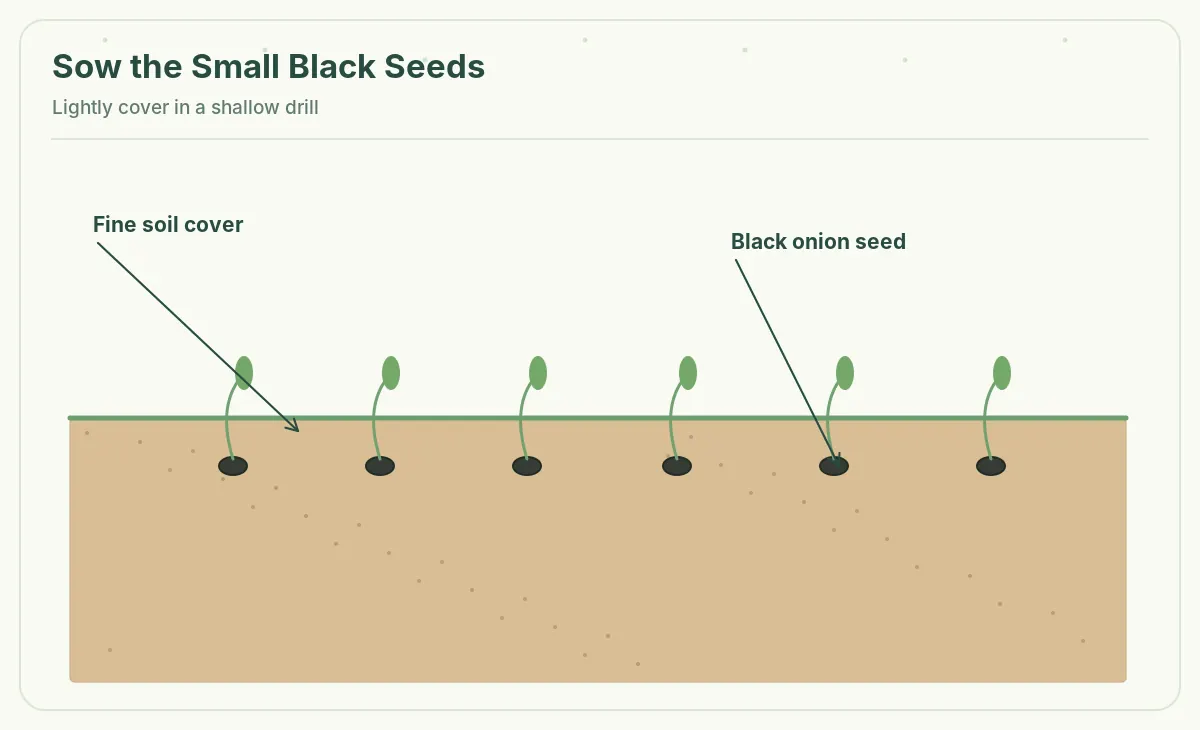
Welsh-onion seeds are small, dark and angular, resembling other true onion seeds rather than the larger cream-colored seed of a gourd. RHS’s dedicated Welsh-onion sowing instructions advise shallow drills in spring, a light covering of soil and watering after sowing. A soil cutaway should show each dark seed just beneath a fine surface layer, with the seed not resting on the exposed surface and not buried several inches deep. Write a planting label before watering so multiple similar rows remain distinguishable.
Broadcasting a thick carpet of seed may look productive but makes later clump establishment difficult. Sow sparingly, and use a gentle watering rose to avoid washing little seeds down the row. In cold, soggy conditions, wait for workable growing weather or start in a tray where moisture can be regulated. Newly emerged seedlings are slender and easy to bury with a heavy blast of water or bulky mulch.
Thin and Transplant While Roots Are Manageable
Once seedlings have enough size to handle, reduce crowding so there is air and room for individual shoots. The RHS Plants Welsh-onion guidance suggests moving tray-grown seedlings after they strengthen and hardening them first. When lifting, tease apart roots gently only if they are not hopelessly tangled. Hold the young plant by foliage or root plug rather than pinching the tender leaf junction. Set the seedling at about its previous soil level and press the surrounding soil lightly to remove large air gaps.
Not all Welsh onions must be thinned into widely separated solitary plants. Gardeners may intentionally grow small clusters for bunching greens, but these groups still need accessible water and room to form healthy bases. Label the row or pot so that clump-forming plants are not mistaken for weeds while young. Avoid piling soil up over the center of a developing shoot in the belief that it will become a bulb onion.
Recognize and Protect the Hollow Green Leaves
As Welsh onions mature, the leaves form distinctive green cylinders that are hollow inside. A transverse cross-section should display a ring of green leaf tissue around a central open cavity, not a solid blade or a bundle of many short veins. Growth comes from the protected basal region, which should remain alive after modest leaf harvest. Welsh onions can flower in rounded clusters of many small white flowers; that flower head is an umbel, unlike the solitary globe-shaped papery inflorescence of gomphrena.
Inspect plants for collapsed, twisted, yellowed or damaged leaves. RHS notes onion fly, allium leaf miner, downy mildew and white rot as potential allium problems. Check the cause before choosing a treatment, and remove badly diseased tissue with clean tools as appropriate. Preventing excess wetness and rotating plant families are sensible cultural practices; do not use unverified sprays on edible leaves. Keep onion trimmings away from pets: alliums can be harmful if eaten by them, as the RHS Red Welsh onion profile notes.
Cut Outer Leaves Without Destroying the Base
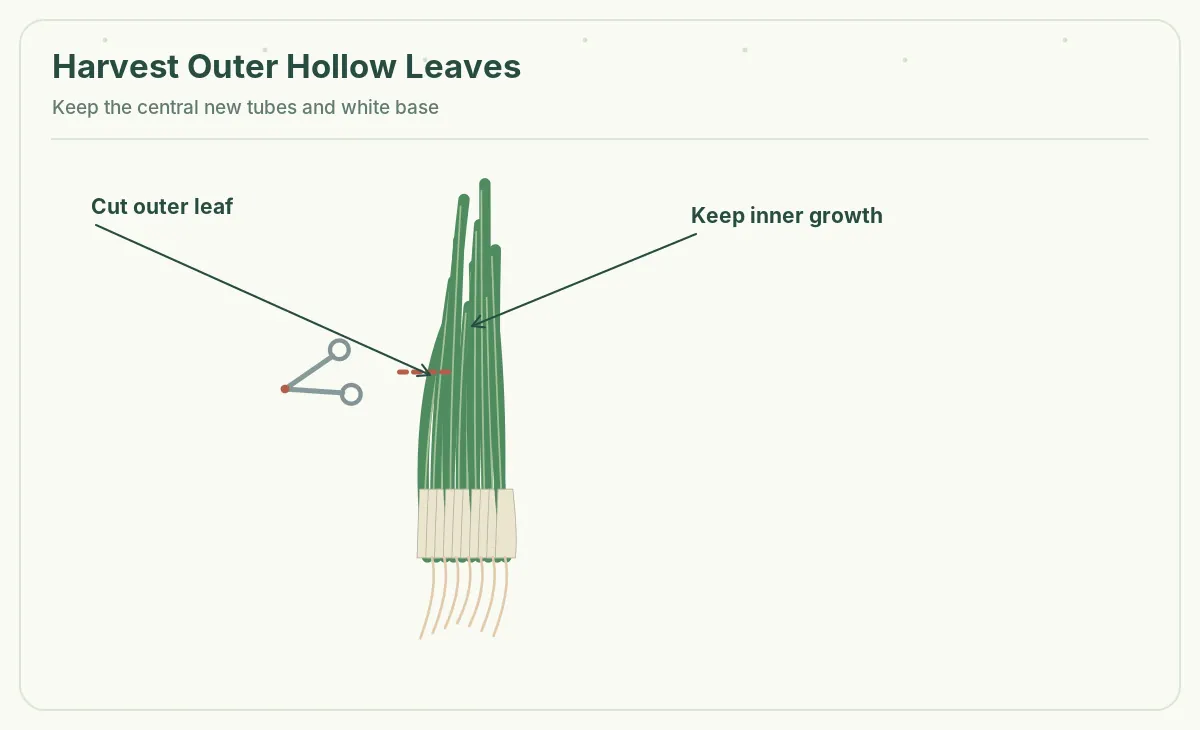
Welsh onion can be cut for its green leaf tubes or lifted as a whole small bunch when that is the intended harvest. For recurring greens, the RHS Plants guidance recommends selecting outer shoots so the inner shoots remain active. Hold the plant steady and cut a suitable leaf above its basal junction, keeping young inner growth intact. Do not sever the entire live basal plate or the entire crown close below ground and then promise reliable regrowth from nothing.
The harvest diagram should show scissors cutting a long outer hollow leaf with the central young cylinder untouched, and a second illustration showing a cleanly lifted whole small clump as a one-time harvest. Neither method creates a new plant from a detached leaf segment. If plants begin flowering, leaf quality may change, so use sound leaves while tender and leave blossoms for pollinators when maintaining a perennial patch.
Let Established Clumps Multiply Gradually
An established clump can produce side shoots and become denser over time, depending on cultivar and climate. RHS identifies Welsh onion as clump forming and the Welsh-onion supplier guidance describes regular leafy harvest. Do not force division on tiny seedlings or expect five shoots to appear instantly from a single seed. Give mature plants enough root space and recover after heavy harvest. A clump that has become congested may eventually be lifted and separated into rooted portions for replanting, but that is a later maintenance task.
In containers, monitor whether roots are filling the available volume and water drains through rather than collecting in the bottom. Cut faded flower stems and damaged foliage as appropriate. The steady process is fine dark seed, narrow emergence, recognizable hollow tube, a strong living base and selective outer-leaf harvest. These observations are more useful than assigning a universal number of weeks to every garden.
Related Guides
- Onion Gardening: Choose Day Length, Start Bulbs, and Cure the Harvest
- How to Plant Onion Sets Upright and Avoid Large Sets That Bolt
- Egyptian Walking Onions: Plant Topsets and Control the Patch
- Why Onion Plants Flower: Diagnose Bolting and Save the Harvest
- Starting Onion Seeds Indoors: A Tray-to-Transplant Checklist
How We Research This Guide
We reviewed the following horticultural sources on October 27, 2026: www.rhs.org.uk — RHS identifies Allium fistulosum as Welsh onion, a clump-forming edible allium propagated from seed in fertile well-drained soil.; www.rhs.org.uk — RHS describes shallow, successive sowings and seed-grown Allium fistulosum salad onions in garden beds or containers.; www.rhsplants.co.uk — RHS Plants supplies Welsh-onion-specific shallow sowing, seedling handling and harvesting guidance.; www.rhs.org.uk — RHS profile shows a Welsh onion variety with hollow green leaves and clumping whitish bases; it notes pet safety precautions for alliums.. The cited research explains general plant biology; adapt timing and growing conditions to your garden and cultivar.
No paid product or manufacturer is endorsed here. Read our affiliate disclosure for the site-wide policy. We do not imply any private sponsorship or approval.
No. Welsh onion has hollow tubular leaves; garlic chives have flatter leaves.
Usually no; Allium fistulosum is generally grown for long green leaves and narrow white bases.
Sow in shallow drills and cover lightly according to Welsh-onion packet guidance.
Yes, from an established clump if you leave living basal growth and inner young shoots intact.
Yes, use a freely draining container and give enlarging clumps sufficient root space.