
Dragon Tongue beans are easier to harvest when you ignore the calendar for a moment and actually look at the pods. This bush-type common bean is known for broad pale-yellow pods with irregular purple streaks. As the seeds inside expand, the fresh whole-pod eating quality changes. For snap beans, University of Minnesota Extension recommends picking before the seed bulges become obvious; UGA Extension likewise emphasizes tenderness rather than a rigid date. The key decision is whether you want succulent whole pods now, fully developed fresh shell beans later, or dry planting beans at the end of the season. Each stage looks different and deserves a different action.
Recognize Real Dragon Tongue Pods on the Bush
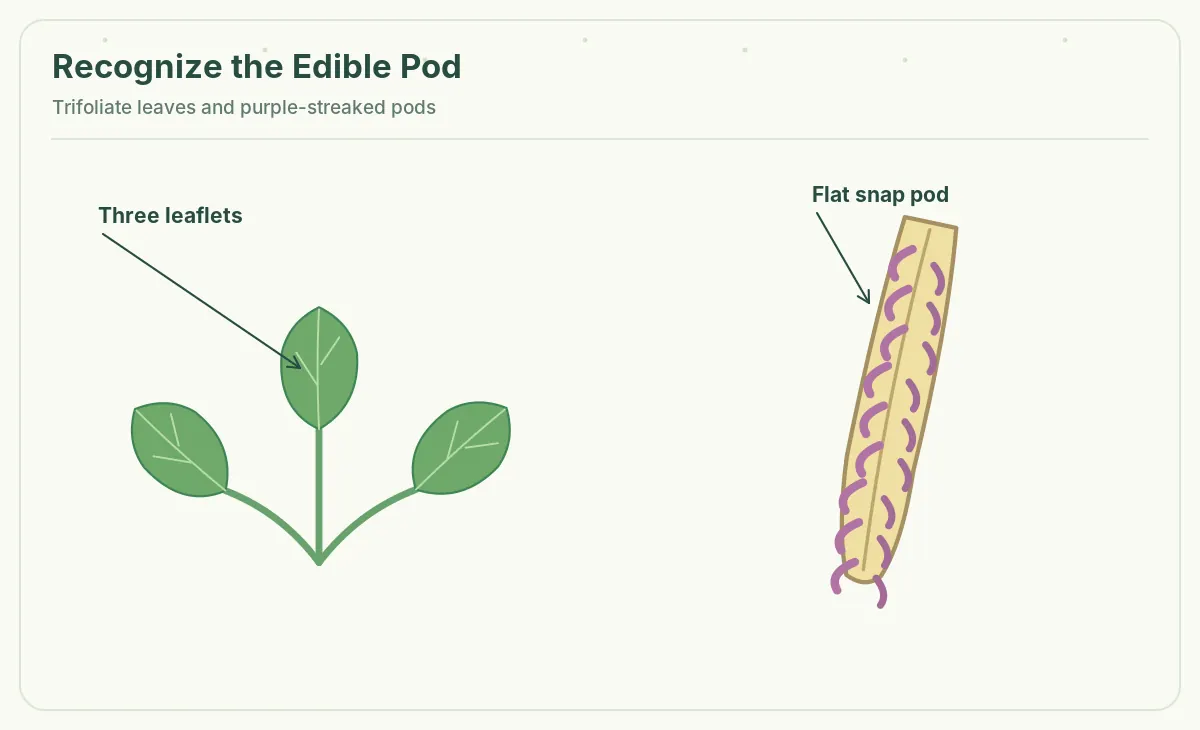
Dragon Tongue is a type of Phaseolus vulgaris, the common bean, not the very long yardlong bean Vigna unguiculata and not a purple-podded runner bean. Its pods are fairly broad and slightly flattened, cream to pale yellow with purple brushstroke-like streaks. The markings can vary between plants and with maturity. The foliage is typical of a common bean: each mature leaf is divided into three leaflets, with pale flowers preceding developing pods. Bush forms stay comparatively compact rather than twining many feet up a support.
Use the seed packet’s cultivar name and growth habit to avoid mistakes. A green bean with a few violet blotches may be another variety altogether. A diagram of the recognizable trifoliate leaf next to the striped pod helps separate the plant from the crop. Do not rely on a particular stripe count or length as a universal identifier, because climate and seed lines can affect appearance.
Check the Snap Stage Before Seeds Swell
For the tender fresh-pod harvest, look for pods that have gained their cultivar’s useful length while remaining juicy and flexible. The surface should feel smooth and turgid, not leathery. Individual beans inside should still be immature; a line of conspicuous rounded seed bulges usually indicates a later stage. University of Minnesota Extension notes that snap beans may be harvested before seeds inside swell, while the UGA bulletin describes how excess maturity increases fiber. Pick a representative pod and bend or snap it to assess quality.
The stripes are a helpful identification feature but not an infallible ripeness gauge. A handsome cream-and-purple pod can still be too mature for best whole-pod eating. Conversely, smaller pods may taste pleasant but reduce yield if picked unusually early. Balance the visual stage with texture and the intended use rather than enforcing a single number of days since sowing.
Detach Pods Without Pulling Branches Off
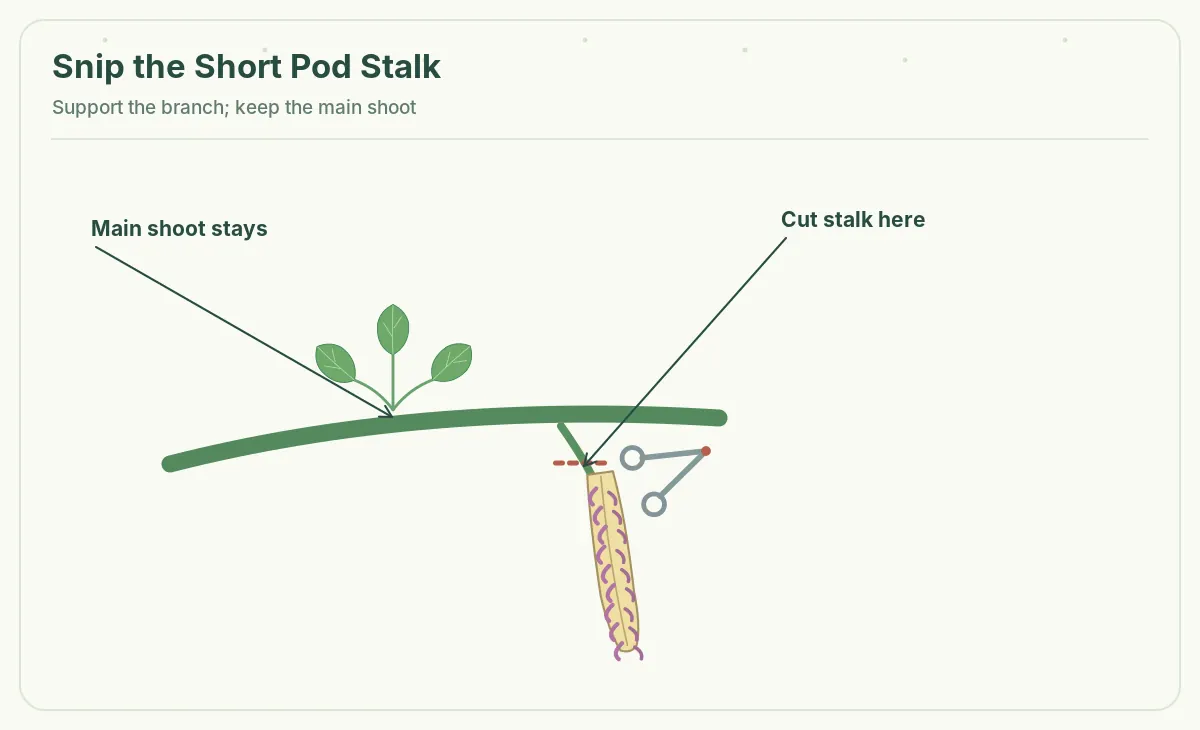
Snap-bean bushes can be brittle, particularly at joints where pods, branches and developing flowers meet. Hold the stem or nearby branch with one hand. With the other, pinch or snip the small pod stalk just above the fruit, taking the pod without ripping the plant. UGA Extension describes pinching the bean stem for hand harvesting. A clean pair of small snips helps when clusters are crowded, and it gives a precise cutting point to illustrate.
Avoid cutting through the main stem, removing an entire leafy tip or pulling so hard that roots lift from soil. Leave immature pods and healthy flowers in place for later checks. Harvest during reasonable weather and handle pods gently; bruising and moisture trapped in heaps can shorten quality. A good plant diagram shows the stalk joint and fruit separately, with the cut mark on the small stalk rather than across a young seed-filled pod.
Tell Snap, Shell and Dry Stages Apart
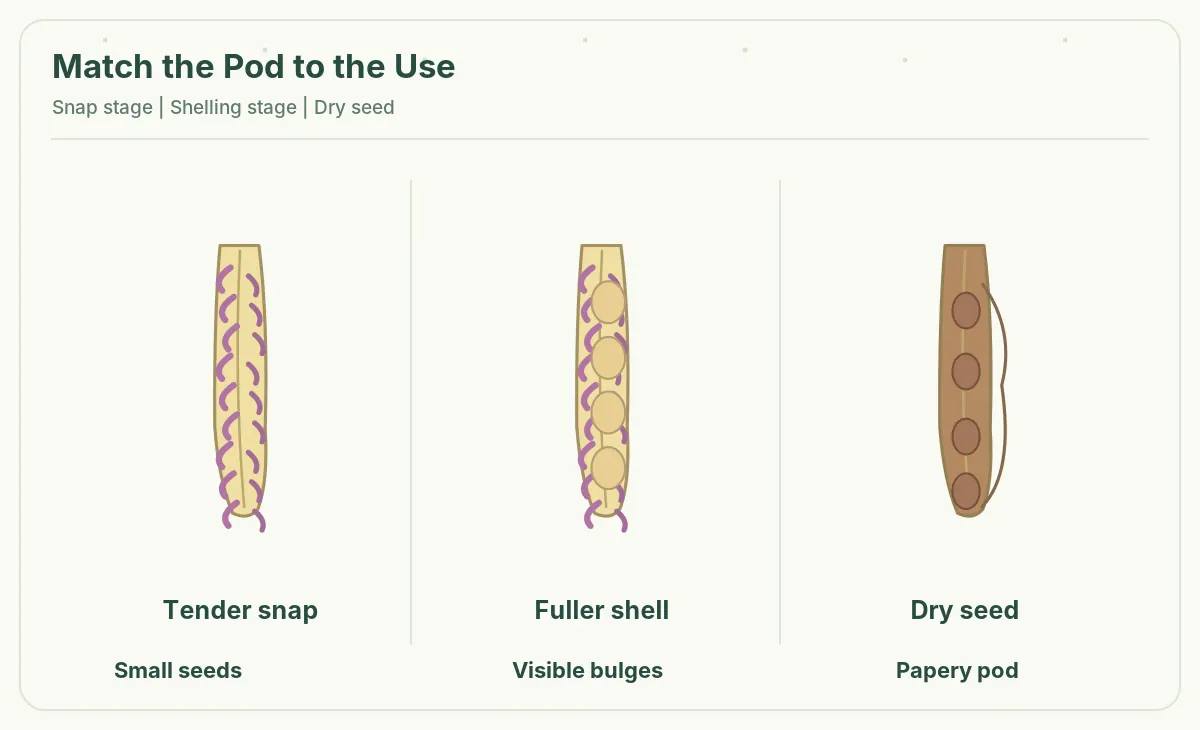
The same common-bean crop can offer several harvest goals. At snap stage the pod itself is the desired food and seeds remain small. At shell stage the individual seeds are expanded, and the pod wall becomes less pleasant to chew; the seeds are removed and prepared according to reliable food guidance. At dry-bean stage pods are papery and the seeds are firm and mature. Minnesota Extension describes these three uses distinctly. Do not present a woody dry pod as if it were the optimal fresh snap bean.
A useful comparison has three specimens in one frame: slender striped pod without pronounced lumps; fuller pod with visible seed bumps; and brown dry pod opening to reveal mature seeds. Color alone can mislead, especially because purple bean pigments may fade during cooking. Always identify which tissue is being eaten and avoid giving casual raw-bean advice that ignores variety and preparation.
Pick Frequently When Plants Are Producing
Check productive plants often because young pods expand quickly in favorable weather. Removing full-size snap pods encourages the plant to keep directing resources toward other developing pods, although the eventual flush depends on the variety and conditions. UGA Extension discusses how leaving mature pods can decrease further production. A garden notebook listing first blossom, first striped pod and harvest quality helps refine the interval for your own site more accurately than a fixed time claimed for every garden.
If an extreme heat spell causes blossoms to drop, the appropriate response is to check water, temperature and plant stress, not automatically add more nitrogen. Excess nitrogen can favor lush leaves over pods. Beans have their own nitrogen-fixing association under suitable conditions, but that is not permission to grow them in completely depleted soil. Aim for balanced growing conditions and prevent drought stress during flowering and pod fill.
Protect Pods and Cool the Harvest Promptly
Inspect both sides of leaves and individual pods for chewing damage, spotting or soft decay. University of Minnesota Extension describes pests and diseases of snap beans and recommends identifying problems before selecting controls. Avoid splashing muddy water over pods unnecessarily, and do not work through wet foliage when preventable disease spread is a concern. Remove visibly spoiled pods rather than mixing them into the edible basket.
The harvest continues to lose moisture and quality after picking. Minnesota Extension advises keeping snap beans in cool, moist conditions and discusses their relatively limited fresh storage life. Refrigerate promptly in appropriate produce storage rather than leaving a warm basket in direct sun. If you plan to preserve beans by canning, use a tested USDA or National Center for Home Food Preservation process, not an improvised recipe.
Leave a Separate Plant for Seed if Desired
Saving a few Dragon Tongue plants for seed is a different project from repeated fresh harvesting. Choose vigorous, correctly identified plants and allow selected pods to mature until the pods and seeds are fully dry. Dry bean seeds should be firm and rattle within the pod, rather than looking like the small tender seeds of a snap bean. Keep the seed lot labelled with cultivar and year, and do not substitute an open-pollinated cultivar promise for proof of isolation from nearby flowering bean varieties.
For today’s tender harvest, keep the decision simple: broad cream pods with purple streaks, smooth sides, no conspicuous seed swelling and a clean stalk removal. A few mature seed pods are useful only when you intentionally want the later stage. This prevents both premature picking of tiny pods and overshooting the best fresh texture.
How We Research This Guide
We reviewed the following horticultural sources on October 27, 2026: extension.umn.edu — University of Minnesota Extension distinguishes snap, shelling and dry bean stages and says snap beans are best before individual seeds bulge.; extension.uga.edu — UGA Extension explains tender mature-green snap-bean pods, fiber development and hand removal at the stem.; extension.umn.edu — University of Minnesota Extension summarizes snap bean harvest stage and postharvest cooling.. The cited research explains general plant biology; adapt timing and growing conditions to your garden and cultivar.
No paid product or manufacturer is endorsed here. Read our affiliate disclosure for the site-wide policy. We do not imply any private sponsorship or approval.
No. Check size, tenderness and whether individual bean seeds visibly bulge inside the pod.
The tender immature snap pod is the whole-pod harvest stage; wash and prepare it as a snap bean.
Pinch or snip the short pod stalk while supporting the branch, rather than tearing the main stem.
That is a later shell-bean stage; the pod is likely less tender, so select younger pods for whole-pod harvest.
No. Leave separate pods on suitable plants to ripen fully if you intentionally want dry seeds.