
Borage (Borago officinalis) grows from conspicuous dark, ridged seeds into a softly hairy annual with nodding blue star-shaped flowers. Sowing it where it will flower avoids unnecessary disturbance to young roots and lets you decide how much space an adult plant receives. The same generosity that makes borage easy to establish can make it a prolific volunteer. This guide follows the seed, seedling and mature flower all the way to a sensible self-seeding boundary.
Confirm It Is Annual Common Borage
Common annual borage is Borago officinalis in the Boraginaceae family, not every garden plant marketed with the word borage. RHS describes blue flowers, furry foliage and a generous ability to reseed. NC State’s plant profile shows branching, hairy stems and rough ovate leaves with unmistakable dangling star flowers. A different creeping species may have a perennial habit and require different handling. Buy seed labeled with a complete botanical name and keep its packet. A correct identification is especially important if children or pets play near the bed, because common names do not establish whether a leaf or flower is safe to eat.
Pick a Site That Has Room for the Adult Plant
Borage performs best in a sunny bed with free-draining soil, although it tolerates some light shade. NC State describes plants that can become broadly spreading and noticeably hairy; do not crowd them against tiny lettuce seedlings or narrow pathways. Before sowing, visualize the mature clump rather than imagining that the small initial leaves represent its final footprint. A bed edge or flower strip where volunteers can be recognized may be easier to manage than a dense mixed seedling flat. Avoid waterlogged locations because constantly wet roots can fail even with an otherwise vigorous flower species. No special fertilizer recipe is necessary in ordinary garden soil.
Choose the Season From Soil and Frost Conditions
In frost-prone regions, direct sow when spring weather and soil conditions are suitable for annual establishment, following your local Extension or the packet for the cultivar. RHS also notes that borage can sow itself successfully for later crops; in milder areas volunteer seedlings may establish outside a standard northern spring window. A garden in the subtropics may experience different heat and moisture constraints than one in New England. Do not translate a USDA perennial hardiness zone into a universal calendar month. The purpose is to provide workable soil and enough remaining growth season for flowering, not to force seeds into cold saturated ground.
Prepare a Fine Surface Without Burying the Bed
Clear competing weeds from the intended patch, loosen the top few inches and rake lumps aside. Mark the short sowing row so future seedlings are not confused with weeds. Borage seeds are larger than dustlike petunia or snapdragon seed, so they should not be treated as requiring exposure on the surface. Use a shallow furrow and a light layer of loose soil; follow the packet’s depth specification because nursery seed lots and growing media vary. Gently settle the surface with the back of a rake or hand so the seed contacts moist soil. Do not compact wet clay into a hard crust.
Place Seeds With Space for Later Thinning
Put a few seeds along the furrow rather than scattering an entire packet into a tiny circle. Cover lightly and water using a fine rose or gentle watering can to avoid shifting seeds. Mark the row and cultivar with a weather-resistant label, and leave the packet where you can check the expected germination period. If emerging seedlings are numerous, select sound individuals and snip weaker crowded seedlings near the soil line. Rough pulling can lift the young primary root of a neighboring keeper. There is no benefit in transplanting every surplus seedling; sow fewer seeds next season if crowding is consistent.
Recognize the Hairy Seedling and Growing Root
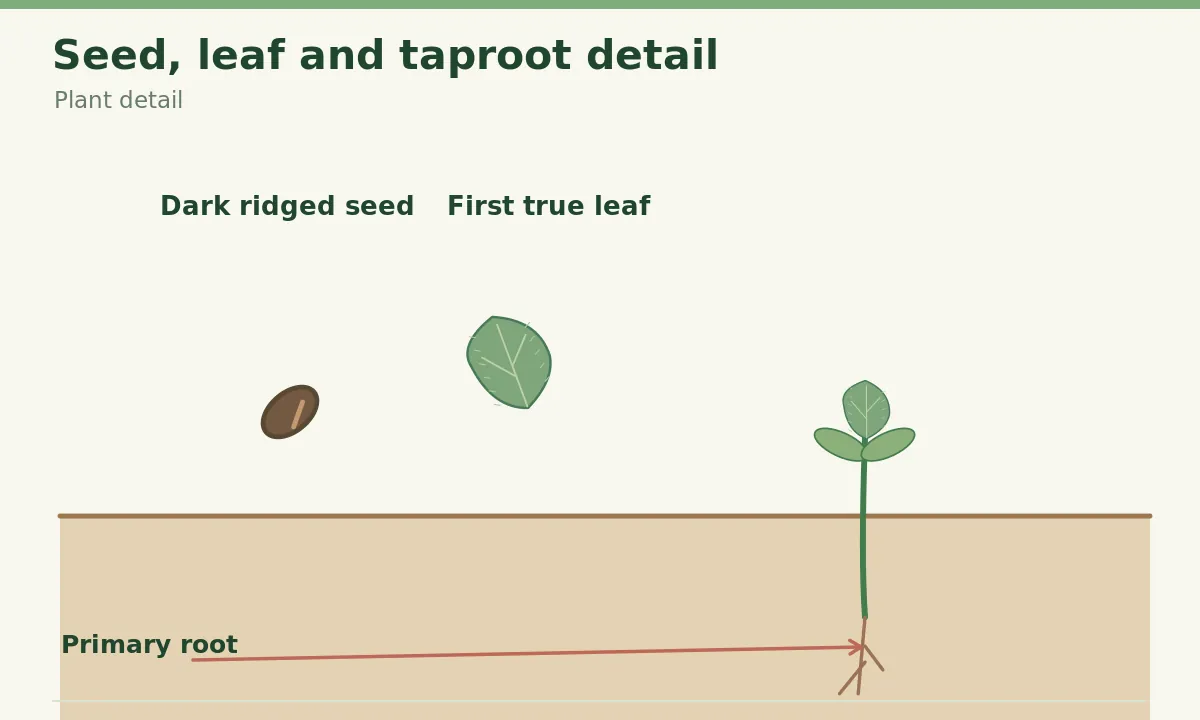
Young borage plants form seed leaves first, followed by broader, rough-textured true leaves. As they develop, a more pronounced main root anchors the seedling. It is often easier to start in place than to disentangle many roots once plants are large. Do not confuse tiny borage starts with a mature nettle or mint based only on fuzz: leaf shape and eventually flower structure matter. A weak stretching seedling may need brighter conditions; a collapsed seedling in constantly wet soil may indicate poor drainage or a seedling disease. Observe before adding chemical treatments, since a bare patch may simply reflect crusting or seed eaten by wildlife.

Water New Plants Gently but Avoid Soggy Soil
The upper layer should remain sufficiently moist during germination, while the whole root area retains good drainage. Once established, borage can tolerate some dry spells, as the RHS and NC State profiles describe, but a fresh seedling cannot rely on an extensive root system. Water the soil rather than blasting leaves onto the ground. In containers, use drainage holes and a stable pot large enough for the growing plant; small pots can dry quickly and limit growth. A thin mulch can moderate soil moisture only after seedlings are visible; avoid burying the new crowns with bulky mulch before emergence.
Allow Flowers to Support Pollinators Without Overclaiming
Borage produces nectar-rich blue flowers visited by bees and other insects, making it useful in a pollinator planting. That does not prove it will repel pests from tomatoes or guarantee pollination of every nearby vegetable. Show the flowers to children without encouraging the sampling of unknown plants. Leave clear access between rows so gardeners can harvest crops without brushing repeatedly against prickly leaves. If the annual becomes floppy, place a simple stake or plant support before stems spread into an adjacent crop. This is about keeping the plant accessible rather than pruning it to an exact ornamental shape.
Decide How Much Self-Seeding You Want
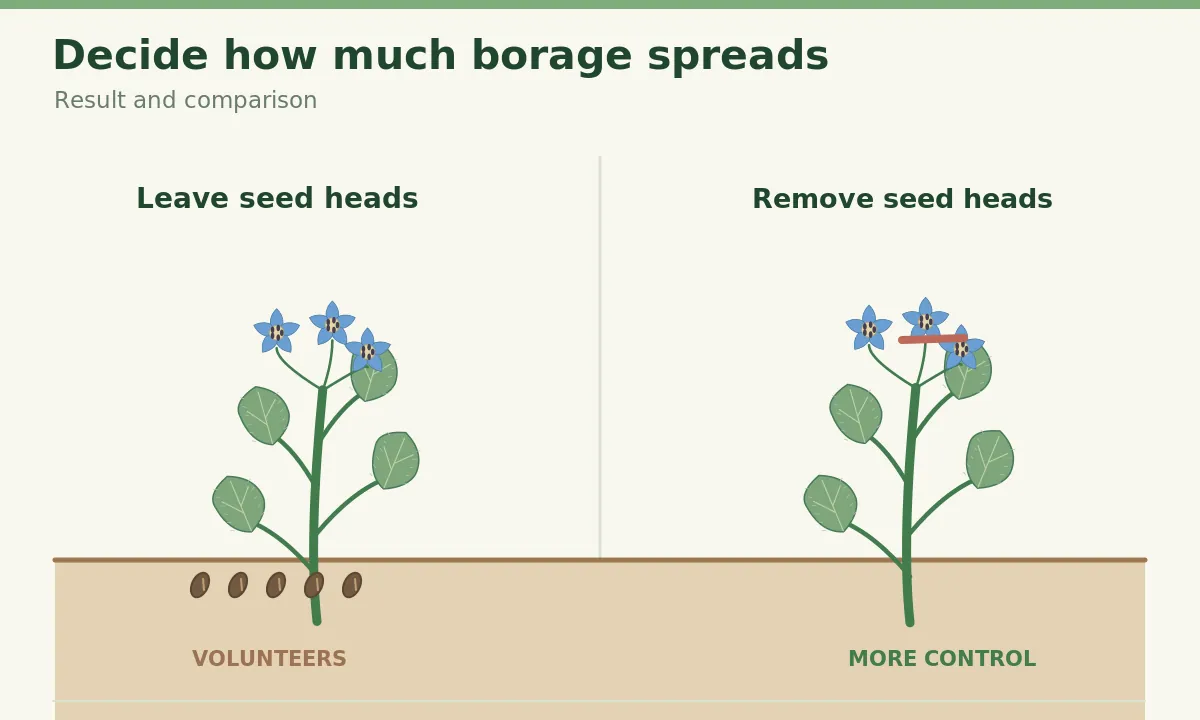
A single mature borage can drop ample seed after flowers finish. RHS notes that volunteers are common and suggests collecting seed or removing plants to avoid unwanted spread. Choose one small area where the plant may self-sow, or cut spent seed-bearing growth before mature seeds are released. Removing all flowers early also removes nectar, so choose a balanced schedule based on actual space. Watch for seedlings in paths, pots and neighboring vegetable beds the next season. Remove volunteers before roots become difficult to lift, and do not assume every self-sown seedling will preserve an ornamental cultivar’s exact traits.
Avoid Misleading Claims About Edibility and Safety
Borage is sometimes promoted for edible flowers and cucumber-flavored foliage. NC State Extension, however, flags pyrrolizidine alkaloids and possible liver injury, and lists the plant as having low-severity poisoning characteristics for people and animals. This gardening guide does not recommend eating leaves, making tea, or using borage medicinally. Exercise particular caution with children, pets, pregnancy and liver conditions; consult qualified medical or veterinary advice where exposure is a concern. Never assume that a flower’s popularity as a garnish proves all preparations or repeated doses safe. Growing the plant for ornamental and pollinator value does not require consuming it.
Review the Bed After Flowering Ends
Once the main flowering flush is over, decide whether to keep a few stems for seed or clear the entire plant. Compost only sound material when your local compost system is suitable; do not intentionally spread ripe seed heads throughout the garden if volunteers are unwanted. Remove dead debris that shelters slugs or crowds younger plants. A labeled photograph of the mature rough leaf and blue flower helps recognize volunteers later. Record where borage performed well, when it flowered and whether reseeding became troublesome. Those three observations are more useful than treating it as a universally beneficial companion plant.
Related Guides
- How to Grow Borage From Seed and Manage Its Self-Sown Seedlings
- How to Grow Borage in a Deep Pot Without Damaging the Taproot
- How to Save Borage Seeds Before Black Nutlets Drop to the Ground
- Growing Borage Near Vegetables Without Letting It Self-Seed Everywhere
How We Research and Verify Plant Advice
Sources checked on 2026-10-26: rhs.org.uk; plants.ces.ncsu.edu; rhs.org.uk. We reviewed each institution’s plant identification, correct growth stage and relevant cultural recommendations before adapting them into an independently written step-by-step guide. Where sources are region-specific, their calendar details are not applied universally. Pictures use simplified teaching shapes and should be compared with living specimens; they are not a substitute for laboratory disease diagnosis or local climate guidance. The relevant advice is paraphrased rather than reproduced.
Safety and Independent Editorial Disclosure
This independently prepared educational article does not claim sponsorship or affiliate approval. Our category reading links are informational, not product endorsements. See the VegWin affiliate disclosure. Clean sharp tools before cutting plants, protect hands from thorns and blades, and keep cut plant material away from children and pets where appropriate. Use only locally registered plant treatments labeled for the actual crop, and observe the product label. Do not rely on unsupervised home remedies or unverified harvest-safety promises.
No. Direct sowing is suitable for annual borage in an appropriate season; avoid unnecessary root disturbance.
No. Borage has comparatively larger seed; follow its packet for a light cover rather than copying light-germinating flowers.
The common plant is annual but often self-seeds, so volunteers may appear where seed heads were allowed to ripen.
This guide does not recommend ingestion; NC State warns of pyrrolizidine alkaloids and possible harm.
Remove seed heads before release and thin volunteer seedlings early while their roots are manageable.