
Old-fashioned bleeding heart is famous for arching strings of pink and white heart-shaped flowers. When the display finishes, the leaves often remain green for a while, then begin turning yellow during summer. That decline can be a normal dormancy rather than a gardening failure. For the old-fashioned species, now usually called Lamprocapnos spectabilis and still widely sold as Dicentra spectabilis, the safest routine is to leave healthy green foliage in place and remove stems after they naturally die down. Wisconsin and Penn State Extension both describe this summer senescence. The important decision is not simply whether blooming has stopped, but whether each stem is still functioning or has genuinely finished for the season.
Confirm Which Bleeding Heart You Grow
The classic old-fashioned bleeding heart forms mounds of deeply divided green leaves and arching stems carrying pendant heart-shaped flowers. Its accepted name is Lamprocapnos spectabilis, though labels may still say Dicentra spectabilis. Several other perennials sold as bleeding heart behave differently. Wisconsin Extension notes that eastern fringed bleeding heart, Dicentra eximia, and western Dicentra formosa often have longer seasons with foliage that persists longer. Do not automatically apply a summer dieback schedule to all plants with heart-shaped blooms. Check the label or compare leaves, stems, and overall habit before trimming. In a mixed border, accidentally clearing the wrong crown can remove healthy growth.
Understand Why Green Leaves Still Matter
After flowering, green leaves continue to use light and support the perennial underground crown and roots. The end of a floral display does not necessarily mean the plant has stopped functioning. Cutting all foliage off when it is still healthy can weaken the plant or simply remove a useful source of energy, especially when summer heat has not yet arrived. The RHS does not require routine pruning of old-fashioned bleeding hearts. It is reasonable to remove a spent flower stem for neatness, but that is not equivalent to shearing every leaf to the soil. If the green mound looks healthy, it is usually best left alone.

Remove Spent Flowers Only if You Want To
Once the pink hearts fade, the leafless arching flower stalks can be snipped back for appearance or to discourage unwanted seed formation. Trace the stem to its origin before cutting so you do not mistakenly sever neighboring leafy stems. Some gardeners leave seedpods or spent flowers undisturbed; that is usually acceptable when disease is absent. Deadheading is primarily a cosmetic and seed-management choice, not an essential requirement for winter survival. A tidy shears cut is better than tearing fleshy stems from the crown. The key is to distinguish the nearly leafless flower stalk from the green, divided foliage that should remain until it finishes naturally.
Watch for True Yellowing and Dormancy
In warmer or drier summers, the entire mound may yellow, flop, and wither relatively early. Wisconsin Extension explains that summer senescence is common and may happen later in cool, moist conditions. Penn State likewise describes roots remaining alive when the tops die back. A uniform seasonal change after flowering is therefore not the same as a sudden isolated wilt in spring. Observe the whole clump: leaves transition from green to yellow, stems gradually lose firmness, and the aboveground plant disappears. When most tissue is dry or dying, removing it is reasonable. The perennial crown survives below ground and may return the next spring. If you are starting from scratch, read When to Cut Back Hardy Hibiscus vs. Tropical Hibiscus.
Cut Only Dead Stems Near the Soil Surface
Use clean hand pruners to remove yellow, dry, or fully collapsed stems without digging into the soil. There is no advantage to excavating the crown to look for living tissue. If green leaves remain among yellow ones, leave those healthy sections until they finish. RHS maintenance guidance is essentially to tidy the plant as its foliage dies, while Wisconsin Extension notes that fully dead stems can be removed. Collect decayed material that could shelter pests and dispose of suspiciously diseased debris separately from clean garden compost. Avoid treating the crown as if it were a woody shrub needing rejuvenation cuts each year.

| Situation | Recommended action | Why it matters |
|---|---|---|
| Flowers have faded; leaves remain green | Remove only spent flower stalks if desired | Healthy foliage still functions |
| Leaves naturally yellow and die down | Trim dead stems near the ground | A dormant crown remains under soil |
| Fresh green stems abruptly wilt in spring | Check roots, soil and symptoms first | Unexpected collapse is not always dormancy |
Tell Normal Dormancy From a Real Problem
Yellowing that arrives after a normal spring flowering sequence can be expected, but abrupt collapse, stem discoloration, mushy crowns, or unusual mottling deserve inspection. Bleeding hearts prefer cool shaded conditions with adequate but well-drained moisture; severe drought and stagnant wet soil can both be stressful. Check the planting location, recent weather, and firmness of remaining stems. Do not assume all late-spring wilting is harmless dormancy if neighboring plants show similar disease signs. Wisconsin Extension lists occasional aphids and slugs; Penn State also advises watering during dry spells. If in doubt, take photos and ask local Extension before using pesticides or digging up a crown that may be healthy.
Avoid Overwatering an Invisible Dormant Clump
Once tops have completely disappeared, the root crown is still present but normally uses less water than a fully leafed plant. Maintain sensible soil moisture for the site without regularly saturating the location. Avoid watering every day simply because the plant no longer has leaves. In dry climates, nearby plants may need irrigation, so judge the whole bed and drainage rather than enforcing an absolute no-water rule. Mark the crown’s position with a small label or discreet stake. That prevents an enthusiastic gardener from planting bulbs or digging a new hole directly through the dormant roots in late summer or fall.
Hide Summer Gaps Without Smothering Crowns
Because old-fashioned bleeding heart often disappears by midsummer, design the border with later-emerging shade companions. Wisconsin Extension suggests hostas, ferns, hardy geraniums, astilbe, and other plants that fill in as bleeding-heart foliage declines. Place companions with enough room that neither root mass is repeatedly disturbed. An airy annual or nearby potted plant may disguise a gap while the perennial rests. Do not bury the dormant crown under a thick mound of fresh soil or aggressive roots. The objective is visual continuity without mistaking natural dormancy for a permanent vacancy in the garden. For the basics, see our guide: When to Cut Back Bleeding Heart Foliage Without Disturbing Dormant Roots.
Protect the Crown During Autumn Cleanup
With a marked crown, remove seasonal litter gently rather than raking deep into the bed. A modest layer of appropriate organic mulch can help maintain reasonable soil conditions, but keep it from forming a soggy mound against any crown or stems. Cold-hardiness decisions should follow species and site conditions; growing zones do not tell you exactly when a plant will yellow in summer. If a late flush of small leaves appears in a cool season, do not cut it merely to match the neighboring empty space. The plant’s actual foliage color and condition are the better signals. Allow the dormant perennial to resume growth naturally the next spring.
Use a Simple Three-Stage Pruning Test
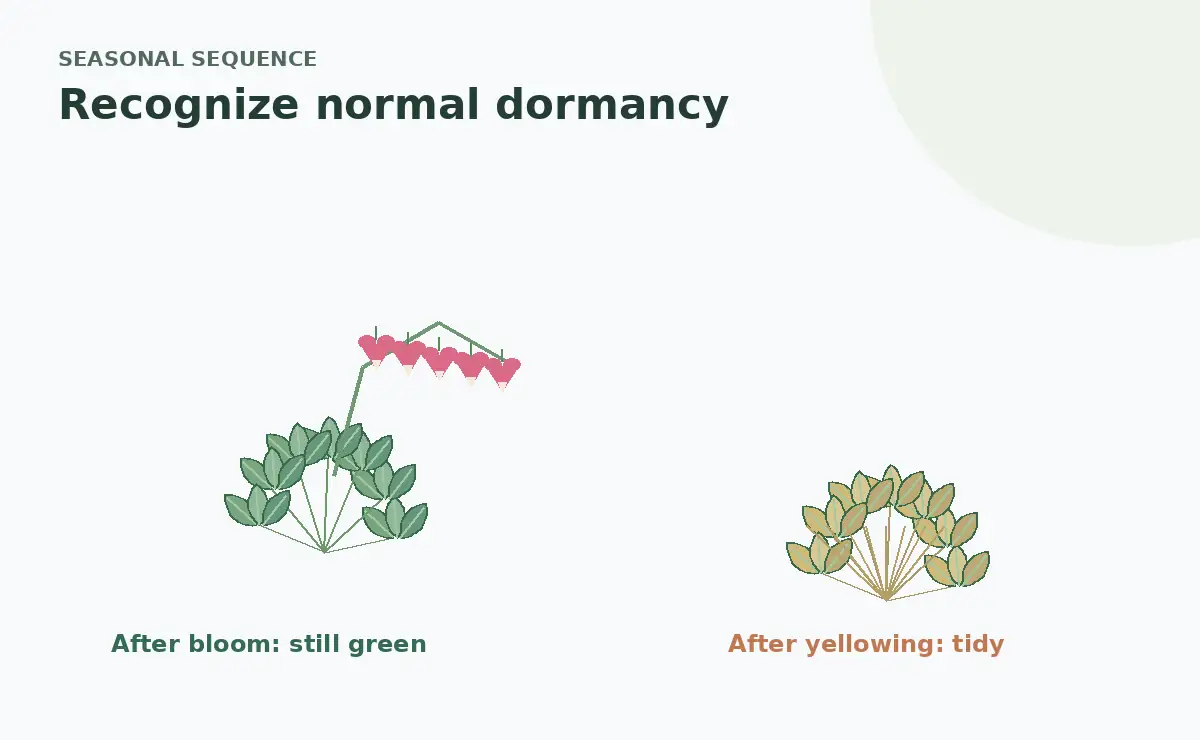
Stage one is finished flowering with green foliage: optional flower-stalk removal, but no wholesale shearing. Stage two is partially yellow foliage: clean up obviously dead stems gradually and retain healthy leaves. Stage three is full dormancy: clip away dried growth while avoiding the buried crown. That sequence is more reliable than any fixed month, because climate and weather shift senescence. Compare next year’s behavior before judging whether a seemingly early fade indicates illness. By matching the cut to the plant’s stage rather than the garden calendar, you keep cleanup tidy without removing productive leaf tissue unnecessarily.
How We Research and Verify Recommendations
We checked the crop or species identity, practical stages, and important exceptions against the following authoritative material on 2026-10-24 (UTC): hort.extension.wisc.edu reference; extension.psu.edu reference; www.rhs.org.uk reference. We use an identifiable visual cue before recommending a cut or harvest and distinguish generalized gardening principles from region-specific timing. University Extension and horticultural guidance may address different climates or varieties; compare recommendations with your seed packet, local soil, weather, and local regulations. These articles are educational guidance, not an independent trial of every cultivar.
Safety, Disclosures, and Local Limitations
No paid partnership, approved affiliate program, or commercial product recommendation is asserted here. Read the VegWin affiliate disclosure. Do not use unidentified plants as food. Check current local rules before growing species known to spread or before using plant protection products. Conditions vary by climate, variety, container, and planting system. Diagnose suspicious symptoms instead of assuming a single cause; follow any locally applicable pesticide label exactly rather than copying an unverified home recipe. Old-fashioned bleeding heart is potentially harmful if eaten and its foliage may irritate skin; wear gloves when clearing stems and prevent access by children or pets.
Usually not the whole plant. You may remove spent flower stalks, but leave healthy green foliage until it naturally turns yellow and dies.
Old-fashioned Lamprocapnos spectabilis commonly enters summer dormancy, especially when weather becomes hot or dry.
Often yes. When summer senescence is normal, the perennial crown and roots remain alive below the soil.
No. Fringed bleeding hearts and related species may keep foliage longer; confirm which plant you grow.
Clip dry stems close to soil level without digging or damaging the underground crown.