
Common ninebark (Physocarpus opulifolius) forms naturally arching canes with clusters of pale spring flowers and distinctive peeling bark. Cutting every stem to the same height can remove the shape and next season’s flower-bearing growth. For an established healthy shrub, selectively remove crowded old canes from the base soon after flowering. A badly overgrown specimen may need a different, harder approach during dormancy, with temporary flower loss. These are two distinct jobs, not interchangeable pruning methods. First identify the oldest, crossing and dead stems so the next cut improves the entire shrub rather than making a flat-topped hedge.
Confirm You Have Common Ninebark and Check Its Growth Habit
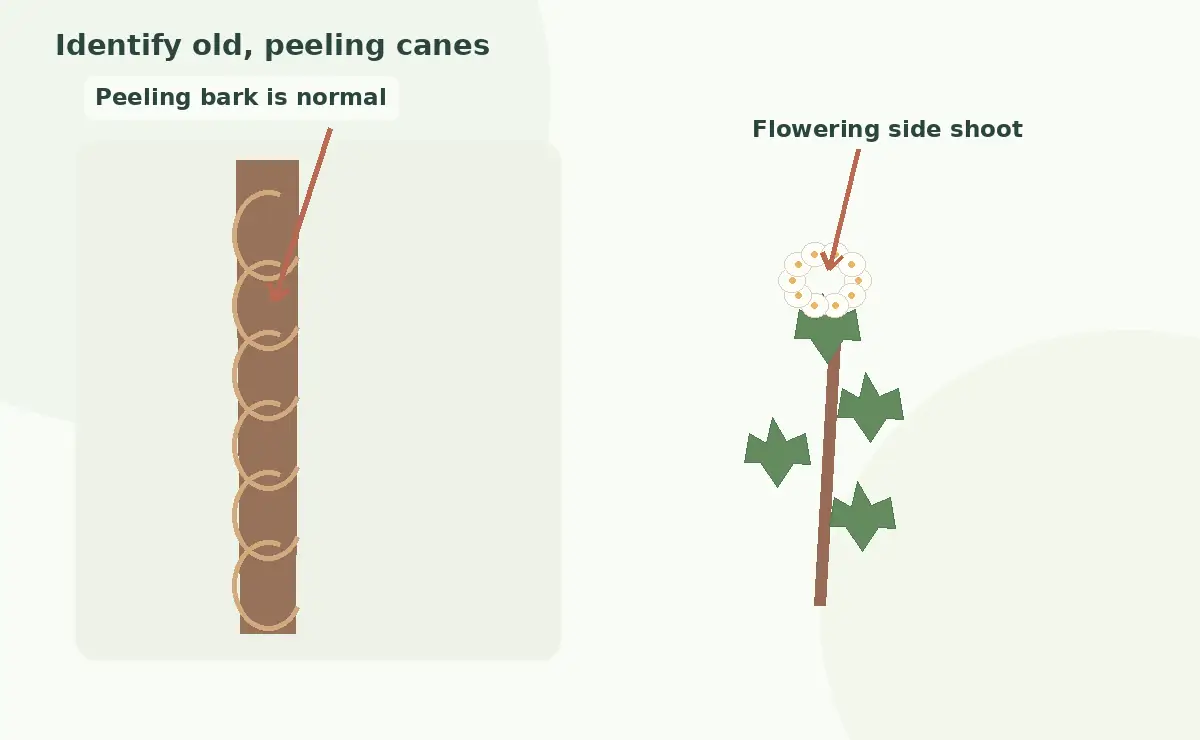
Ninebark is a deciduous shrub, not a woody vine or a spirea. Its older stems can show peeling layers of bark, and its lobed leaves may be green, golden or deep burgundy depending on cultivar. Small pale flowers appear in rounded clusters in late spring or early summer in many regions. Some compact cultivars naturally form smaller plants, so pruning intensity should not be based only on a neighbor’s larger variety. NC State Extension identifies flowering on old growth, which is the key reason timing matters. Check for developing shoots and their arching direction before picking up the shears, and avoid mistaking healthy peeling bark for damage.
Choose the Post-Bloom Window for Ordinary Thinning
If your aim is to preserve spring flowers, wait until the flowering display has finished before making selective cuts. That leaves time for replacement stems to grow and develop future flowering wood. NC State advises trimming soon after bloom and avoiding very late-season pruning, though exact dates depend on local conditions. Winter pruning can still remove diseased, broken or obstructing branches when necessary, but it may reduce spring flowers. Do not set a rigid month using only USDA hardiness zones; observe the shrub’s actual bloom finish and local growing season. Delay optional heavy cutting during severe heat, drought or obvious transplant stress.
Find Dead, Rubbing and Inward-Growing Canes First
Step back and look through the shrub. Mark stems that are dead, cracked, crossing repeatedly or aiming into the center. University of Maine Extension recommends removing such wood close to the base, where possible. Cut dead branches back to sound living wood rather than leaving long stubs. Check for obvious disease before moving between plants and clean tools appropriately. If you cannot see the internal structure, use a hand pruner to remove small obstructing twigs first. Do not automatically remove every dark or rough-looking cane: exfoliating older bark is a normal ornamental feature. The aim is better light and air penetration while retaining a stable, naturally arching framework.
Remove Selected Thick Old Canes Near the Ground
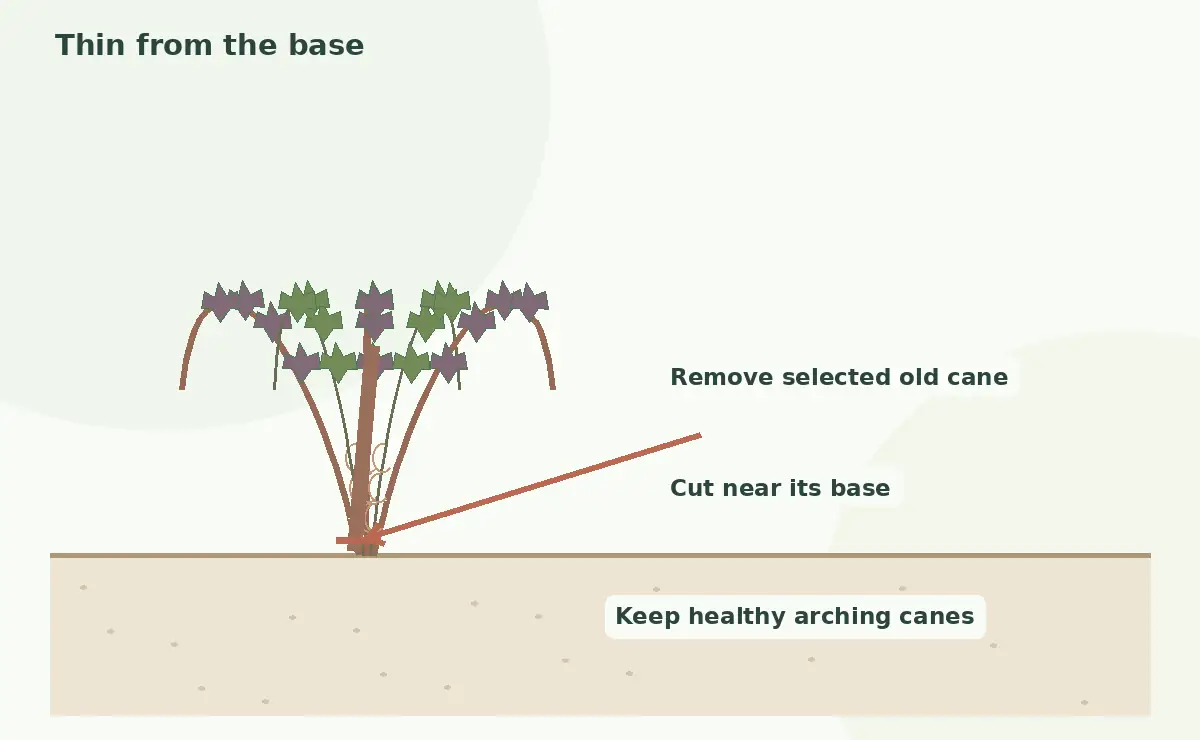
Among the remaining healthy canes, the oldest are usually thicker, more heavily barked and less productive in the upper canopy. Follow one of them down to its attachment point. Use loppers or a clean pruning saw to cut near the base without gouging adjacent stems or the crown. Iowa State recommends selectively removing older stems rather than clipping tips across the entire shrub. Start with a modest number; a roughly one-third old-cane renewal plan spread across years can be appropriate for crowded mature specimens. Do not remove one-third of every branch length. That shortcut creates lots of cut ends and sacrifices natural form.
Do Not Top the Shrub Into a Rounded Ball
Ninebark looks best when long arching canes make an open vase-like shape. Heading every cane at the same height often encourages dense shoots at the tips while leaving the interior crowded. University of Maine explicitly advises avoiding indiscriminate heading cuts. If one stem sticks out beyond the intended space, shorten it to a suitable lateral branch rather than making a random mid-stem stub. This is especially important on purple- or gold-leaved cultivars, where the colorful foliage tempts repeated shearing. If the plant is genuinely too large for its site, a more compact cultivar or relocation may work better than forcing permanent hedge-like maintenance.
Understand When Hard Renovation Is a Separate Choice
Iowa State describes rejuvenating an unattractive or overgrown ninebark by cutting all stems to roughly six to twelve inches in late winter or early spring while dormant. This is a disruptive reset, not ordinary after-bloom grooming, and flowering is likely to be sharply reduced for a season. The newly emerging shoots may also lose the appearance of mature exfoliating bark until they age. Choose this only for an established vigorous plant able to recover, not for a drought-stricken or freshly transplanted shrub. If flower continuity matters, staged renewal over multiple years is usually the more conservative method.
Cut at the Right Attachment Point, Not Above an Empty Stub
For basal thinning, identify exactly where an unwanted cane enters the clump. Move surrounding twigs aside and position the saw so you can remove the whole selected cane while preserving its neighbors. For a broken mid-branch, cut back to sound wood or a healthy lateral, without damaging that junction. Avoid flush cuts into adjoining bark and avoid leaving long snag-like stubs. Gloves protect hands from rough bark and sharp cut ends. Collect woody trimmings so loose material does not catch lawn equipment. A careful cut reduces future dead tips and makes it easier to inspect whether the center has opened enough.
Observe New Growth Before Making More Cuts
After an initial thinning, step back to assess the canopy from several angles. Look for balanced arching canes and open spaces rather than a perfectly symmetrical globe. Over the next season, monitor whether replacement stems arise from the crown and whether flowers remain on retained older growth. You can remove crowded young shoots selectively if the center fills too quickly. Do not compensate for slow regrowth with untested fertilizer doses; check watering, drainage and plant health instead. A single year is not enough to judge an extensive renovation. Mature peeling bark and elegant form return as canes age, not immediately after cutting.
Account for Mildew, Stress and Cultivar Size
Ninebark can experience powdery mildew and other stresses, especially with poor airflow. More sunlight and selective opening of a dense center may help conditions, but pruning by itself is not a guaranteed disease treatment. Remove diseased or dead portions responsibly and consult local Extension if symptoms are spreading. If new foliage wilts in dry soil, correct water stress before attempting drastic renewal. For shrubs beside buildings, remember their mature width; constant hard trimming suggests a mismatch between shrub and location. Do not use spring-flowering spirea or panicle hydrangea instructions as a substitute for ninebark-specific growth habits.
Use a Three-Season Renewal Log for Mature Shrubs
Take a photo before pruning, note the date flowering finished and mark which oldest canes were removed. Repeat once the new growth is visible to see whether gaps are filling. During a staged renewal, this record prevents accidentally cutting too much in consecutive years. When flowers are a high priority, keep enough vigorous older stems to bloom the following spring. A neglected ninebark does not have to be completely cut down if a few well-placed basal removals solve the crowding problem. Choose the least disruptive change that improves health and room for its natural habit. If you are starting from scratch, read When to Prune Ninebark Without Losing Next Spring’s Flowers.

How We Research and Verify Garden Recommendations
We reviewed published university Cooperative Extension and other established horticultural guidance for the specific plant and practical decision in this guide. We compared how each source describes the relevant botanical structures, growth stage, safe handling and regional limits. Our source review was completed October 24, 2026; it does not replace your local Extension office or the instructions for a named cultivar. We did not conduct a controlled trial in the reader’s garden, and the accompanying artwork illustrates plant structures rather than documenting a single real specimen.
Sources and Editorial Disclosure
Sources checked October 24, 2026: yardandgarden.extension.iastate.edu — Iowa State Extension: selective thinning, three-year renewal and drastic dormant renovation.; extension.umaine.edu — University of Maine Extension: base cuts, avoiding topping and preserving vase form.; plants.ces.ncsu.edu — NC State Extension: old-wood spring flowers and pruning just after bloom.. These references support the specified horticultural claims and do not imply the organizations approve this article.
Disclosure: This article includes no verified sponsorship, paid product promotion, or affiliate recommendation. Learn about site disclosures at VegWin Affiliate Disclosure. Gardening conditions and local restrictions can differ across the United States.
Avoid major optional fall pruning if spring flowers are important. Routine shaping is better just after bloom; deadwood can be removed as needed.
Common ninebark flowers on older wood, so late or extensive pruning can remove the next season’s flowering growth.
Follow the chosen cane to the base and remove it near its attachment without harming adjacent stems or leaving a long stub.
An established vigorous shrub can be renovated in late winter or early spring, but expect temporary loss of flowers and mature bark character.
No. Selective thinning better preserves its naturally arching vase shape than repeated flat or rounded shearing.