
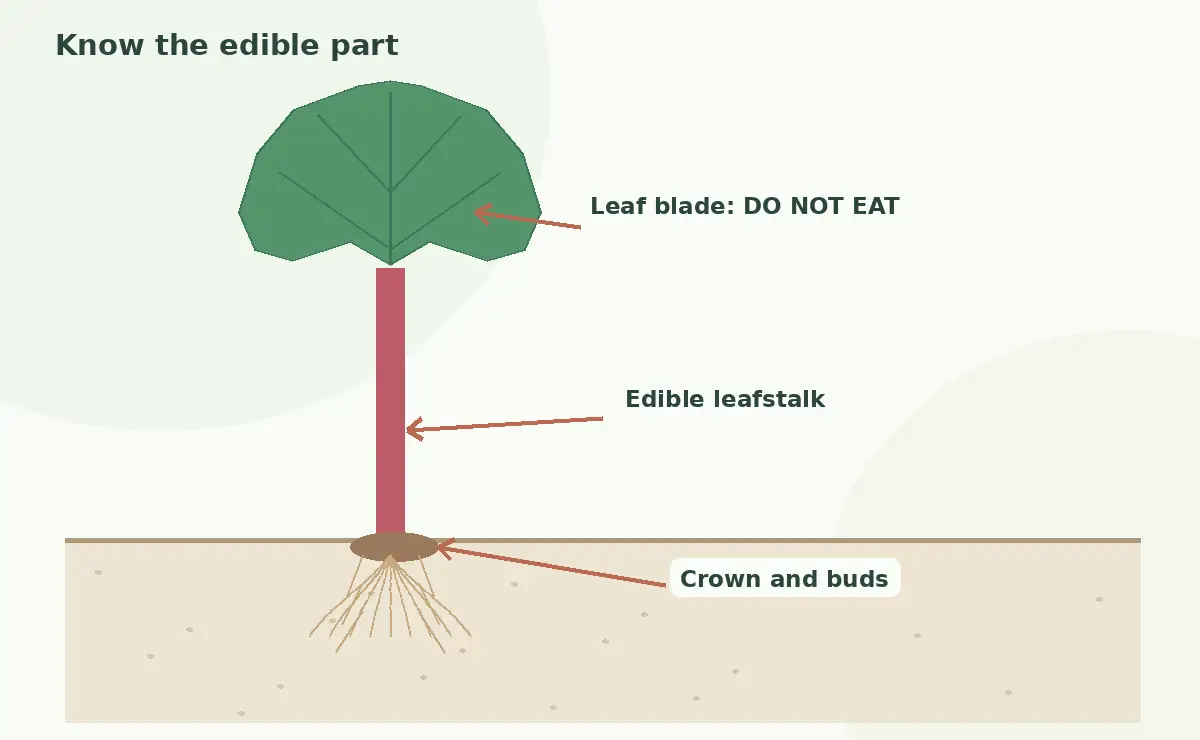
A rhubarb plant can look enormous and still be too young for a heavy harvest. The correct goal is not to remove every bright red stem; it is to take a few firm edible leafstalks while the remaining foliage rebuilds the crown for another spring. This guide focuses on cultivated culinary rhubarb (Rheum hybrids), not ornamental look-alikes. Only the leafstalks are food: the broad leaf blades are poisonous and must never be cooked or eaten. Start by checking the plant’s age and overall strength, then use a controlled pull near the base rather than a hard tug on an entire clump.
First Decide Whether the Plant Is Old Enough to Pick
During the planting year, let every healthy rhubarb leaf stay on the plant. New crowns need their foliage to establish a substantial root system, and an impressive early stem is not permission for a full harvest. South Dakota State and Wisconsin Extension both emphasize avoiding first-year picking. The second year is a period for a few cautious stalks only if growth is vigorous. By the third year or once plants are established, a spring harvest can be more generous. The exact schedule varies among Extension publications: defer to the more conservative plan whenever the crown is small, stressed or recently divided. A transplanted division should be treated like a newly established plant. If you want the full process, read how to harvest rhubarb stalks safely and keep plants productive.
Recognize a Harvestable Stalk Instead of Waiting for Red Color
Choose stalks that are firm, crisp and well expanded, with a broad leaf held above the crown. Wisconsin Extension gives a practical range of roughly eight to fifteen inches in stalk length; cultivars and growing conditions affect size. Many excellent eating cultivars have green or green-and-red stems, so red pigmentation is not a maturity test. Bend or squeeze only gently; a limp, damaged or slimy stalk is not a good candidate. Rhubarb produces the large leaf blade on a long petiole, or leafstalk. That petiole is the portion to save, and the leaf blade is removed after harvest. Thin new stems should remain to build the plant.
Pull From the Base With a Gentle Twist
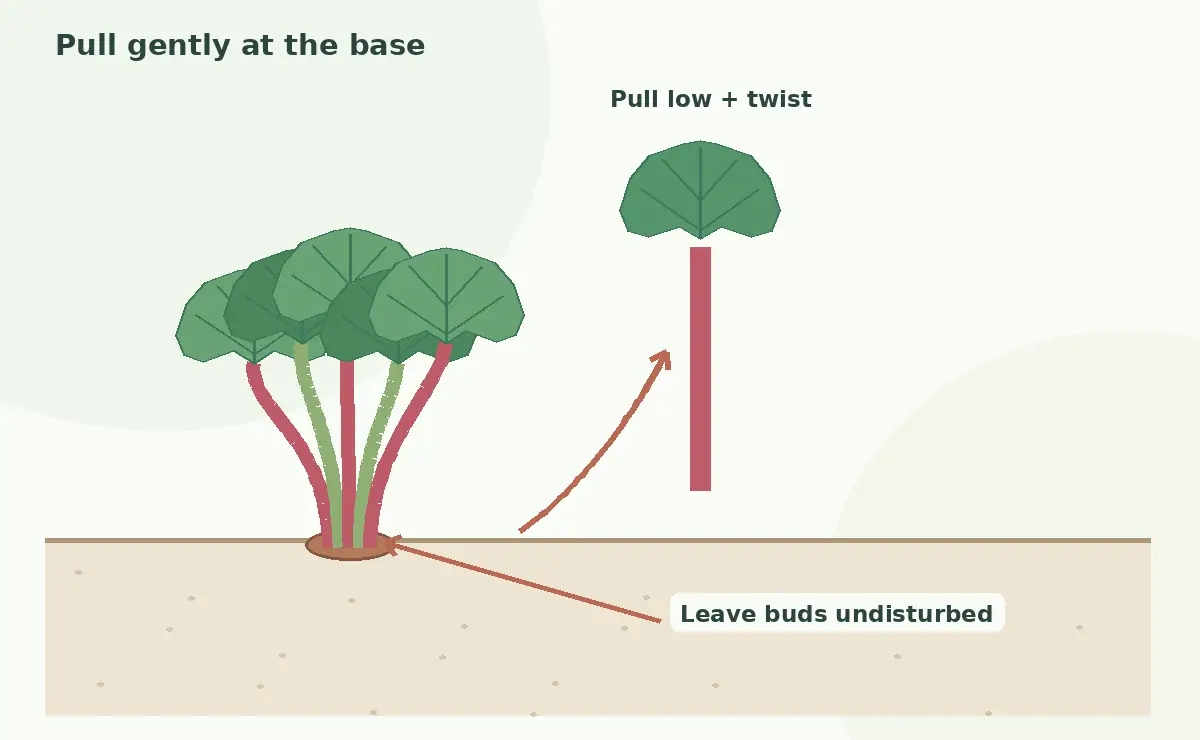
Follow a single stalk downward to where it joins the crown. Grasp it low, keep your hand clear of neighboring shoots, then pull slightly outward while twisting gently. A mature petiole usually separates cleanly at its base without a knife. Do not yank straight upward by the big leaf: that force can jostle nearby buds and tear more tissue than intended. If the stalk does not release easily, stop and adjust your grip rather than wrenching the crown. A clean knife is an alternative where necessary, but make a careful low cut that avoids slicing adjacent growing points. Remove one stalk at a time so you can reassess the plant.
Leave Enough Living Leaves to Recharge the Crown
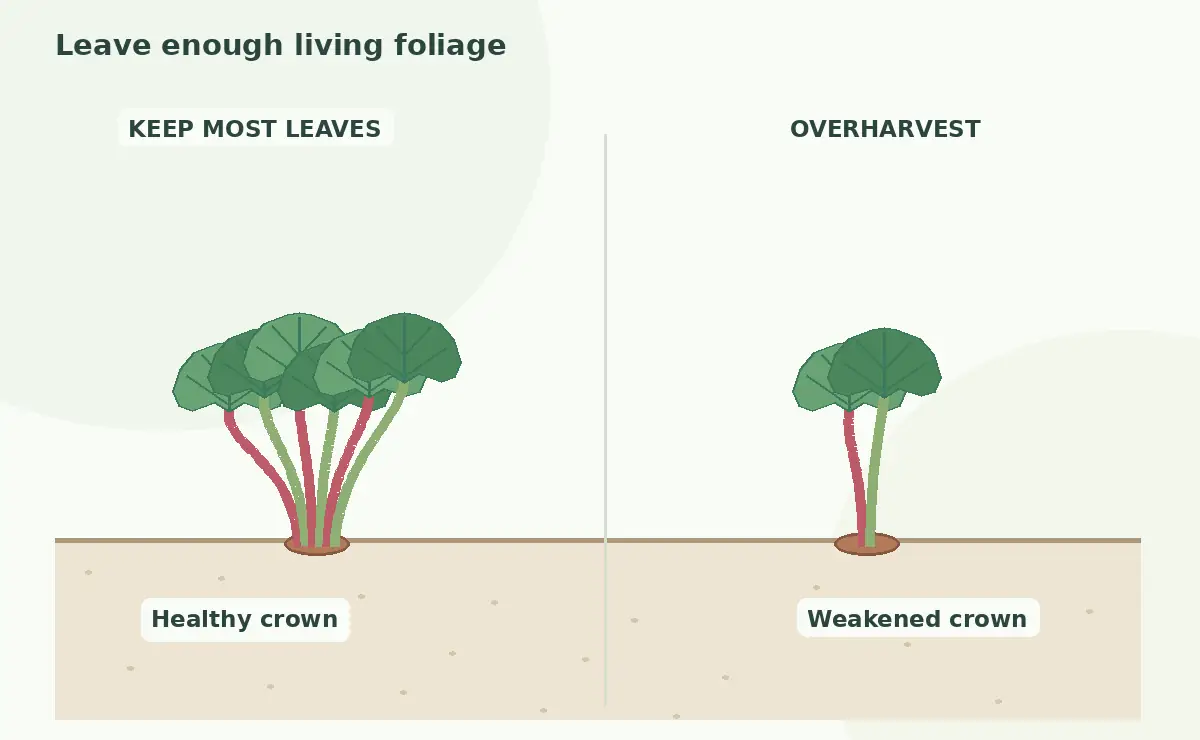
The plant must keep photosynthesizing after you pick. A conservative rule from Wisconsin and South Dakota State is to take no more than about one-third of developed stalks at a time. On a small crown that could mean harvesting only one or two stalks. If the plant has a sparse center, tiny new leaves or noticeably slow regrowth, leave it alone even when that fraction looks available mathematically. Think of the remaining leaves as the crop for next year: they support the stored reserves that produce the next flush. A large vigorous clump can tolerate repeated modest harvests better than a stressed or newly transplanted crown.
Stop Picking Before the Plant Runs Out of Recovery Time
For many temperate gardens, prime harvest quality occurs in spring and early summer. South Dakota State advises finishing the main harvest around midsummer, allowing the leaves to replenish reserves; local seasons may shift that window. This is a biological recovery period, not a universal date tied to your USDA hardiness zone. Hot spells and drought often slow vigorous growth and can make stalks less pleasant to use. You do not need to strip foliage because a calendar says the season is over. Leave healthy leaves standing to keep feeding the root system, and continue normal watering without saturating the crown.
Trim the Leaf Blade Immediately and Handle It Safely
Carry the picked petiole to a clean work surface, cut off the large triangular or heart-shaped leaf blade and discard it where children or animals cannot reach it. Rhubarb leaves contain hazardous compounds, including oxalates, and are not edible. Do not juice, brew tea from, or ferment the blades. The usable stalk may be pink, red or green. Rinse soil and garden debris from the stalk using potable water before preparation. If you are unsure whether the plant is edible rhubarb rather than an ornamental species, do not taste it. The safety distinction is between edible stalk and toxic blade, not between red and green stems.
Skip Questionable Stalks After Severe Spring Freeze Damage
A hard late freeze can injure emerging rhubarb foliage. Wisconsin Extension specifically cautions against harvesting leafstalks damaged by a hard spring freeze. Look for floppy, water-soaked, blackened or obviously collapsed tissue, and wait for sound new growth instead of trying to salvage questionable sections. This is not a claim that every cool night makes rhubarb unsafe. The key warning concerns visibly frost-damaged foliage after severe freezing. Keep children and pets away from discarded leaf blades and damaged material. For uncertain severe weather events, local Extension guidance offers the best interpretation of the conditions in your region.
Respond to Thin Stalks by Resting the Plant
A declining crown often signals its stress in the harvestable stems. Stalks may become thinner when a clump has been overpicked, crowded, drought-stressed or simply reached a stage when growth slows. The immediate corrective action is to stop picking and leave foliage. Check that soil drains reasonably well, that the crown is not buried under wet mulch, and that nearby plants are not stealing all the light. Do not respond with a large untested fertilizer dose. Older congested crowns may benefit from division while dormant in an appropriate season, but that is a separate task from harvesting. Give divided rhubarb time to reestablish before selecting stalks. For the basics, see our guide: When to Divide Rhubarb Crowns.
Store the Edible Stalks Without Confusing Them With Leaves
After trimming off toxic leaves, inspect for insects, rot and serious bruising. Wash stalks before use, or keep clean stalks chilled until you can prepare them. Wisconsin Extension describes refrigeration as a reasonable short-term option, while actual quality depends on moisture and temperature. Cut pieces can be frozen for later recipes, but freezing is not a substitute for removing leaves first. Discard obviously spoiled stalks. Rhubarb is commonly cooked for its tart flavor; a firm stem with some green color can be just as suitable as a red one. Keep the kitchen portion completely separate from the garden waste pile.
Keep a Simple Harvest Record for Next Year
Write down whether the crown was new, recently divided or established, along with the number of stalks taken per visit. Record the date of the first firm stalks, any spring freeze injury and when stems started to thin. This helps you spot a developing pattern of overharvest rather than blaming a cultivar for every small petiole. The plant should finish the season with a healthy set of leaves. If a crown consistently produces very few sturdy stems, investigate sunlight, age and root health before planning another heavy harvest. Sustainable picking favors a reliable future crop over the largest possible bowl today.
Related Guides
- How to Germinate Rhubarb Seeds in Modules and Grow Healthy Crowns
- How to Pull Rhubarb Stalks Without Injuring the Crown or Eating Leaves
How We Research and Verify Garden Recommendations
We reviewed published university Cooperative Extension and other established horticultural guidance for the specific plant and practical decision in this guide. We compared how each source describes the relevant botanical structures, growth stage, safe handling and regional limits. Our source review was completed October 24, 2026; it does not replace your local Extension office or the instructions for a named cultivar. We did not conduct a controlled trial in the reader’s garden, and the accompanying artwork illustrates plant structures rather than documenting a single real specimen.
Sources and Editorial Disclosure
Sources checked October 24, 2026: hort.extension.wisc.edu — Wisconsin Extension: edible leafstalk selection, twist technique, one-third limit, and poisonous leaves.; extension.sdstate.edu — South Dakota State Extension: first-year restraint and rebuilding crown reserves after spring harvest.; homegarden.cahnr.uconn.edu — UConn Extension: second-year harvest limits, crown health, and seasonal observations.. These references support the specified horticultural claims and do not imply the organizations approve this article.
Disclosure: This article includes no verified sponsorship, paid product promotion, or affiliate recommendation. Learn about site disclosures at VegWin Affiliate Disclosure. Gardening conditions and local restrictions can differ across the United States.
No. Leave new plants unpicked so leaves can build crown and root reserves; take only a modest harvest once they are established.
No. Edible cultivars can produce red, green or mixed-color petioles. Look for a firm, adequately developed stalk.
A gentle outward pull and twist close to the crown is the usual method. If using a knife, avoid cutting into nearby buds.
As a conservative guide, take no more than one-third of developed stalks at one picking, and less from weak plants.
No. The leaf blades are toxic and should never be used for food; prepare only the edible stalks.