
A fava or broad bean plant (Vicia faba) may hold small tender pods, large glossy pods filled with beans, and older drying pods at the same time. Those stages serve different kitchen purposes. For fresh shelling, pick when the pods are still green and plump, and you can feel well-developed seeds inside; do not wait until every pod turns brown. The crop prefers cool weather, so heat can also shorten your useful harvest window. Favas have an important safety limitation: people with glucose-6-phosphate dehydrogenase (G6PD) deficiency can develop severe hemolysis after exposure to fava beans, and anyone affected should avoid them and seek medical advice.
Distinguish Fava Beans From Common Green Beans
Fava beans are Vicia faba, not the usual snap bean (Phaseolus vulgaris). The plants have erect stems, paired oval leaflets and striking white flowers with dark markings. Their mature pods are broad and often padded inside, rather than long narrow snap pods intended to be eaten whole at the same stage. University of Minnesota Extension describes favas as cool-season beans growing under pea-like conditions. This identification matters because instructions to pick ordinary snap beans while seeds are barely formed do not describe the best fresh-shelling fava stage. Use the cultivar name and cooking purpose to set harvest expectations. For the fuller picture, see our guide to growing scarlet runner beans.
Check the Pod Shape Before Picking
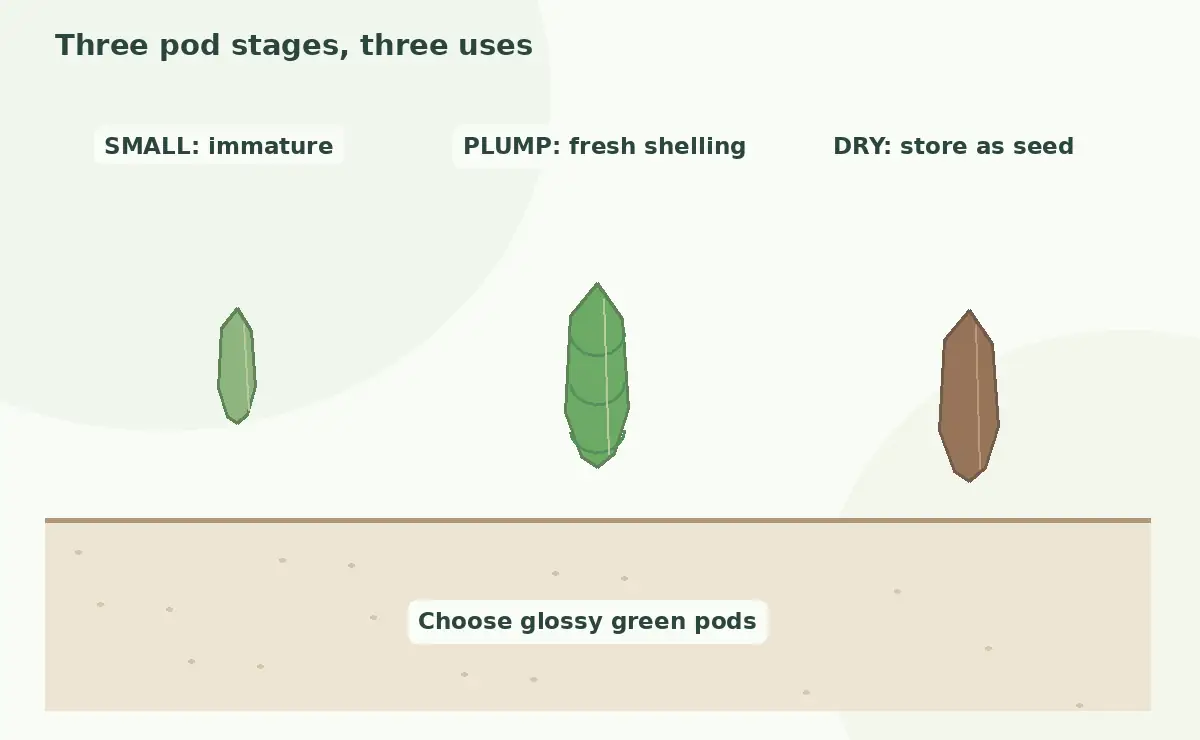
Look for a pod that is green, thick and still fairly glossy. Run your fingers gently along its length: distinct rounded swellings tell you the seeds inside have filled out. UC Master Gardeners and Oregon State Extension both emphasize green succulent pods with well-developed beans for fresh shelling. A slender, almost flat pod is early; it may be useful for a different immature-pod recipe but yields little shelled bean. A blackened papery pod is moving toward dry seed instead. The exact pod length depends on cultivar and growing conditions, so feel and appearance are more dependable than a single number of inches.
Use Three Harvest Stages for Three Different Jobs
At the youngest stage, certain fava varieties have small tender pods that can be cooked whole. At the fresh-shelling stage, pods are large and green with individual swollen beans; the pod casing is usually discarded after shelling. At the dry-bean stage, pods become leathery and eventually dry and darken, and the hardened seeds require dry-bean preparation. Decide the intended use before picking. A mixed planting may supply more than one stage in the same week. Do not interpret dark pod color as proof of a premium fresh harvest; freshness and drying are separate outcomes. If you are starting from scratch, read When to Harvest Edamame for Plump Green Beans Before Pods Turn Yellow.

Harvest Gently Without Tearing the Main Stem
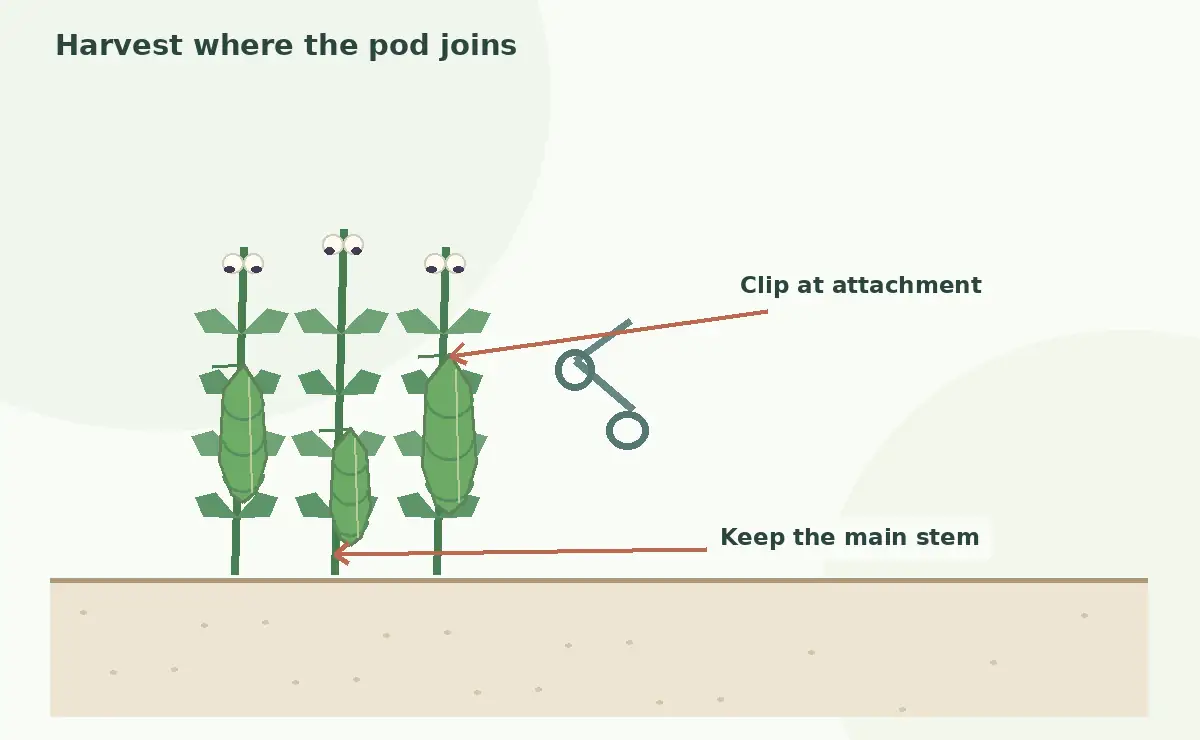
Support the pod-bearing stalk with one hand and twist the selected pod carefully at its attachment, or clip it off with clean pruners. Fava stems can be substantial but brittle at joints, so pulling a whole side shoot can dislodge young flowers and developing pods. Select mature green pods first and leave the smaller pods to enlarge if temperatures remain favorable. Work when the plants are dry to reduce the spread of plant problems on wet foliage. Collect pods in a clean container, avoiding prolonged hot sun. A lightweight basket helps prevent bruising and makes it easier to separate fresh-shelling pods from more mature drying ones.
Watch Cool Weather and Harvest More Frequently in Heat
Favas perform better in cool than hot weather. Minnesota Extension notes limited pod set when conditions become too warm; UC regional recommendations likewise vary according to local climate. In a mild winter region, fall-planted plants may set pods in spring, while colder regions often plant in early spring. These are broad patterns, not dates determined by hardiness zone alone. During a fast-warming spell, inspect pods more often because a pod can become coarse or begin drying before you planned to pick it. Maintaining even moisture helps developing plants, but no extra fertilizer can convert a fully dried pod back into a tender shelling crop.
Open a Sample Pod to Judge Seed Development
Choose one likely pod and split it along a natural seam. A fresh-shelling specimen should contain plump seeds nestled in a spongy lining; the seeds should have reached useful size but not become hard dry beans. Some cultivars produce notably larger individual beans than others. Very small, flat seeds suggest the remaining pods need more time. If the coating has become tough, the beans may still be suitable for cooking after removing the outer seed skin. Opening one sample reduces guesswork across an entire crop. Inspect for mold or rot rather than cooking from a pod that has obviously spoiled.
Know the Two Layers You May Need to Remove
Shelling favas often involves two separate steps. First open the thick outer pod and remove the beans. Next decide whether to remove the pale skin around each bean, often called the seed coat; larger beans may have a noticeably firmer coat. Removing it can improve texture, but preferences vary by recipe and cultivar. The spongy pod lining is not the edible inner coat of an individual seed. Illustrations should show the green pod outside, the separate bean and its coating, so readers understand what to peel. Do not treat the inner skin as evidence that the beans are unripe or contaminated.
Handle G6PD Deficiency and Cooking Safety Explicitly
Fava beans can trigger potentially life-threatening destruction of red blood cells in people with G6PD deficiency, an inherited enzyme condition; cooking does not make favas safe for these individuals. People who know or suspect this condition should avoid fava beans and seek qualified medical guidance. The University of Minnesota also advises fully cooking favas rather than assuming raw consumption is safe. Clean hands, tools and surfaces before preparation; discard visibly spoiled beans. A blog suggesting that a tiny taste can test personal sensitivity is not an appropriate safety check. This is a medical risk, not a seasoning preference or a botanical maturity sign.
Refrigerate Fresh Pods and Keep Dry-Seed Harvests Separate
Fresh pods lose quality if held in a hot kitchen or left in direct sunshine. Oregon State Extension recommends prompt cool storage for fresh favas, with best quality in a short window. If you will cook them soon, keep the pods intact and refrigerated until shelling, then rinse prepared beans as appropriate. Dry beans belong to a different procedure: allow pods to become fully dry before shelling for storage and make sure seeds are dry before putting them away. Do not mix damp fresh beans into a sealed jar of dry seeds. Label separate containers so nobody mistakes a raw or dried product for a fully cooked ready-to-eat food. For the basics, see our guide: When to Harvest Cowpeas for Fresh Shelling or Dry Storage.
Mark the Best Pod Stage for Next Season
Take a photograph of a glossy filled pod beside one that is still flat and one that has turned leathery. Note your cultivar, sowing season, typical temperature during flowering and first date that seeds reached the desired size. This local reference can be more helpful than counting days from sowing, especially when an unusually warm spring cuts pod set short. If plants are used partly as a cover crop, remember that terminating them for soil management may prevent a full bean harvest. Choose between seed production, green food pods and cover-crop timing before the stand reaches maturity. For the basics, see our guide: When to Harvest Edamame.
Related Guides
How We Research and Verify Garden Recommendations
We reviewed published university Cooperative Extension and other established horticultural guidance for the specific plant and practical decision in this guide. We compared how each source describes the relevant botanical structures, growth stage, safe handling and regional limits. Our source review was completed October 24, 2026; it does not replace your local Extension office or the instructions for a named cultivar. We did not conduct a controlled trial in the reader’s garden, and the accompanying artwork illustrates plant structures rather than documenting a single real specimen.
Sources and Editorial Disclosure
Sources checked October 24, 2026: extension.umn.edu — University of Minnesota Extension: cool-season fava culture, mature green pod cue, and cooking warning.; ucanr.edu — UC Master Gardeners: thick green glossy pods, options for fresh and dry harvest.; extension.oregonstate.edu — Oregon State Extension: fresh harvest and cold handling of mature green succulent pods.; medlineplus.gov — US National Library of Medicine: fava beans can trigger hemolytic anemia in people with G6PD deficiency.. These references support the specified horticultural claims and do not imply the organizations approve this article.
Disclosure: This article includes no verified sponsorship, paid product promotion, or affiliate recommendation. Learn about site disclosures at VegWin Affiliate Disclosure. Gardening conditions and local restrictions can differ across the United States.
Pick pods that are green, thick, glossy and noticeably swollen over the individual seeds.
Some very young, tender pods can be cooked whole, but large fresh-shelling pods are commonly opened for the beans inside.
Dark, drying pods are a sign of the dry-bean stage, not the prime fresh-shelling stage.
Yes. Fully cook fresh beans, and people with G6PD deficiency should avoid fava beans regardless of cooking.
Often not. They are a cool-season crop, so local spring or fall conditions matter more than a universal harvest date.