
The plant sold as ‘Autumn Joy’ sedum is an upright, clump-forming stonecrop, commonly listed botanically as Hylotelephium rather than a low carpet-forming Sedum. As a clump expands, the center can become crowded and the outer stems may lean. Divide it in early spring when short new shoots are visible. The point is not to make equal-sized chunks of soil; every new piece needs healthy emerging shoots attached to a portion of the root system. The plant also needs a high, well-drained crown after replanting. Follow a simple lift–identify–separate–replant sequence instead of slicing blindly into dormant soil.
Confirm You Have an Upright Clump-Forming Stonecrop
Upright ‘Autumn Joy’ develops fleshy leaves along sturdy stems and finishes the growing season with broad clusters of tiny pink-to-rust flowers. A mat-forming groundcover sedum behaves differently, often rooting along trailing stems. Look near the base for a compact crown from which several shoots arise together. These basal buds and attached roots are the units you will divide. Some catalogs label the plant Sedum ‘Autumn Joy’; others use Hylotelephium names, so avoid assuming different labels necessarily mean different habits. The process here concerns the upright clump, not a rosette succulent or a creeping groundcover. If you want the full process, read how to divide autumn Joy sedum without burying new crowns.
Use Emerging Spring Shoots as Your Timing Cue
Iowa State Extension specifically recommends early spring, just as new growth begins to appear. Little green or reddish nubs show where viable buds are located before tall stems obscure the crown. Work once soil is thawed and crumbly, not muddy or frozen solid. Penn State also lists spring for upright sedum division, while RHS offers general seasonal guidance for summer-flowering perennials. In climates with very wet autumns or cold winters, spring is particularly practical because new divisions get a growing season to establish. Do not use the USDA hardiness zone number alone as a precise dividing date.
Check Whether the Plant Actually Needs Division
Division is useful when the crown is crowded, the plant flops repeatedly or you want additional plants. It is not compulsory on a rigid annual schedule. An established clump that stands upright and flowers well may be left undisturbed. Look for a dead or woody center and healthy buds around the edge; those peripheral sections often make the best new starts. Weak growth caused by shade or waterlogged soil will not be fixed merely by cutting roots. Confirm good drainage and suitable light before deciding to multiply the clump. A plant suffering active rot may need sanitation and better site conditions rather than propagation of unhealthy tissue.

Lift the Rootball From Outside the Active Crown
Use a fork or spade several inches outside the shoot cluster, keeping the blade away from thickened stems and buds. Work around the perimeter in more than one place to free the clump instead of levering through its center. Lift the rootball gently onto a tarp or tray, and shake off just enough soil to see the shoots and root connections. Fleshy stems can snap if you grasp and pull them for leverage. An older upright sedum may have a woody central portion; that does not require keeping every old stem attached to a new division. Treat the visible buds as your guide.
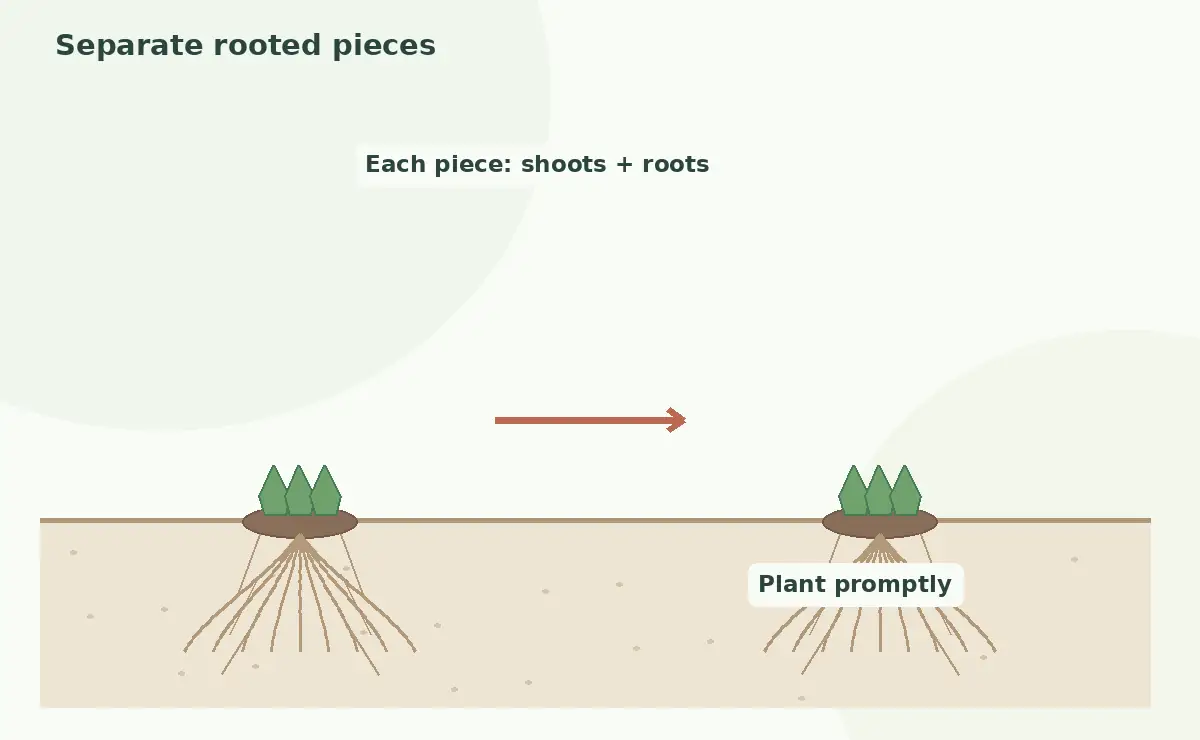
Give Every Division Both Shoots and Roots
A viable division is not merely one loose leaf or a detached stem. Iowa State advises several shoots together with a portion of the root system. Find natural separations and tease sections apart where possible; use a clean sharp knife or spade when the crown is too dense. Aim for reasonably substantial pieces rather than many tiny chips likely to dry out. Examine the underside: sound roots should remain attached to the shoot base. Discard severely rotted sections and do not bury soft blackened material with healthy divisions. Keep the separated plants shaded briefly while you prepare their new positions so exposed roots do not dry needlessly.
Replant at the Same Crown Level in Free-Draining Soil
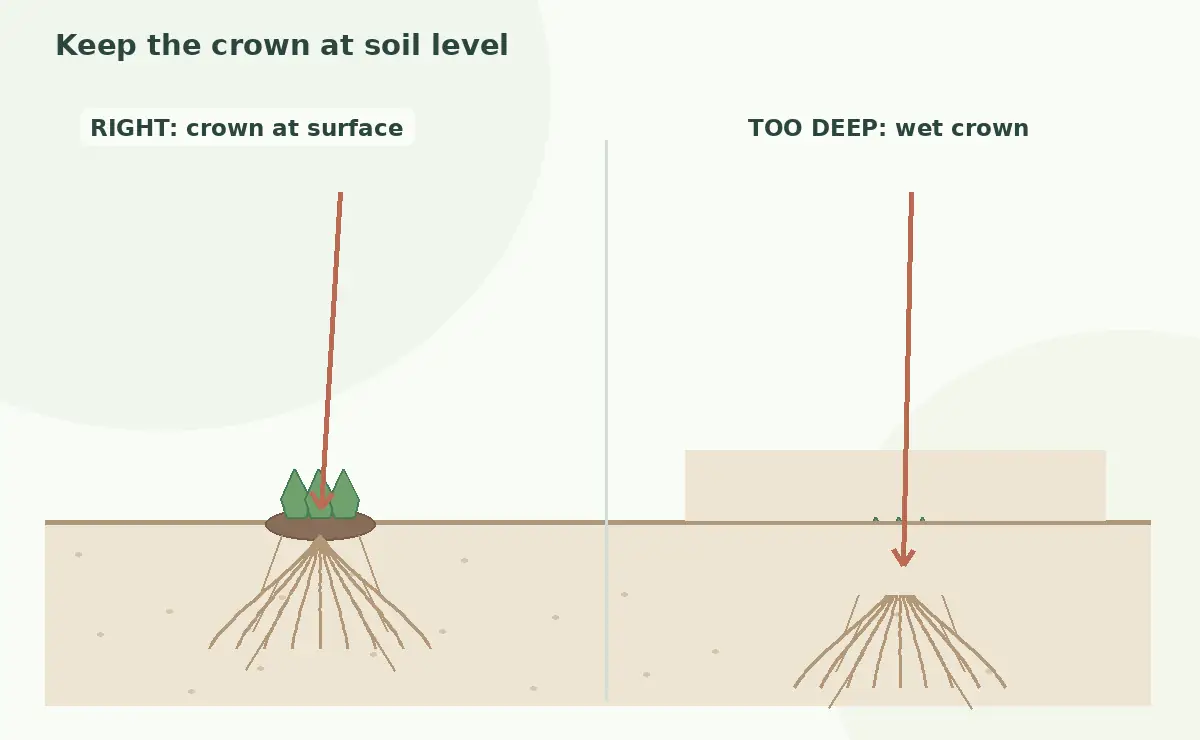
Set each new division into a hole just wide enough to accommodate the roots without coiling or folding them excessively. The new shoots should sit at or slightly above the surrounding finished soil surface, not hidden below a deep layer. Penn State notes that sedum should be set high, and Iowa State emphasizes well-drained soil in full sun. Firm the soil lightly around the roots so there are no large air pockets. Do not heap heavy compost directly over the basal buds. A buried crown in a wet bed is more likely to deteriorate, while one perched high with exposed roots can dry out. Aim for root coverage without crown burial.
Space New Plants for Their Mature Size
A small spring division will not remain small for long. Consider the mature width given by your cultivar label, nearby perennials and whether sunlight reaches the entire clump. A crowded border can recreate the same floppy growth that led you to divide. Give each plant room for airflow and avoid placing the crowns next to a constantly wet downspout. If planted in a container, use one with drainage holes and a medium suited to a drought-tolerant perennial. You do not need to add unverified fertilizer doses at planting. Consistent light and a soil structure that drains well matter more than rich feeding for upright stonecrop.
Water the Roots In, Then Avoid Constant Sogginess
Water thoroughly once after planting to settle soil around roots. During establishment, check root-zone moisture rather than watering blindly every day; new divisions need help before they develop an extensive root system. As growth becomes vigorous, avoid chronic saturation because sedum is adapted to well-drained conditions. Heavy mulch touching fleshy new shoots can trap moisture, so leave the crown open. Hot, drying winds may justify temporary extra attention, while cool rainy springs require less irrigation. Wilting after division can mean insufficient root contact or damaged roots, but a black soft crown points toward a moisture or rot problem.
Avoid Confusing Pinching With Division
Gardeners sometimes cut tall upright sedum stems earlier in the season to influence plant height, but shortening tops does not create separate rooted plants. Division separates existing basal buds and roots. Likewise, a broken stem may sometimes root as a cutting, but a rootless stem is not a successful crown division. This distinction matters in diagrams and in the garden. If you see a few tiny shoots still attached to a woody center, do not tear them off and assume they already have adequate roots. Carefully trace the connecting tissue, include roots with each section, and choose fewer stronger divisions when uncertain. For the basics, see our guide: When to Divide Agapanthus in Pots or Borders Without Losing Blooms.
Check Establishment and Flowering Without Overreacting
New divisions may flower later or less abundantly during their first season, especially if they were made small. Watch for fresh shoot growth, firm crowns and leaves that remain sound through dry spells. Record which division came from the healthy outer edge and whether a shady or overly wet site affected growth. Do not dig the pieces up weekly to test the roots; that repeats the very disturbance they are recovering from. Once established, upright sedum provides late-season flower clusters and winter seedhead structure if left standing. Good division preserves healthy buds and roots; it does not promise an immediate full-sized flowering clump.
Related Guides
- When to Cut Back Autumn Joy Sedum and Keep Its Winter Seed Heads
- How to Divide Shasta Daisies in Spring and Replant Healthy Crowns
- When to Divide Coral Bells and Replant Rooted Heuchera Crowns
- When to Divide Bee Balm and Replant Rooted Rhizome Sections
- How to Divide Bearded Irises and Replant Healthy Rhizomes
How We Research and Verify Garden Recommendations
We reviewed published university Cooperative Extension and other established horticultural guidance for the specific plant and practical decision in this guide. We compared how each source describes the relevant botanical structures, growth stage, safe handling and regional limits. Our source review was completed October 24, 2026; it does not replace your local Extension office or the instructions for a named cultivar. We did not conduct a controlled trial in the reader’s garden, and the accompanying artwork illustrates plant structures rather than documenting a single real specimen.
Sources and Editorial Disclosure
Sources checked October 24, 2026: yardandgarden.extension.iastate.edu — Iowa State Extension: early-spring division, several shoots and rooted sections, immediate replanting.; extension.psu.edu — Penn State Master Gardener: spring division, cutting and separation technique, avoiding deep planting.; rhs.org.uk — RHS: lifting rootballs, separating crowns, season and aftercare considerations.. These references support the specified horticultural claims and do not imply the organizations approve this article.
Disclosure: This article includes no verified sponsorship, paid product promotion, or affiliate recommendation. Learn about site disclosures at VegWin Affiliate Disclosure. Gardening conditions and local restrictions can differ across the United States.
Use early spring when small shoots emerge and soil is workable; the calendar month depends on local conditions.
Yes, if the crown is dense. Make clean divisions and ensure each piece retains several shoots and attached roots.
No. Keep the crown at the soil surface with the roots covered; avoid burying shoots in wet soil.
They may, but small new pieces can be slower to establish and flower less heavily initially.
No. Autumn Joy is a tall clump-forming stonecrop; trailing groundcover sedums often propagate and spread differently.