
A healthy basil stem can become another plant without waiting for flowers or seeds. Basil cuttings are especially useful when you want to preserve a particular plant’s flavor, leaf shape, or color; seed-grown offspring, particularly from hybrid selections, may not repeat those exact traits. Penn State Extension notes that basil cuttings root easily in water. The crucial details are simple: start with a vigorous nonflowering shoot, recognize the nodes where leaves attach, keep foliage above the water or potting mix, and give the new roots time to support the plant. Water and mix are both workable, but they demand slightly different checks.
Select a Healthy Source Plant First
Choose a basil plant with strong new growth and no visible leaf spots, insects, wilt, or unexplained yellowing. A cutting from a sick mother plant can carry the same problem into the new pot. Actively growing, nonflowering tips tend to root more predictably than woody or exhausted stems. Penn State identifies water rooting as an easy basil propagation method, while general Extension cutting guides emphasize pest-free source material and clean tools. If the plant has begun flowering, select leafy shoots that have not developed seed heads where possible. Basil is frost-sensitive, so plan an indoor rooting spot with stable warmth rather than placing cut stems outside before cold nights. Use a labeled plant to preserve cultivar identity accurately.
Find the Nodes Along a Basil Stem
A node is the point where a pair of opposite basil leaves emerges from the stem; buds for new side branches often sit at these junctions. Select a several-inch-long tip containing at least two nodes and a few healthy leaves. Make a clean cut just below a lower node on the cutting you are taking. You may make the initial harvest cut on the donor plant just above a leaf pair so the parent can branch again. Remove lower leaves that would be under the waterline or buried in mix, but keep two or three upper leaves to support photosynthesis. Avoid crushing the thin stem. Taking many long cuttings from a small young basil plant can stress the donor unnecessarily.
Root Cuttings in a Clean Glass of Water
Place the prepared cutting in a clean clear or opaque glass with enough potable water to cover the lower bare stem and at least one node, while keeping all leaves out of the water. Submerged leaves decay and make the vessel harder to keep clean. Set the glass in bright indirect light rather than intense afternoon sun that heats the water. Replace cloudy water and rinse the container; monitor for soft, discolored stems rather than assuming all root growth is healthy. Do not add fertilizer, sugar, or rooting powders to the water as a default. Most healthy cuttings eventually produce white branching roots, but the exact number of days depends on temperature, stem maturity, and light. Penn State confirms that this is a valid propagation method; it does not require an exact “day seven” promise.

Root Cuttings Directly in Moist Mix
Alternatively, use a small pot with drainage and clean, airy, lightly premoistened propagation mix. Illinois Extension recommends cuttings roughly three to six inches long with at least two nodes, and instructs gardeners to remove leaves that would sit below the medium. Make a pilot hole so the cutting is not abraded as it enters the mix, insert the bare lower stem, and firm gently. Place in bright indirect light and keep the medium moist, not saturated. A temporary loose humidity cover can limit wilting, but it must not trap persistent condensation against leaves. Check every day and vent if necessary. Potting mix rooting skips the eventual water-to-soil transition, yet it hides the developing roots from view.
Compare the Tradeoffs Between Water and Mix
Water makes root development visible and is convenient on a windowsill, but cuttings can rot if the vessel is dirty, leaves sit submerged, or water becomes stagnant. Rooting directly in mix can reduce handling and produces roots adapted to growing in substrate, but gardeners must judge moisture without seeing the roots. Choose one method for a batch rather than repeatedly moving an unrooted stem back and forth. Keep notes on parent plant, start date, and source conditions. If one cutting fails, do not conclude the whole method is ineffective: source-plant health and sanitation may be larger influences than water-versus-mix. For especially valuable plants, start several small cuttings instead of depending on one oversized stem.
Transplant When Roots Can Support New Growth
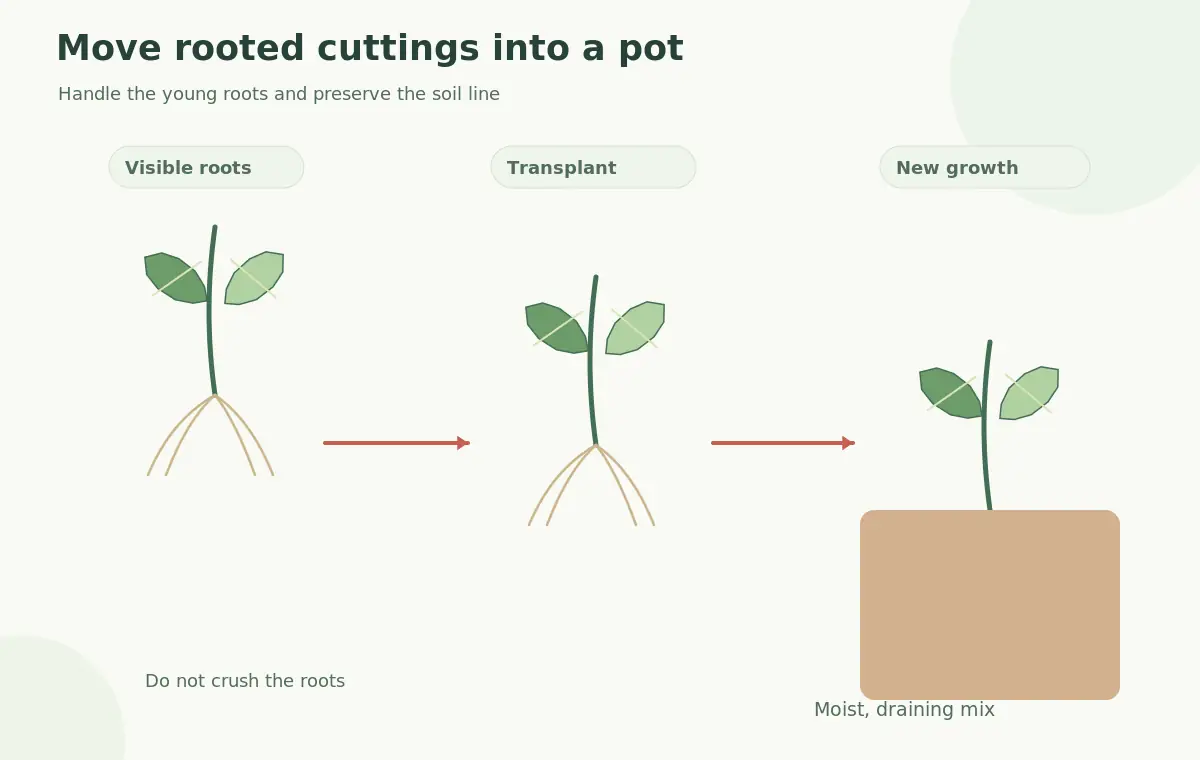
Illinois Extension suggests moving rooted cuttings to individual pots when roots are approximately an inch long. For water-rooted basil, handle these delicate roots gently and place them into moist, well-drained potting mix without coiling them into a tight knot. Fill around the roots rather than compressing soil hard. Keep the plant out of harsh direct sun briefly while it adjusts, and maintain even but not soggy moisture. For mix-rooted basil, slight resistance to a very gentle tug or visible new shoot growth can signal root establishment, though neither is a perfect test. Do not tear the cutting out just to look. Pot into a container appropriate for its growing root system, with drainage holes always open.

Acclimate the New Basil Plant to Sun
Freshly rooted basil has fewer effective roots than a mature plant, so strong midday heat can overwhelm it. Move toward brighter light in stages while watching leaf posture and the pot’s moisture. Indoors, provide adequate bright light without resting foliage against a hot grow bulb. When transplanting outdoors, wait until frost danger has passed and nighttime temperatures are suitable for warm-season basil. Penn State and University of Minnesota describe basil as a warm-weather herb needing substantial sun and well-drained conditions. Begin with a sheltered position, then gradually introduce direct outdoor light. If a leaf wilts during the first transition, review moisture, temperature and root condition; do not instantly compensate with a strong fertilizer dose.
Keep a New Plant Bushy Through Good Harvest Cuts
Once the cutting establishes vigorous growth, harvest shoot tips just above a healthy leaf pair rather than stripping the entire stem. University of Minnesota advises cutting basil stems above paired leaves so side shoots develop. Allow time for leaf area to rebuild between major harvests. Flowering behavior depends on variety and growing conditions; simply removing every flower is not a guarantee of unlimited tender production. Pinching can change branching, but light, moisture and root space still set growth limits. Keep plants appropriately spaced to encourage airflow and avoid constant wet leaves. A pot that becomes crowded with several cuttings may need thinning or separation rather than more frequent watering.
Prevent Rot and Other Common Failures
Soft dark stems in water or mushy lower stems in potting mix suggest the cutting is declining; discard compromised material and start again from healthier growth. A yellow upper leaf can signal low light or poor root function, not automatically nutrient deficiency. Excessive direct sun causes rapid wilting before roots form; deep shade produces weak elongated growth. If stems wilt immediately, check that the original cutting was fresh and hydrated when prepared. Use clean containers and blades and never reuse a stagnant cup indefinitely. Avoid placing a propagation jar near raw food preparation if plants have been treated with garden products. Cuttings are vegetative clones: that preserves desirable traits, but also carries existing plant infections or pests. If you want the full process, read how to propagate oregano from cuttings without rotting the stems.
Decide Whether Cuttings Fit Your Growing Goal
For a kitchen windowsill supply, a few rooted tips offer a useful supplement to buying seedlings. For many annual plants at once, seed starting may be less labor than tending individual jars. For a sterile cultivar or one with traits that are not reliably inherited through seed, vegetative propagation can be especially valuable, provided the parent is healthy and propagation is permitted. Commercially protected varieties may have legal propagation restrictions; check plant tags and applicable rights before reproducing plants for sale. Don’t imply a cutting is identical in flavor under every environment: light, water, maturity and season still affect basil growth. The value of the method is predictable plant identity plus practical convenience, not guaranteed yield.
Related Guides
- Growing Herbs by Type: Water, Harvest, and Winter Survival Guide
- Growing Basil for Repeat Harvests: Plant, Pinch, and Prevent Problems
- How to Grow Cinnamon Basil From Seed and Recognize Its Paired Leaves
- How to Pinch Basil Flower Buds and Keep Tender Leaves Growing
- How to Harvest Thai Basil Above Leaf Nodes for Fresh Branching Shoots
How We Research and Check Recommendations
Research checked October 23, 2026. This guide combines plant-specific Cooperative Extension advice with institutional guidance on propagation, pruning, crop handling, or integrated pest management as applicable. Where institutions describe different methods or regional calendars, we identify the difference instead of presenting one schedule as universal. Recommendations are educational, not a substitute for plant diagnosis, product labels, or locally applicable rules.
Institutional sources reviewed: Penn State Extension (basil cuttings root in water and the plant’s disease and growing considerations); University of Illinois Extension (node identification, stem cutting preparation, media and root length before potting); University of Minnesota Extension (basil warm-season needs and harvesting above leaf pairs). This article is not sponsored; no product endorsement or confirmed affiliate relationship is claimed. See the VegWin affiliate disclosure for site-wide information.
Yes. Penn State Extension notes that basil cuttings root easily in water. Use a clean container, healthy stem, and keep leaves above the water.
Take a shoot with at least two nodes and cut the new cutting just below a lower node; on the donor plant, cut above a leaf pair.
Basil often roots without it. Adding products is not required for the straightforward water method.
Illinois Extension suggests moving rooted cuttings when roots are approximately an inch long; handle them gently.
Nonflowering healthy shoots are generally preferable. Remove flowers from a cutting so it can concentrate on establishing roots.