
Anise hyssop (Agastache foeniculum) is a North American mint-family perennial grown for fragrant leaves and upright lavender-purple flower spikes that draw pollinators. It can be started from seed without elaborate equipment, but one detail matters: the tiny seeds need light for good germination, so burying them like large vegetable seeds works against you. Cold, moist stratification can improve the result, although it is not always required. The steps below separate what the seed must have from what may help a stubborn batch, and explain how to transplant seedlings without creating a soggy crown.
Check the botanical name on seed packets
Anise hyssop is Agastache foeniculum, a perennial with opposite, toothed leaves and an anise-like scent. It is not culinary hyssop (Hyssopus officinalis), anise (Pimpinella anisum), or every brightly colored Agastache hybrid sold for containers. Names matter because seed germination advice and expectations about longevity can change between species and hybrids. A packet marked A. foeniculum is the simplest choice if you want the familiar prairie plant. Seeds from a named hybrid may produce variable offspring, and a plant marketed for flower color may not breed true. Choose clean, fresh seed from a reliable source and keep the packet so you can compare its instructions with your actual germination results. For a step-by-step method, see how to grow catmint from seed without confusing sterile hybrid cultivars.
Provide a sunny site with good drainage
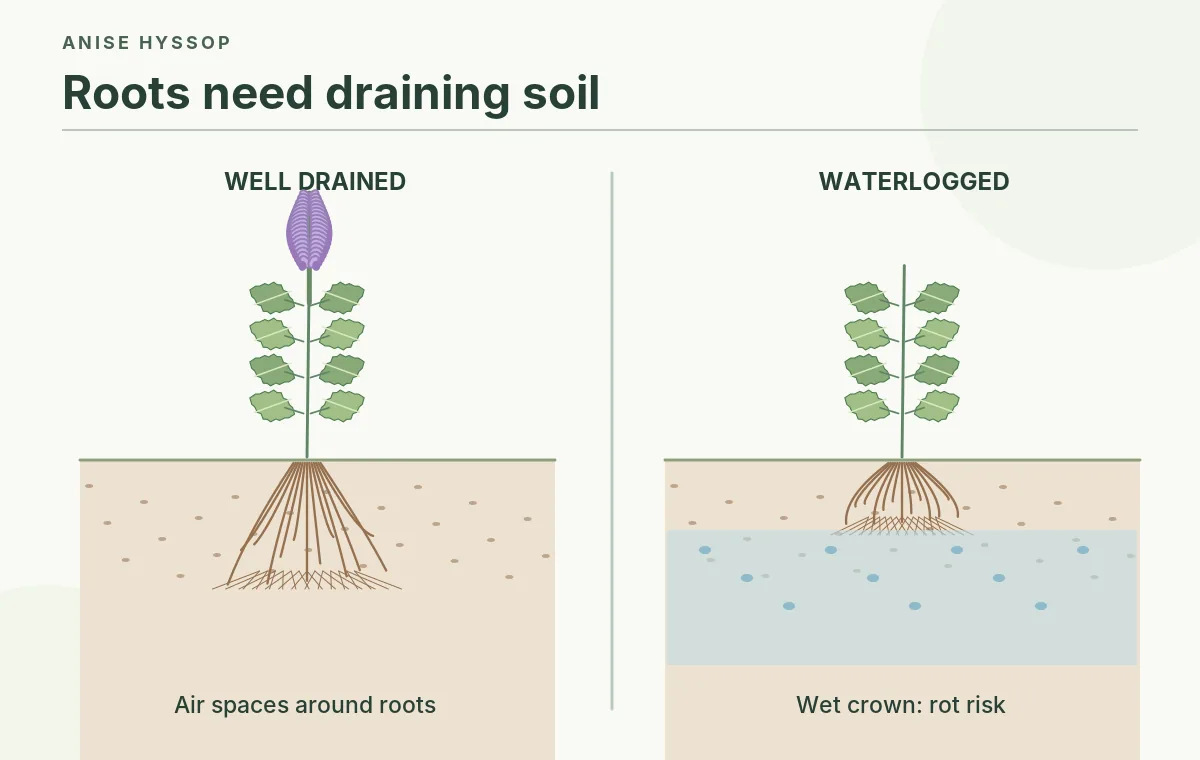
Mature anise hyssop grows well in full to partial sun and soil that sheds excess water. NC State Extension lists well-drained soil as important and warns about crown and root rot in poorly drained sites. Before sowing, decide whether the eventual growing area has enough room for upright flowering stems and neighboring plants to share light. This perennial may be short-lived, so do not plan it as a permanent woody shrub. In a dry garden border, water young plants until established; in a low, wet spot, first fix the drainage or move the planting site. The seed-starting method cannot compensate for persistently saturated outdoor soil.
Surface sow seeds so light can reach them
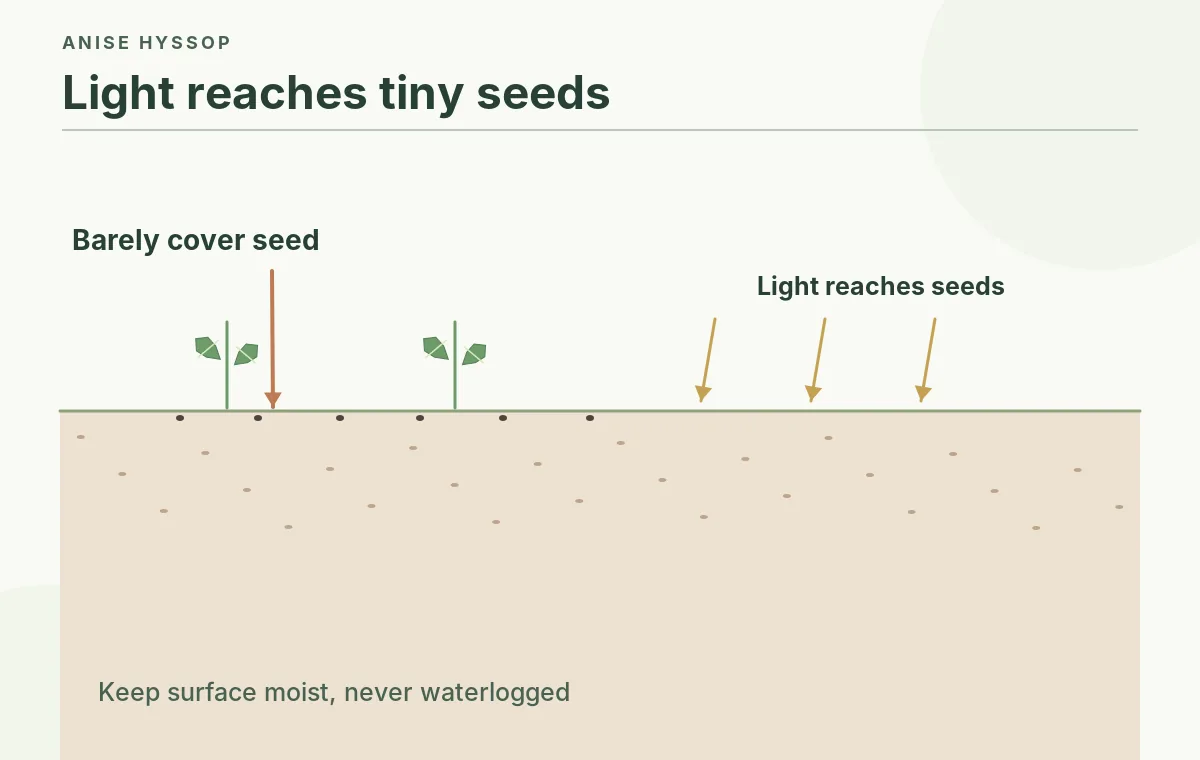
Fill a clean container with moistened sterile seed-starting mix and level the surface. Scatter a small number of seeds thinly and gently press them into contact with the mix. University of Wisconsin–Madison Extension explains that anise hyssop seeds need light to germinate and should be only barely covered. A dusting of fine mix is acceptable, but a thick blanket of soil is not. Place trays in bright indirect light or beneath a seed-starting light and maintain stable, suitable warmth. Use a clear cover only if needed to reduce rapid drying, then vent and remove it as soon as seedlings appear. Label the tray to prevent confusion with other mint-family herbs.
Know when cold moist stratification may help
Wisconsin Extension reports that cold, moist stratification improves germination; it does not say every seed must be frozen or that one arbitrary treatment succeeds everywhere. If your packet recommends a cold period, follow that supplier’s species-specific duration. Seeds can also experience winter conditions when sown outdoors at an appropriate season in a protected prepared spot. A Minnesota Extension answer published in March 2026 gives a particular cold-treatment response to a local grower, but that one response is not a universal refrigerator-freezer recipe. For a small experiment, compare an untreated tray with a labeled cold-treated tray from the same lot, keeping light and moisture otherwise similar. Note results rather than assuming failure after only a few days. For a step-by-step method, see how to start eastern columbine from seed with the right cold period.
Expect emergence over several weeks
University of Wisconsin–Madison Extension gives a typical germination interval of approximately one to four weeks. That range is more useful than a rigid promised day. The surface should stay evenly moist but not dripping, and seeds must remain in good contact with the growing mix. Bottom watering or a fine spray prevents the small seeds from washing into a corner of the tray. A healthy first leaf pair is tiny; later true leaves become visibly toothed. If no seedlings appear at all, review seed freshness, temperatures, depth, and excessive watering before restarting. A tray kept permanently under standing water can rot seeds and encourage damping-off even when the light requirement was met. Our walkthrough on how to grow German chamomile from seed without burying the seedlings sets out each step.
Recognize mint-family seedling structure
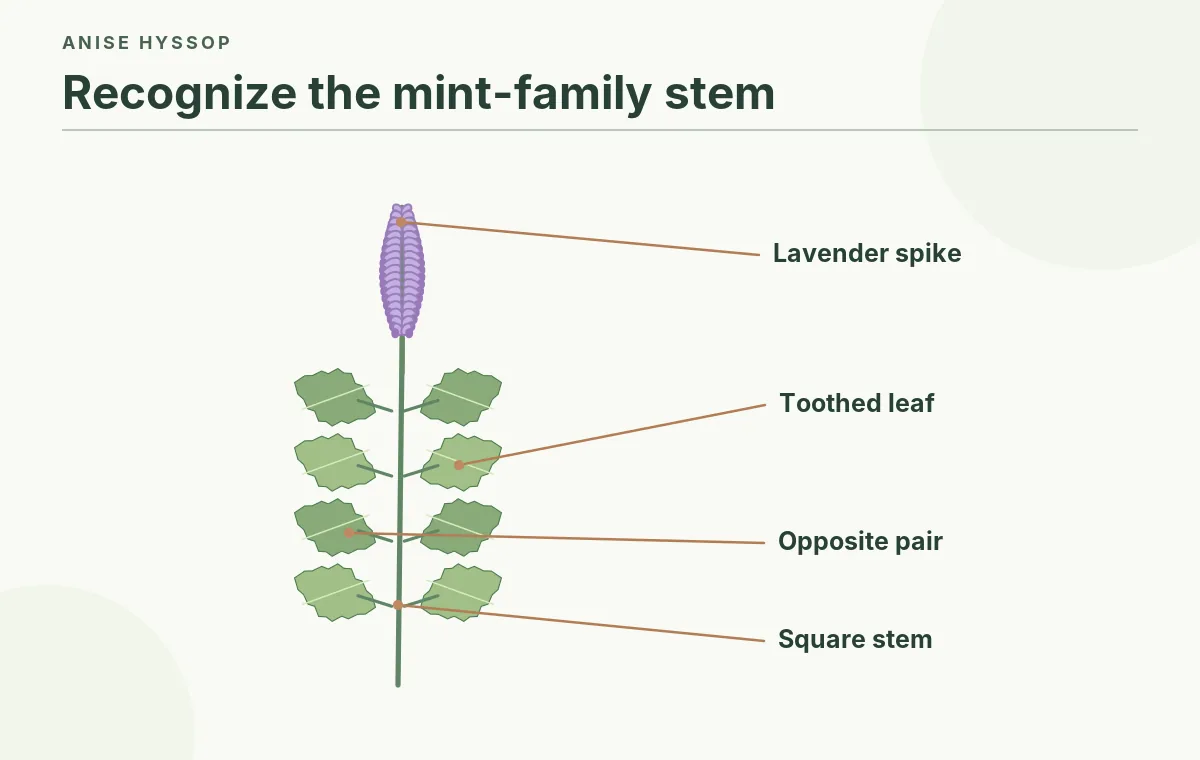
As plants grow, look for pairs of leaves emerging on opposite sides of the stem; later pairs typically rotate relative to earlier ones. The blades become ovate with serrated edges and develop the characteristic licorice-like scent when gently handled. Mature stems are square in cross-section, another common mint-family feature, and flowering stems finish in dense upright spikes of many tiny lavender flowers. Do not confuse weeds with seedlings based on fragrance alone, since other mints smell similar. Use your labeled sowing area, leaf arrangement, and later flower spike shape together. Seedlings need good airflow: thin or pot up crowded plants instead of allowing several stems to remain pressed together in a single cell.
Pot up young plants before roots knot together
Once several true leaves have formed and roots hold the media lightly, move each seedling to an individual container with drainage holes. Lift by a leaf or small root plug rather than pinching the tender stem. Set the crown at the same height it was growing, water gently, and provide bright light after any brief settling period. A seedling that stretches and falls over may be lacking enough light; a yellowing, wet seedling may be suffering from overwatering. Do not rush outdoor planting merely because a particular hardiness zone number appears on a map. Local frost risk and the actual stage of young plants govern when they can safely transition outside.
Harden off plants before transplanting outside
Indoor seedlings need a gradual adjustment to wind, sun, and wider temperatures. Over a period suited to the weather, move plants outdoors first to a sheltered bright-shade position, then slowly increase direct sun while protecting from frost or intense afternoon heat. A cloudy day is useful for final planting. Space according to the mature habit of the species and cultivar, not the small size of the transplant. NC State Extension describes plants large enough to require generous room in the border. Gently firm soil around roots, water well once, and monitor moisture as the establishment period continues. A dry surface does not always mean the lower root zone is dry, so inspect below the mulch.
Water young roots but avoid a wet crown
Anise hyssop is often described as drought tolerant after establishment, but small transplants still need moisture while their root systems expand. Water deeply when needed and let the surface begin drying between rounds if the soil drains normally. Keep mulch a little away from the crown rather than making a moist cone around stems. In containers, excess water must leave through real holes, not collect inside a decorative cachepot. NC State lists root and crown rot among potential problems in poorly drained conditions. If a plant suddenly wilts in wet soil, investigate root health instead of assuming another watering will fix it. Once established, plants can be more resilient in moderately dry conditions.
Collect seed with realistic cultivar expectations
Flowering stems mature from dense purple-blue spikes into dry seed-bearing structures. You can leave some to support insects and birds, or collect mature dry seed for next season by placing a paper bag over fully drying spikes. Self-sown seedlings are possible in favorable settings, though local winters and soil disturbance determine which survive. Seedlings from selected cultivars or cross-pollinated plants may not copy a parent exactly. Retain the plant name and collection year, dry seeds well before storage, and do not assume their identity simply from a licorice scent. If unwanted self-sowing occurs, trim selected spikes before the seeds mature instead of spraying seedlings indiscriminately. For the fuller picture, see our guide to growing love-in-a-mist from seed.
How We Research and Check Recommendations
Research checked October 23, 2026. We compared species-specific or safety guidance from the institutional sources listed below, cross-checked planting or action timing against plant biology, and distinguished evidence from reasonable garden practice. The information is for home gardening, not a site inspection or substitute for local soil tests, plant diagnosis, or food-safety rules. Local climate, cultivars, and current Extension recommendations can change the appropriate decision.
Sources reviewed: University of Wisconsin–Madison Extension (Seed needs light, 1–4 week germination, cold moist treatment improves results; foliage and cultivation.); NC State Extension Plant Toolbox (Species identity, opposite mint foliage, perennial habit and well-drained soil.); Ask Extension, Minnesota Master Gardeners, March 2026 (Site-specific cold-treatment response demonstrates variability; not a universal freezer method.). This article does not claim a sponsorship, compensation, product endorsement, or verified affiliate relationship. Review our affiliate disclosure for site-wide policy.
Yes. Wisconsin Extension advises barely covering the tiny seeds so they can receive light.
Not always. Cold, moist stratification often improves germination, but some fresh seed sprouts without it.
Wisconsin Extension reports approximately one to four weeks under appropriate conditions.
Avoid exposing tender greenhouse-grown seedlings abruptly to frost. Harden off and follow local weather and plant-development conditions.
Not necessarily. Open-pollinated offspring, especially from hybrids or mixed nearby plants, can vary from the parent.