
Sweet marjoram offers tender, aromatic shoots for cooking without needing a large herb bed. It is sometimes confused with oregano, a related plant that can grow more aggressively and tastes noticeably different. Starting with the correct plant name matters, especially when nursery labels say only “marjoram” or when seed packets feature several Origanum species.
Illinois Extension identifies sweet marjoram as Origanum majorana, a low, spreading herb that prefers sun and well-drained soil. University of Maryland Extension notes that it can be grown from seeds or cuttings and harvested throughout the season. The practical key in a pot is to keep roots supplied with moisture without leaving them saturated, and to cut stems in a way that encourages new leafy growth instead of stripping the entire plant.
Confirm you have sweet marjoram rather than oregano
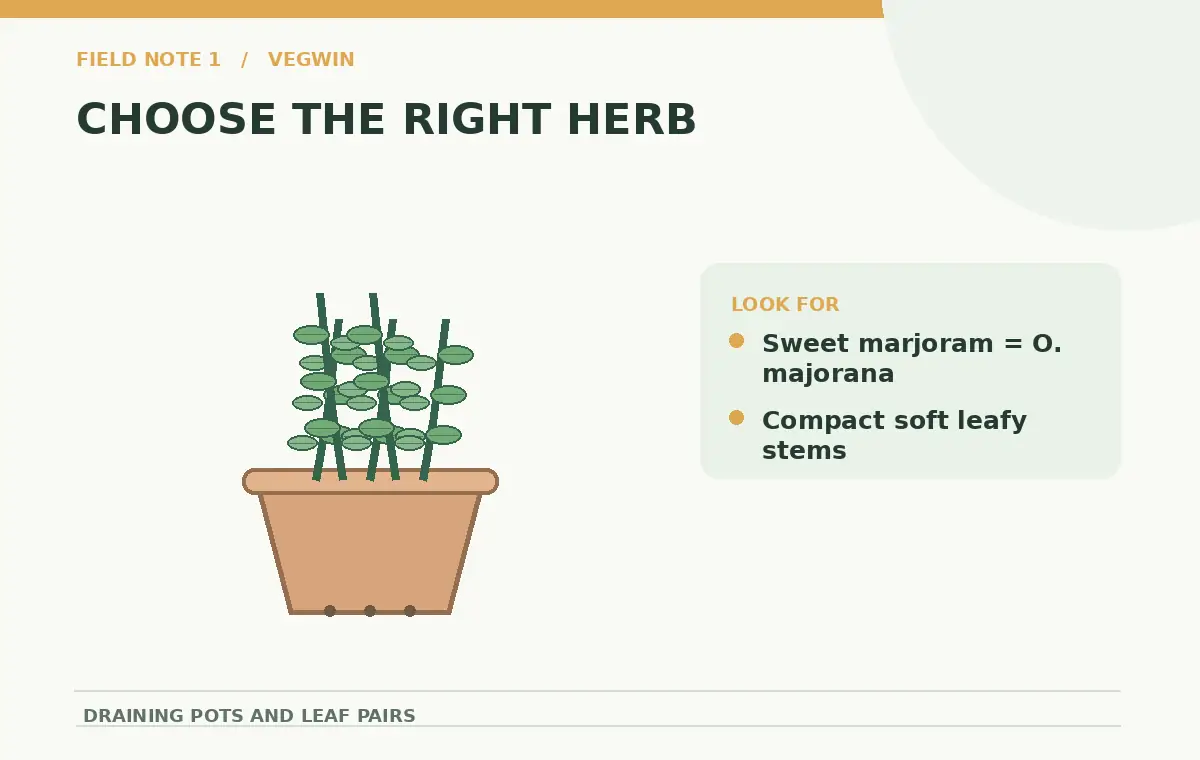
Sweet marjoram is botanically Origanum majorana. Oregano is commonly associated with other Origanum species, so the names are related but not interchangeable in a growing plan or recipe. Marjoram tends to have softer, gray-green foliage and a milder fragrance. Check a botanical label if the distinction affects which herb you want for cooking. A plant sold under a trade name may not specify the exact species.
An established marjoram plant often forms a low branching mound instead of tall, rigid stems. That makes it particularly suitable to a container close to the kitchen, provided the pot can drain. Do not assume that a strong-smelling herb wants constantly moist soil. Herbs in this group can be stressed by stagnant water even though they respond positively to careful irrigation during active growth.
Choose a pot that drains freely and stays manageable
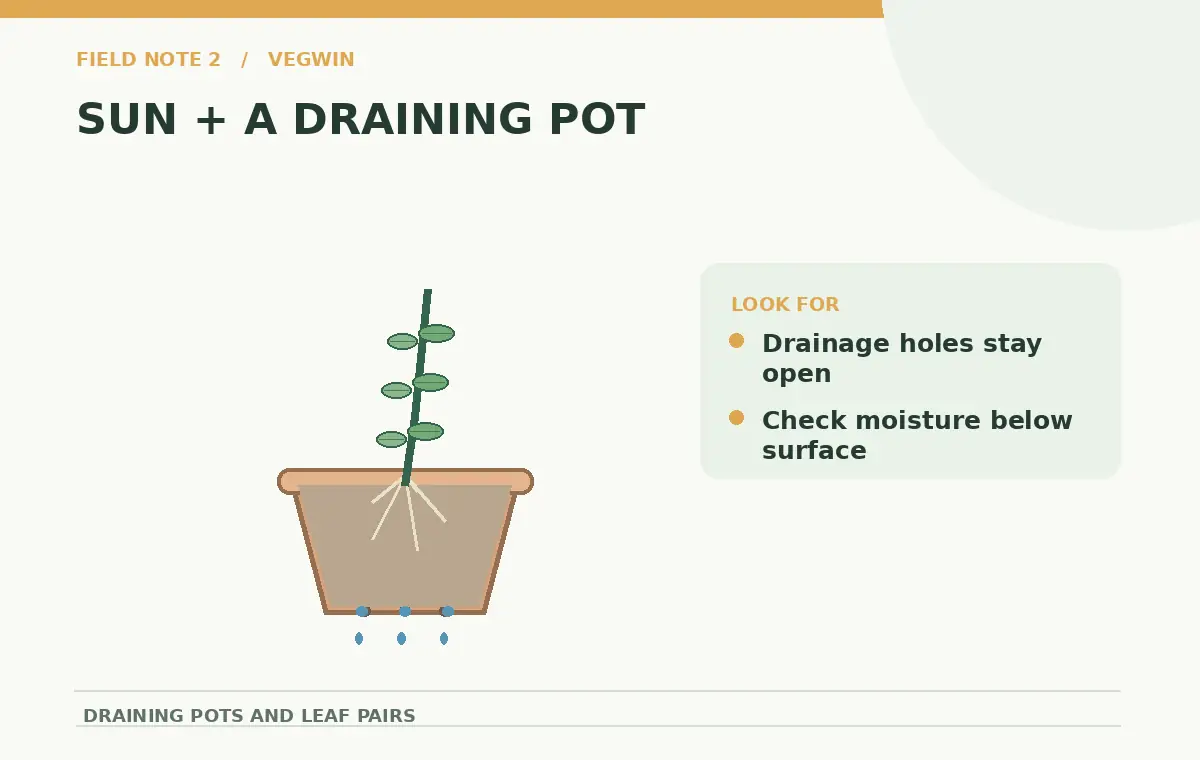
Start with a container that has genuine drainage holes and a loose, good-quality potting mix. Illinois Extension advises containers with drainage and well-drained medium for herbs. An ornamental cachepot without an outlet can be used only if the inner pot can drain completely and standing water is emptied. A modest container is often easier to manage than a very deep pot filled with wet medium around a small cutting. For the fuller picture, see our guide to growing rosemary in pots.
Place the pot where the plant receives substantial sunlight. A sheltered patio or bright outdoor shelf can work, but air circulation and watering needs vary with heat and wind. Check the mix below the surface before watering: dry-looking material on top may hide moisture deeper in the root zone. If the entire pot stays soggy for days, improve the drainage setup rather than adding fertilizer. Our guide to growing culinary thyme in pots adds more detail on this.
Start from seed or from a healthy cutting
Illinois and Maryland Extension both describe sweet marjoram as readily propagated by seed or cuttings. For seeds, use fresh packets, fine sowing medium and the depth supplied by the seed source rather than inventing a universal depth. Keep the mix evenly moist while seedlings establish but not waterlogged. Thin crowded seedlings by snipping extras to avoid disturbing delicate roots of those you keep.
For cuttings, choose clean nonflowering shoots from a healthy mother plant, remove lower leaves and root in a suitable sterile propagation medium. A cutting should have nodes where roots and new shoots can develop. Give bright indirect light while it establishes; do not treat an unrooted cutting as an adult herb that can endure severe dryness. Pot up only when a root system can hold the medium together.
Shape the plant before stems become coarse
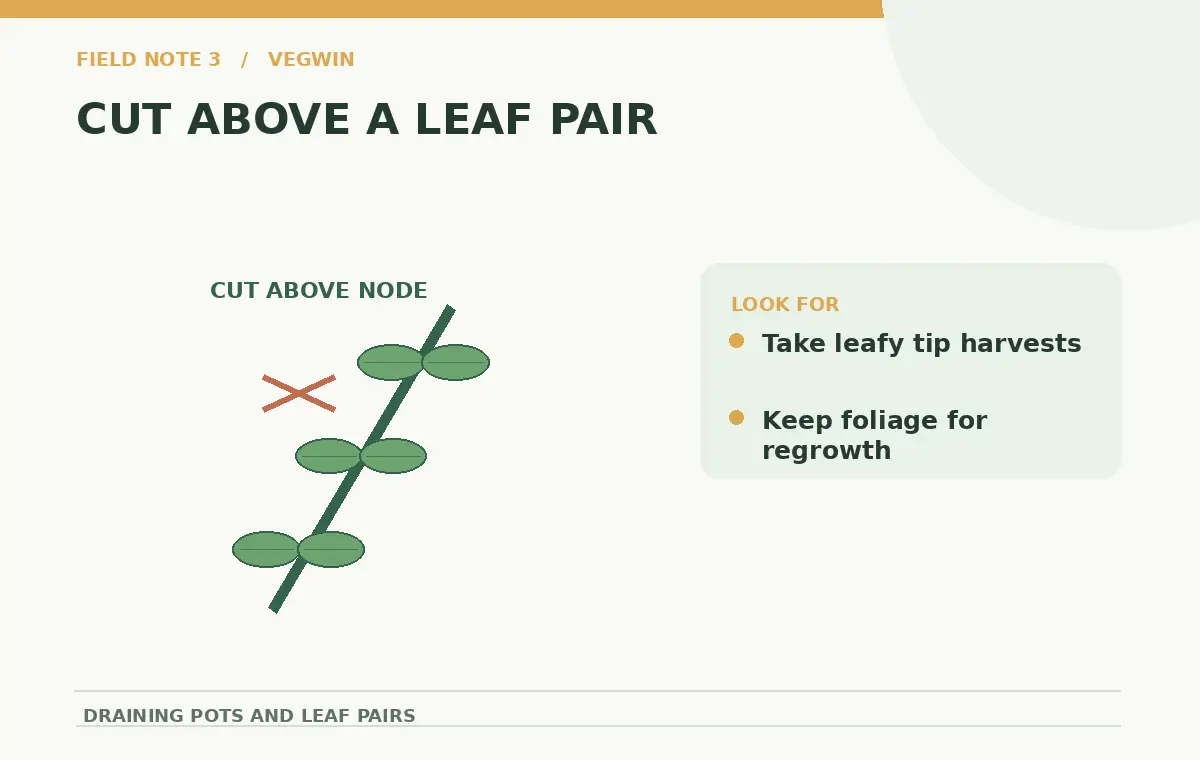
Illinois Extension suggests trimming marjoram when it is roughly six to eight inches tall to encourage branching. Rather than cutting an unbranched seedling to the base, pinch or cut a growing tip above a healthy leaf pair and allow side shoots time to develop. Repeating restrained harvests creates more accessible leafy stems without removing the entire canopy that powers regrowth.
Avoid using the scissors as though the plant were lawn grass. Leave enough healthy foliage on each stem for recovery and avoid repeatedly cutting the same weak shoot. If the plant is flowering, some stems may become less tender; harvest selected leafy shoots first and trim spent flower stems according to the vigor of the plant. The best approach is responsive to growth, not a calendar-based haircut.
Harvest stems cleanly and preserve the leaf quality
Fresh leaves can be picked whenever the plant has sufficient growth. Maryland Extension suggests cutting leafy stems around flowering for drying, while Illinois notes that cutting back at the onset of bloom can stimulate another flush. These are complementary options: selective cuts give fresh kitchen supply, and a larger planned harvest provides material for drying. Always leave enough live stems for the pot to recover.
Use clean scissors and harvest dry, healthy foliage rather than muddy stems. Handle leaves gently because bruising can change aroma. For drying, keep cuttings in an airy, clean location out of direct moisture until thoroughly dry, and store them in a dry sealed container. Avoid claiming exact storage life or preservation safety without a validated food-storage source; this guide is about growing and basic air drying.
Adapt water and winter care to the actual climate
In colder climates sweet marjoram is often treated as a tender annual or brought inside as a container herb. Maryland Extension explicitly notes that it can be overwintered in a pot. A plant coming indoors will need an adjustment period and a bright position; lower winter light usually means slower growth and less water use. Keeping the same outdoor watering schedule may leave indoor roots too wet.
When moving a pot to a new environment, inspect for pests on stems and leaf undersides, and avoid sudden temperature and light shocks. Do not promise outdoor survival from a hardiness-zone label alone. Survival depends on cultivar, root moisture, freeze-thaw exposure and local winter conditions. If the plant becomes sparse indoors, increase usable light before reaching for extra fertilizer.
Troubleshoot poor growth without overcorrecting
Yellowing leaves and stagnant growth can accompany roots sitting in wet mix, insufficient light, compacted medium or exhausted crowded plants. Inspect the container first: are drainage holes open, is water retained beneath the pot, and are roots healthy? A small plant in a large soaked container can appear to need more attention but actually benefits from less standing water.
If the plant grows long, weak shoots, give it better light and pinch carefully once healthy growth resumes. If harvests have stripped almost every leaf, allow a recovery period rather than continually cutting. Good marjoram care is repetitive but modest: light, free drainage, observation and small stem harvests. Keeping brief notes about watering and growth will quickly reveal which adjustment is useful.
Decide What to Do With This Comparison
| Condition | Next step |
|---|---|
| Pot stays wet for days | Check drainage holes and standing water |
| Plant grows tall and sparse | Increase light and harvest tips sparingly |
| Healthy leafy growth | Cut stems above leaf pairs and let side shoots regrow |
| Cold season approaches | Move tender container plants appropriately; reduce watering as growth slows |
Related Guides
How We Research and Verify Garden Advice
This guide was checked on October 22, 2026 against horticultural recommendations from Illinois Extension or RHS guidance and the independent references listed below. We distinguished general plant biology from regional calendars, variety differences and decisions requiring local inspection. The diagrams are original simplified educational illustrations, not exact measurements of specific cultivars. Recommendations should be compared with your regional Cooperative Extension office before substantial pruning, planting or water-system changes.
Sources checked: Illinois Extension covers Origanum majorana growth habit, seed or cutting propagation, pruning and harvest.; University of Maryland Extension describes marjoram culture and leaf harvesting.; Illinois Extension recommends containers with drainage holes and loose growing media for culinary herbs..
Editorial disclosure: This is an informational gardening guide. No paid product endorsement or affiliate partnership is claimed. Read the affiliate disclosure for the site-wide policy.
No. Sweet marjoram is Origanum majorana, related to but distinct from plants commonly sold as oregano.
Yes. A sunny place, drainage holes and loose potting mix suit its low branching habit.
Illinois Extension suggests trimming when plants reach roughly six to eight inches in height.
Yes. Healthy nonflowering stems can be rooted in appropriate propagation media.
Usually not automatically. Slower growth and lower winter light often reduce water use; check root-zone moisture first.