
Potted rosemary often struggles not because it needs a secret herb fertilizer, but because its roots stay wet or its light changes abruptly during a seasonal move. Rosemary is an aromatic woody perennial, not a basil-like leafy annual. Its long-term performance depends on drainage, sun, air movement and a realistic overwintering plan for your climate. This guide is specifically about managing a rosemary container through warm and cool seasons, with a pot cross-section, symptom checklist and indoor-transition workflow. It does not repeat a general herb-garden planting list or promise that every variety tolerates the same cold.
Start With a Pot That Drains Freely
A container must have real drainage holes and enough room for a growing root system. Decorative cachepots are fine as outer sleeves only if excess water cannot accumulate around the inner pot. Use a well-drained commercial potting medium instead of dense soil dug from a garden bed. Illinois Extension recommends draining pots and loose potting mixes for herbs, while rosemary guidance highlights the plant’s need for a well-drained site. A layer of stones below wet, compacted soil is not a dependable replacement for proper drainage. For the fuller picture, see our guide to growing culinary thyme in pots.
Lift the pot after irrigation and watch where water actually exits. If the mix stays soggy for days, assess container size, drainage blockage and the medium before adding more water. Potting mix gradually settles and may become less airy. Do not repot simply because one lower leaf turns yellow; use multiple clues including root condition and moisture pattern. A pot large enough for the plant but not excessively oversized for a tiny rootball is easier to manage through variable weather.
Place Rosemary Where Sun Is Reliable
Rosemary generally needs abundant sunlight and performs best with direct outdoor light during the growing season. Illinois Extension describes full sun and well-drained growing conditions. A north-facing balcony shaded by neighboring buildings may not provide enough light even if the spot feels bright to a person. If leaves become sparse and shoots extend weakly toward a window, investigate light exposure along with root health. Rotate a movable pot periodically for even growth, but avoid moving the plant repeatedly between radically different conditions. Our guide “Grow Sweet Marjoram in Pots for Fragrant Leaves and Repeat Harvests” goes into more detail.
Reflective walls, small paved balconies and dark containers may raise root-zone temperatures in midsummer. Watch for unusually rapid drying and leaf scorch when the pot is exposed to intense afternoon sun. Adjust the location or shade the pot surface if necessary, without pushing the foliage into permanent deep shade. This is a balancing act: rosemary needs light, but container roots respond faster to extreme heat than roots protected in a large in-ground soil volume.

Water According to the Root Zone
There is no universal schedule such as every two days for a potted rosemary. Check the medium below the surface and the weight of the pot; a dry-looking top layer can hide moisture deeper down. When the plant needs water, moisten the potting medium thoroughly and let excess drain. Empty any saucer that continues to hold water. In cooler, lower-light conditions the plant usually uses water more slowly, so a summer watering routine can become excessive indoors. The goal is both adequate moisture and available oxygen around roots.
Dry branches can result from insufficient water, but root damage from prolonged saturation can also leave the top unable to take up water. Do not assume every dry-looking rosemary needs another soaking. Gently inspect the mix and a few roots if a plant is declining; healthy roots and a clean-smelling medium support a different decision from dark, mushy roots and sour soil. If in doubt, take photos and seek local Extension advice before adding fertilizer or fungicides.
Harvest Without Stripping Woody Growth
Cut healthy green shoot tips for cooking, using clean pruners and taking from several stems rather than reducing one branch to bare wood. Illinois Extension recommends modest harvest of perennial herbs because the plant must retain enough healthy growth for recovery. Woody old stems may not produce new shoots readily after severe cutting. Shape the plant gradually and avoid a drastic pruning just before its most stressful winter conditions. Remove dead or damaged growth only after checking how much tissue is still alive.
A harvest can be part of routine shaping, but a weak container plant should not be treated as a source of unlimited leaves. If growth is sparse, first correct light, rooting and watering conditions. Avoid overfeeding; the goal is healthy, aromatic foliage rather than forced soft growth that may be vulnerable to environmental changes. When drying harvested leaves, follow appropriate food-handling guidance rather than assuming any countertop method will work in a humid room.

Plan the Outdoor-to-Indoor Move Early
In colder climates many gardeners overwinter rosemary in a container rather than leaving a marginally hardy plant outside. Illinois Extension cautions that rosemary is not reliably hardy in some colder regions. Exact winter survival varies by cultivar, site exposure, root protection and weather, so USDA hardiness zones can provide context for the perennial but are not an exact survival promise. Plan the move before damaging frost, especially for roots in an exposed pot that cools more rapidly than the ground.
Transition the plant gradually where practical. Inspect leaves, stems and the underside of foliage for hitchhiking pests before bringing it indoors. Move it toward a bright, appropriately cool and ventilated location rather than suddenly placing it in a dark heated corner. Keep the plant away from furnace vents and sources of drying heat, and reassess irrigation rather than automatically continuing the outdoor schedule. Illinois Extension’s container-herb guidance recommends gradually acclimating plants to indoor light and temperature changes. For a step-by-step method, see how to grow lemon verbena in pots and bring it indoors before frost.
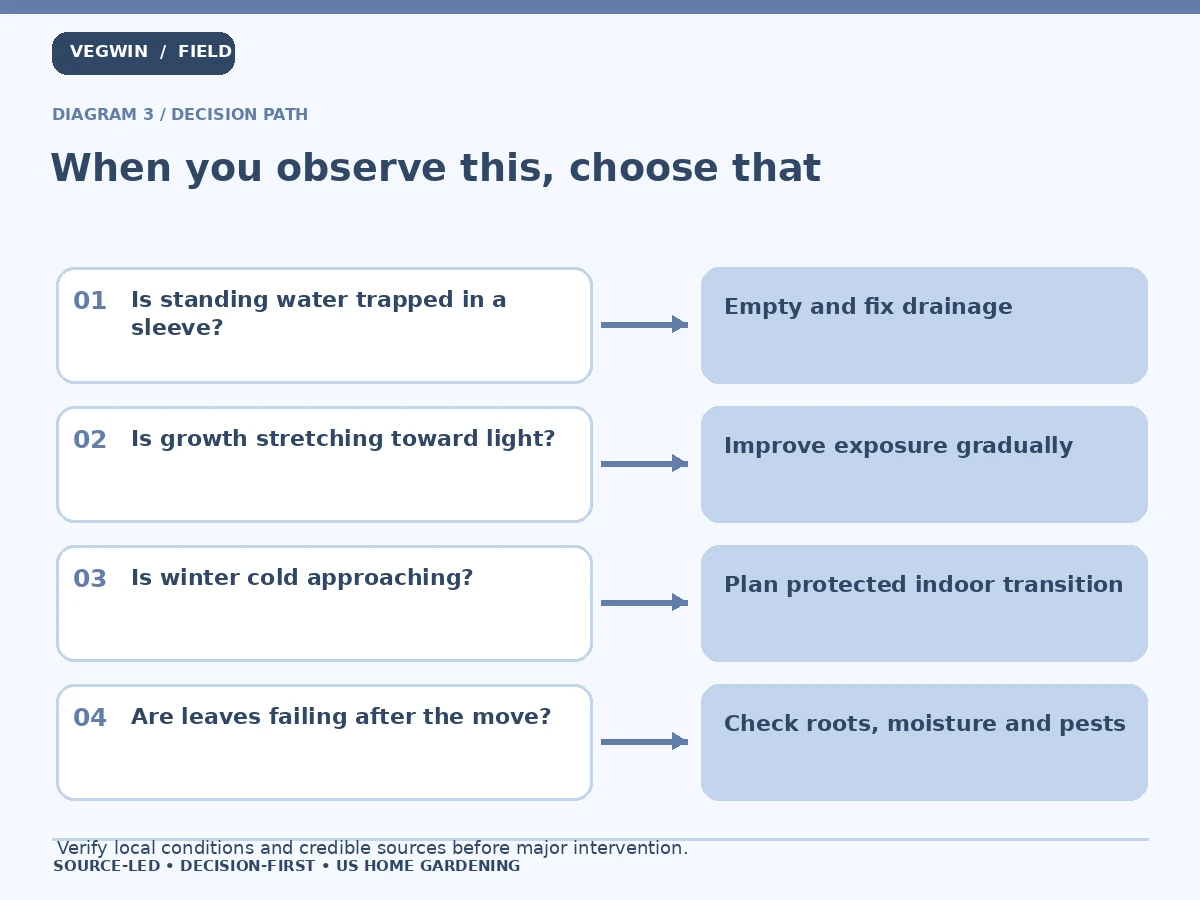
| What you see | What to inspect | Low-risk response |
|---|---|---|
| Mix remains soggy | Drain holes and potting medium | Remove standing water; improve aeration |
| Sparse, stretched shoots | Window or balcony light | Increase exposure gradually |
| Brown tips with dry mix | Root-zone moisture and heat | Water thoroughly; drain; monitor |
| Decline after indoor move | Light, heat vents, pests | Stabilize location and inspect roots |
Recognize Stress Instead of Guessing Causes
Yellowing can accompany overly wet media, but it can also occur with general decline or other stresses. Crisp tips might signal drying, salt accumulation or heat, while weak elongated shoots point toward insufficient light. Small speckles or webbing may require examination for mites. Use a checklist: where is the pot located, how long does the mix stay wet, what changed recently, and are any pests actually visible? Separate observation from a diagnosis rather than attaching a product recommendation to every symptom.
If most branches are dead and roots are rotted, treatment may be less practical than replacing the plant with healthy stock and changing the potting setup. If roots remain sound, small adjustments to light and water followed by patient observation are safer than several simultaneous interventions. Avoid using homemade chemical mixtures or unregistered pesticides on culinary herbs. If pests are confirmed, follow current crop-specific label instructions and local Extension IPM advice.
Repot Only When the Evidence Warrants It
Roots circling densely around the pot or a medium that no longer drains may justify repotting. Choose an appropriately larger draining container and fresh potting mix. Work gently to avoid excessive root damage and avoid burying woody stems deeply. Repotting is not a cure for a plant whose main problem is low winter light. Choose a period of active recovery rather than forcing major root disturbance during a dark, cold spell when growth is nearly paused.
After repotting, watch moisture carefully because fresh mix and an altered root-to-pot ratio can change drying time. Do not suddenly add heavy fertilizer or cut the top back dramatically as a routine response. Maintain a short log for a few weeks: drainage, weather, foliage and any new growth. That simple follow-up gives you a better basis for the next decision than buying another amendment each time a leaf drops.
Reset the Container for Spring Growth
As daylight increases and danger of damaging cold declines, gradually return indoor rosemary to brighter outdoor conditions. Even a sun-loving plant can experience scorch when moved directly from winter indoor light into intense full-day sunlight. Increase exposure in steps while inspecting leaves and moisture. Use local frost forecasts for the timing; unlike annual vegetable planting calendars, the perennial’s cold-hardiness information relates to its ability to survive winter conditions but still does not replace local weather observation.
At the start of the growing season, assess the roots, pot stability and available space. A thriving rosemary plant can become a long-lived ingredient source without being constantly repotted or fertilized. The useful routine is consistent bright light, root oxygen, modest pruning and early seasonal planning. A clearly recorded overwintering failure can also teach you whether this year’s location was too dark, hot, wet or cold for the particular plant you selected.
Related Guides
- Growing Herbs by Type: Water, Harvest, and Winter Survival Guide
- How to Root Rosemary Cuttings in a Free-Draining Potting Mix
- When to Prune Rosemary After Flowering Without Cutting Into Old Wood
How We Research and Verify This Guidance
Our research was checked on October 20, 2026 against the following primary horticulture and seed-conservation references: extension.illinois.edu reference 1, extension.illinois.edu reference 2, extension.illinois.edu reference 3. Each supports the topic-specific points recorded in the source metadata, but some recommendations depend on cultivar, climate, soil or local pest pressure.
Disclosure: This informational article contains no approved affiliate promotion and no compensated product recommendation. Read the site affiliate disclosure for the policy; the page itself has not been independently verified as accessible. For a site-specific problem, use your local Cooperative Extension and current regulatory labels rather than extrapolating a pesticide or fertilizer rate from a general guide.
Use an appropriate loose, well-drained potting mix in a pot with actual drainage holes, rather than compact garden soil.
Both drought and root damage from prolonged waterlogging can cause decline. Check root-zone moisture, drainage and light before assuming the cause.
It depends on cultivar, exposure and climate. Illinois Extension notes rosemary is not reliably hardy in some cold regions.
Avoid severe cutting into old bare woody stems. Harvest green shoot tips modestly to retain healthy growth.
There is no fixed interval. Use the actual potting-medium moisture, drainage and reduced winter growth to guide watering.