
Garlic scapes are the tender flowering stalks made by many hardneck garlic varieties before bulb harvest. Their appearance is a useful signal, but the calendar is not: scapes may develop at different times in different U.S. climates. To harvest a scape, identify the smooth, round stem rising from the center of the flat garlic leaves and remove it while the tip remains closed and tender. Do not pull the whole plant or strip off healthy foliage. Removing hardneck scapes can help the underground bulb grow, while the cut green shoot becomes a separate edible crop. The sections below explain how to recognize the plant part, judge timing and avoid damage.
Confirm the Plant Has a True Hardneck Garlic Scape
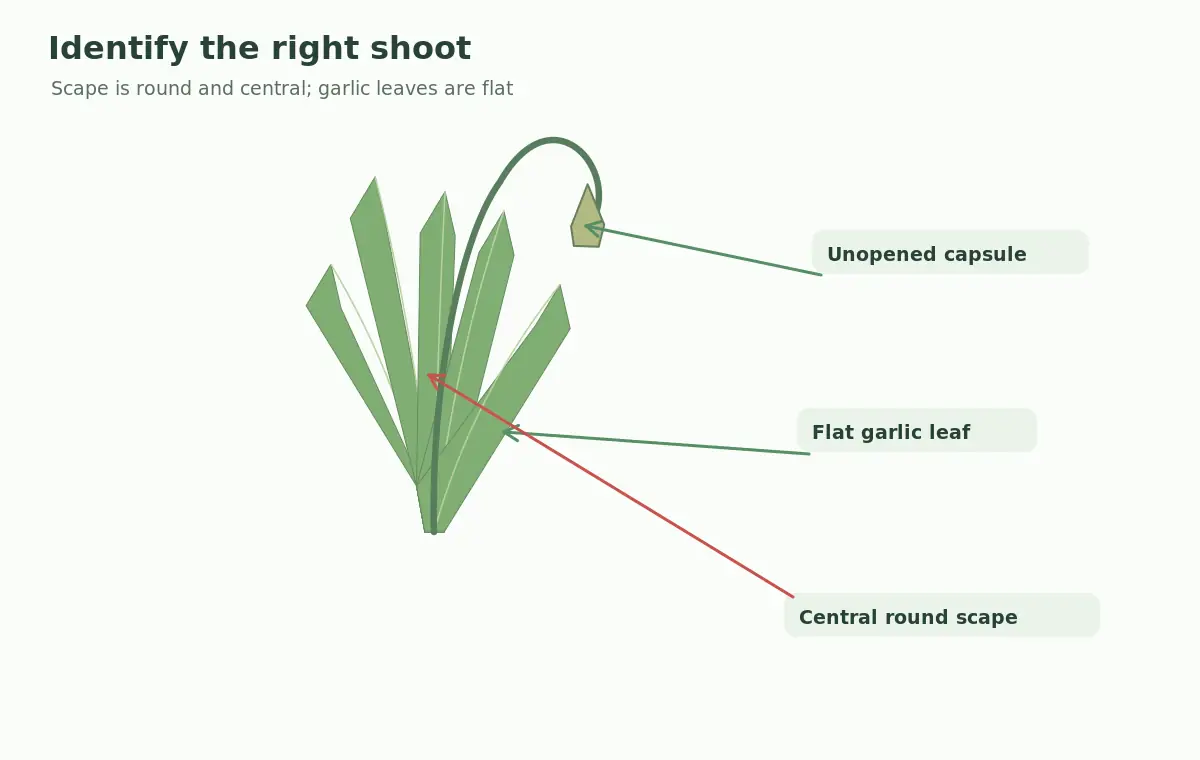
Garlic foliage forms long, relatively flat, straplike leaves. The scape is different: it is a distinct, usually round, leafless flowering shoot that rises from the center, bends or curls, and ends in a pointed capsule enclosing developing flower parts and bulbils. These bulbils are not the same as the cloves in the soil. Hardneck cultivars commonly produce this stalk; most softneck garlic does not form a comparable scape under normal home-garden conditions. If a plant has a single pale leaf or bent ordinary foliage, do not assume it is a scape. Follow the shoot down visually to the center of the leaf cluster before using a cutting tool. For a step-by-step method, see how to plant garlic cloves pointed end up at the correct depth.
Watch the Shoot Rather Than Choosing a Calendar Date
Iowa State Extension recommends harvest once the immature scape stands above the leaves and begins to curl, before the tip opens or the stem straightens as it ages. University of Maine research emphasizes removing scapes early, when the young bulbil body can be taken off. These descriptions are compatible: seek a small, unopened tip on a flexible, young central stem rather than waiting for multiple large loops. Development depends on spring temperatures, garlic type and planting conditions, so a fixed June date does not travel well between southern and northern gardens. Check plants every few days after you first notice central shoots.
Check the Tip for Tenderness and a Closed Capsule
A suitable scape should bend without feeling woody and have a tight, unopened bulbil capsule. A very small stalk can be left a little longer if you need it to be easily visible, but there is no requirement to wait until it makes a perfect ring. When the stalk thickens, extends far beyond the leaves or develops an open capsule, its texture becomes firmer. Cutting at that point still removes reproductive growth, but it misses the best tender eating stage. Use a clean sample from one plant to guide the rest of the bed instead of relying on photographs of a different variety.
Cut Only the Scape and Keep Green Leaves Attached
With clean snips or scissors, hold the young scape and cut its stalk above the leaf whorl, as low as you can reach without cutting a leaf. Iowa State describes this as cutting as low as possible without damaging foliage. Avoid slicing deep into the tightly packed center and do not yank the scape hard enough to loosen the developing bulb. Leave all the broad green leaves in place; they manufacture carbohydrates used as cloves enlarge underground. A single clear cut is enough. No wound sealant, fertilizer dose or special chemical treatment is needed for this routine harvest.
Understand What Research Says About Bulb Size
Scape removal is more than an optional cosmetic task on hardneck garlic. University of Maine reports trials in which leaving a scape on the plant reduced eventual harvested bulb size substantially; it also states that removing scapes did not impair bulb storage life in its research. The reported maximum effect is a study result, not a promise that every home garden will gain the same percentage. Weather, soil, cultivar and plant health affect final bulb size. The immediate practical lesson is to remove the flowering shoot before it becomes an expensive sink for energy, while avoiding loss of healthy foliage during cutting.
Use Your Scapes Soon After Harvesting Them
Rinse harvested scapes in clean water and trim any dry or tough cut ends. Younger tender portions can be sliced for quick sautés, stir-fries, soups or a garlic-flavored pesto. If the older lower stalk resists your knife, separate that fibrous part from the usable green section. Refrigerate fresh scapes promptly in a clean container or produce bag rather than leaving them in sun on the garden path. This guide concerns edible garlic shoots, not an assurance that every ornamental allium shoot is a food crop. Only prepare scapes from positively identified edible garlic grown without unsafe residues.

Do Not Confuse Scape Harvest With Bulb Harvest
The bulb is not ready merely because a scape appears. The plant still needs weeks of healthy leaf growth as its cloves size up. Leave the underground bulb undisturbed after taking the scape, and continue ordinary moisture and weed management suitable for your climate. Later, lower foliage will naturally yellow and dry as the crop approaches maturity. The correct bulb-lifting stage requires observing that separate leaf-dieback pattern and local Extension guidance; do not lift a bulb by pulling on its scape. Harvesting a leaf or two along with each shoot creates avoidable losses in bulb-building capacity.
Handle Plants With Different Speeds Individually
A bed seldom matures in perfect synchrony. Cultivars can differ, and plants near a warmer path or in a lighter soil may show scapes first. Walk the rows more than once rather than chopping every green shoot on the same date. If a scape was accidentally missed and its capsule is already opening, remove it if bulb growth is your priority, but expect the portion you eat to be coarser. Conversely, an undersized garlic plant should not be stripped of leaves to match its larger neighbors. Individual observation produces a more reliable harvest than applying a fixed number of days after emergence.
Avoid Three Common Cutting and Handling Mistakes
The first error is mistaking a flat green garlic leaf for the cylindrical flowering shoot; always find the central tip. The second is cutting into the live whorl or snapping the plant while pulling down on the scape. Sharp, clean shears make the targeted cut easier. The third is waiting until a big stiff spiral and splitting bulbil capsule have developed, when the shoot can become tougher. Do not worry if scapes vary in exact curl shape; examine texture and the closed tip. Put diseased or suspicious plant parts aside, clean tools after working on unhealthy plants, and keep food handling surfaces clean.

Plan Next Season Around Your Actual Garlic Type
Keep the name of the garlic cultivar and a note of when scapes first appeared in your location. If you are growing a softneck variety, not seeing scapes is normal and not a sign that its bulbs will fail. If you are growing hardneck garlic, record the interval between shoot emergence, first bend and bulb harvest so next year you can inspect at the right stage without following another region’s schedule. Scapes are a bonus crop, not a substitute for healthy roots, weed control or suitable garlic planting stock. Good records help make harvesting more consistent without turning weather-driven milestones into false calendar rules. If you are starting from scratch, read When to Cut Garlic Scapes for Tender Stalks and Healthy Bulbs.
Related Guides
- Garlic Gardening: Select Seed Cloves, Plant, Harvest, and Cure
- How to Manage Garlic Straw Mulch From Fall Through Spring
- How to Grow Hardneck Garlic From Aerial Bulbils Over Several Seasons
How We Research and Verify Gardening Advice
This guide was checked against the University of Maine research summary, an Iowa State home-garden answer and Rutgers production guidance. Their timing language differs slightly: Maine places greater emphasis on very early removal to protect yield, while Iowa State and Rutgers describe the curling stage as an easy field marker. We therefore recommend observing the unopened capsule and tenderness, with foliage protection as the overriding cutting rule. Sources were checked October 23, 2026. No cultivar or percentage gain is guaranteed, and this article is not a food-safety certification or original trial.
Sources reviewed (October 23, 2026): University of Maine Cooperative Extension — Growing Garlic in Maine (research on removal timing and effect of scapes on hardneck garlic bulb growth); Iowa State University Extension — What Are Garlic Scapes? (identifying immature curling scapes and cutting without damaging leaves); Rutgers Cooperative Extension — Garlic for Small Commercial Growers (hardneck scape tenderness and timing relative to bulb harvest). No university listed here sponsors this article or endorses VegWin. For site-level commercial relationship information, consult the VegWin affiliate disclosure.
Most softneck cultivars do not make the prominent curling scape typical of hardneck garlic, although occasional flowering behavior can vary with conditions. Do not cut ordinary leaves.
No. A young shoot with an unopened tip may be ready even before a complete loop forms. Harvest while it remains tender rather than waiting for the largest spiral.
A careful cut that removes only the flowering shoot should not kill the bulb. Keep the flat leaves and growing point undamaged so bulb development continues.
You can remove a late scape, but it is generally tougher to eat and has already drawn more resources into reproductive growth. For kitchen use and bulb size, earlier removal is preferable.
No. Scapes form ahead of bulb maturity. Wait for appropriate lower-leaf dieback and consult regional guidance for the separate bulb harvest.