
Lupines have upright spikes of pea-like flowers above fan-shaped leaves, but the first gardening decision happens long before those flower spikes appear. Many lupine seeds have coats that slow water entry, while young seedlings establish a taproot that is easy to injure during transplanting. The Royal Horticultural Society recommends seed-coat treatment for several border lupines and starting plants in individual pots where disturbance is minimal. Requirements still vary among Lupinus species, so the seed packet and locally native species guidance take priority over generic claims that every lupine must spend weeks in a refrigerator. This guide shows how to prepare a large seed safely, place it at the correct depth, and move seedlings without bending the root. All lupines are ornamental here, not edible beans.
Identify Your Lupine Species Before Treating Seed
Lupinus is a diverse genus, ranging from annual native wildflowers to long-lived border hybrids. A label reading ‘lupine mix’ does not establish whether the batch requires cold treatment, a nicked coat, or no pretreatment. RHS guidance for common border lupines recommends nicking and soaking, but its broader germination guidance has separate entries for particular species. Check the botanical name and supplier instructions, not simply the flower color printed on a packet. Some regional natives are ecologically specialized and should be planted only where appropriate; other lupines can naturalize aggressively outside their native range. If you intend a conservation planting, use regionally sourced seed and consult local native-plant organizations about species suitability. This first identification step prevents both poor germination and unwanted spread.
Understand the Hard Seed Coat Rather Than Over-Treating
A firm lupine seed coat may keep water from reaching the embryo even when soil looks moist. Scarification means slightly breaking or thinning the outer coat, not cutting deeply into the living contents. For larger border-lupine seeds, RHS suggests a cautious nick followed by soaking for about a day. Hold one dry seed securely, make a tiny mark on the outer coat away from the obvious embryonic area and stop as soon as the surface is breached. Gloves and a stable work surface are sensible because a slipping blade is a greater immediate hazard than a slow seed. Never scarify very small unidentified seed on autopilot.

Decide Whether Chilling Is Actually Required
Cold moist stratification and scarification solve different biological barriers, and they should not be treated as interchangeable. Some lupine species or seed sources benefit from a cold period; others germinate readily after the coat is chipped. The RHS seed scheme lists temperature and timing requirements by genus or species, demonstrating why a single refrigerator recipe is unreliable. Read the supplier’s species-specific advice first. If the packet calls for stratification, follow its stated duration and moisture conditions rather than inventing a fixed number of weeks. If it calls only for a small nick and a soak, use that route. Label experimental batches clearly when comparing methods, because otherwise a gardener cannot tell whether the treatment or the environment influenced germination.
Sow in Deep Individual Containers With Drainage
Lupines often establish a strong downward root quickly. An individual deep pot or root-training cell reduces tangles when moving seedlings. Fill it with a clean, free-draining seed-starting medium and moisten the mix evenly before sowing. Cover seed to the depth given for your species on the packet; RHS guidance for some Lupinus species describes a shallow cover, not burying seed several inches deep. The seed should be surrounded by medium rather than sitting in an air gap, but the mix should never remain saturated. Label the pot by species and sowing date. Keep containers where appropriate germination temperatures can be maintained. A deep pot is useful only if drainage actually works; standing water at the bottom can rot a seed or young root.
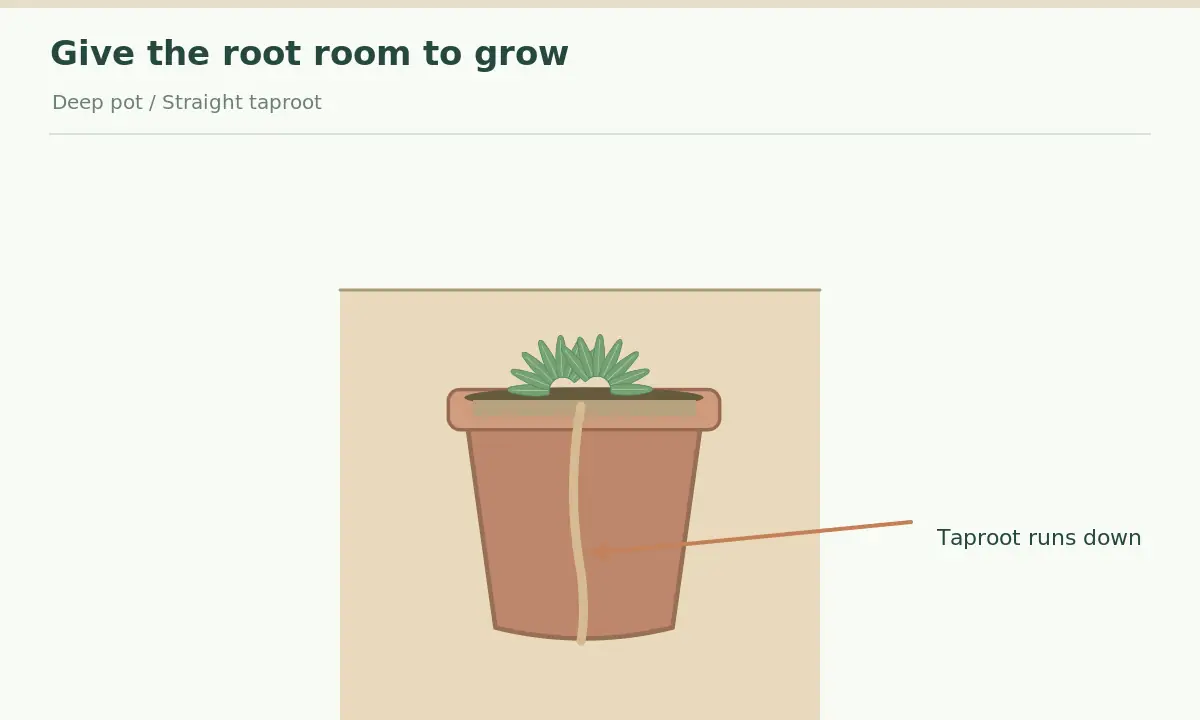
| Observation | Useful next step | Common mistake |
|---|---|---|
| Hard seed coat | Understand the Hard Seed Coat Rather Than Over-Treating | Acting before checking the plant |
| Deep pot | Sow in Deep Individual Containers With Drainage | Copying one method without context |
| Root bent | Set Realistic Expectations for Flowers and Seedlings | Assuming a single sign proves the diagnosis |
Keep Germination Moist But Not Waterlogged
A germinating seed needs oxygen as well as water. Check the medium below its top surface and water gently when it begins to dry, allowing excess water to escape. Avoid spraying so forcefully that the seed shifts to the edge of the pot. Give emerging seedlings strong light as soon as they appear, keeping lights at a safe distance rather than letting stems stretch toward a distant window. Germination timing may vary substantially even within one packet, particularly if seed coats absorb water at different rates. Never excavate every slow seed repeatedly to see whether it has grown a root; that can break the delicate radicle. Remove collapsed or moldy seedlings and improve hygiene, airflow and drainage instead of applying home pesticide recipes.
Recognize the Seedling Before Moving It
Early lupine seedlings first show seed leaves, then develop the distinctive hand-shaped foliage with several narrow leaflets radiating from a single point. Those true leaves help distinguish them from grass weeds or unrelated volunteers. Wait for a healthy but still manageable root system before moving plants. A seedling that has already wrapped a long taproot around the base of a shallow cell may transplant poorly; a plant with only a thread-like new root is also fragile. Avoid pulling seedlings by their stems. Lift the whole root ball, support the container, and handle the compost around the roots. A gentle pot squeeze is safer than grabbing leaves and yanking. Small injuries during this phase may delay establishment long after the foliage looks recovered.
Transplant Without Folding the Taproot
Choose a site with ample sun and well-drained soil, as recommended by RHS for border lupines. Water the young pot first so the root ball holds together. Dig a planting hole large enough for its natural length, set it at the same depth it grew in the container and backfill around—not over—the crown. Do not force a taproot into a shallow hole so it curls upward. If the pot is packed with roots and cannot be released intact, be realistic about transplant losses instead of aggressively teasing apart the young system. Firm gently, water to settle soil and keep an eye on dry spells while plants establish. Leave room around the leaf rosette, which will expand well beyond its seedling footprint.
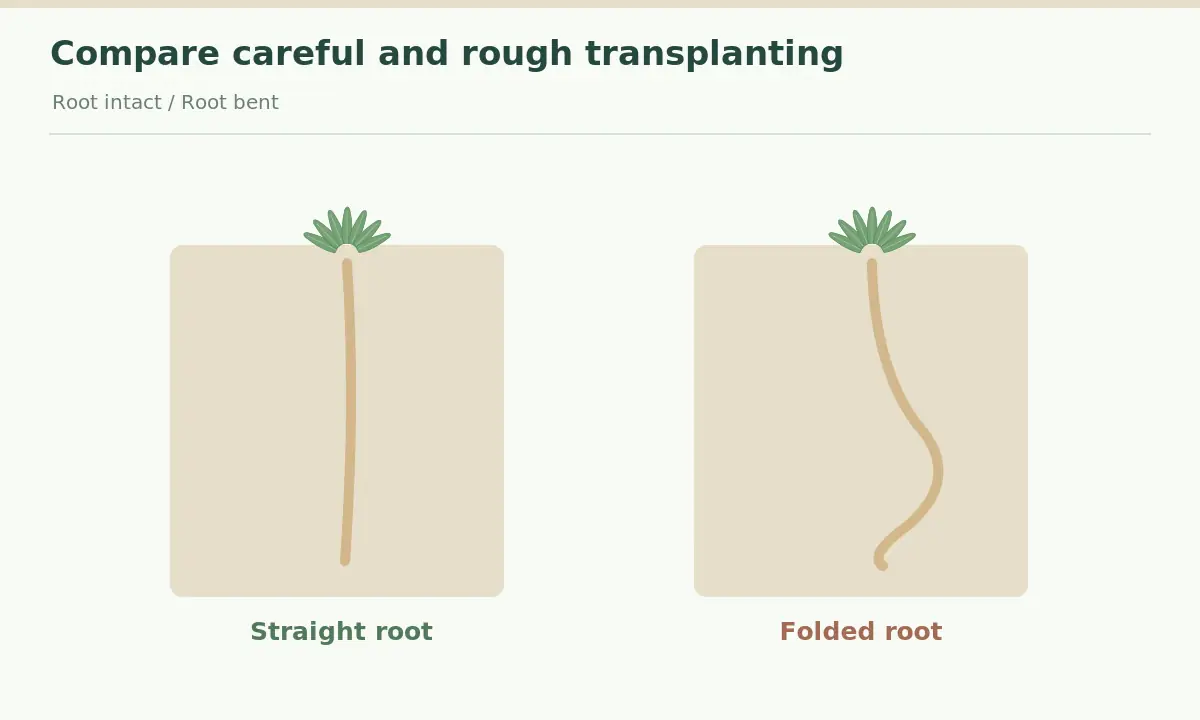
Set Realistic Expectations for Flowers and Seedlings
Not every lupine will flower in its first growing season. Annual and perennial species have different growth schedules, and border hybrids can vary in height, flowering color and vigor. Seeds collected from hybrids do not guarantee exact copies of the parent; their offspring may segregate into different colors. Protect healthy young leaf rosettes from slug browsing, especially during moist spring weather. Remove competing weeds gently rather than cultivating deeply next to the taproot. If a plant spends its first season forming roots and leaves, that can be normal establishment rather than proof of failed seed preparation. Assess the crown and true leaves before deciding the plant needs more fertilizer or pruning. Follow local guidance for species prone to self-seeding. For a step-by-step method, see how to grow lupines from seed without damaging their young taproots.
Keep Poisonous Seeds Away From Children and Animals
Lupine is a legume but should not be equated with edible peas or beans. Species and plant parts vary in alkaloid content, and ornamental lupine seeds are potentially poisonous. RHS explicitly warns that lupine seed ingestion can cause severe discomfort. Do not use garden-grown lupine pods in cooking, even if they resemble food-legume pods. Wear gloves when handling seed if you have skin sensitivity, store leftover seed where children and pets cannot reach it, and discard trimmings responsibly. If a person or animal has swallowed a seed or plant part, seek appropriate medical or veterinary guidance promptly rather than testing home remedies. This safety note matters most at seed-saving time, when attractive dry pods can be mistaken for edible harvests.
Troubleshoot Failures With a Small Controlled Test
If almost no seeds sprout, examine your actual process: species identity, seed age, coat treatment, temperature, waterlogging and the sowing depth. Try a second small labeled batch with the seed supplier’s recommended method rather than repeatedly burying the same suspect seed. If seedlings collapse near the soil surface, improve sanitation and moisture management before resowing. If they germinate but fail after planting, suspect root handling, abrupt sun exposure or unsuitable drainage before blaming the seed. Harden off indoor-raised plants gradually ahead of transplanting and watch nighttime temperatures. Keep brief notes on emergence and losses so the next sowing improves. A successful lupine planting starts with choosing the right species and giving one undamaged root enough room.
How We Research and Verify This Guidance
Sources checked on 2026-10-24. This article compares plant-stage or pest-stage guidance from www.rhs.org.uk — Border lupine scarification, sowing, soil drainage and transplant sensitivity; www.rhs.org.uk — Species-specific Lupinus germination advice and variable timing; www.rhs.org.uk — Palmately divided leaves and pea-like flower spikes for correct identification. We reviewed practical identification, growth and safety details and separated specific recommendations from widely varying local climates. The learning illustrations simplify appearance to make distinctions legible; they are not to botanical scale. The best action still depends on the named species or cultivar, current weather and observed plant condition.
Disclosures, Safety and Regional Differences
This is general gardening education; VegWin does not claim an invented endorsement or affiliate arrangement. See the affiliate disclosure. Where food safety, toxic plant parts or pest controls are involved, follow local Extension guidance and applicable registered product labels. No unverified pesticide formulas, fertilizer dosing, or zone-only planting schedules are recommended.
Some hard-coated border lupine seeds benefit from nicking and a soak, but follow the instructions for your identified species and seed lot.
No. Germination treatments vary by species; scarification and cold stratification are different processes.
Young lupines develop taproots that can bend or tear in shallow crowded cells; deeper individual containers reduce disturbance.
Not necessarily. Seed from hybrid cultivars may produce different colors or forms.
Do not eat ornamental lupine seeds or pods. Some contain toxic alkaloids and can cause illness.