
Gooseberry stems can turn a productive bush into a snagging thicket when old branches cross and droop toward the soil. Unlike blackcurrants, gooseberries carry fruit both on short spurs on older wood and around the bases of more recent shoots. Winter pruning therefore aims for an accessible, airy framework without stripping every mature-looking branch that holds fruiting buds.
Identify a Gooseberry Bush Before Cutting
Gooseberries typically have thorny stems, small lobed leaves during growth and berries that hang singly or in small numbers from short shoots. The canes are not interchangeable with raspberry floricanes, nor do gooseberries require removal of every cane after it fruits. Check which type of Ribes you are growing, because redcurrant and blackcurrant pruning systems differ. Mature gooseberry stems may look brown and woody while still producing fruiting spurs. During winter dormancy, leafless twigs and thorns can make identification harder, so examine their branching and bud arrangement before selecting the first cut.
Prune When Dormant Before New Growth Begins
RHS recommends late-winter to early-spring pruning for gooseberry bushes while they remain dormant. Exact months vary with local climate, and pruning into fresh growth may expose tender tissue unnecessarily. Select a dry workable day and avoid rushing into icy brittle wood or cutting when the plant is heavily stressed. In a mild region, dormancy may be less visually obvious, so focus on growth stage and local fruit-growing advice rather than a fixed national calendar. Summer pruning of trained cordons and fans is a separate system; do not apply those instructions unchanged to a large open bush.
Protect Hands From Gooseberry Thorns
Wear sturdy thorn-resistant gloves, eye protection when leaning into the bush and long sleeves when handling old branches. Use sharp clean bypass pruners for thin stems and loppers for thicker wood, keeping fingers outside the blades. If an old cane is tangled, make a safe relieving cut instead of pulling it through the center toward your face. Work from the outer edges inward and move detached stems to a clear area immediately. Thorns are a practical reason to create spacing between main branches, not merely a cosmetic preference. Check for ties, fencing and wildlife nests before major removal.
Find the Short Spurs That Bear Berries
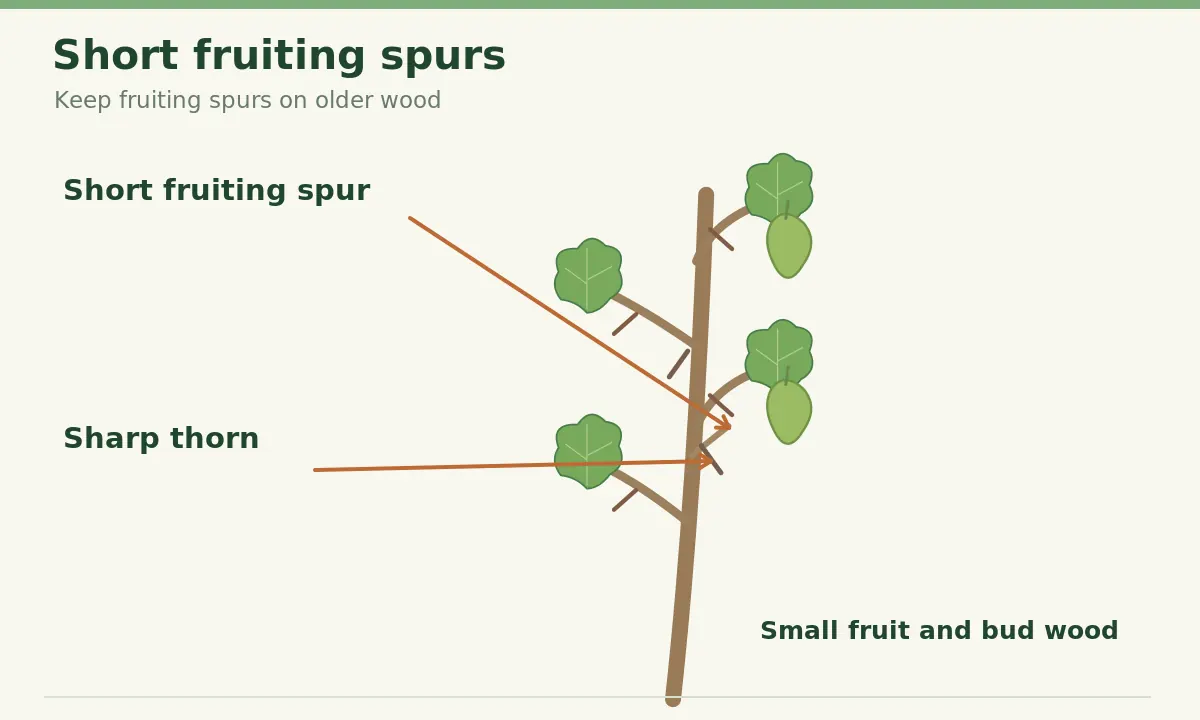
RHS notes that gooseberry buds form at the bases of shoots from the previous year and on short spurs along older wood. A stubby side shoot with a plump bud is therefore not automatically useless. Look closely at the junction between young laterals and the main branch before making a long flush cut. Removing every small lateral can sacrifice harvest potential, depending on the pruning system. The close-up diagram shows a short intact spur next to a longer crowding shoot. Preserve strong well-positioned fruiting growth while choosing a manageable framework for light and access.
Remove Dead Damaged and Crossing Stems First
Begin with clearly dead, broken or diseased branches. Next identify stems that rub together, grow into the center or run so low that fruit would rest on soil. Cut such wood back to a suitable junction or to its origin without leaving long awkward stubs. Clean pruners between suspiciously diseased plants and remove cut debris. This first pass often opens more space than expected, making it unnecessary to remove many additional healthy branches. The purpose is to reduce friction, improve airflow and make berries reachable, not to reduce the plant to a handful of bare sticks.
Renew a Few Old Unproductive Branches
For an established bush, RHS advises periodically removing a small number of older less productive branches, or cutting them back to a promising replacement shoot. That approach retains young wood and existing fruiting spurs while gradually changing the structure. Do not take out every older branch in one season simply because its bark is dark. Watch where a new strong lateral can take over and cut above or beside that actual junction. Renewal is a sequence over seasons, not one severe reset. If the bush is neglected, make a measured plan instead of promising that removing most wood will immediately double yields.

Build an Open-Centered Goblet Shape
The familiar bush form resembles an open bowl with main branches radiating outward from a short lower stem. Space the framework so you can see into the center and reach fruit without pushing through a wall of thorns. RHS describes a target of several well-spaced main branches for established bush forms; do not treat the exact count as mandatory for every young plant. Where growth points inward, select an outward-facing bud on a healthy branch for shortening cuts. A severe inward cut made just for symmetry may remove productive spurs. Judge the structure from more than one viewing angle.
Distinguish Bushes From Cordons and Fans
An ordinary freestanding gooseberry bush is not managed identically to a single upright cordon or wall-trained fan. RHS gives distinct seasonal pruning approaches for these trained forms, including lateral spur work in summer for cordons. Before copying a pruning diagram, check the actual support and number of principal stems. This article uses an open-centered bush, so its removal priorities concern overcrowding, low branches and gradual renewal. If your gooseberry is tied to a fence as a cordon, follow specialized training advice; otherwise you may remove the side shoots it depends on for fruit.
Leave Fruit Buds and Check the Final Cuts
After pruning, inspect the remaining short spurs and branch tips for sound plump buds. Cuts should be clean and positioned to retain a bud or chosen junction, not buried through it. Remove forgotten twigs dangling in the middle and confirm that a hand can reach the bush interior safely. Do not cover every wound with a homemade sealant without evidence of benefit. Small clean pruning wounds normally need no elaborate coating. Good branch architecture helps air movement and harvest, but does not eliminate gooseberry mildew or other disorders; monitor during the growing season as well.

Evaluate Fruit Production in the Following Season
When flowers and berries appear, note which branches carried fruit and where thorns made picking difficult. Those observations are more useful than deciding immediately that a winter cut was a success because the bush looks neat. If heavy new growth crowds the center, adjust next season’s renewal selection rather than repeatedly shearing all current shoots. Maintain watering and soil health according to local conditions without adding arbitrary fertilizer doses. A good gooseberry pruning method protects both this year’s fruiting wood and the open space needed to harvest safely in future years.
Related Guides
- When to Prune Gooseberry Bushes by Cane Age and Growing Form
- How to Identify Gooseberry Sawfly Larvae Before They Strip the Leaves
How We Research and Verify Plant Advice
Sources checked on 2026-10-26: rhs.org.uk; extension.umn.edu; rhs.org.uk. We reviewed each institution’s plant identification, correct growth stage and relevant cultural recommendations before adapting them into an independently written step-by-step guide. Where sources are region-specific, their calendar details are not applied universally. Pictures use simplified teaching shapes and should be compared with living specimens; they are not a substitute for laboratory disease diagnosis or local climate guidance. The relevant advice is paraphrased rather than reproduced.
Safety and Independent Editorial Disclosure
This independently prepared educational article does not claim sponsorship or affiliate approval. Our category reading links are informational, not product endorsements. See the VegWin affiliate disclosure. Clean sharp tools before cutting plants, protect hands from thorns and blades, and keep cut plant material away from children and pets where appropriate. Use only locally registered plant treatments labeled for the actual crop, and observe the product label. Do not rely on unsupervised home remedies or unverified harvest-safety promises.
Late winter or early spring while the bush is dormant and before vigorous new growth, adjusted for local conditions.
Yes, short spurs on older wood and buds on previous-season shoots can carry berries; do not remove all mature branches.
No. Bark color alone does not prove the branch is unproductive.
An open-centered, well-spaced framework makes berries easier to reach and improves airflow.
Not exactly. Cordons and fans have different seasonal pruning and side-shoot management from ordinary bushes.