
A gooseberry bush can look healthy one week and oddly bare soon afterward when sawfly larvae feed unnoticed among the lower inner leaves. These caterpillar-like larvae are not the same animals as cabbageworms or moth caterpillars, although their damage may look similar at a distance. Effective action begins with finding the insects on the right host plant, examining their body markings and checking fresh leaf edges before extensive defoliation occurs.
Start With the Right Host Plant
Gooseberry sawflies feed on gooseberries and sometimes red or white currants in the genus Ribes. First confirm that your shrub is one of these hosts. Gooseberry leaves are lobed, with prominent veins and a small maple-like shape, while some shrubs sold as ornamental berries may be unrelated. A few small holes in a different species of shrub do not establish a gooseberry sawfly diagnosis. Look for clusters of remaining chewed leaves, stripped leaf blades and small green larvae close together. Spring and summer timing varies by region and insect species. The RHS reports several gooseberry sawflies, not one identical pest everywhere. Treat any calendar range as a prompt to inspect, not proof that the bug must be present today.
Find Larvae on Low Inner Leaves First
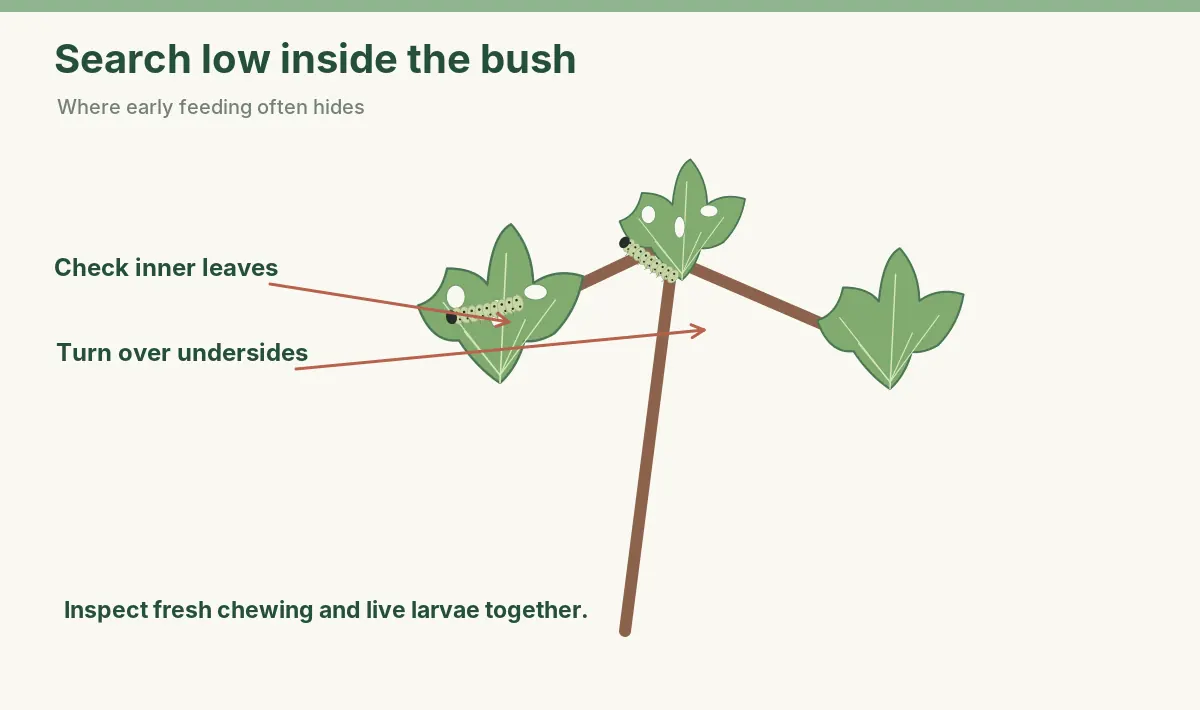
The RHS describes females depositing eggs on the underside of leaves in sheltered parts of the bush, often low and towards its middle. Begin scouting there rather than checking only the obvious outer branch tips. Turn a leaf gently and use strong natural light or a hand lens. Follow stems outward and upward if early feeding is found. Small groups may be hidden along veins and undersides, while larger larvae can rapidly move through tender foliage. If you see only skeletonized leaves but no pests, inspect at another time and consider that larvae may already have moved away. A quick regular search during local active growth is more informative than one blanket treatment applied after every leaf has disappeared.
Recognize Green Bodies and Species Differences
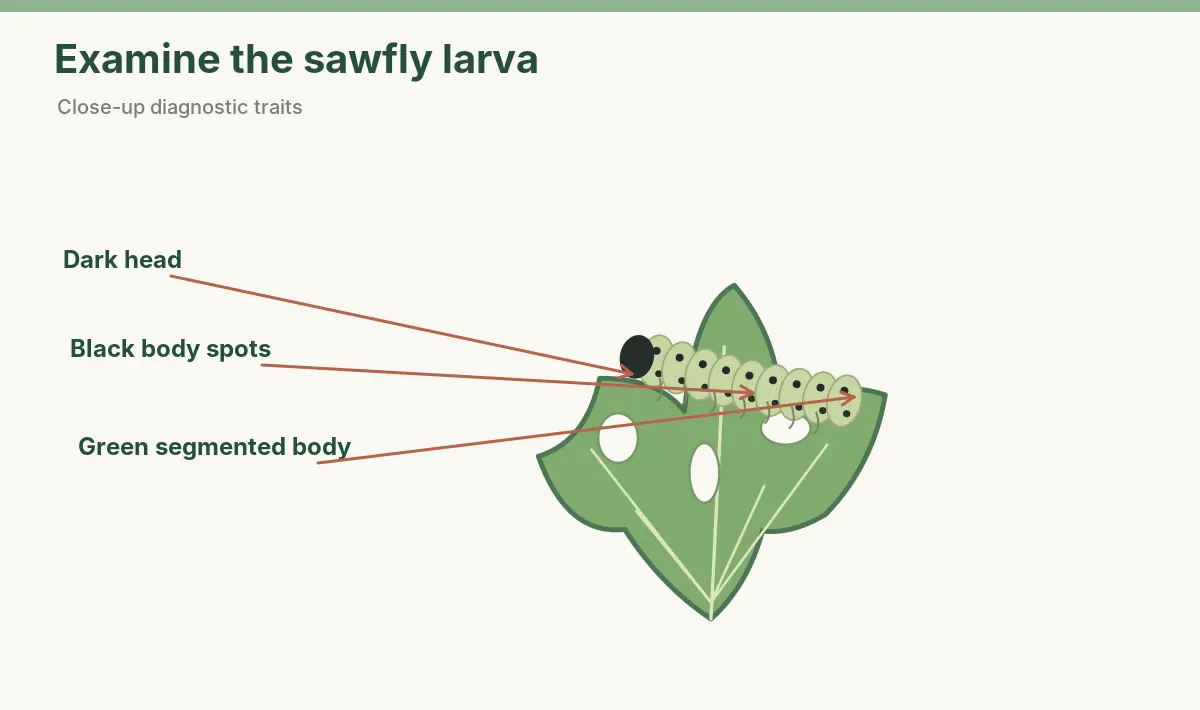
The common gooseberry sawfly larva is typically pale green with a dark head and scattered black spots on its body. RHS records mature common larvae up to about 20 millimeters long. Other gooseberry sawfly species may have less obvious spots, smaller bodies or pale heads. The Pacific Northwest handbook likewise describes the imported currantworm, the larva of a sawfly, as greenish and often marked with dark spots. The larva’s shape resembles a caterpillar, but it belongs to a group related to bees and wasps rather than moths and butterflies. Do not conclude that every green worm is this pest solely from color; combine host plant, feeding pattern, body features and location.
Examine Fresh Holes and Bare Midribs
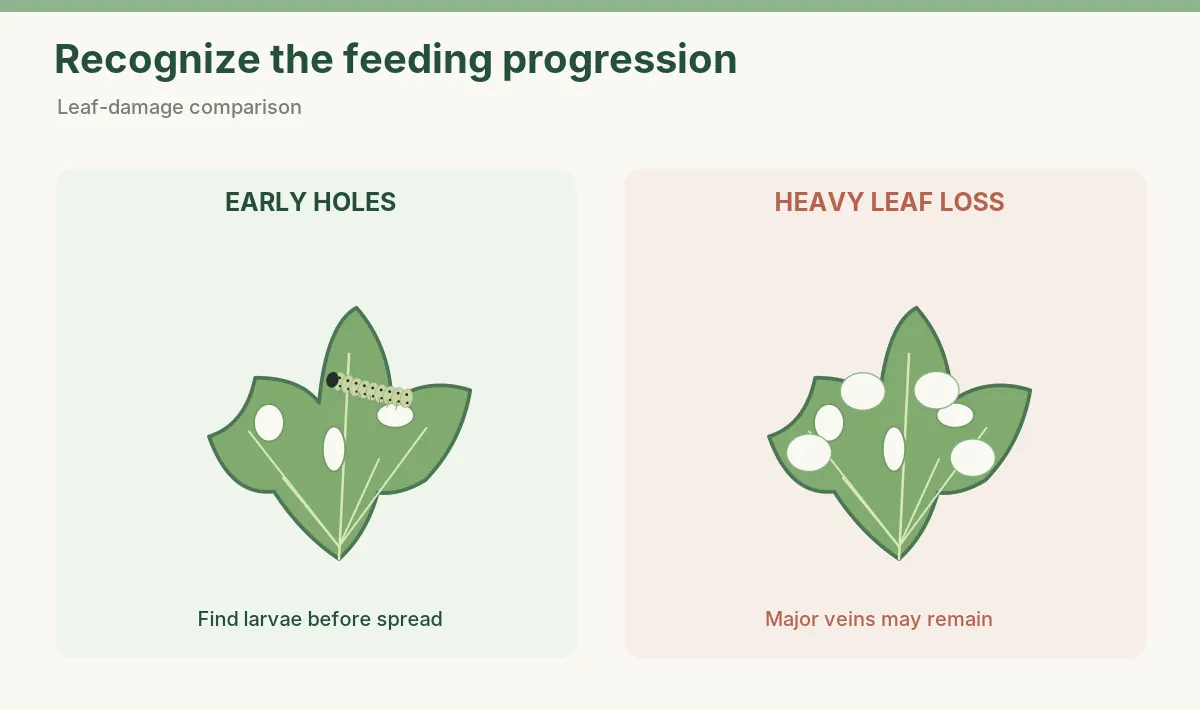
Young larvae frequently begin by chewing along the edges of leaves. As numbers or body size increase, they can remove much of the blade, leaving major veins or a largely bare petiole. This can look dramatically worse within only a few days during favorable feeding weather. Notice whether damage begins on lower or inner leaves and spreads outward, and whether live larvae are present on nearby intact leaves. Disease spots, wind injury and nutrient problems do not create the same freshly chewed margins. Japanese beetles also skeletonize foliage in some regions, but those are hard-bodied beetles with distinctly different appearance. Take clear close photographs of both insect and affected leaf before any control is attempted.
Tell Sawflies From True Moth Caterpillars
Sawfly larvae can have more pairs of abdominal prolegs than a typical moth caterpillar, although exact counts vary and may be hard to inspect on a small active insect. Their membership in Hymenoptera is important for choosing an accurate identification and treatment approach. Products intended for specific caterpillar groups, such as Bacillus thuringiensis kurstaki formulations, should not automatically be expected to manage sawfly larvae. Focus on the whole insect and a confirmed local Extension identification rather than relying on a generic “caterpillar spray” label. The diagram compares a green spotted sawfly larva on a lobed gooseberry leaf with a simple true moth caterpillar silhouette; the visual is an educational comparison, not a substitute for close inspection in the field.
Respond Early With Targeted Hand Removal
For a home shrub that can be reached safely, remove the found larvae by hand or dislodge them into a container as you inspect the inner foliage. RHS and WSU Extension resources describe hand removal as a practical first action. Check underneath the next neighboring leaf before finishing, because small groups are easy to overlook. If only a few leaves are affected, there may be no need for a broader intervention. Wear gloves if they help you handle rough gooseberry stems, which may carry spines. Do not shake insects onto an adjacent crop and assume they are gone. Avoid stripping healthy leaves to remove one larva; that may cause more damage than the small population you are trying to control.
Expect More Than One Feeding Wave
Some common gooseberry sawfly species produce multiple generations in one season, whereas other related species differ in timing. The RHS notes that new larvae can be present repeatedly from spring through summer. A thorough inspection this week therefore does not guarantee the plant is safe for the rest of the year. Mark which branches were affected and revisit those parts at short practical intervals during active feeding periods. Eggs may be difficult to see; searching for fresh damage and tiny larvae is often more useful than relying on egg counts. Because insects develop in relation to local weather, a fixed UK month-by-month program will not always fit a US garden. Your own observation log is the better prompt.
Protect Beneficial Organisms and Avoid Guesswork
Sawflies are members of garden food webs and some populations can be tolerated. Birds, predatory insects and other natural enemies may reduce numbers. RHS recommends encouraging natural enemies and intervening where needed rather than spraying indiscriminately. If damage is severe and hand removal impractical, ask local Extension for crop-specific, locally legal management options and read the current label of any registered product. Do not infer that a material labeled for lepidopteran caterpillars treats sawflies, or apply pesticides to edible berries without the relevant crop and harvest restrictions. Do not promise that soap, household detergent or homemade extracts have been proven safe and effective. Management should be proportional to confirmed damage and the plant’s ability to recover.
Evaluate Recovery After Leaf Loss
Gooseberries sometimes survive substantial defoliation, but repeated loss of leaves can reduce growth and next season’s cropping. Photograph the canopy before and after action and watch for a flush of new leaves. Preventing recurrent feeding is more useful than applying fertilizer to force growth while larvae remain active. Keep the root zone reasonably mulched and watered during drought without saturating the soil. If leaves fail to return, check for stem disease, drought and other problems before blaming the same insect again. Your goal is to preserve enough healthy foliage for the shrub to rebuild reserves, not to eradicate every insect in the entire garden. The most effective small-garden practice is often early, repeated inspection of the hidden underside of low leaves.
Sources and Further Reading
Primary references: www.rhs.org.uk; pnwhandbooks.org; hortsense.cahnrs.wsu.edu. These resources support the identified plant parts, timings, and management distinctions discussed above. Sources last reviewed 2026-10-26. Follow the linked original guidance where it differs for your climate or a specific cultivar.
Related Guides
How We Research and Check Advice
We reviewed the named institutional growing and pest-management references on 2026-10-26, cross-checked relevant plant identity and growth-stage claims, and kept the recommendations within what those sources support. We also compared available previous VegWin topics to reduce overlap. The diagrams are simplified educational drawings showing the indicated structure or action, not photographs of verified individual specimens. When a local extension recommendation, plant cultivar, or site condition differs, use the more specific advice. No laboratory diagnoses or live trials were conducted for this article.
Safety and Independent Editorial Disclosure
This independent educational guide does not claim commercial sponsorship, product testing, or affiliate approval. Category links are informational. Read the VegWin affiliate disclosure. Use clean, correctly sized tools, wear protective gloves as appropriate, and verify plant identity before eating any harvest. Seek locally registered and crop-labeled options if chemical management is considered; always follow the current label and harvest restrictions. Images cannot replace professional diagnosis when serious injury or disease is suspected.
They resemble caterpillars but are larvae of sawflies, insects related to bees and wasps.
Start under low inner leaves of gooseberry and currant bushes, then follow fresh chewing outward.
No. RHS describes several species with different head colors and spot patterns.
A bush can survive major leaf loss, but repeated defoliation can weaken it and reduce future crops.
Do not assume it will work: sawflies are not moth or butterfly larvae; confirm identification and label instructions locally.