
French tarragon is the culinary herb prized for its delicate anise aroma. Many gardeners try to raise it from a packet marked simply “tarragon” and discover a taller, weaker-tasting plant. The reason is botanical: true French tarragon is propagated from living plants, not viable commercial seed. This guide shows how to confirm what you have, take a healthy young cutting below a leaf node, position its bare base in a well-drained rooting medium and care for it without drowning the stem. A rooted cutting maintains the parent plant’s identity.
Verify That the Parent Is French Tarragon
True French tarragon is Artemisia dracunculus var. sativa, sometimes presented under a slightly different botanical rank. It carries narrow aromatic green leaves and is valued for a marked anise or licorice note. University of Illinois Extension explains that its small flowers are sterile and that packets sold as tarragon seed ordinarily contain Russian tarragon, a more vigorous but much less distinctive culinary relative. A mail-order French tarragon plant or a trustworthy division is therefore the right starting material. Rub a healthy leaf to check scent, but do not ingest an unidentified roadside plant. Plant identity matters more than whether a packet has a familiar common name.
Select Young Nonflowering Shoots for Cuttings
Take cuttings from a healthy actively growing parent, ideally during a moderate part of the season rather than during severe heat or drought. Utah State Extension recommends young stems collected early in the morning. Select shoots with sound narrow leaves, no visible pests and enough stem length to insert without crushing the growing tip. The Extension fact sheet describes approximately four- to six-inch cuttings; this is a supported useful scale, not a precise requirement for every propagation tray. Avoid thick old woody stems, weak etiolated tips and material coated with suspicious mildew. Place collected stems out of direct sun and plant promptly to reduce moisture loss.

Find a Node and Make a Clean Cut Below It
A leaf node is a small point on the stem where one or more leaves attach. For the cutting, make a clean cut just below a suitable node, using sanitized snips. Remove leaves from the lower part of the stem that will sit in rooting mix. Exposed foliage inside damp medium can decompose and create trouble. Keep several healthy leaves in the upper part so the cutting can photosynthesize while rooting. Do not strip the entire shoot bare or tear leaf nodes off with large wounds. A diagram with a real narrow-leaf sprig, exact node and lower bare stem is more helpful here than a generic root icon.
Choose a Draining Medium Rather Than a Waterlogged Pot
Fill a small clean container with fresh, loose potting or propagation medium that drains freely. Moisten it before insertion, then make a pilot hole with a dibber so the cut end is not scraped. Insert the bare base enough to hold the stem upright, with lower nodes in contact with moist medium and remaining leaves above the surface. Firm gently to remove large air gaps. Rooting hormone may be used according to a labeled product, as the Utah State fact sheet discusses, but it is not a substitute for healthy parent material and moisture balance. Never claim a universal dose or an infallible rooting percentage.
Balance Humidity and Oxygen Around the Cutting
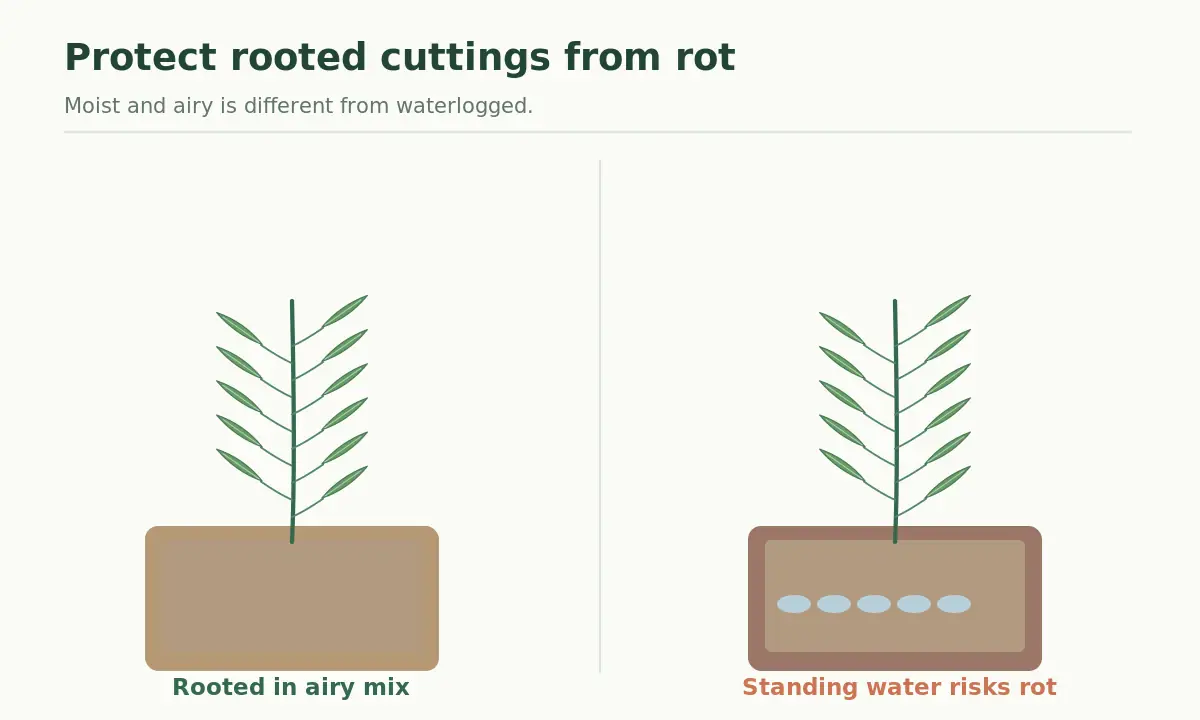
Without roots, a cutting can lose water through leaves faster than it absorbs moisture from medium. Provide shelter from strong sun and wind, maintain modest humidity and check the surface frequently. Utah State recommends periodic misting during establishment, but a constantly flooded pot deprives tissues of oxygen and encourages rot. Keep drainage holes open; do not let the base sit in standing water for days. Good airflow reduces condensation that wets foliage continually. If a temporary cover is used, ventilate and ensure it does not touch tender leaves. Adjust water to actual medium conditions rather than spraying automatically on an inflexible schedule.
| Propagation method | Material | Essential condition |
|---|---|---|
| Stem cutting | Young tip with nodes | New roots in draining mix |
| Root division | Shoot with intact roots | Handle fragile roots carefully |
| Seed packet | Usually Russian tarragon | Not true French cultivar |

Check for Roots Without Tearing Them Off
The earliest trustworthy sign of success is new growth accompanied by roots in the medium, not a leaf that remains green for a few days. Wait until a gentle tug meets some resistance or visible roots appear at a draining opening; do not repeatedly pull the stem out to inspect its base. Dead cuttings may blacken at soil level, wilt persistently or turn soft. Remove failed material and examine drainage and hygiene. Rooting speed varies with temperature and growth stage, so do not promise every shoot will root within a fixed number of days. Once rooted, shift the plant gradually toward brighter conditions instead of abruptly exposing tender growth.
Pot On Without Burying the Stem Crown
Move a well-rooted cutting to its next pot by sliding out the small root ball intact. Use a container with drainage and a suitable potting mix; do not compress the substrate into a brick around the new roots. Keep the soil level near the original stem level rather than burying the leafy crown. Water to settle the plant and allow excess to drain. French tarragon prefers warm, reasonably sunny positions and well-drained soil once established, as both Illinois and Utah State Extension emphasize. Do not place a newly rooted cutting in a permanently wet shaded corner and expect vigorous fragrant growth. Gradual acclimation matters.
Compare Stem Cuttings With Root Division
Vegetative division is another valid route when a mature parent plant has multiple shoots and sufficient connected roots. Utah State recommends spring division at the appearance of new shoots and warns that French tarragon roots are brittle. Each division needs growing shoots and roots, just as a stem cutting needs to produce new roots before it becomes independent. Division can furnish larger plants sooner but disturbs the parent. Cuttings allow you to produce a few small clones while leaving much of the parent intact. Neither method requires sowing purchased “French tarragon seeds.” Store a verified plant label with propagated clones to avoid later mixing with Russian tarragon. Our guide “Grow Real French Tarragon From Cuttings or Divisions, Not Seeds” goes into more detail.
Protect Container Plants Through Seasonal Changes
Established French tarragon dislikes poor winter drainage. Illinois Extension notes that wet soil can compromise overwintering and recommends leaving tops standing until spring in many situations. Container-grown plants face both root saturation and faster freezing than beds, so shelter and local winter conditions matter. In hot-summer regions, Utah State notes that some afternoon shade can improve survival in very high heat. Do not translate plant hardiness into a universal indoor sowing date. Check climate, container exposure and parent health before a major cutting session. Where winters kill the parent, a protected rooted backup may preserve a preferred culinary selection.
Finish With a Reliable Identity and Rooting Check
Before describing a cutting as a successful French tarragon plant, confirm that it came from a verified French tarragon parent, has retained fresh upper foliage and has developed a usable root system. Note the date, propagation medium and how often you actually watered. If rooted plants are weak, examine stagnant medium, light and whether the stem was damaged while inserting it. Use healthy tips sparingly in cooking only after normal plant establishment; this is cultivation guidance, not a claim about herbal therapy. Most importantly, remember that a vegetative cutting preserves parent characteristics, whereas seed labeled generically as tarragon may give a very different herb.
Related Guides
- Growing Herbs by Type: Water, Harvest, and Winter Survival Guide
- How to Grow French Tarragon in a Pot Without Waterlogged Roots
- How to Root Oregano Cuttings and Keep the Parent Plant’s Flavor
- How to Propagate Basil From Cuttings in Water or Potting Mix
- How to Root Spearmint Cuttings in Water and Pot Them Without Rot
How We Research and Verify This Guidance
This article was checked on 2026-10-24 against plant-specific university Cooperative Extension and government guidance: University of Illinois Extension; Utah State University Extension; Utah State University Extension fact sheet. We separated directly supported cultivation, pruning, and insect-life-cycle recommendations from choices that depend on local weather, crop genetics, and gardening goals. Illustrations are simplified teaching diagrams, not photographs or treatment labels. Consult your regional Extension office for local timing, pest identification, and regulations.
Sources, Disclosure, and Regional Limitations
Source links and their supported claims are preserved in the article metadata and linked above. No field trial was performed for this particular garden, and results are not guaranteed. This guide does not assert a paid partnership or endorse a pesticide product. Review VegWin’s affiliate disclosure for site-wide transparency.
No. True French tarragon produces sterile flowers and is propagated using cuttings or divisions.
Just below a healthy leaf node on a young shoot, leaving upper foliage and removing the lower leaves.
No. Remove lower leaves where the stem enters medium, and provide drainage and moisture without saturation.
Look for new growth and light resistance from a developed root system without repeatedly pulling it out.
Russian tarragon is generally seed-grown and has a coarser growth habit and weaker culinary aroma.