
Broccoli rabe, also called rapini, surprises growers expecting a single heavy broccoli head. It is a leafy Brassica rapa vegetable harvested for slender stems, leaves and relatively small clusters of green flower buds. Those clusters change fast in warm weather, and open yellow flowers signal that peak tenderness may be slipping away. The practical goal is to identify the closed-bud stage, cut stems at a useful edible length and protect enough lower foliage for any subsequent shoots. The plant’s look and cut location matter more than matching a generic number of days from sowing.
Identify Rapini Rather Than Heading Broccoli
Rapini belongs to Brassica rapa, the botanical species associated with turnips, and is not simply an undersized version of heading broccoli. The North Carolina Extension plant profile places it in the Ruvo Group. Leaves are often lobed or toothed, the stems are relatively slender, and clusters of many small green buds sit near shoot tips. Yellow four-petaled brassica flowers may emerge if buds are left too long. Some forms are leafier than others, so compare the packet’s cultivar description with the actual developing plant.
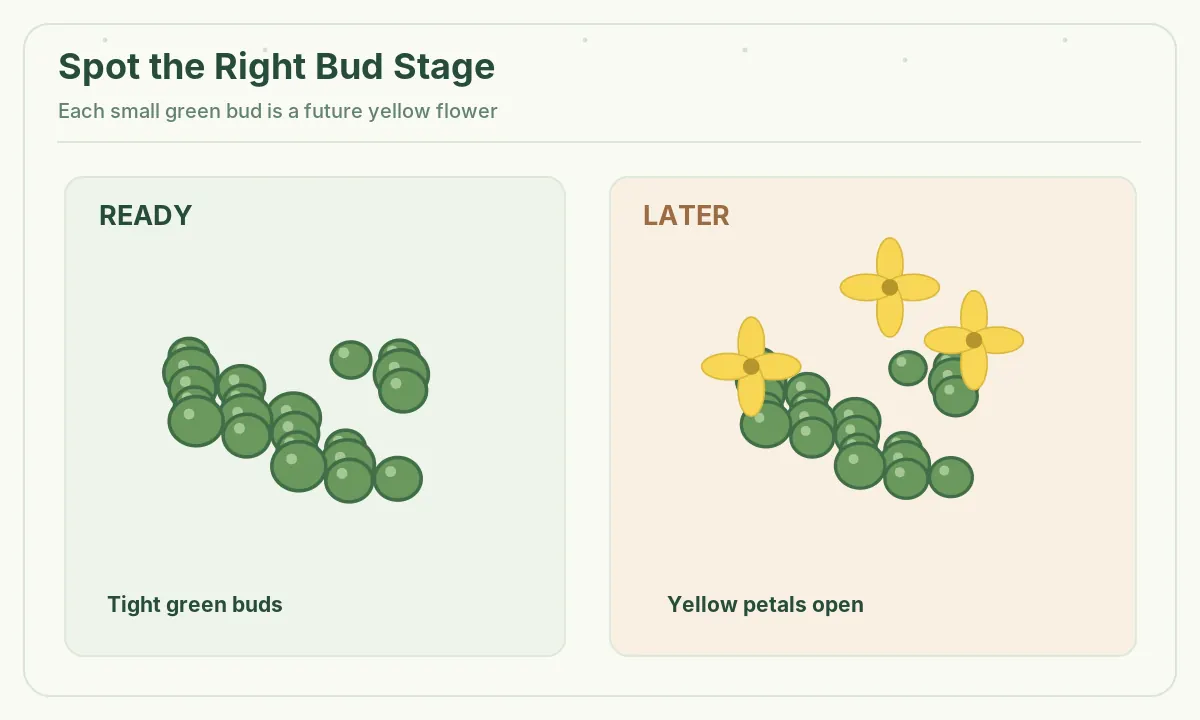
A useful featured illustration should include full green foliage and several smaller flowering shoots, rather than one dense domed broccoli crown. Harvest includes parts of the shoot, not only a separated flower head. A bud close-up should reveal distinct rounded flower buds, with no yellow petals yet visible.
Wait for Tight Green Buds and Tender Stems
The University of California Master Gardener guidance recommends cutting rapini before the buds open, when the plant has reached usable size and its stem remains succulent. The number of days on a seed packet is a planning estimate: cool weather, plant vigor and cultivar alter timing. Inspect the bud clusters frequently as they enlarge. A cluster with distinct closed buds and flexible-looking nearby stem tissue is generally more suitable than a tall, woody flower stalk with many open petals.
Sampling a small piece after careful washing can help judge tenderness before clearing the bed. Yellow flowers do not instantly make a rapini plant poisonous, but quality and texture may have declined. Do not invent a universal stem diameter or height requirement for every type.
Cut a Tender Shoot Above Lower Leaves
Hold the stem steady and use clean, sharp scissors or a knife at a point where the tissue is still tender, leaving sufficient healthy leaves and buds below if a second harvest is desired. UC Master Gardener guidance notes that plants can resprout after cutting when enough leaves remain. Rather than slicing every plant at bare soil level, identify a low healthy leaf node and cut above it when your planting is intended for cut-and-come-again production. Remove an entire plant only if the crop plan calls for a one-time harvest.
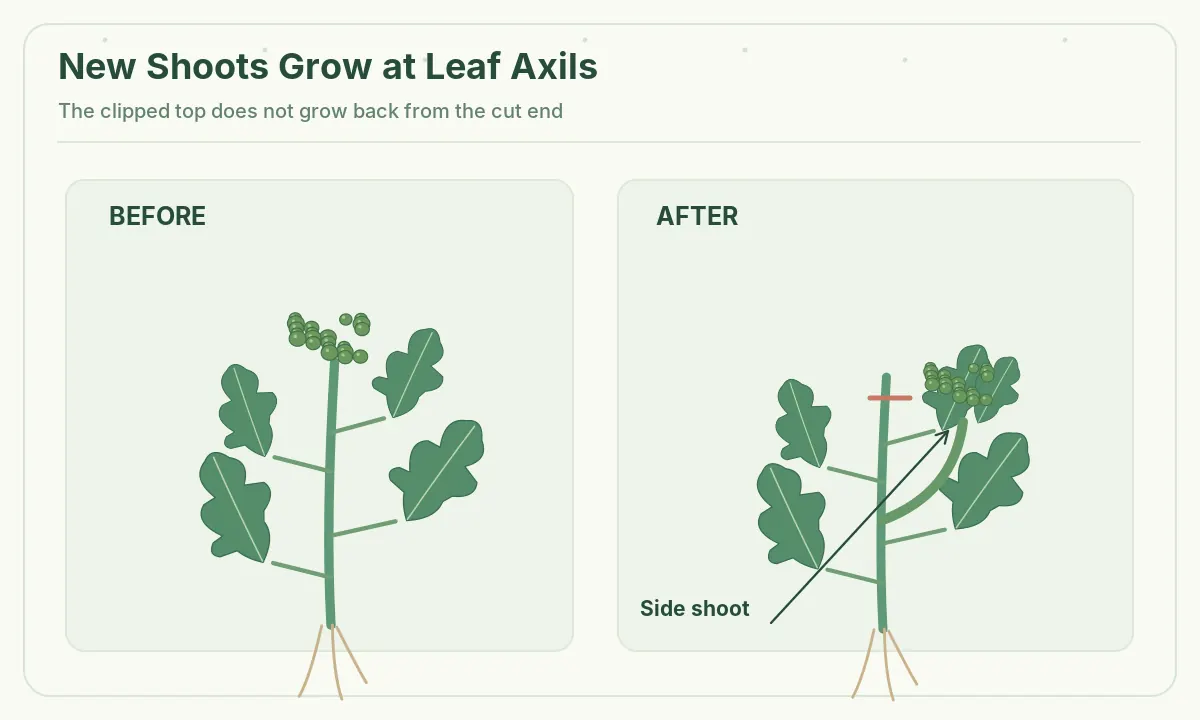
In a cut diagram, the cutting line should cross the soft green shoot just above a surviving leaf node, not the top of the central bud cluster or a leaf blade. Harvest the buds, upper leaves and an edible stretch of stem together.
Check Side Shoots Before Harvesting Again
After a selective cut, retained nodes may send out smaller side shoots if temperatures, light, water and plant health remain favorable. Look for new green buds at leaf axils, not the same central stem magically regrowing from a missing tip. Allow these shoots to become useful before the next cut, but do not wait for numerous open flowers. With poor conditions, rapini may bolt or become tough rather than give a reliable second picking. A repeat harvest is a possibility, not a guarantee.
Watch the leaves for feeding damage and remove heavily damaged tissue during sorting. Do not use vigorous pruning in an effort to force a plant already stressed by heat or drought to produce an improbable new flush. Sow another small crop when the local cool-season window allows.

Use Heat and Flowering as Quality Signals
Brassicas in this group tend to prefer cool growing weather. As temperatures rise, the flowering stalks can elongate rapidly; a plant that looked tight yesterday may show yellow petals tomorrow. Once stems are fibrous and strong-tasting, keeping the crop another week generally does not reverse that change. Harvest promptly when buds are firm and unopened. If your climate is already consistently hot, choose an appropriate future cool-season sowing window rather than treating the same planting as permanently productive.
The final visual comparison should clearly separate green, tight usable buds from yellow flowers and coarse stems. Both illustrations should be recognizably rapini with leafy shoots rather than unrelated cauliflower florets. Show leaf attachment and lower axillary shoots, which explain potential regrowth.
Keep Freshly Cut Greens Cool and Clean
After cutting, shake loose soil and inspect the undersides of leaves for insects. Trim damaged or very tough lower portions and cool the edible shoots promptly. The tender flowering tips lose quality after harvest, so plan to use them soon. UC Master Gardener guidance suggests short refrigerated holding rather than leaving bundles warm on a counter. Wash with clean running water before use, and separate any diseased, slimy or off-smelling material rather than putting it into a general storage bag.
Handle clean edible shoots with a food-safe knife and board. Wash hands after garden work. Rapini may be cooked in ways similar to other assertive mustard-family greens, but this article does not claim that a particular blanching method eliminates all bitterness. Taste, cultivar and heat all affect flavor.
Avoid the Three Most Common Cutting Errors
First, do not wait for a full, supermarket-sized broccoli head; the Ruvo Group is not bred to make one. Second, do not cut off all leaf nodes if your goal is repeat harvest. Third, do not wait for flowers to open because a photo of yellow bloom looks more impressive. In all three cases, the visual mistake leads to lower-quality food or less regrowth. Teach harvest stage using actual bud texture and attached leaves rather than only the calendar.
If a plant has already bolted, remove a sample tender shoot and decide if it is still worthwhile. Otherwise let a small portion flower for pollinators or remove it as garden cleanup appropriate to your rotation. Avoid leaving diseased brassica residues where pests can persist.
Record What Your Variety Did This Season
Make a simple note of the cultivar, sowing date, first tight-bud appearance, number of good cuttings and when yellow petals began. This small record is more useful for future plantings than a rigid harvest date transferred from a different climate. When choosing a later planting, consider the cool-season window and crop rotation: brassica pests and soil diseases may build up if related crops occupy the same bed continuously.
At season’s end, compare stems from early and late pickings. A drawing showing the remaining lower node and new lateral shoot reinforces which material is left alive after harvesting. Do not confuse broccoli rabe with purple sprouting broccoli: both have green buds, but their plant architecture and routine harvests are distinct.
Related Guides
- When to Harvest Broccoli Rabe for Tender Leaves and Tight Flower Buds
- How to Grow Broccoli Rabe (Rapini) for Tender Shoots, Not Heads
How We Research This Guide
We reviewed specialist sources on October 27, 2026, including plants.ces.ncsu.edu (North Carolina State Extension identifies broccoli rabe as Brassica rapa Ruvo Group and advises harvesting before bud opening.); ucanr.edu (University of California Master Gardeners describe tender leaves, stems, tight buds and potential regrowth after cutting.); extension.umn.edu (University of Minnesota Extension supports cutting tight brassica bud clusters before flowers open and checking side-shoot quality.). These references describe typical botany and cultivation, not a promise that every cultivar and climate will perform identically. Check current regional Extension recommendations where applicable.
No affiliate products or paid placements are recommended in this article. Review our affiliate disclosure for site-wide policy. Follow any local regulations and applicable label directions before using gardening treatments.
No. Rapini is in Brassica rapa Ruvo Group, while heading broccoli is a form of Brassica oleracea.
For best tenderness, choose tight green buds before yellow petals have opened.
Some plants produce smaller side shoots when lower leaves and growing nodes are retained and conditions remain good.
No. Tender leaves, young stems and bud clusters can all be harvested as edible shoots.
Warm weather and advancing flowering often accelerate stem elongation and reduce tenderness.