
Peas can be a very rewarding cool-season crop, but buying the wrong packet can make a harvest feel like a failure. A snow pea is best while the pod is flat; a shelling pea is grown for tender seeds inside the pod; and a sugar snap pea is harvested when its edible pod is crisp and filled appropriately. Their planting window also differs from warm-season beans. This guide pairs crop choice, support, weather and picking stage into one practical decision system, with local conditions taking priority over generic dates.
Choose the Pea Based on What You Want to Eat
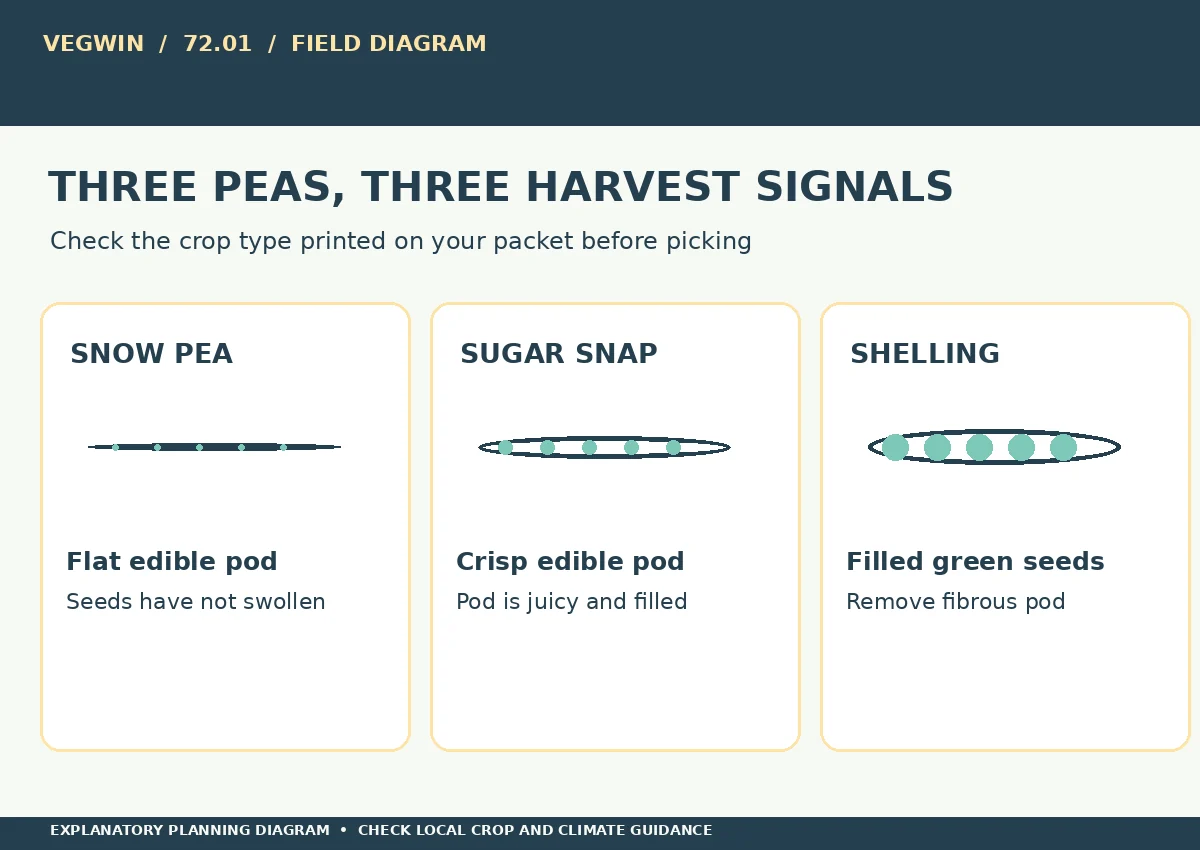
Start at the plate. English or shelling peas supply tender green seeds that are usually removed from their inedible fibrous pod. Snow peas are selected for thin flat edible pods before the seeds swell. Sugar snap peas offer crisp edible pods that fill more than snow peas. University of Minnesota Extension distinguishes these types and the point at which each becomes pleasing rather than tough or starchy. The exact variety controls pod stringiness and how quickly harvest quality declines.
Write the intended meal next to the packet name: stir-fried flat pods, crunchy whole pods, or shelled peas. Do not treat a vague label such as garden peas as proof that the entire pod is edible. Some peas are intended for dry seed or shoots instead. A small mixed trial of known cultivars can reveal which type fits your kitchen without dedicating an entire bed to an unsuitable product.
Plant for the Cool Part of Your Local Season
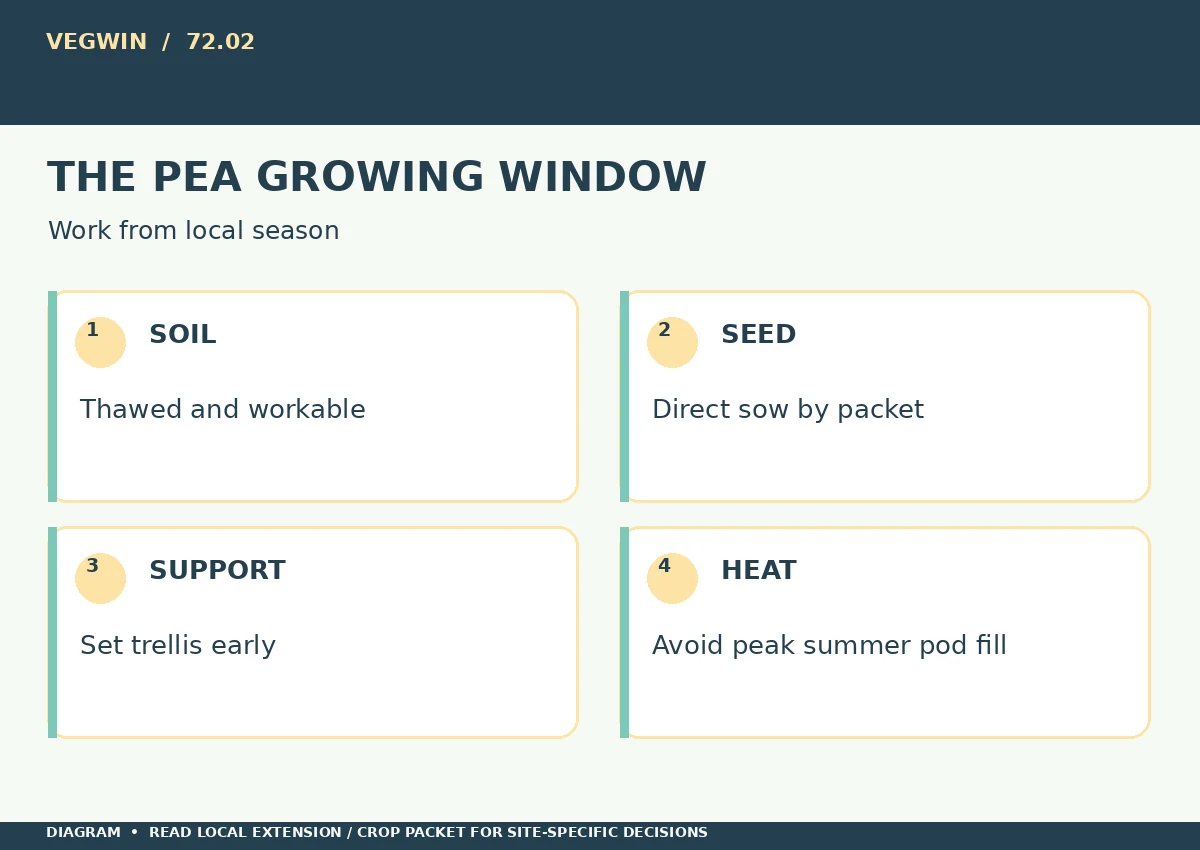
Garden peas are cool-season annuals and often perform best when early growth occurs in mild conditions. Minnesota Extension advises planting as soon as the ground is thawed and workable in its region, while Maryland Extension gives region-specific spring guidance. Neither is a universal national date. A packet’s days to maturity and local warming pattern determine whether the plants can flower and fill pods before sustained heat arrives.
Check soil readiness rather than using USDA hardiness zones as a sowing calendar. A damp but workable seedbed is different from mud that sticks in clumps and becomes compacted. In areas with a long mild cool season, a fall attempt may be possible, but hot germination weather and an early hard freeze can shorten the window. Ask local Extension whether a fall pea crop is realistic; do not promise that a second planting always works.
Match the Growth Habit to a Support You Can Reach
Pea packets may describe compact bush plants, semi-leafless types or tall climbing vines. Tall varieties generally require a stable trellis installed by sowing time; short types may lean on each other but still benefit from simple support in windy sites. Inspect the available space, the height you can harvest safely, and whether a net or string structure can be removed after the crop. A trellis blocking light from the rest of the bed is not a free advantage. For a step-by-step method, see how to choose a pea trellis for bush and climbing peas.
Build with weather in mind. Pea tendrils need surfaces they can catch, and a support should not topple when vines are wet and full of pods. Avoid tying fragile stems tightly. If a compact cultivar is recommended for self-support, check it after a storm rather than assuming all bush peas stand without help. Growth habit and harvest type are separate decisions: a snow pea may be tall or short depending on cultivar.
| Situation | Practical choice | Important check |
|---|---|---|
| Snow pea | Flat edible pod, tiny seeds | Pick before seed enlargement |
| Sugar snap pea | Thick crisp edible pod | Pick when filled but tender |
| Shelling pea | Green seeds to remove | Pick filled before starchy |
| Tall vine | Long supports and access | Install trellis before growth |
Sow Seed Into a Prepared Bed Without Damaging It
Peas are usually direct sown. Prepare a fine but not powdery seedbed with adequate drainage and position seed according to the packet and regional guidance. Maryland Extension notes that cool soil slows emergence; Minnesota Extension warns that cracked seed performs poorly in cold moist soil. Handle seed gently and avoid forcing planting into a saturated bed. Use the cultivar’s actual spacing rather than a generic square-foot chart borrowed from another crop. Our walkthrough on how to grow snow peas from seed with a simple trellis sets out each step.
Water evenly during establishment. A hard surface crust or very dry seed zone can prevent emergence, but constant saturation is equally unhelpful. Record sowing date, seed lot, soil condition and where you placed each variety. When emergence is uneven, inspect whether birds, seed damage, disease or variable moisture is a more credible cause than a missing fertilizer dose. Peas are legumes, but that does not mean soil testing and nutrient balance can be ignored.
Keep Vines Productive Without Overfeeding
Good light and steady root-zone moisture support growth and pod fill. Cool spring weather may reduce irrigation demand, but a dry spell during flowering and filling can affect the crop. Water the soil rather than leaving foliage wet routinely. Mulch can help conserve moisture after soil is workable and plants are established, while careful shallow weeding protects near-surface roots.
Do not assume a rich fertilizer mix boosts pea harvest. Minnesota Extension emphasizes soil testing and notes that heavy phosphorus applications can accumulate in garden soils. Follow a local soil-test report instead of adding a fixed amount of balanced fertilizer. When flowers fall or pods stop forming in very warm weather, check seasonal stress and cultivar timing before feeding more nitrogen. Pest or disease symptoms should be identified before any treatment is considered.
Harvest Snow, Snap, and Shelling Pods Differently
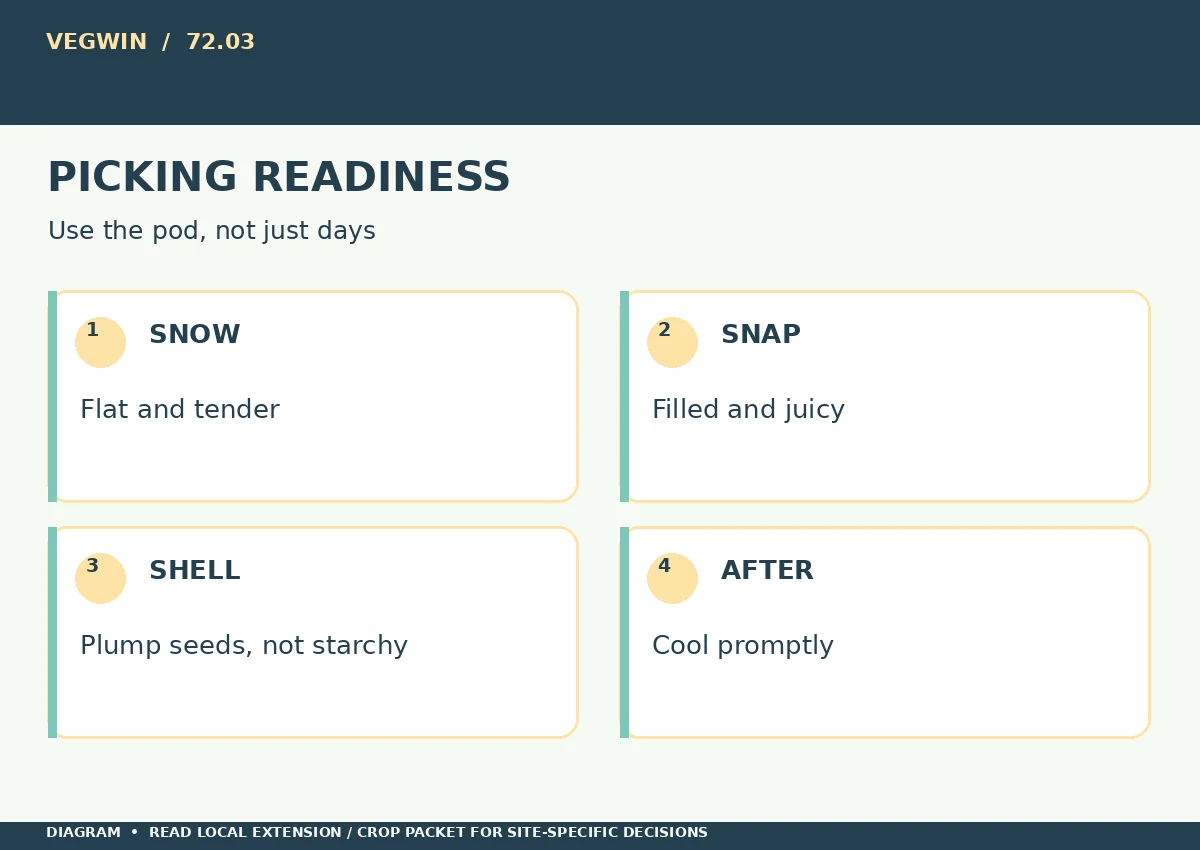
Pick snow peas while the pods are broad and flat and seeds are still small. Harvest sugar snap peas when the pod is plump, juicy and crisp but not stringy or tough. For shelling types, take filled green pods before their seeds become noticeably starchy. University of Maryland Extension describes these separate harvest stages. Inspect the planting frequently because pea quality can shift quickly as pods mature. Our guide “Grow Black-Eyed Peas” adds more detail on this.
Use two hands so harvesting a pod does not tear an entire stem. Cool harvested peas promptly for best eating quality, and plan to eat or refrigerate them rather than leaving baskets in full sun. If one picking was too late, use it as a reference for the next visit and sample pods at different sizes. Mature dry seed production is a different objective and should not be confused with harvesting tender edible peas.
Troubleshoot Heat, Missing Pods, and Yellow Leaves
A vigorous pea vine with poor pod set near the onset of hot weather may be reaching the end of its cool-season window. A row that never emerged could reflect wet soil, damaged seed or pests in the seedbed. Yellowing lower leaves can have several causes including aging, water stress and disease; a photograph of a leaf alone does not establish a nutrient deficiency. Take context seriously before changing the entire care routine. For a step-by-step method, see how to grow asparagus.
Examine both sides of affected leaves and check for insects, spotting patterns, soil saturation and broken vines. Improve airflow and avoid unnecessary leaf wetness as general prevention. When you suspect a true disease or need control advice, use local Extension or an IPM service to identify the problem first; pesticide labels and local rules must guide any product choice. Never substitute an unverified homemade treatment for diagnosis.
Related Guides
- How to Plant Pigeon Pea Seeds in Warm Soil and Grow a Healthy Bush
- How to Harvest Pea Shoots While Leaving Lower Nodes for Regrowth
How We Research and Check These Recommendations
This article was reviewed against public university Extension materials on 2026-10-20: University of Minnesota Extension University of Maryland Extension. We compared crop-specific recommendations, the circumstances behind them, and where different regions may advise different practices. Verify local weather, soil tests, cultivar packet details, and updated Extension guidance before making irreversible decisions. An automated preflight checks formatting, not biological accuracy or website intent overlap.
Disclosure: This is an educational article, not a paid product recommendation. See our affiliate disclosure. The destination page and existing WordPress URLs require live verification before manual publication; the informational source links were separately checked.
Pea growth and pod quality commonly decline as weather gets hot. Local mild-season timing matters more than the calendar month.
Yes. Snow peas are taken flatter, whereas sugar snap pods are usually allowed to fill while still juicy and tender.
Direct sowing is normally preferred. Check local Extension and seed-packet guidance if considering an unusual short-season approach.
Some compact varieties stand fairly well, but support can still help keep the crop accessible, especially in windy conditions.
Shelling pea pods are generally removed rather than eaten; choose snow or sugar snap types if you want an edible pod.