
Sunchokes, also called Jerusalem artichokes, are perennial sunflowers grown for edible underground tubers. Their major gardening challenge is not getting them to grow; it is giving a tall, persistent plant enough space and preventing overlooked tubers from spreading into neighboring beds. This guide starts with the decision to plant them at all, then explains where to put them, how to manage seasonal growth, and how to harvest while keeping the patch contained. They are not globe artichokes, and their cultural needs should not be copied from the artichoke-bud crop.
Identify The Crop And Its Long Term Behavior
The botanical name is Helianthus tuberosus. Sunchokes are grown from planted tubers that sprout into tall leafy stems; they are related to sunflowers rather than to ordinary potatoes. The Royal Horticultural Society explains that shoots die back at the end of the growing season while underground tubers persist. That persistence is an advantage for a repeated harvest and a serious disadvantage in a small bed where every inch must be replanted with a different crop the next season.
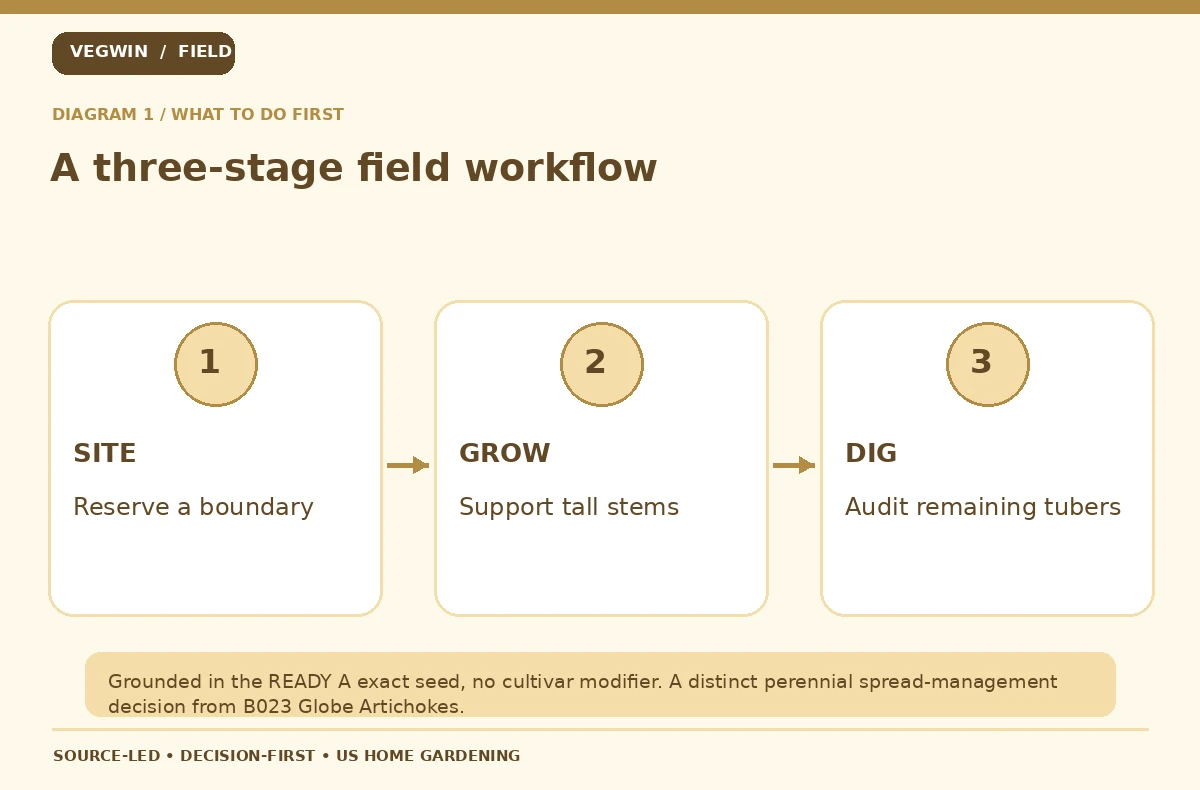
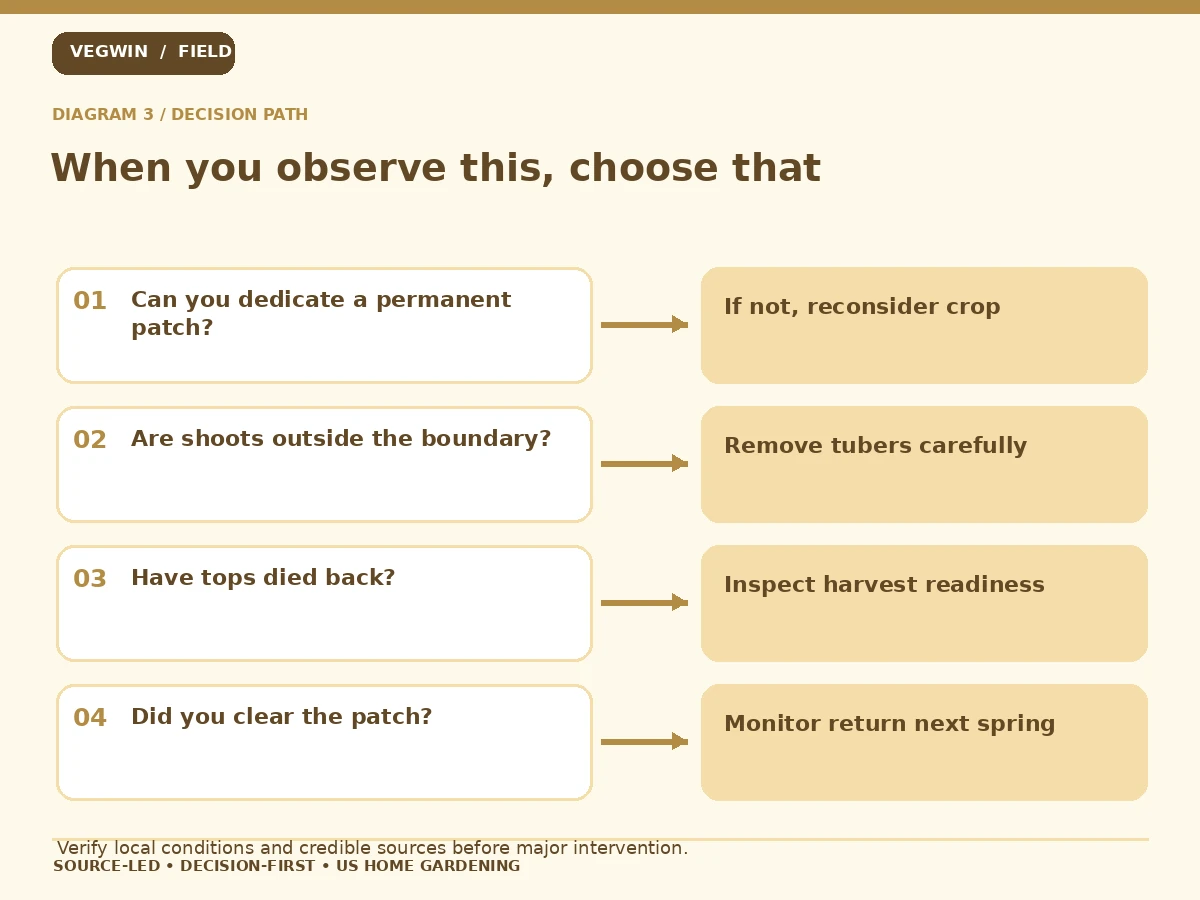
Before buying tubers, walk the garden and decide where volunteers would be acceptable. A permanent corner away from short vegetables may be easier to manage than the middle of a rotating salad bed. The tall foliage can shade neighboring crops, and tall stems can be affected by wind. A patch should be located with its height and potential spread in mind. Ask yourself whether you can harvest and check the patch each year, because a few forgotten tubers may produce plants again next spring.
Select A Site That Can Contain Returning Plants
Choose a site with useful sunlight and soil that drains without extended waterlogging. RHS guidance describes tolerance of less-than-ideal conditions, but tuber yield can suffer where growth is poor. The plant’s height can make it useful on a garden edge, although it should not cast unwanted afternoon shade onto tender crops. Keep access along at least one side for digging. In a windy area, think about a support plan before stems are full height rather than propping a collapsing thicket during a storm.
A large container or bounded area may simplify harvesting, yet containers are not magical barriers if roots and tubers escape through openings or if the pot fails. Use a substantial, stable container with drainage and enough room for tuber development, then inspect its base and surrounding soil. When planting directly in the ground, establish a defined boundary on a sketch and leave a digging margin. That boundary becomes the basis for checking volunteer shoots outside the patch each season.
Plant Sound Tubers In The Local Spring Window
Select firm, healthy planting tubers from a reliable source instead of using damaged or decaying roots. RHS explains that this crop is normally propagated from tubers. Regional timing should follow soil workability, the local growing season, and the risk of damaging cold to emerging shoots; exact calendar dates in a UK guide should not simply be transferred to a U.S. garden. Place tubers at the depth and spacing specified by a suitable regional publication or the supplier, and avoid burying them in saturated compacted soil.
Mark the planting locations even if the bed appears empty for a while. Emerging shoots can be confused with weeds and accidentally removed. Mulch and weed by hand as needed while growth is small so plants do not compete heavily. Once the canopy develops, watch for shoots beyond the planned boundary. Dig out unwanted escapees early with their underground pieces rather than trimming only the leaves. Avoid routine fertilizer claims without soil-test information; a fertile site may produce a huge canopy without a proportionate increase in useful tubers.
Manage Tall Summer Growth And Patch Edges
As plants rise, the main maintenance problem becomes height, shade, and access. RHS cautions that some types may reach around ten feet and can need support in exposed settings. Do not promise that a random cultivar is short unless the identity and supplier information actually support that claim. Keep paths open and use a support where wind exposure justifies it. If the patch shades nearby crops, the planning error usually cannot be solved without moving plants or changing the next year’s layout.
Check the soil surface near the edge after heavy rain and after routine cultivation. A new shoot outside the perimeter can signal an overlooked tuber. Trace it carefully rather than spraying or repeatedly cutting tops. Also inspect the crop for general drought or waterlogging stress; extreme conditions affect tuber growth like other garden crops. A healthy green plant does not guarantee large roots, especially if seasonal development is interrupted. Keep flowering and foliage observations separate from the actual condition of harvested tubers.

Harvest Tubers Without Spreading The Crop
RHS describes harvest from late autumn into winter in suitable climates, often after shoots begin dying back. Dig carefully and work outward to find tubers that developed beyond the original planting point. Do not confuse a traditional seasonal harvest window with a guarantee that frozen ground will be diggable. In cold regions, mulch or planned storage may be needed; in warm climates, timing and holding quality can differ. Choose a dry, workable digging day when possible to reduce soil compaction and bruising. If you are starting from scratch, read When to Harvest Jerusalem Artichoke Tubers and Keep Them Fresh.
Place harvested tubers in a container as you work so they are not lost among discarded stems and soil. Inspect the digging area twice, especially around path edges, and reserve sound tubers only if you intentionally want next year’s crop. Do not put questionable propagation pieces into unmanaged compost that may later be moved to other beds. Wash food tubers just before use rather than assuming they keep like dry storage onions. Follow credible produce-handling guidance and discard decayed or contaminated tubers rather than trying to rescue unsafe food.
| Observation | What it may mean | Next check |
|---|---|---|
| Shoot outside the marked patch | Escape from a tuber | Dig and remove underground piece |
| Tall stems shading lettuce | Poor placement for height | Relocate patch next season |
| Few tubers at early digging | Season not finished | Check local maturity and forecast |
| Soft or decayed tubers | Poor conditions or damage | Discard affected food roots |
Decide How Much To Keep For The Next Season
If you want a permanent patch, leave only the number of planting tubers that fits your designated area. If you plan to remove the crop, expect to check for new shoots through the following growing season. RHS notes that even a few tubers remaining in the soil can restart a stand. One harvest cannot establish that a sprawling perennial has been eliminated. Small emerging plants are easiest to deal with while the roots can still be retrieved without damaging surrounding vegetables.
Write down where tubers were dug and where volunteers appeared. In a tiny garden, the labor required to control the patch may outweigh the value of the harvest; a large dedicated bed might be more practical. This is an important distinction from growing a short annual crop such as radish. Treat the decision as an ongoing space-management commitment rather than a one-time planting purchase. Avoid claims that companion crops automatically prevent spread, since underground tubers do not respect planting combinations.
Troubleshoot Yield And Safe Handling Concerns
If the plants grew tall but gave few tubers, check the planting date, growing season length, sun exposure, soil conditions, and whether the patch was crowded. RHS and Extension materials describe tuber production tied to the plant’s seasonal growth. Early digging can understate the harvest. Rotting or soft tubers call for examining drainage, injury, and storage conditions, not simply increasing fertilizer. Never identify a disease from one brown mark or suggest a pesticide treatment without a diagnosis.
Sunchokes contain inulin, a carbohydrate some people digest poorly, so eating a large unfamiliar portion may cause significant gas or discomfort. Start with a modest serving if they are new to your diet; cooking preferences and tolerances vary. This growing guide does not offer home-canning directions or untested preservation times. Its central goal is a manageable, safely handled harvest from a plant that is biologically enthusiastic and can return even when the gardener thought the bed had been cleared.
Related Guides
- How to Plant Jerusalem Artichoke Tubers With Living Buds
- When to Harvest Sunchokes After Frost Without Leaving Tubers Behind
How We Research and Verify This Guidance
We checked sources including www.rhs.org.uk — source 1, ask.extension.org — source 2, ask.extension.org — source 3 and hort.extension.wisc.edu — source 4 on October 20, 2026. Each source supports a crop- or practice-specific assertion recorded in the source list. Gardening outcomes depend on local weather, species, cultivar, soil and management. This page is not a live verification of all WordPress canonical URLs. Editorial assessment and appropriate local Extension checks remain necessary before publication.
Disclosure: There is no approved affiliate offer or compensated product placement in this article; its links point to educational references. Read the site affiliate disclosure for applicable policy information. No pesticide or fertilizer rate is recommended without relevant local Extension support and, where applicable, an approved product label.
No. Sunchokes are Helianthus tuberosus sunflowers grown for underground tubers; globe artichokes produce edible flower buds.
Yes. Tubers left in the soil can sprout, which is useful in a planned perennial patch but problematic in a rotating bed.
A large stable drained container may help limit spread; inspect for escapes and provide adequate growing volume.
Many references describe late-autumn through winter harvest, but frozen soil, cultivar and regional climate change access.
Consider season length, shade, soil drainage, crowding and harvest timing rather than relying on foliage height.