
Common sorrel, Rumex acetosa, is a useful perennial leaf herb for gardeners with only a patio or a small sunny border. Its arrow-shaped, citrus-tasting leaves appear repeatedly when the plant has a healthy crown and enough root space. Trouble begins when a tiny pot dries repeatedly, old leaves are left to become coarse, or the gardener clips off the center along with the harvest. The RHS sorrel growing guide provides a practical container size and advises regular picking of young leaves. This article stays with common sorrel and its recognizable arrow-shaped foliage rather than conflating it with the rounder French sorrel or unrelated sour-tasting weeds.
Distinguish Common Sorrel From Other Sorrels
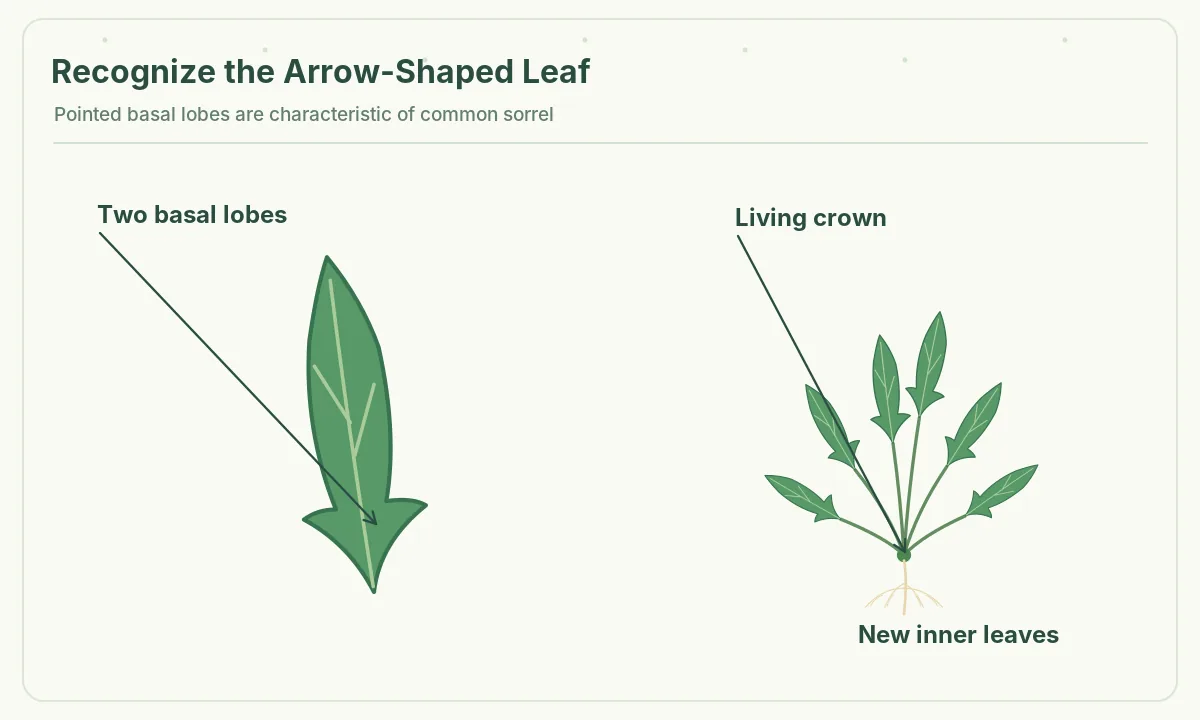
Common sorrel is Rumex acetosa, a hardy clump-forming perennial. Its leaves are generally long, smooth and arrow-shaped, with two pointed basal lobes near the petiole. French sorrel, Rumex scutatus, is often shorter and has a different, sometimes more shieldlike leaf outline; red-veined sorrel displays contrasting veins. RHS lists these as different grown kinds. Use your plant label rather than assuming every green tangy leaf in a mixed seed tray belongs to the same species.
Mature common sorrel can send up thin branched flowering stems with many small reddish flowers. Those stems are not the same as the basal leaves grown for food. Sorrel is in the dock family, so casual foraging identification is risky: do not taste an unknown roadside Rumex or garden weed to decide if it is edible. The illustrated growing guide shows a healthy central crown, leaf petioles and an outward harvest path for known cultivated common sorrel.
Select a Container With Space Below the Crown
RHS advises a pot at least 30 cm (12 inches) across and 20 cm (8 inches) deep for container sorrel, filled with a suitable soil-based and general potting compost blend. Exact mix brands are less important than a balance of water retention and drainage. A drainage hole is essential. Set the plant at its prior surface level; never bury the junction where fresh leaves emerge just to conceal an old stem. The root system needs space for a perennial clump, not just a decorative shallow saucer.
Put the pot where the plant gets sun or part shade, adapting exposure to summer heat. Dark containers on hot paving can heat and dry rapidly, so pay attention to the root environment rather than treating partial shade as a failure. Raise a container slightly where needed so water can leave the drain hole. In a wet winter, shelter from constant standing water rather than sealing the pot in a tray full of rain.
Sow Sparingly or Plant at the Previous Depth
Common sorrel can be started from seed, but a single purchased transplant is another reasonable way to establish a container. RHS describes sowing sorrel seed in spring and thinning young seedlings, with shallow outdoor drills around 1 cm deep. In a pot, sprinkle a few seeds into fine prepared mix, lightly cover according to the packet and keep moisture even through emergence. Avoid turning the container into a carpet of crowded seedlings, since one or a few healthy plants often meet household needs.
If moving a young seedling, lift it with its own small soil plug and plant level with its previous medium surface. Press the soil gently around the outer plug rather than squeezing its basal leaves together. Identify the newest center leaves before mulching. Any organic mulch should sit around, not over, the emerging crown. Keep initial watering gentle enough that little seeds or young roots are not washed to one side of the pot.
Monitor Moisture Without Keeping Roots Underwater
RHS notes that containers dry more readily than established sorrel in a garden bed. Test the medium a little below the surface during warm spells. Water thoroughly when necessary, let excess water drain, and then reassess rather than applying a fixed dose every day. Leaf edges that droop in direct heat may recover in cooler light, but persistent wilt requires investigation of root moisture, pot heat, drainage and pests. A soggy pot can cause problems that adding more water will not solve.
In hot weather, shifting the pot to a place with afternoon shade can reduce stress. In winter, common sorrel often dies back and later reappears; a dormant-looking plant is not automatically dead. Avoid leaving roots waterlogged in cold weather. Mark the container so it is not emptied while the crown rests. The objective is steady growth conditions for a perennial, not forcing nonstop large soft leaves regardless of season.

Cut Individual Outer Leaves Above the Crown
Harvest leaves while still young and pliable for a less bitter, more tender crop. Hold the petiole of an outer leaf and snip it near its base without driving the shears through the small central cluster of new leaves. This is a leaf harvest, not a mowing cut across every emerging point. Leave enough healthy foliage for the plant to continue photosynthesis and rebuild itself. The practical diagram points to the outer petiole and marks the central crown as the portion to keep.
The RHS guide recommends regular harvest rather than allowing all leaves to age. A very large old blade may be tougher and have a stronger bitter-sour taste; removing it can make room for new growth. Wash picked leaves before culinary use, and identify the variety correctly. Sorrel has natural oxalates; people with medically restricted oxalate intake should follow their clinician’s advice rather than treating this gardening guide as nutritional or medical guidance.
Remove Flowering Stalks and Renew the Clump
When common sorrel begins to send up tall flowering stems, the leafy harvest can change. RHS advises removing flower stalks to keep a productive supply of fresh leaves and limit unwanted self-seeding. Trace each upright flowering stem to its base and cut the stem, avoiding the adjacent leafy crown. Do not confuse a narrow early leaf with a spent flowering stalk. If you want to collect seed instead, accept that plant energy will be directed into seed production for a time.
An established perennial clump may eventually become congested. RHS suggests dividing established sorrel every four or five years as needed to rejuvenate growth. Lift the root mass in a suitable season, separate pieces with rooted shoots and replant each division at its previous depth. Do not divide a tiny first-year plant simply because it has several leaves. A manageable pot with room for new shoots is more productive than an overstuffed cluster competing for moisture.

Recognize Pests and Adjust the Pot Before Treating
Slugs, snails and aphids may damage young tender growth; RHS identifies them as possible sorrel problems. Inspect leaves for irregular holes, slime trails or colonies on new shoots and choose the least disruptive response appropriate to what is actually present. Removing a few pests by hand and correcting overly damp hiding spots can often help small containers. Do not apply an unspecified pesticide to edible leaves; label restrictions and harvest intervals matter for any product used in your area.
Regular checks also make it easy to spot crowded stems, an empty drainage saucer after a heatwave or persistent wet mix below a seemingly dry crust. Keep a record of the pot’s summer exposure and each major harvest. The repeatable method is adequate pot size, surface-level planting, even moisture and outer-leaf picking with the growing point intact. That is the difference between a one-time salad and a healthy returning sorrel plant.
Related Guides
- Vegetables in Pots: Match Crops, Container Volume, Sun, and Water
- How to Grow Garden Sorrel in Containers for Tender Repeat Harvests
How We Research This Guide
We reviewed the following authoritative horticultural references on October 27, 2026: www.rhs.org.uk — RHS recommends growing sorrel in a container at least 30 cm wide and 20 cm deep, maintaining even moisture and regularly harvesting young leaves.; www.rhs.org.uk — RHS identifies common sorrel Rumex acetosa as a clump-forming hardy perennial with arrow-shaped sour leaves and flower panicles.; www.ucanr.edu — UC Master Gardeners distinguish common, French and red-veined sorrels and confirm that young leaves can be harvested and sorrel contains oxalates.. Recommendations about outdoor timing must be adjusted for local conditions and cultivar.
No manufacturer or product endorsement is implied. Read VegWin’s affiliate disclosure for the site-wide policy.
RHS advises at least 30 cm across and 20 cm deep, with drainage.
Yes. RHS lists sun or partial shade; afternoon protection may help in hot conditions.
Snip individual outer petioles without cutting through the central crown and youngest leaves.
It is a perennial; plants commonly die back in winter and regrow when conditions improve.
Remove them if your aim is repeated young leaves and limiting self-sown plants.