
The word chicory covers several quite different garden projects. One gardener wants a bitter green cut repeatedly for salad; another wants tightly formed radicchio heads; a third buys witloof seed to grow large roots that will later produce pale winter chicons in darkness. Those goals cannot share a single generic harvest instruction. The seed packet and intended edible portion should determine everything from spacing to how long the plant stays in the ground.
Chicories belong to a different botanical group from ordinary lettuce, even when the leaves look similar. Utah State University Extension distinguishes witloof, grown for its root and later forcing, from radicchio, grown for leaves or heads. University of Minnesota explains how cool conditions support good quality and how heat and long days can trigger bolting. This guide turns those facts into a type-first workflow and prevents a common disappointment: treating a root-forcing chicory as if it should automatically produce a radicchio head. To go further, our guide to growing lettuce shows how to choose the right type and harvest before bolting.
Identify the chicory harvest you actually want
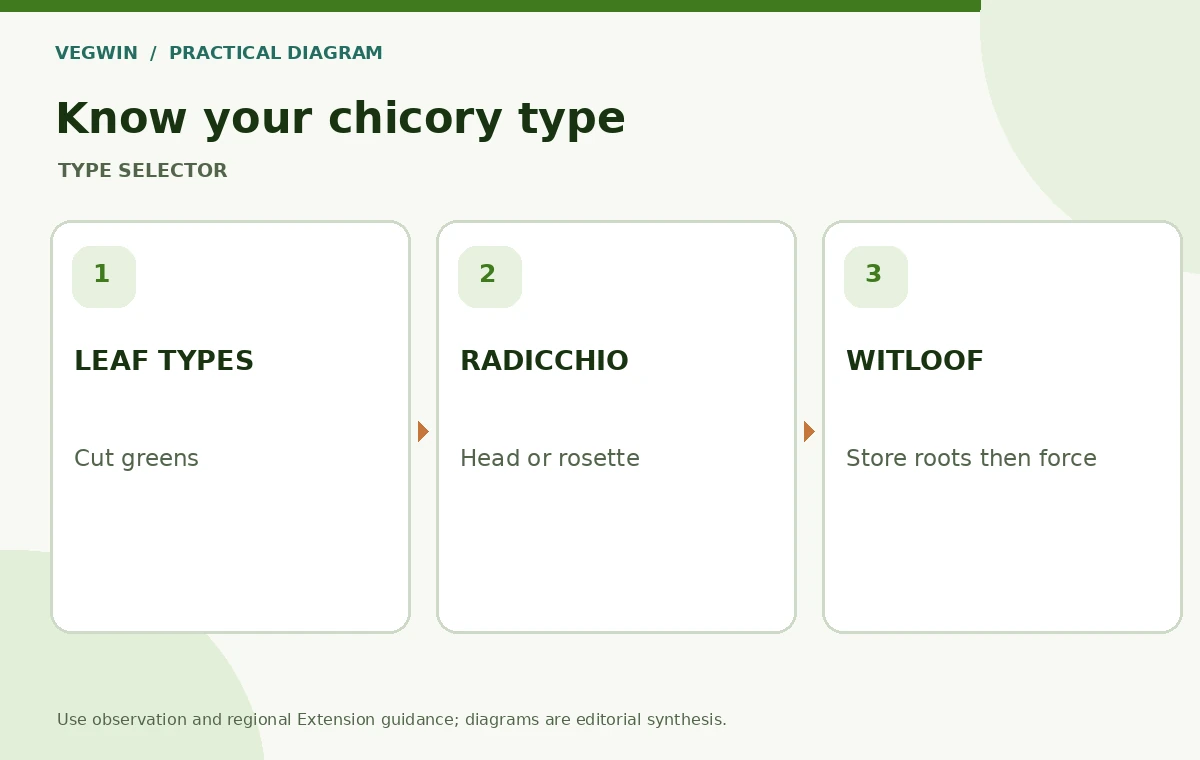
Choose a packet labeled radicchio when the objective is a leafy or compact bitter head; within radicchio, some varieties are loose and some head more reliably under particular cool conditions. Choose leaf chicory or cutting types when you want repeated greens. Choose witloof, sometimes sold as Belgian endive, when you are prepared to grow a storage root and then force pale chicons later. The root-forcing approach is a separate winter project, not an instant pale head on an ordinary outdoor plant. For the basics, see our guide: When to Harvest Radicchio.
Names on seed packets can confuse even experienced growers. Escarole and curly endive are related salad crops, but they are not interchangeable with a specified witloof cultivar for winter forcing. Keep the Latin name and variety description from the packet in your garden record, along with the intended harvest. If the package only says “chicory mix,” expect variable leaf shapes and habits rather than reliably uniform radicchio heads. Start with one clearly labeled type per small plot so outcomes remain interpretable. If you want the full process, read how to start escarole from seed for tender cool-season heads.
Select a cool-season sowing window locally
Chicory generally does better during the cooler parts of the growing season. Utah State describes reduced germination and growing quality in excessive heat, while Minnesota cautions that heat, long days and stress can promote bitter flavors and bolting. Plan from local temperature patterns and first or last frost dates, then consult regionally appropriate Extension calendars. An attractive generic USDA hardiness-zone chart cannot decide your sowing week for an annual crop.
Direct sowing can avoid damage to a developing taproot, although healthy transplants may help with certain schedules. Prepare fine, firm, freely drained soil and protect emerging seedlings from crusting or drying out. Thin according to whether you want baby leaves, mature leafy plants or full heads; a densely crowded bed will not automatically form larger heads. Start modestly with two small sowings separated by a local workable interval, rather than sowing the entire packet into peak summer heat.
Prepare soil and maintain steady early growth
Chicory develops best when roots can explore well-drained soil that still holds useful moisture. Loosen compaction without destroying soil structure, and remove persistent weeds before seedlings emerge. A basic soil test can reveal whether nutrient amendments are needed. Utah State warns against excessive nitrogen when good heading and root formation are the goal. Do not transfer the University’s Utah-specific fertilizer amounts automatically to a different soil or climate; use the test results and local guidance. For a step-by-step method, see how to grow jicama.
Water deeply enough to reach active roots, then check moisture rather than assuming a fixed weekly amount suits every garden. Leaves that stay dry or bitter after repeated short sprinklings may signal uneven water at the root zone, especially during sudden heat. Organic mulch, if free of herbicide residues, may help conserve moisture once seedlings are established; keep it away from vulnerable crowns. Weed removal is easiest while young plants are small, before roots spread across the bed.
| Your harvest goal | Choose this type | Decisive next step |
|---|---|---|
| Repeated slightly bitter greens | Leaf or cutting chicory | Harvest before bolting |
| Dense colorful leafy head | Heading radicchio | Match variety to cool season |
| Pale winter chicons | Witloof root type | Plan dark forcing before planting |
| Mixed leaf harvest | Explicit salad mix | Do not expect uniform heads |
Harvest leafy chicory and radicchio differently
For cutting chicories, take usable outer leaves while preserving enough young central leaves for continued growth; harvest quality is usually better before serious heat or flower-stalk development. Radicchio should be evaluated according to its own variety: some produce compact hearts, while others remain more open. A head that feels firm and mature is ready for cutting at its base, rather than waiting for it to mimic a supermarket iceberg lettuce. Check the exact variety description before interpreting an open rosette as failure.
Taste and texture respond to stress. Bitter, coarse leaves after a hot dry spell are not necessarily a disease. Inspect watering and bolting first, and harvest promptly when quality is best. If you see twisting, spots, visible insects or rot, look for a specific cause before discarding a crop or spraying anything. Keep harvested salad greens clean, refrigerate promptly, and follow standard fresh-produce washing guidance; the fact that a plant is grown in a home garden does not eliminate food-safety concerns.
Use witloof roots only with a forcing plan
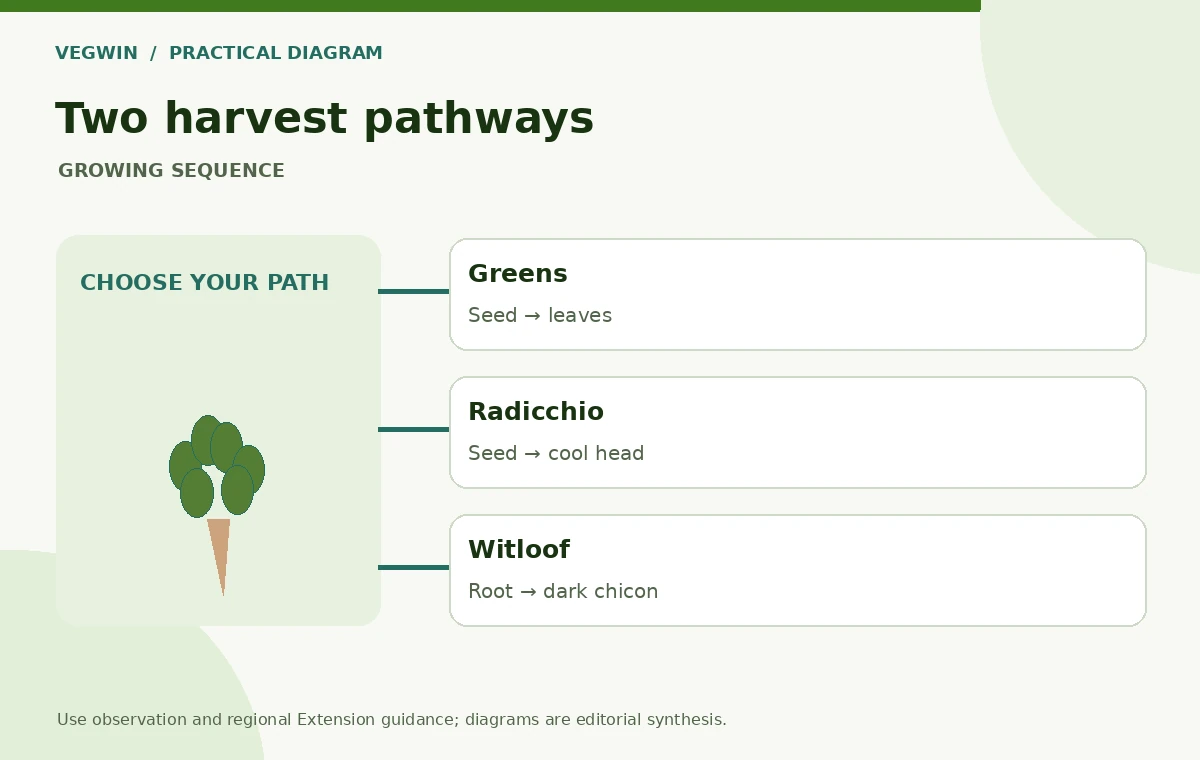
Witloof is a two-stage crop. First grow a healthy storage root outdoors; then lift and condition the root for a later dark forcing period so it produces the pale compact chicon. Utah State University supplies a specific reviewed sequence for harvesting, storing and forcing roots. That sequence differs from merely bringing a potted plant indoors and expecting a white head. A gardener without a cool dark storage space can enjoy young greens but should reconsider whether forcing witloof is worth the space and effort.
Keep forced roots oriented correctly and follow a university-tested forcing procedure rather than inventing water depths, temperatures or times. Light reaching developing chicons changes the result; darkness is an essential part of the process. Check for soft or diseased roots before storing and remove any deteriorating material. Do not confuse an edible harvested leaf crop with an assured indoor winter harvest. For a first attempt, run a small labeled batch and record the number of usable heads produced.
Solve bolting and weak heading by type
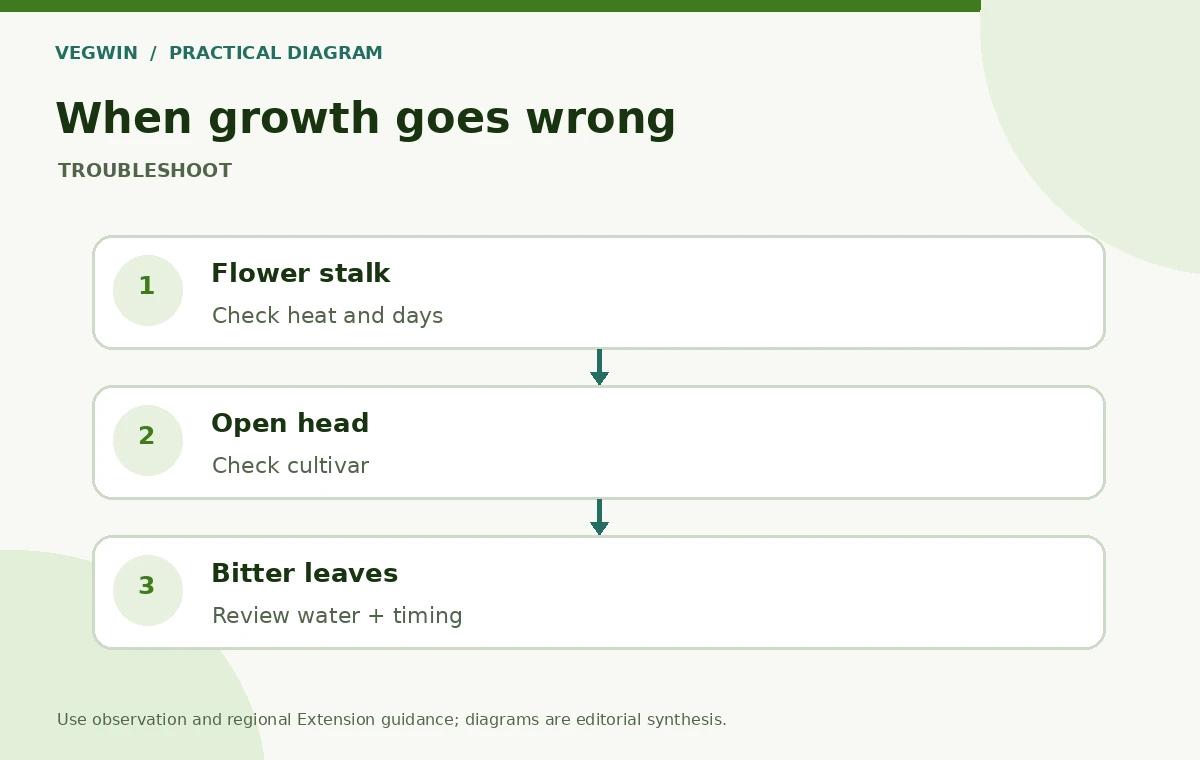
A rapidly elongating flower stalk suggests bolting, often linked to temperature or daylength stress. Verify whether the planting entered a hot or stressful period rather than treating it as a fertilizer deficiency. A radicchio that remains leafy may be an open-leaf variety, a heading cultivar lacking favorable cool conditions, or a plant harvested prematurely. Those possibilities call for reading the cultivar details and local seasonal conditions. Applying additional feed to force a head without evidence can make problems worse.
For weak growth, compare root moisture, weed pressure, drainage, transplant disturbance and soil-test information. Insect injury may resemble irregular weather damage; identify the insect rather than using a broad-spectrum product. Keep each harvest type in a separate log so you are not judging a witloof root by radicchio standards. Next season, change one variable at a time, such as a different regional sowing window, instead of changing variety, fertilizer and irrigation simultaneously.
How We Research and Check These Decisions
Source review: October 20, 2026. This article was prepared after checking the primary university publications: Utah specialist source; University specialist source; University specialist source. Web search was reviewed for topic relevance, but a complete authenticated inventory of live VegWin WordPress URLs was not available; this limits the cannibalization assessment. Diagrams and decision matrices are our original synthesis, not experimental results. Recheck your region, cultivar, soil, live source changes and current rules before manual publication.
Disclosure: No sponsorship, affiliate approval, merchant link or /go/ route is claimed for this article. The three buttons link to independent educational sources, not affiliate offers. Read our affiliate disclosure; verify that the policy page exists on the live site before publication.
Both are chicories, but a radicchio variety may be bred for heading while cutting chicory is managed for leaves.
Heat, daylength and stress can contribute to bolting. Confirm the seed type and local growing window first.
Do not assume so. Choose a witloof forcing cultivar and follow a reviewed root storage and dark-forcing procedure.
Both are possible. Direct sowing avoids handling the taproot; transplants may fit a regional schedule when carefully grown.
No. Plan from local frost windows, seasonal heat, crop tolerance and appropriate Extension recommendations.