
Garden phlox forms upright perennial clumps, and older clumps can be refreshed by dividing them into smaller sections. A successful piece needs both living shoots or buds and a portion of sound root system; a cut bundle of bare stems is not a viable division. Garden phlox, Phlox paniculata, differs from low mat-forming moss phlox in habit and preferred timing, so identify your plant before lifting a single crown.
Separate Garden Phlox From Creeping Moss Phlox
Tall garden or border phlox, Phlox paniculata, produces leafy upright stems topped by clusters of small five-lobed flowers. It forms a crown and fibrous roots that can be divided into living sections. Moss phlox, Phlox subulata, makes low evergreen mats with needlelike foliage and flowers closer to the ground. Iowa State Extension lists different ideal division windows for those two species. Do not dig through a creeping mat following instructions meant for an upright flowering clump. Check the plant label, its growth habit and leaves before selecting your method. Both may be called phlox in casual conversation, but their below-ground organization can differ.
Choose Spring or Late Summer for Garden Phlox
Iowa State Extension recommends dividing garden phlox in spring as new growth begins or in late summer to early fall, with local climate considerations. RHS particularly favors early spring for border phlox. Do not rely on specific Midwestern months if your climate is substantially warmer, wetter or subject to early freezes. Choose a time when the soil is workable and there is enough mild weather for roots to establish. Avoid lifting a plant in extreme heat, during drought or when roots are in frozen ground. A healthy clump does not need dividing merely because a calendar year has elapsed.

Prepare the New Planting Place Before Digging
Choose a location with enough light, fertile soil and reliable drainage; RHS describes border phlox as suitable for sun or partial shade in moist fertile conditions. Clear weeds and loosen the receiving soil before disturbing the original crown so roots do not dry while you work. Keep a bucket of clean water nearby if the soil is dry, but do not store bare roots submerged for a prolonged period. Label the cultivar if you are separating more than one phlox selection. Division is also an opportunity to remove crowded competing plants and improve air movement around stems, though this alone does not guarantee freedom from powdery mildew.
Lift the Whole Clump With a Wide Margin
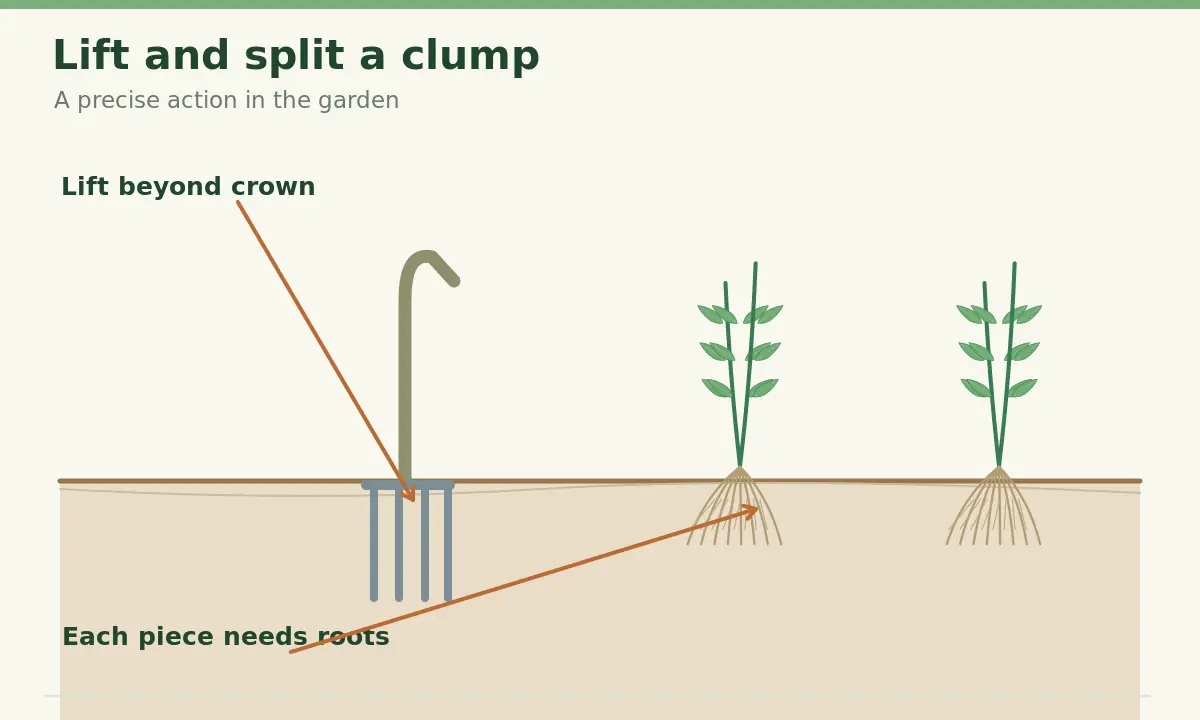
Work a garden fork around the outside of the crown rather than driving its tines straight through the center. Ease the root mass up gradually and shake or gently wash away enough soil to see where shoots connect to roots. Older clumps may have dead or tangled material in the middle; identify living peripheral buds before making any cut. Wear gloves and steady the heavy clump on a clean surface. Excessive wrenching may detach healthy stems from their root base. A large crown can be divided with two garden forks or a clean sharp knife, but the tool should match the toughness of the root mass.
Keep Two or Three Shoots With Roots on Each Piece
Iowa State specifies at least two or three shoots and a portion of roots on each garden phlox division. Look for new green or reddish shoots arising from a firm crown with branching fibrous roots below. Plan cuts between shoot groups rather than cutting through every emerging bud. Discard rotten or obviously dead center tissue rather than attaching it to a healthy piece for extra bulk. A section of shoots without roots may wilt and fail, while a handful of detached old stems does not become a viable new crown. If the whole clump is small, replant it undivided rather than forcing several weak fragments.
Set Sections at Their Original Growing Depth
Place each rooted shoot group into its new hole so the crown returns approximately to its original soil level. Spread the roots naturally without folding them upward into an air pocket, firm soil gently around them and water thoroughly. The RHS and general perennial guidance favor returning divisions to a suitable depth instead of burying emerging shoots beneath a heavy layer of soil. Keep a modest gap between sections appropriate to the cultivar’s eventual spread; do not crowd them back into the same footprint. Mulch around but not smother the crowns. Replant promptly because exposed fine roots can dry very quickly.
Protect Newly Divided Phlox From Drought
Established garden phlox can form a substantial root system, but a fresh division has lost some roots and needs careful aftercare. Check moisture around the actual root ball and water as required during establishment. RHS highlights watering new plantings in dry spells, and Iowa State stresses continued watering after spring division. Do not keep the soil permanently sodden in an attempt to prevent wilting. A few older leaves drooping after transplanting are not necessarily evidence of disease; persistent collapse calls for checking soil, root contact and weather. Resist heavy flowering expectations in the first weeks while the plant is rebuilding its roots.
Manage Fall Divisions With Local Winter Conditions
Late-summer and early-fall division is possible when there is time for roots to establish before hard freezing. Iowa State recommends protective mulch for fall divisions where freeze-thaw heaving can lift young plants. Do not place the same thick insulating treatment on a warm wet site where it might trap excessive moisture against crowns. Match mulch type and depth to local Extension guidance and pull it back from emerging shoots in spring as advised. If your region often has wet winter soils, spring may be the safer opportunity. Plants transplanted just before an unexpected freeze need special monitoring for heaving and exposed roots.
Watch for Mildew and Stunted Growth Separately
Garden phlox may develop powdery mildew on foliage, and poorly grown stems can occasionally reflect other pests or diseases. Dividing a crowded healthy clump may improve airflow, but it will not cure an infection already present inside plant tissues. Do not propagate crowns that show severe unexplained rot, systemic stunting or suspect nematode symptoms without reliable diagnosis. RHS lists mildew and phlox eelworm among concerns. Sanitize tools between suspect and healthy plants, and remove diseased debris appropriately. New brown edges immediately after transplanting can also result from heat or dry roots; evaluate those conditions before applying unnecessary treatments.

Check Each Division for New Shoots Next Season
Label the replanted groups and inspect whether buds open into upright new shoots. Continue watering while roots establish and protect against weeds competing closely with small divisions. Garden phlox can be divided every few years when overcrowded, but growth rate determines the real need. A flowering clump with a healthy center does not require annual disturbance. Make a note of how many shoot-bearing sections were produced, their original planting depth and whether summer or spring timing succeeded in your climate. The useful outcome is a set of rooted living plants, not the greatest number of tiny pieces cut from one crown.
Related Guides
- Dividing Tall Garden Phlox: When, Where to Cut, and How to Replant
- When to Divide Ornamental Grasses and Remove a Dead Center
- When to Divide Astilbe and Replant Clumps Without Drying Their Roots
- When to Divide Black-Eyed Susans Without Losing Healthy Crowns
- How to Divide Autumn Joy Sedum Without Burying New Crowns
How We Research and Verify Plant Advice
Sources checked on 2026-10-26: yardandgarden.extension.iastate.edu; rhs.org.uk; yardandgarden.extension.iastate.edu. We reviewed each institution’s plant identification, correct growth stage and relevant cultural recommendations before adapting them into an independently written step-by-step guide. Where sources are region-specific, their calendar details are not applied universally. Pictures use simplified teaching shapes and should be compared with living specimens; they are not a substitute for laboratory disease diagnosis or local climate guidance. The relevant advice is paraphrased rather than reproduced.
Safety and Independent Editorial Disclosure
This independently prepared educational article does not claim sponsorship or affiliate approval. Our category reading links are informational, not product endorsements. See the VegWin affiliate disclosure. Clean sharp tools before cutting plants, protect hands from thorns and blades, and keep cut plant material away from children and pets where appropriate. Use only locally registered plant treatments labeled for the actual crop, and observe the product label. Do not rely on unsupervised home remedies or unverified harvest-safety promises.
Early spring as new shoots appear is favored; late summer to early fall is also possible where roots can establish.
Iowa State recommends at least two or three shoots along with an attached healthy root portion.
No. Moss or creeping phlox is mat-forming and has a different preferred division period.
Return rooted crown sections to approximately their previous growing depth.
Keep roots evenly moist while they establish, without leaving the soil saturated.