
A tomato transplant standing yesterday may be lying on the ground this morning with its stem severed near the soil. That pattern can indicate a cutworm, the caterpillar stage of certain moth species. It is not the same as a seedling that collapses from damping-off, rabbit browsing or wind damage. If you confuse the causes, you may water a wet seedbed more, add pesticide without a target or replace a vulnerable plant in the same spot.
This article is a diagnostic and prevention workflow for vegetable beds rather than a list of insecticide products. First inspect the base of the plant, then search for a larva and decide whether a physical collar and targeted monitoring are appropriate. The aim is to save the next transplants while avoiding treatments that do not address what happened.
Inspect the soil-line cut before naming the pest
Cutworms often feed on tender stems at or very near the soil surface. Look for an apparently chewed or cleanly severed stem, a fallen seedling, and damage concentrated on the newest transplants. University of Minnesota Extension describes soil-line clipping as a common clue. Make a close photo before disturbing the area and check several nearby plants. A few plants cut in a patch can point to a locally concentrated pest rather than a nutrient problem affecting the whole bed.
A brown, pinched, water-soaked stem that seems to rot and collapse is a different finding. Damping-off tends to affect young seedlings and their vulnerable stem bases, while rabbits may remove leaves and leave characteristic browsing patterns. The Minnesota diagnostic comparison explicitly separates cutworm stem chewing from seedling disease. Do not put a collar around a rotting tray of seedlings and assume you have solved its moisture or sanitation problem.
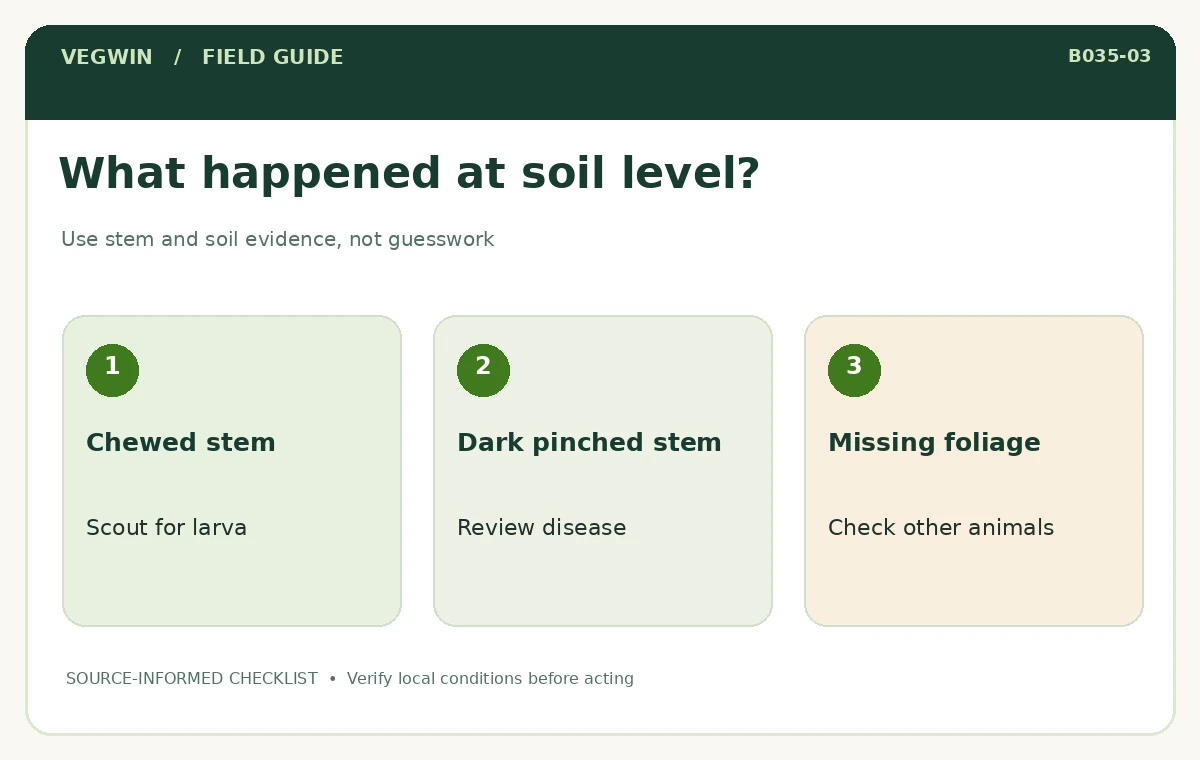
Search nearby soil for a curled caterpillar
Many cutworm larvae spend daylight hidden in soil or debris and emerge to feed when light levels are low. Minnesota Extension recommends examining soil close to recently damaged plants, especially in the evening. Gently turn shallow soil clods and inspect places where a larva could shelter. Many cutworms are dull brown, gray or other muted colors and may curl into a C shape when disturbed; exact species can be hard to identify without specialist help.
Check several damaged locations, not only the first seedling you notice. If you find a caterpillar, document its appearance and feeding context before deciding what it is. Other soil organisms and non-cutworm caterpillars can be present. If no larva is found, continue observations instead of treating the discovery of a severed plant as certainty. Identification can be supported by local Cooperative Extension photos or diagnostic services.
Protect vulnerable transplants with physical collars
Where cutting near the ground is confirmed, a cardboard, paper or foil collar around a susceptible transplant can block access to its stem. University of Minnesota Extension describes a collar set partly below and partly above the soil surface. Install collars without pinching or abrading the plant, and inspect after watering and heavy rain. They are most useful around small vulnerable seedlings; do not assume they solve every species or feeding pattern.
A collar is prevention, not a way to revive a plant whose vascular tissue has already been severed. Replace irrecoverably clipped plants only after the site has been checked, and protect replacements promptly. If you use a row cover, make sure the planting bed does not already shelter the pest, and consider crop pollination needs later in the season. These physical choices are more direct than spraying a bed without establishing which caterpillar is present.
| Observed situation | What it may indicate | Best next step |
|---|---|---|
| Stem chewed through at soil line | Cutworm feeding is plausible | Inspect nearby soil at dusk |
| Stem dark, pinched or rotting | Damping-off or another disease | Review moisture, hygiene and diagnosis |
| Brown C-shaped larva found | Cutworm evidence stronger | Hand-remove; protect new stems |
| Repeated loss of small transplants | Seedling stage remains vulnerable | Use correctly fitted collars |
| No new injury after controls | Pressure may have declined | Continue monitoring; do not spray |

Scout at the right time and remove confirmed larvae
Inspect seedlings in the morning for fresh injury and revisit selected spots in late afternoon or evening, when larvae are more likely to move and feed. Keep a simple count of clipped plants and found caterpillars by bed. If a larva is present, University of Minnesota Extension lists physical removal as a practical home-garden method. Avoid handling unidentified organisms carelessly; use a suitable container or garden gloves. Our walkthrough on how to prevent damping-off in tomato seedlings started indoors sets out each step.
A daily quick check during establishment is often more useful than one long inspection after many plants have disappeared. If damage stops after collars and removal, maintain observation rather than escalating automatically. If injury continues, reconsider the identification and look for additional larvae or alternate causes. IPM means repeating the evidence-gathering cycle, not treating each chewed leaf as the same problem.
Reduce risky shelter without destroying healthy soil
Weeds and plant debris near young plants can offer shelter and alternate food for cutworms. Utah State University IPM and Minnesota Extension discuss weed management and site preparation. Clear dense weeds where practical before planting and inspect sites with a history of cutworm damage. Keep a balance: soil health and erosion protection matter too, and broad disturbance is not automatically desirable in established beds.
If a bed is freshly planted into heavy residue, consider more focused monitoring near transplant stems instead of removing all mulch throughout the garden. Take local conditions into account, particularly heat and soil moisture. A soil surface can be managed to reduce pest refuge while still protecting roots from drying out. The correct action follows the observed problem and the crop stage.
Decide when an intervention is justified
Cutworm infestations are often patchy, and not every garden requires pesticide use. Minnesota Extension states that pesticides are usually unnecessary in home gardens, especially where physical controls can work. Evaluate the number of clipped plants, how many caterpillars are found and whether new transplants remain at risk. A few isolated losses are a different situation from rapidly repeated damage across several planting rows.
For an unusually severe problem, consult the current state IPM recommendation and any legally registered product label for that specific crop and pest. Never invent dilution rates, treatment intervals or promises of safety. Biological and chemical products vary by species, life stage, application site and regulation. Without a confirmed target and a local label, no pesticide recommendation belongs in a beginner-facing article.
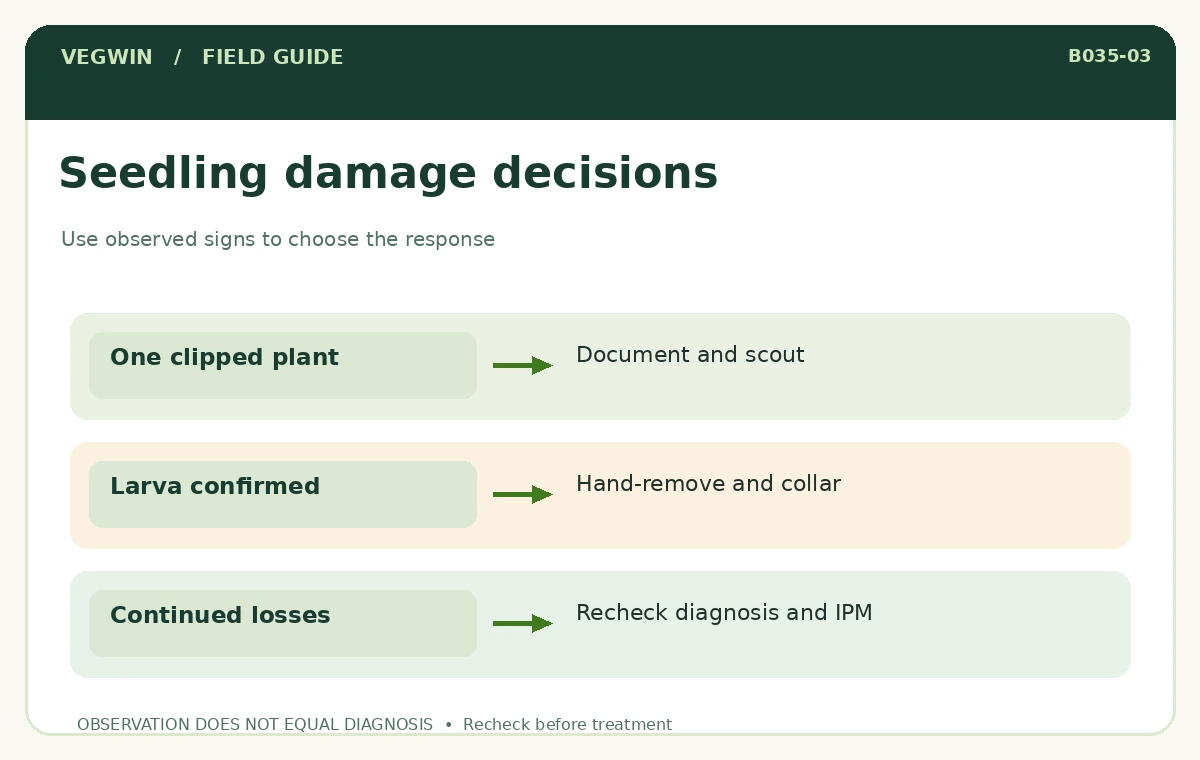
Replant using a stem-protection checklist
Before replacing a clipped seedling, photograph the original damage, scout the nearby soil and decide whether physical protection is needed. Install the collar around the new plant during transplanting so the stem is not repeatedly handled later. Water it for establishment based on actual soil moisture and return to check the collar after weather events. Record how many protected plants remain standing.
If a new seedling falls despite protection, inspect for pinched, rotten or wilted tissue and reassess whether the injury is actually damping-off, transplant shock or another animal. Keeping the diagnostic path explicit prevents unnecessary treatment cycles. The goal is not a garden with no insects; it is one where young plants survive and management actions match documented causes.
How We Research and Verify Garden Advice
We compare the practical claims in this guide with the primary university Extension, IPM, and established horticultural sources linked below. Sources were checked on October 21, 2026. Where recommendations depend on location, crop type, soil conditions, weather or pest identification, we explicitly state what to verify locally rather than inventing universal dates, rates or outcomes. This article is written for home-garden decisions, not for medical use or a pesticide application prescription.
Reference Sources and Editorial Disclosure
University of Minnesota Extension on cutworm identification, soil-line damage, hand removal and protective collars. University of Minnesota diagnostic comparison of cutworm clipping and damping-off at the stem base. Utah State University IPM on scouting, weed management, seedling collars and label-based treatment boundaries. This article contains no approved affiliate placements or sponsored product claims. Read the VegWin affiliate disclosure; the availability of that site page requires verification before publication.
No. Some chew a stem and cause wilting; others climb and feed on foliage. Inspect the plant and nearby soil.
Chewed or severed stems near soil suggest feeding; dark, pinched, rotting stem bases suggest disease. Confirm with a soil search and local diagnostics.
They help block many stem-cutting species but not every feeding behavior. Continue observing plants after installation.
Look for fresh clipping in the morning and inspect nearby soil and plants in late afternoon or evening.
Not without identification and demonstrated need. Physical barriers and removal often work; any product must be legal and labeled for the crop and pest.