
A watermelon seed can become an impressive vine, yet most disappointing melon patches fail at one of three transitions: sowing into cool soil, managing the rapidly expanding vine, or assuming that flowering automatically guarantees fruit. The solution is not a universal date or a larger dose of fertilizer. It is to match the method to local warm weather, manage flowers and water, and check ripeness using several signs together.
This article is specifically about the route from seed to harvest, not a catalog of varieties or a general seed-starting tutorial. Iowa State and Utah State Extension provide the basis for the planting, pollination and maturity guidance. Local last frost dates, expected frost-free season and the cultivar maturity description are more meaningful than a USDA plant hardiness zone for an annual watermelon crop.
Choose a seeded or seedless growing plan first
Most ordinary seeded watermelon varieties are diploid and produce viable pollen. Seedless watermelons generally are triploid and require suitable pollen from a seeded pollenizer nearby to set seedless fruit. Iowa State Extension notes that commercial seedless mixes sometimes include pollenizer seeds; read the actual packet before deciding whether an extra planted variety is needed.
Do not promise that every seedless watermelon will behave like a common seeded type at germination. Triploid seed can be more exacting, and transplant instructions from a seed supplier are important. Choose a type whose expected days to maturity fit the frost-free window and available growing area. Fruit size does not by itself prove that a cultivar is suited to a small container.
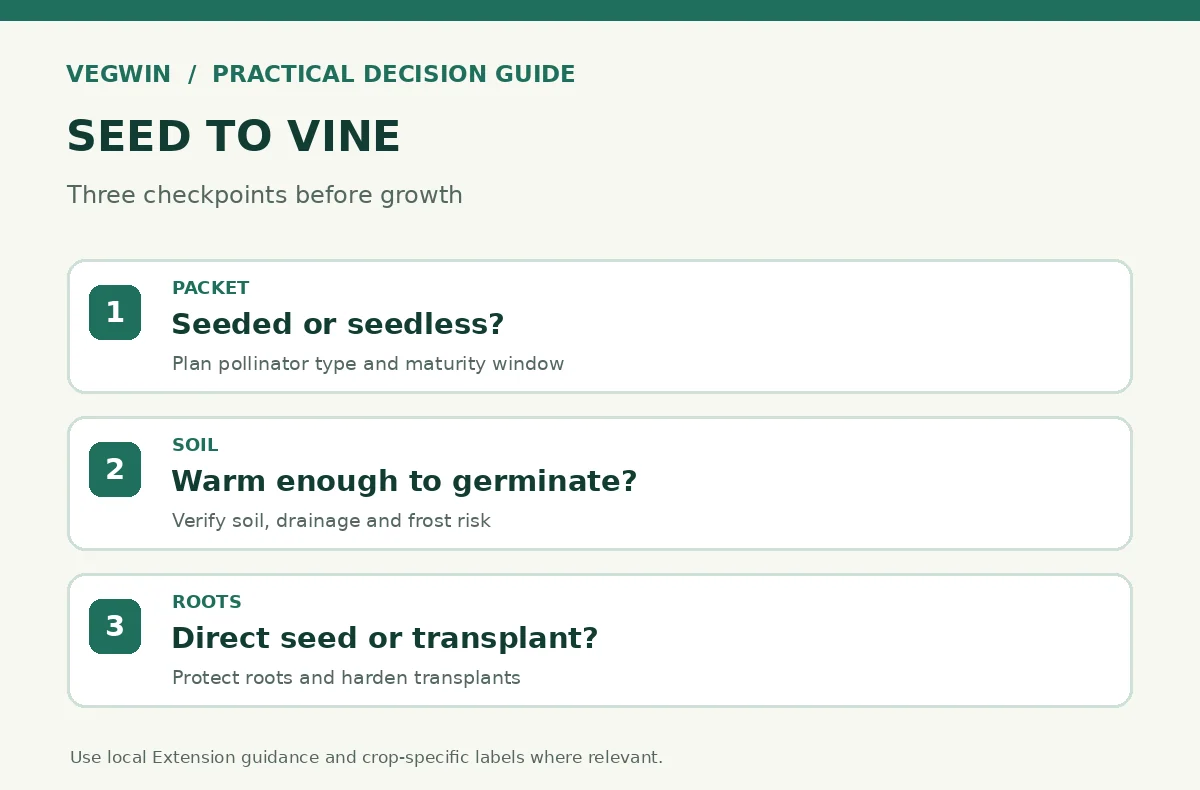
Check soil warmth before putting seed in the ground
Watermelon is a warm-season cucurbit. Utah State Extension describes direct sowing when soil has warmed adequately, commonly around 65°F or warmer. Rather than plant simply because the air feels mild at noon, check actual soil temperature at planting depth and make sure damaging frost is no longer expected without a protection strategy.
Select a sunny, well-drained site with sufficient area for mature vines. Waterlogged soil and cool conditions can lead to poor emergence or stressed seedlings. Read packet instructions for sowing depth and spacing and thin by cutting excess seedlings rather than yanking roots from beside plants you want to keep. Compost can improve structure, but fertilizer rates should come from soil testing and regional guidance.
Decide between direct sowing and indoor transplants
Direct sowing avoids transplant root disturbance and works where soil warms early enough for the variety to mature. Short-season gardens may benefit from transplants, but watermelon seedlings resent root injury. Use adequately sized cells and move the root mass carefully. Harden plants to outdoor conditions before planting; a rapid transition from soft indoor growth to sun and wind can set them back.
Do not let a seedling languish in a small cell while waiting for a cold bed to warm. A stretched, root-bound transplant may not give the anticipated head start. Compare local frost risk, soil warmth and plant quality, then select the method with the lower overall risk. Utah State Extension cautions that rough handling during transplanting slows establishment.
| Your condition | Lower-risk approach | Check before proceeding |
|---|---|---|
| Long warm growing season | Direct sowing is often practical | Soil temperature and packet instructions |
| Short warm season | Consider carefully handled transplants | Root quality and frost risk |
| Seedless variety | Provide seeded pollenizer flowers | Seed packet and pollenizer layout |
| Fruit approaching maturity | Use a multi-signal harvest check | Tendril, ground spot, rind and timing |
Give vines room and maintain steady moisture
Watermelon vines need room to spread unless a deliberately selected compact type is being grown with suitable support. Plant spacing varies with cultivar, trained system and regional production method; use the seed packet and Extension guidance instead of copying a single hill diagram to every yard. Give people a path to inspect flowers and developing fruit without walking on vines.
Water deeply enough to moisten the active root zone, then check soil rather than applying the same number of minutes every day. Both extended drought stress and waterlogged roots can disrupt growth. Mulch can limit weeds and conserve moisture after the bed has warmed. Avoid directing sprinkler water onto flowers during peak pollinator activity, and do not assume frequent overhead watering is needed for large leaves.
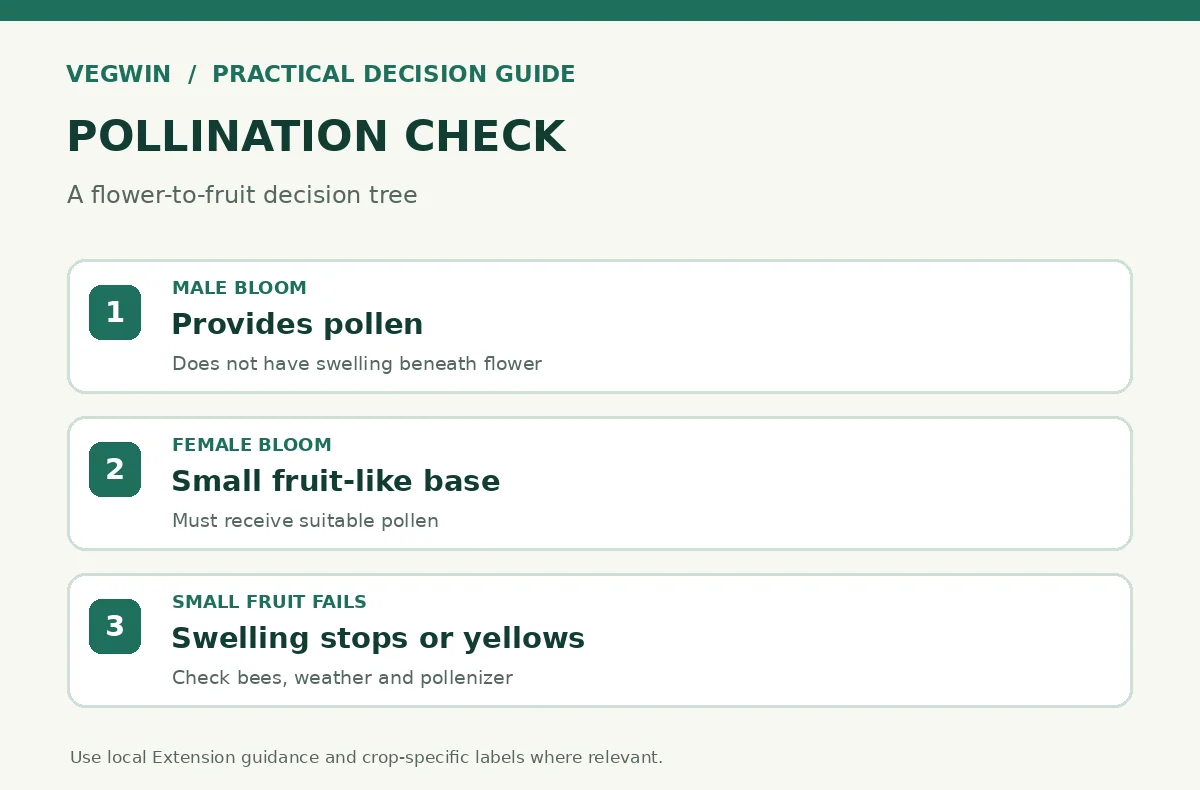
Observe flowers and pollinators before diagnosing poor set
Watermelon produces separate male and female flowers; female flowers have a tiny fruit-like swelling beneath the bloom. Flowers need effective transfer of pollen, commonly by bees. If vines look healthy but small fruit swellings turn yellow or fail to enlarge, observe flower opening and pollinator visits before declaring a fertilizer deficiency.
Seedless types also need viable pollen from a planted seed-bearing variety. Keep pollinator-friendly habitat and follow local pesticide restrictions when blooms and bees are present. Excessively cool, wet or very hot weather may affect flower behavior. Failed early fruit set does not prove permanent infertility; continue observation as weather and vine maturity change.
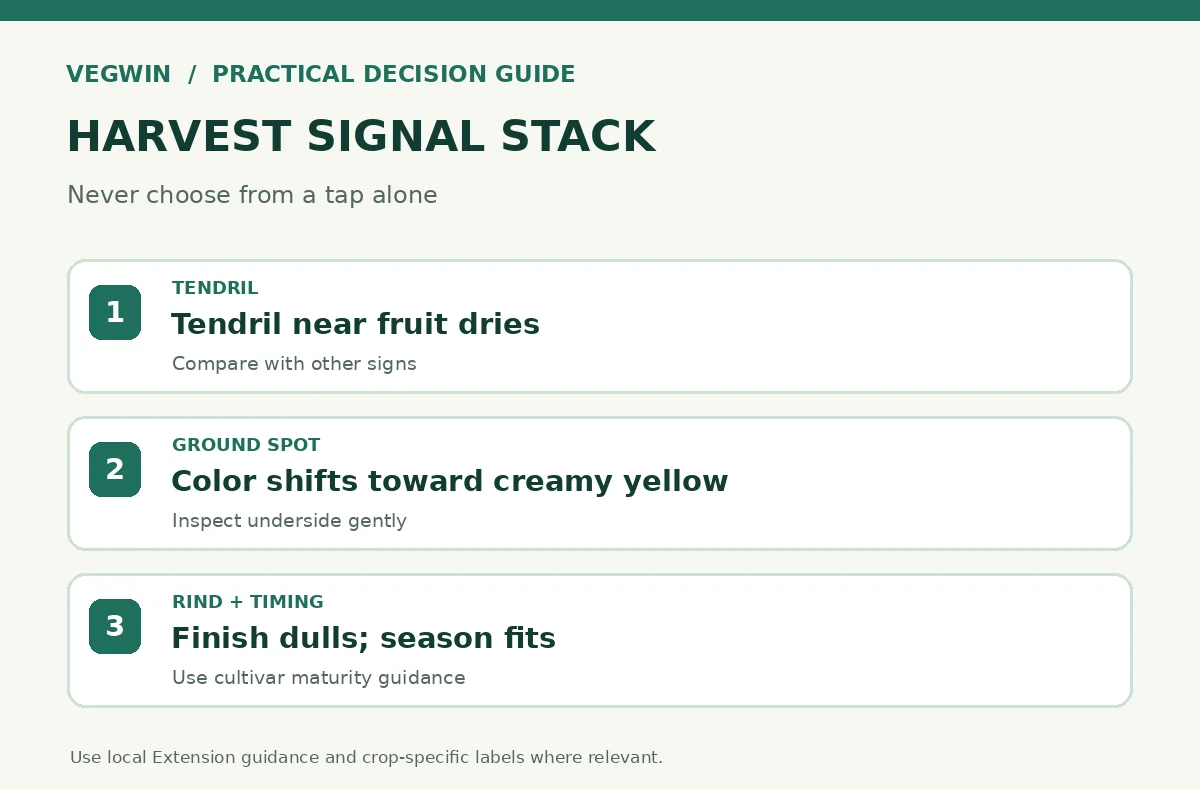
Combine harvest signals instead of relying on a knock
Watermelon does not continue to develop sweetness in storage the way some other fruit can. Utah State identifies a drying tendril near the fruit, a yellowing ground spot and a duller rind among harvest signs. No single cue is perfectly reliable across cultivars. The tendril can dry from stress, and a pale ground spot may be less useful if fruit rests on mulch.
Use the seed packet maturity window as context, then compare the tendril, contact spot and rind finish. Make a small written note for each test harvest. The famous hollow sound from tapping varies with fruit and the person listening; it should not overrule clear cultivar-specific guidance. Cut fruit cleanly with a portion of stem rather than tearing the vine. If you are starting from scratch, read When to Harvest Cantaloupe.
Learn from poor fruit rather than blaming one input
Cracked or uneven fruit, weak set and small melons do not all have the same cause. Review water variation, pollinator access, crop load, plant vigor and whether the site provides enough warm days. Photos taken at flowering and maturity can show whether the problem began before fruit set or during enlargement.
For the next crop, keep a short record of soil temperature at sowing, date of flowering, first sustained fruit growth and harvest tests. That record is more useful than changing three practices at once. If foliage shows distinct disease symptoms, consult a regional diagnostic service; avoid moving directly to sprays without identification and edible-crop label confirmation. For a step-by-step method, see how to grow tomatillos.
How We Research and Verify These Recommendations
We compared the practical recommendations in Iowa State Extension on site selection, pollination, seeded/seedless distinction and harvest with Utah State Extension on warm soil, sowing, transplant sensitivity, moisture and harvest, both checked October 20, 2026. These sources support the general growing and diagnostic practices, while the exact variety, local climate, soil conditions and product labels can change the appropriate decision. This guide is informational and should be rechecked against local Extension updates as conditions or recommendations change.
VegWin does not claim an approved affiliate relationship for any recommendation in this article; all three learning buttons lead to educational references rather than a sales offer. Read our affiliate disclosure for site-wide context. This page should not be treated as an endorsement of any unverified partner, pesticide formulation or commercial product.
Not safely outdoors without a carefully monitored protection system; wait for frost risk and soil warmth to align with the seed guidance.
Generally yes; triploid seedless types need pollen from suitable seeded pollenizer plants. Check packet instructions.
One possibility is incomplete pollination; examine flowers, pollinator activity, weather and vine condition before assuming a nutrient problem.
Do not rely on postharvest sweetening. Assess maturity carefully on the vine using several cultivar-relevant cues.
It can help, but combine it with ground-spot change, rind appearance and the expected maturity window.