
Woodland forget-me-not (Myosotis sylvatica) produces sprays of tiny blue, five-lobed flowers with bright yellow or pale eyes. It can be planted on a biennial schedule for next spring’s bloom, but freely shed seed can also create a larger colony than intended.
Confirm you have woodland forget-me-not
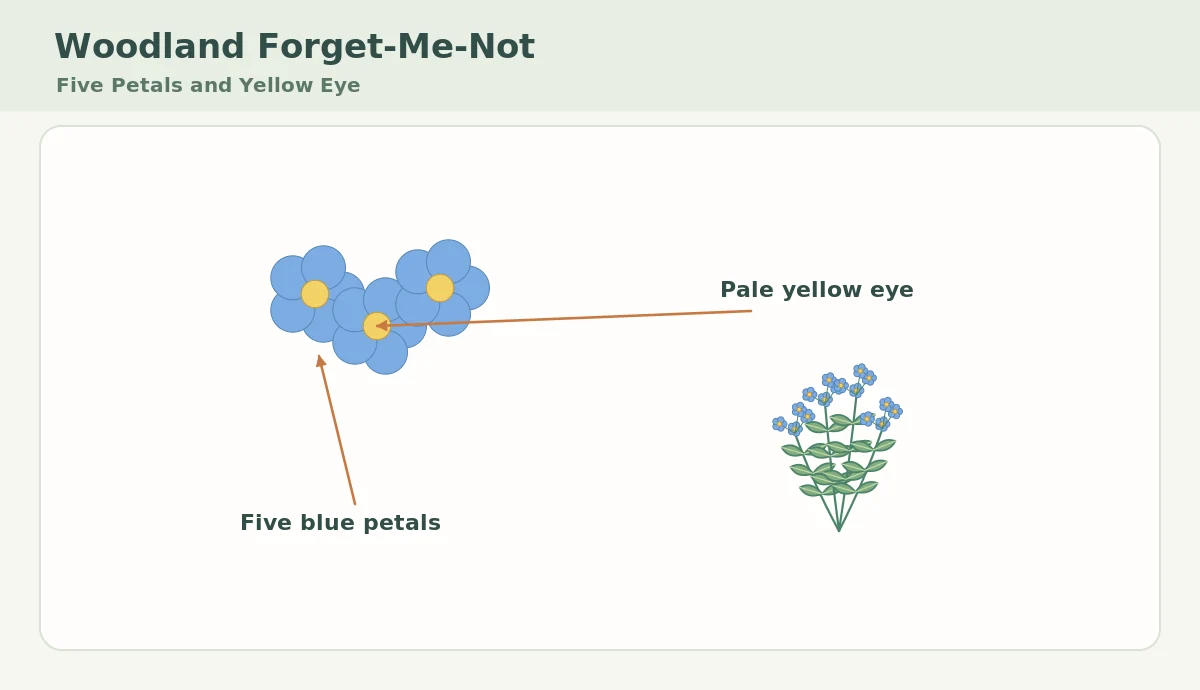
Several species share the common name forget-me-not. This article concerns Myosotis sylvatica, a short-lived, usually blue-flowering herb with small flowers whose five rounded lobes surround a yellow or pale eye. The leaves are oval to lance-shaped and attached to slender branching stems. Do not confuse it with water forget-me-not, which has different habitat needs and may be regulated locally. NC State notes that even M. sylvatica can be a noxious weed in some Midwestern states. Look up state or county restrictions before sowing and consider choosing a better-behaved alternative near wildland edges.
Choose a biennial mid-summer sowing window
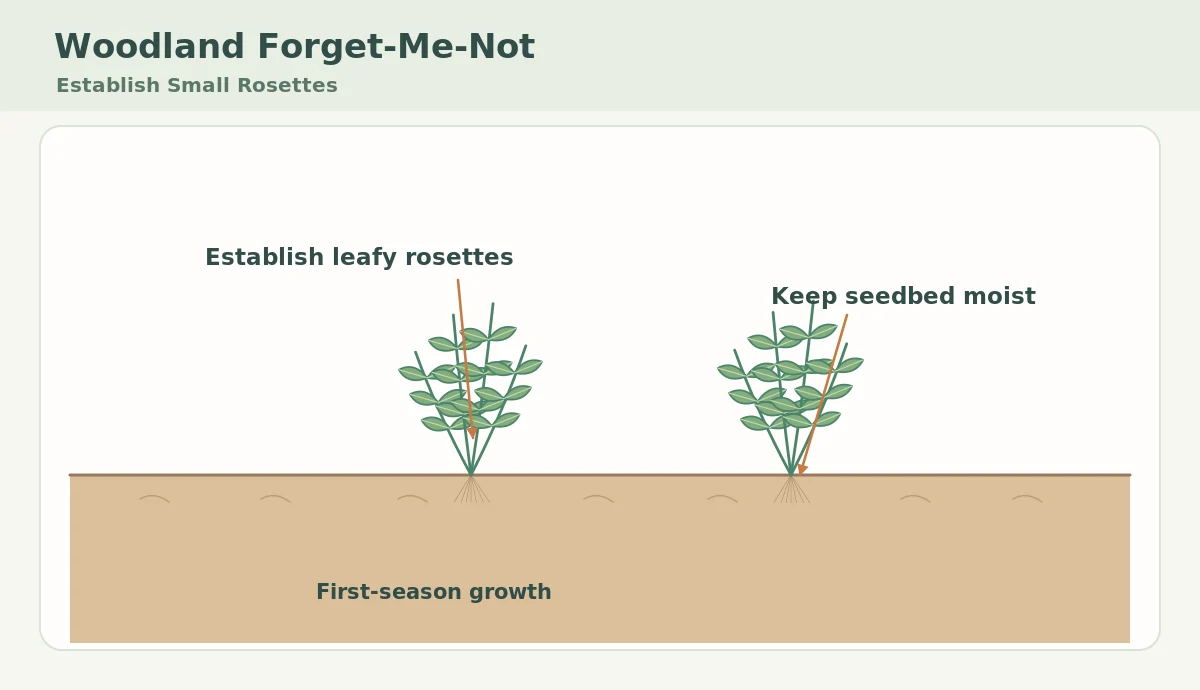
NC State describes direct-sown seed in mid-summer for flowers the following year. University of Maine Cooperative Extension likewise recommends planting no later than mid-summer in its cold-climate example, allowing a root system to establish before hard winter conditions. This is a seasonal principle, not the same calendar date for every state. A cold-region gardener should check first-frost expectations and whether summer heat permits germination. In a warmer climate, local Extension advice may indicate a different cool-season schedule. The goal is an established young rosette going into the next season, not a tall flowering stem forced before winter.
Decide whether you want spring annual flowers instead
NC State offers another route: start seeds indoors roughly eight to ten weeks before a local last spring frost for same-year flowers. This may be appropriate where conditions make summer establishment difficult, but the indoor schedule still requires adequate light and controlled temperatures. The seed packet should provide sowing depth and cultivar-specific instructions. Growing a plant once as an annual and allowing it to seed itself for many subsequent springs are different decisions. Choose the route deliberately based on the desired display, space available and risk of unwanted volunteers rather than assuming every forget-me-not must be planted at the same time.
Use a moist, well-drained and partly shaded site
Woodland forget-me-not thrives in organically rich, consistently moist soil with good drainage, in sun to part shade. NC State notes that afternoon shade can help during hot summers. A dense dry gravel border is therefore a poor match, even though the plant is relatively small. Water the seedbed gently before sowing, keep it evenly moist during germination, and avoid crusting the surface. Use the packet’s stated covering depth instead of inventing a universal measurement. Do not maintain standing water simply because a particular species may tolerate short wet spells; healthy roots still need oxygen.
Identify rosettes before winter and flowers in spring
A first-season or newly established forget-me-not grows a low leaf rosette or short leafy shoots. In the following growing period it may raise branching sprays carrying many small flowers. The diagram separates a basal leaf cluster from the later flowering stem and shows each blue corolla connected by a short flower stalk. A lone blue dot in space would not be a botanical illustration. Examine small plants at the edge of the bed to verify they are M. sylvatica seedlings and not unrelated weeds. Label the original sowing patch so you can follow the plant through the seasons without pulling it accidentally.
Leave room for the whole flower spray
Mature woodland forget-me-nots usually stay fairly low but can form dense patches. Planting too thickly may reduce air movement, especially in cool damp weather. Thin according to the packet or transplant young seedlings while their root systems remain manageable, supporting leaves rather than crushing soft stems. Once established, avoid daily overhead irrigation late in the evening if foliage remains wet for prolonged periods. NC State lists mildew and rust as possible problems; do not treat every discoloration with chemicals. Improve airflow, observe the upper and lower leaf surfaces and ask Extension for a proper diagnosis when needed.
Understand where self-sown seeds come from
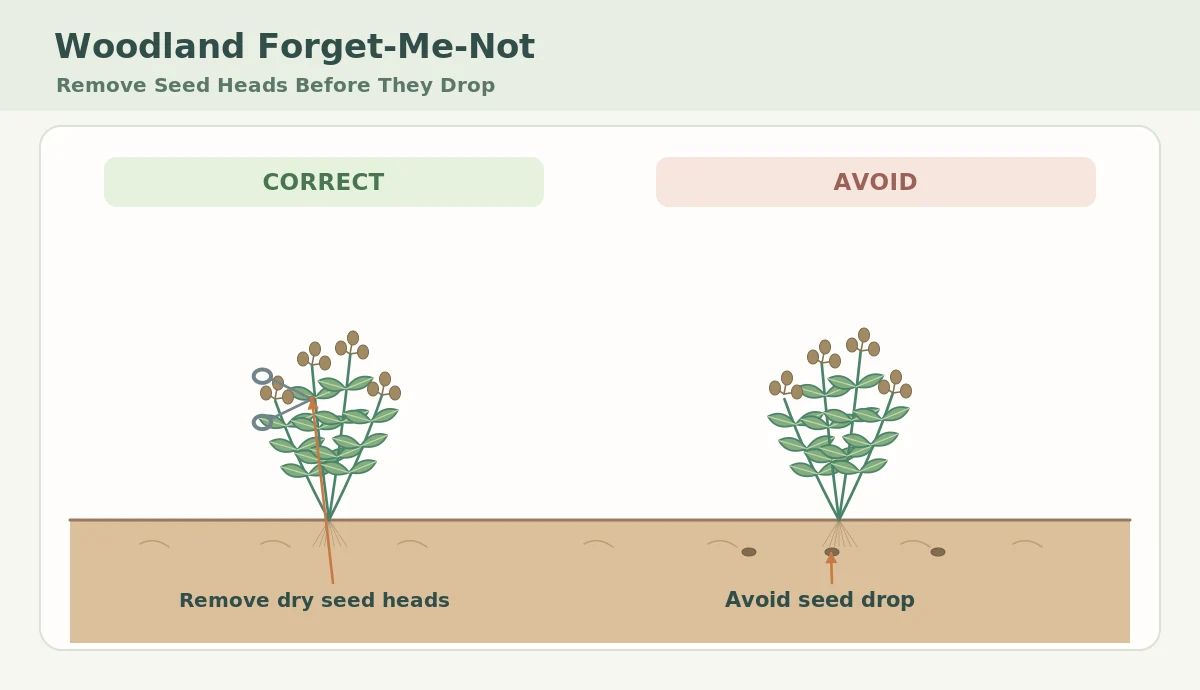
After blue flowers fade, little seed-bearing structures develop along the flowering stems. NC State notes that woodland forget-me-not can self-seed freely and sometimes aggressively. If every spent spray is allowed to mature and shake into paths or nearby habitat, the next generation can spread well beyond the planting patch. Deadheading is a practical control: cut the flowered stem before dry seeds are scattered, while leaving enough foliage for the remaining plant. Place ripe or nearly ripe seed heads in suitable waste rather than an open pile where they may continue releasing seeds. Do not promise that one deadheading pass guarantees zero volunteers.
Check local environmental restrictions first
A plant sold as an ornamental is not automatically appropriate for every region. NC State warns of noxious status in parts of the Midwest, and University of Maine discusses invasiveness concerns among forget-me-nots. Check regional invasive plant lists before purchase or seed sharing. Do not scatter surplus seed along streams, trails, roadside drains or woodland margins. Garden care should include removing plants that emerge outside their intended boundary, not just celebrating the number of seedlings. If local guidance discourages this plant, choose another shade-tolerant flower with similar aesthetic qualities rather than trying to confine it with untested herbicide treatments.
Separate poor flowering from a sowing failure
If a sowing produces only leaves in the first year, that can be normal for a biennial approach rather than evidence of failure. Check the plant’s age and season before fertilizing. If there are no seedlings, revisit the packet, seed quality, soil moisture, temperature and whether seed washed away during irrigation. An indoor-grown seedling that stretches toward the window may require stronger light. Yellowing foliage can stem from multiple causes, including wet roots, crowded plants or natural aging. Do not invent a disease diagnosis from one symptom. Keep written notes of when the rosette formed and when the flower sprays appeared.
Plan next year’s patch before current flowers finish
Decide how many forget-me-not plants you actually want next spring. For a controlled border, reserve a small suitable patch, sow on a climate-appropriate schedule, and remove most developing seed heads before they drop. For an intentionally self-renewing patch where allowed, accept that seedlings may appear outside the original area and plan to remove extras. Healthy plants should have attached lance-shaped leaves and recognizable little blue flowers with pale centers. A successful result is a spring display that remains in its intended garden space, not an unchecked spread into neighboring beds or local wild habitats.
How We Research and Illustrate These Garden Steps
For this guide we reviewed horticultural guidance from plants.ces.ncsu.edu; extension.umaine.edu; extension.umn.edu on October 30, 2026. Sources distinguish species identification, practical timing, transplanting, and care. Conditions and cultivar differences mean that a local Cooperative Extension service and the actual seed packet remain important for site-specific decisions. Botanical drawings illustrate connected plant anatomy but are not measured planting-depth templates.
VegWin provides independent educational garden information. The navigation links in this article lead to VegWin content, not paid recommendations, and no affiliate relationship is claimed. Read our affiliate disclosure. For uncertain plant identity, poisoning exposure, or serious disease, seek appropriate professional or Cooperative Extension help.
In many cold-climate settings mid-summer is safer so seedlings establish before frost; check local guidance.
They may be grown as annuals from early indoor sowing or as biennials for the following spring.
Woodland forget-me-nots prefer consistently moist, well-drained soil and often benefit from part shade.
Yes. It can self-seed aggressively and is restricted or discouraged in some regions.
Remove spent sprays before the seeds mature and check neighboring beds for volunteers.