
Common evening primrose, Oenothera biennis, usually makes a low rosette in year one and tall yellow-flowered stems in year two. Learn to identify the four petals, dusk-opening habit and narrow upright seed capsules. This garden guide explains identification, setup, seasonal decisions and realistic limitations without assuming every climate behaves alike. Use named Extension references below to check species-specific details before acting.
Identify the first-year rosette before expecting blooms
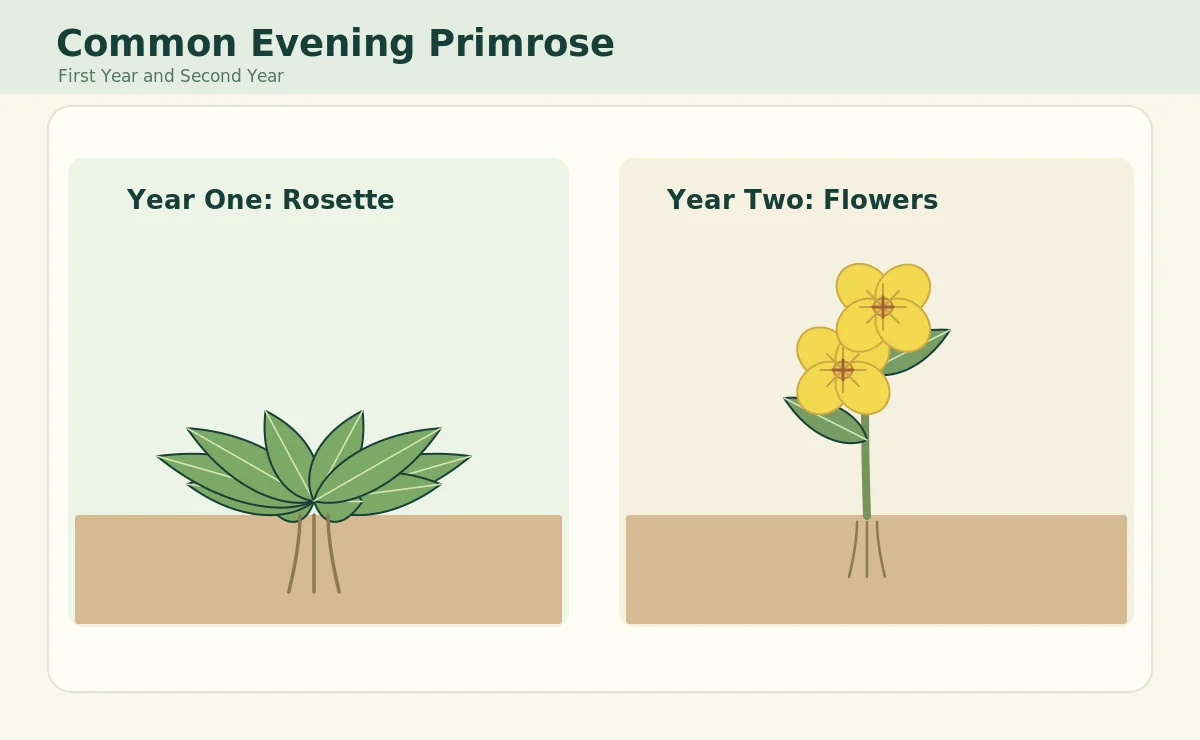
Common evening primrose, Oenothera biennis, is generally a biennial rather than a plant that predictably flowers in the same season as its seed germinates. University of Illinois Extension describes a low cluster of leaves during the first year. Those basal leaves are relatively broad and lance-shaped with noticeable midribs and sometimes wavy or gently toothed edges. They rise from a crown close to the soil, without a tall blossom-bearing main stem. A healthy first-year rosette is normal progress, not evidence that the seed packet was mislabeled. Mark seedlings before autumn cleanups so the living crown is not accidentally pulled.
Watch the second-year stem rise from the crown
In its next growing season, a surviving rosette sends up an upright, often reddish-green and somewhat hairy stem. Leaves on this stem are alternate, attached along the axis rather than forming a second flat rosette in midair. NC State Extension describes a stalk that may branch toward the top, with buds and flowers appearing up its upper part. The resulting tall flowering form can look so different from year-one foliage that gardeners mistake it for another species. Do not claim that a second-year stalk emerges from the dry seed capsule; it grows from the established crown and root system below.
Know when yellow flowers open in your region
Common evening primrose commonly blooms in summer into fall, but the first bloom date varies with local temperature, day length and plant establishment. NC State and Illinois Extension describe this second-year bloom period and late-day flowering habit. Individual flowers typically open toward dusk and may still be visible the following morning. If you inspect only at hot midday, you might miss fresh open blossoms. Choose a quiet evening to observe the yellow petals before concluding that a tall plant never flowers. A USDA hardiness zone does not provide a universal flowering date for every garden.
Recognize four petals and the crossed stigma
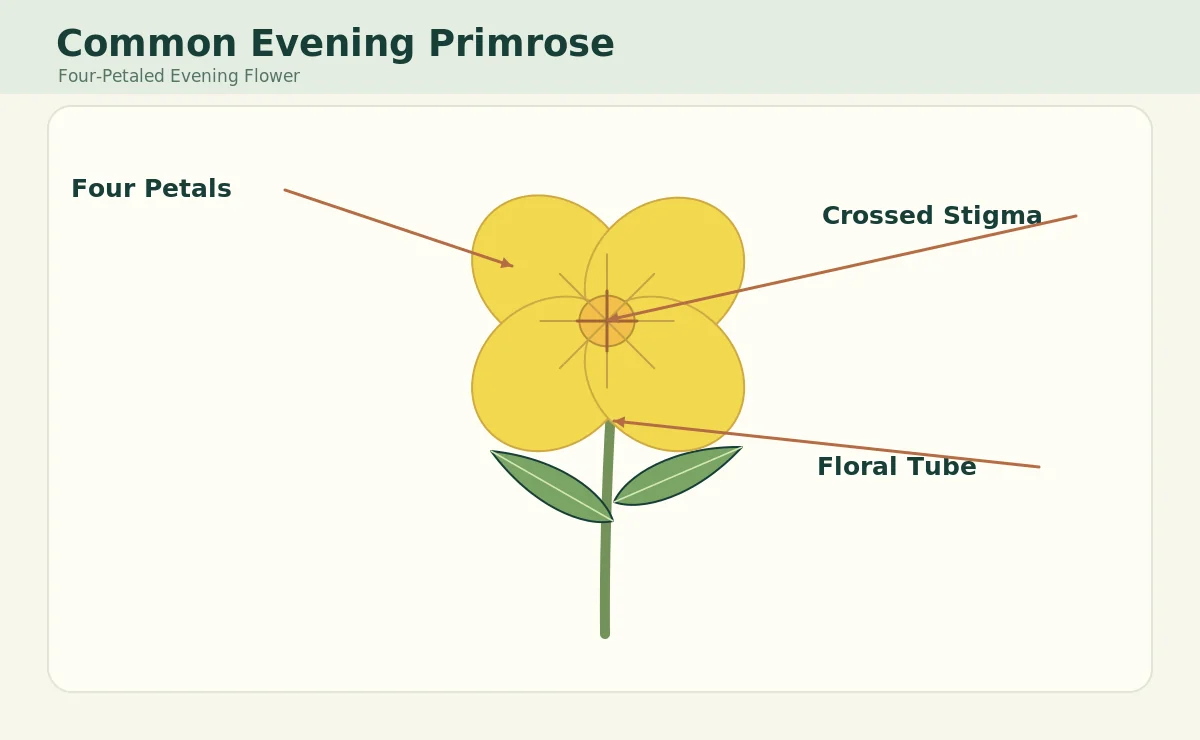
A typical Oenothera biennis flower has four rounded yellow petals on a floral tube above the green ovary. South Dakota State University’s botanical description also identifies eight stamens and a cross-shaped stigma. You do not need to dissect the bloom to appreciate it, but those features help distinguish the plant from unrelated yellow-flowered garden volunteers. Each flower is attached to the living stalk; it is not a detached yellow disk floating over leaves. Buds, open flowers and developing capsules can occur along the same upper stem at different nodes as the flowering period progresses.
Give common evening primrose sun and drainage
This species often grows in open, disturbed locations and generally favors bright conditions and soil that does not stay waterlogged. NC State describes success in full sun and reasonably drained sandy soil. It can adapt to less-than-ideal sites, but heavy sustained shade may limit flowering and tall stems may lean without light. Choose a place with enough room for the second-year height and an easy way to monitor seed spread. A native plant is not automatically appropriate for every tiny formal border. Keep the root crown out of persistently flooded depressions and avoid excessive fertilizer intended to force an instant bloom.
Protect the crown through the nonflowering phase
During the first year, protect the rosette from repeated digging or accidental mowing. Light mulch around, rather than over, the crown can help reduce weeds while leaving air at the growth center. Water new seedlings when the soil is dry, but do not keep the crown continuously wet. A plant that does not make flowers in year one may still be following its ordinary biennial life cycle. If a rosette appears damaged after winter, look for new growth from its center before removing it. Since climate and individual plants vary, avoid promising the same winter survival or flowering month for all gardens.
Trace buds into narrow capsules after flowers fade
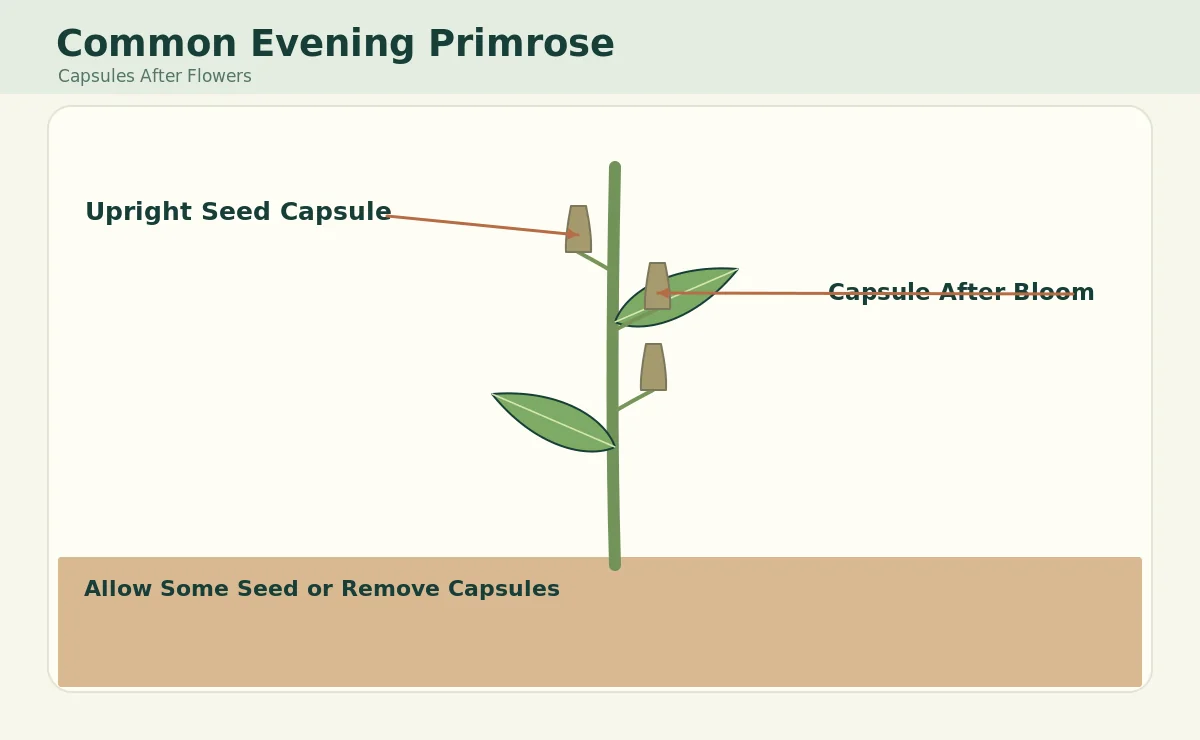
The ovary at the base of a flower develops into a seed capsule as the petals fade. UMass Extension describes upright, hairy capsule-like fruits on common evening primrose, and Illinois Extension notes the small seeds they produce. The capsules are narrow and elongated, not inflated round seed balls. Inspect a plant over a few weeks and you may see upper fresh buds, open yellow flowers and older capsules farther along the flowering portion. A capsule attached at the base of an old blossom is part of normal seed development; do not call every brown capsule a fungal disease.
Decide how much self-seeding your garden can hold
After flowering, common evening primrose commonly sets viable seed and the original biennial plant eventually declines. New rosettes may appear nearby in later seasons. Illinois Extension notes that the species often colonizes disturbed places and can persist in a seed bank. If you want a small controlled patch, remove some mature capsules before they open and keep the area mulched where appropriate. If wildlife seed resources and naturalizing are your goal, leave selected heads, recognizing that the plant may move around the border. Do not assume deadheading will turn a spent biennial into a permanent shrub.
Separate normal senescence from an emergency problem
The tall flowering plant may become woody, brown and untidy after setting seed. In a biennial, decline after reproduction is expected and does not always indicate disease. Before applying any treatment, compare stems with their seasonal stage and check for actual spreading lesions, crown rot, severe insect damage or abnormal collapse while flowers are still active. If a new first-year rosette wilts in saturated soil, check drainage and root condition. Avoid pulling all new basal rosettes merely because the parent plant dies. Identify an issue at the right life stage and consult a local Extension educator for unusual symptoms.
Plan a two-year garden display rather than one quick flush
For continuing blooms across seasons, allow some seed to mature or add responsibly produced seed to a suitable part of the border in staggered years. Expect first-year rosettes and second-year flowering stems to coexist if the patch reproduces. Record where the rosettes are so they are not confused with weeds during spring cultivation. The flower provides an evening display that can be overlooked by daytime-only gardening; observe at dusk to see newly opened petals. Remember the practical distinction: year-one foliage builds the plant, year-two stems carry the blooms and then capsules that may start another generation.
How We Research and Check Practical Horticulture Advice
Research for this article was checked on October 30, 2026, using these primary university and Cooperative Extension resources: University Extension research; University Extension research; University Extension research; University Extension research. They support plant identification, growth stage and the care decisions discussed above. Exact planting dates, maturity and performance still vary with the cultivar, seed lot and regional season. Each illustration is a simplified educational botanical drawing, not a measurement-accurate taxonomic key or a substitute for local diagnosis.
VegWin publishes independent educational gardening information. None of the links or CTA buttons in this article is a paid affiliate recommendation. For the site policy read the affiliate disclosure. Before using any edible plant, verify its identity and use safe preparation practices. If symptoms or regional rules matter, consult a local Cooperative Extension service.
Usually it forms a basal rosette first and flowers on an upright stem in its second growing season.
Fresh yellow flowers commonly open around dusk and may persist into the next morning.
A typical flower has four yellow petals and a cross-shaped stigma.
They are seed capsules that form after flowers fade and mature.
No. It usually completes a biennial cycle and then dies after seed production, leaving possible seedlings.